Reflections on French Colonialism in the Maghreb
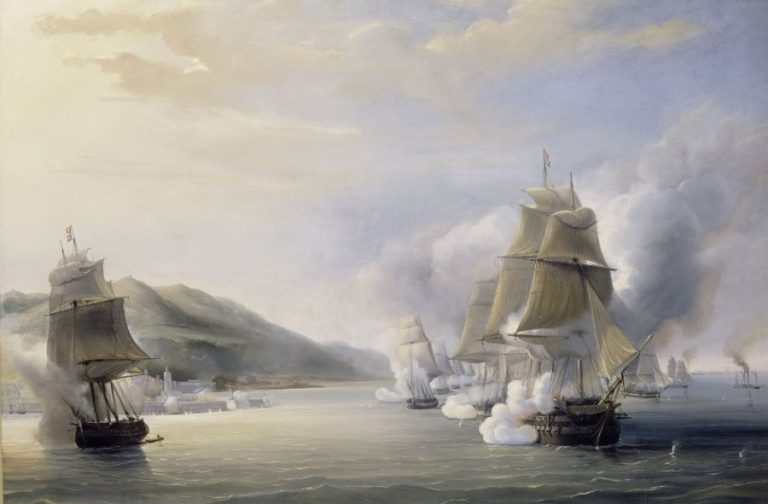
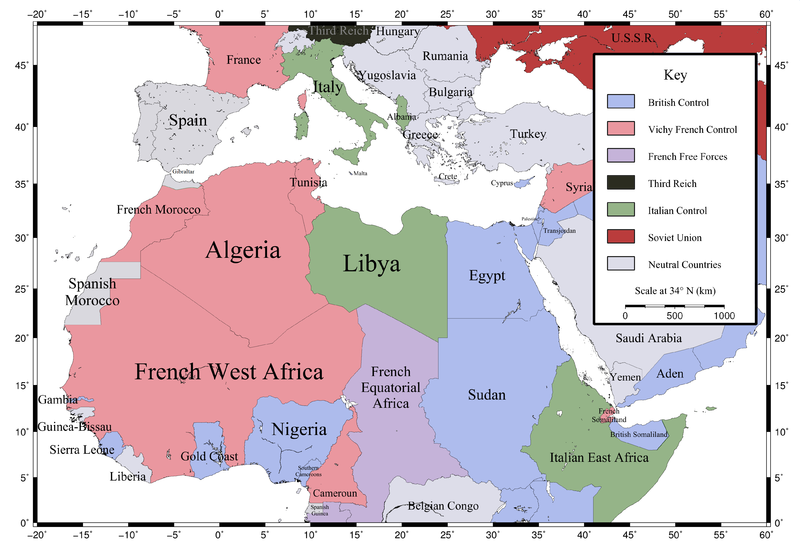
In the European race to divide the land of the world amongst themselves during the colonial era, Morocco, Tunisia, and Algeria were each separately colonized by the French. As a matter of fact, French colonialism manifested differently within each country, particularly in Algeria, where the colonial impact was much more dramatic than in either Morocco or Tunisia. However, each country was greatly affected by French influence and control during the period of colonization, as well as, following liberation. Analyzing each country’s unique colonial history demonstrates not only the effects of colonialism as a whole, but, also, the difference, in effect, created by different levels of colonial involvement and control.
The painful colonization of Algeria
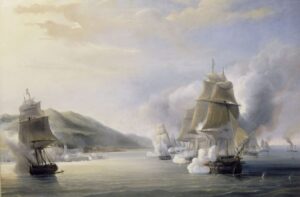
The French colonized Algeria first, in 1830, and remained within Algeria until 1962. The colonization was supposedly initiated by the Ottoman ruler, at the time, slaping a French diplomat, but was, actually, largely caused by the failure of the French to pay their debts to Ottoman Algeria. The French invasion was met with hostility, but the French were able to defeat the Ottomans, Approximately, one third of the Algerian population died as a result of colonization, whether from direct warfare, disease, or starvation.
Of the three Maghrebian countries, Algeria was under French control the longest, and was considered to be a part of France, which was not the case with either Morocco nor Tunisia. Rather than considering Algeria to be a colony, the French essentially claimed Algeria as their own, calling it Algérie Française, or French Algeria.
It was considered to be a part of France, the southernmost portion of the European on African land declared to be French. In addition to claiming the land as French, France, also, offered French nationality to Algerians, which would seem to imply that the French were truly considering Algeria as part of their own nation. However, in practice, this was not how the Algerians perceived the French colonial period, nor was it how the French perceived the Algerians.
The French invasion was met with hostility, but the French were able to defeat the Othomans, Approximately, one third of the Algerian population died as a result of colonization, whether from direct warfare, disease, or starvation.
The treatment of the supposedly French Algerians was in stark contrast to the pretenses presented by the offered citizenship and renamed French Algeria. The French considered the Algerians to be uncivilized, uncouth, illiterate, and dirty, and treated them as a lower class within Algeria. The first legal sign of this was the declaration of land reforms, which essentially took Algerian land, reassigned its ownership to French migrants within Algeria known as the pieds-noir, and forced Algerians to work the land. This, enforced the second-class status of the Algerian natives and gave elevated status to the pieds-noirs, who had, essentially, become landowners through no personal history, labor or achievement. The Algerians were, now, working as slaves on land they had previously owned, which caused a great deal of humiliation, commonly called “hogra,” for the Algerians, as well as, a growing resentment for the French and idealization of the pre-colonial period.
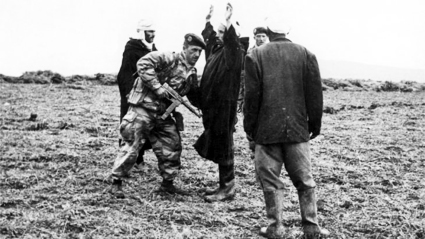
However, some Algerians were able to more easily blend in to the newly-French culture of Algeria, and gained education in French and European matters, which created a divide within Algerian society between the Algerians who identified strongly as Muslim Arabs and those who blended more into French society. The French reinforced this westernization by building western-style settlements, converting mosques into churches, and teaching French to the children of Algeria.
This erased Algerian culture and Islamic heritage, which created a large amount of resentment for the French from Algerians who held Arab ethnicity and Islamic religion as fundamental parts of their national identity. The divide between these two groups led to conflict not only between the French and the Algerians, but, also, between Algerians of differing classes and cultural identities. Large independence movements formed amongst the Islamic Arab portions of Algerian society, which further isolated the French-identifying Algerians within Algérie Française.
The gentle colonization of Tunisia
The next country to be colonized by the French was Tunisia. Tunisia had, previously, been a part of the Ottoman Empire, but was largely allowed self-governance. Following the fall of Libya’s self-governance to the Ottoman Empire and seeing the heavy influence of the French across the border in Tunisia, the Tunisian leader Ahmed Bey began to modernize and reform Tunisia, with great help from French advisers. However, the more Western the country became, the more indebted to the French it was, especially as the economic effects of Bey’s reforms began to have serious consequences on the citizenship through taxes. The next Bey was left to deal with these issues, but found himself essentially unable to hold off the European powers. Finally, as Tunisia continued to decline and collapse, the British agreed to give France control of Tunisia at the Congress of Berlin in 1878.
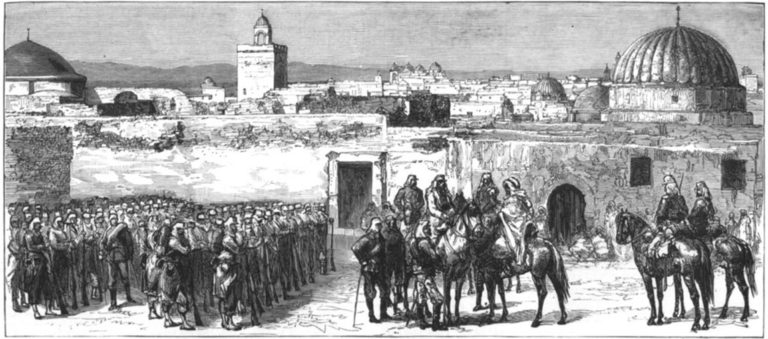
France invaded Tunisia in 1881, placing troops within Tunisia and taking control over the economics and international relations of the Tunisian government. While the Tunisian people attempted to rise against the French, they were, ultimately, defeated and the government, essentially, accepted the French declaration of Tunisia as a protectorate.
Following the fall of Libya’s self-governance to the Ottoman Empire and seeing the heavy influence of the French across the border in Tunisia, the Tunisian leader Ahmed Bey began to modernize and reform Tunisia, with great help from French advisers.
In comparison to Algeria, the Tunisians still maintained a great deal of autonomy, with their own ministers, government structure, and cultural identity. The French had ultimate control, but the Bey was still allowed to serve as the technical leader of the people. This was, incredibly, different from what had happened in Algeria, and the effect of this small amount of freedom is notable: while the Algerians had multiple, violent resistances against the French during the Algerie Française period, the Tunisians had mostly smaller, more peaceful movements for independence, which can be directly attributed to the quality of life and identity that was afforded to the Tunisians.
The Moroccan Protectorate
The final Maghreb country to be colonized by the French was Morocco. The French had never intended on colonizing Morocco, which had been an independent kingdom for years, and only began the colonization process when it became clear that the Moroccan sultan was going to be more sympathetic to the Algerian liberation movement than the French government. The French colonization of Morocco was a protectorate, like the Tunisian colonization, and allowed the traditional makhzen system to exist in duality with the French colonial government. Morocco was divided into Maroc Utile, the environment of Morocco made of urban centers and plains , and Maroc Inutile, the rural areas of Morocco largely inhabited by Amazigh/Berber people. The French imposed laws on Maroc Utile, but allowed the Amazigh/Berbers of Maroc Inutile, to continue to run under their own traditional laws, Isref, and have their own democratic assemblies, Ait Rab3in.
Morocco was divided into Maroc Utile, the environment of Morocco made of urban centers and plains , and Maroc Inutile, the rural areas of Morocco largely inhabited by Amazigh/Berber people.
The French allowed Moroccan traditions and Islamic culture to coexist with French influence, and preserved these aspects of Morocco rather than attempting to eliminate them as they had done in Algeria. The French even encouraged some portions of Moroccan and Islamic culture, paying particular attention to Sufi traditions, including trance music and the celebration of saints. The French did anthropological, sociological, and ethnographical studies in Morocco, and, thus, enriched their own culture with knowledge of Islamic tradition. While there were uprisings against the French, particularly, from the Amazigh/Berbers within the Rif mountains, the French retained control until they exiled the Sultan Mohammed V, after which the Moroccans were able to negotiate their independence.
The verdict
The French colonial efforts were clearly different in each country in North Africa that they inhabited. In particular, the attempt to completely take over Algeria as a part of France was in direct contrast to the generally looser reins given to the Tunisians and Moroccans. As Algeria was France’s first African colony, as well as the largest and nearest to France with the most significant resources, it makes sense that they would attempt to leverage greater control over Algeria. This is, also, reasonable considering that the amount of resources required to rule over Algeria, as well as, eliminate numerous resistance movements within that country would limit the amount of resources France could exert to control Tunisia and Morocco. As the point of the colonies was to make money, having, prohibitively, large costs to colonize would not be beneficial to the French mission. The French, also, realized to a degree that they would not be able to, fully, govern Tunisia and Morocco in addition to France and Algerie Française, which became especially apparent when they lost control of all three colonies following World War II.
As the point of the colonies was to make money, having, prohibitively, large costs to colonize would not be beneficial to the French mission.
The difference in colonization strategy from the French in these three countries has, also, greatly affected each nation in the present day. Tunisia, which did not have a truly strong independent culture regardless because of the Ottoman Empire, has suffered under numerous governmental changes and attempted reforms within the country in the years since the French left. Algeria, which was controlled the most heavily by France, had a violent movement to gain liberty from the French, and continued to be controlled by the army following independence. The Algerian economy has also suffered, as the Algerians nationalized and socialized nearly all of their industrial and agricultural projects, leading to a lack of productivity within the nation. Morocco, which was the least affected and colonized for the shortest time, retained culture and loyalty to the king, which has lead to relatively little instability in the years following independence. Ultimately, French colonization united these three countries with common history, but, also, had devastating effects, particularly in Algeria where the colonization was the most oppressive to the culture and to people.
*Dr. Mohamed Chtatou The Washington Institute
Twitter : @Ayurinu
Bibliography:
Abecassis, Frédéric and Gilbert Meynier, eds. 2008. Pour une histoire franco-algérienne. En finir avec les pressions officielles et les lobbies de la mémoire. Paris: La Découverte.
Amara, Noureddine. 2013. “La nationalité des Touatis, un événement à la mesure d’empire (1901-1830).” Maghreb et sciences sociales 2012: De la colonie à l’État-nation: constructions identitaires au Maghreb. Ed. Pierre-Noël Denieuil. Paris: L’Harmattan. 99-106.
Aouad, Rita. 1994. Les incidences de la colonisation française sur les relations entre le Maroc et l’Afrique noire (c. 1875-1935). Doctoral thesis, Université de Provence.
Aouchar, Amina. 2005. Colonisation et campagne berbère au Maroc. Casablanca: Afrique Orient.
Bantigny, Ludivine. 2012. “Historicités du xxe siècle: Quelques jalons pour une notion.” Vingtième siècle: Revue d’histoire 117 (January-March). 13-25.
Bayart, Jean-François. 2010. Les études postcoloniales, un carnaval académique. Paris: Karthala.
DOI : 10.3917/pe.104.0912
Ben Slimane, Fatma. 2009. Al-ardh wa al-huwiyya, nushū’ al-dawla al-turabiyya fī Tūnis 1881-1974 [Territory and identity: The Formation of the Territorial State in Ottoman Tunisia]. Tunis: Faculté des Sciences Humaines et Sociales de Tunis.
Berque, Jacques. 1957. Leçon inaugurale faite le samedi 1er décembre 1956. Paris: Collège de France.
______. 1978. L’intérieur du Maghreb (xve-xixe siècles). Paris: Gallimard.
Bertrand, Romain. 2006. “Les sciences sociales et le ‘moment colonial’.” Questions de recherche 18. 3-41.
Blais, Hélène. 2007. “Les enquêtes des cartographes en Algérie ou les ambiguïtés de l’usage des savoirs vernaculaires en situation coloniale.” Revue d’histoire moderne et contemporaine 54.4 (October-December). 70-85.
DOI : 10.3917/rhmc.544.0070
______. 2008. “Les représentations cartographiques du territoire algérien au moment de la conquête: le cas de la carte des officiers d’ État-major, 1830-1870.” In L’Empire des géographes. Géographie, exploration et colonisation (xixe-xxe siècles), ed. P. Singaravélou. Paris: Belin. 124-134.
Blais, Hélène, Claire Fredj and Emmanuelle Saada. 2010. “Un long moment colonial: pour une histoire de l’Algérie au xixe siècle.” Revue d’histoire du xixesiècle 41. 7-24.
Bouchène, Abderrahmane, Jean-Pierre Peyroulou, Ouanassa Siari Tengour, and Sylvie Thénault, eds. 2012. Histoire de l’Algérie à la période coloniale (1830-1962). Algiers and Paris: Barzakh/La Découverte.
Branche, Raphaëlle. 2005. La Guerre d’Algérie : une histoire apaisée. Paris, Le Seuil.
______. 2012. “‘Au temps de la France’: Identités collectives et situation coloniale en Algérie.” Vingtième siècle: Revue d’histoire 117 (January-March). 199-213.
Burke, Edmund, III. 1998. “Theorizing the Histories of Colonialism and Nationalism in the Arab Maghrib.” Arab Studies Quaterly 20.2. 5-19.
DOI : 10.1057/9780230623019
Buskens, Léon. 1997. “Commentaires islamiques et codes français: confrontation et accommodation de deux formes de rédaction du droit de la famille au Maroc.” In Droits et sociétés dans le monde arabe: Perspective socio-anthropologiques, eds. Gilles Boetsch, Baudoin Dupret, and Jean-Noël Ferrié. Aix-en-Provence: Presses universitaires d’Aix-Marseilles. 61-86.
Carlier, Omar. 1995. Entre Nation et Jihad : histoire sociale des radicalismes algériens. Paris: Presses de la Fondation nationale des sciences politiques.
Chachoua, Kamel. 2001. L’Islam kabyle: Religion, état et société en Algérie. Paris: Maisonneuve & Larose.
Chantre, Luc, 2007, “L’organisation du pèlerinage à La Mecque: regards croisés franco-britanniques (1880-1930).” In Le fait colonial au Maghreb: Ruptures et continuités, ed. Nadir Marouf. Paris: L’Harmattan, p. 135-145.
Charle, Christophe. 2011. Discordance des temps. Une brève histoire de la modernité, Paris: Armand Colin.
Chérif, Mohamed-Hédi, Abdelhamid Hénia and Hichem Abdessamad. 2008. Itinéraire d’un historien et d’une historiographie : mélanges de Diraset offerts à Mohamed-Hédi Chérif. Tunis: Centre de Publication Universitaire.
Chiffoleau, Sylvia. 2005. “Le pèlerinage à La Mecque à l’époque coloniale: matrice d’une opinion publique musulmane?” In Les pèlerinages au Maghreb et au Moyen Orient: espaces publics, espaces du public, eds. Sylvia Chiffoleau and Anna Madoeuf. Beirut: Institut français du Proche-Orient. 131-163.
Chih, Rachida and Catherine Mayeur-Jaouen. 2010. “Introduction: Le soufisme ottoman vu d’Égypte (XVIe-XVIIIe siècle). In Le soufisme à l’époque ottomane. XVIe-XVIIIe siècle, ed. Rachida Chih and Catherine Mayeur-Jaouen. Cairo: Institut français d’archéologie orientale. 1-55.
Clancy-Smith, Julia. 2006. “Changing Perspectives on Colonialism and Imperialism: Women, Gender, Empire.” In Historians and Historiography of the Modern Middle East, eds. Israel Gershoni and Amy Singer. Seattle: University of Washington Press. 70-100.
______. 2011. Mediterraneans: North Africa and Europe in an Age of Migration, c. 1800-1900. Berkeley and Los Angeles: University of California Press.
Colonna, Fanny. 1983. “Présentation.” In Émile Masqueray, Formation des cités chez les populations sédentaires de l’Algérie. Aix-en-Provence: Édisud. i-xxv.
DOI : 10.3917/leph.071.0001
______. 1995. Les versets de l’invincibilité. Paris: Presses de la Fondation nationale des sciences politiques.
Cooper, Frederick. 2004. “Grandeur, décadence … et nouvelle grandeur des études coloniales depuis les années 1950.” Politix 17.66. 17-48.
DOI : 10.3406/polix.2004.1015
Corriou, Morgan. 2011. Un nouveau loisir en situation coloniale: le cinéma dans la Tunisie du protectorat (1896-1956). Doctoral thesis, EHESS (Paris).
Dakhlia, Jocelyne. 2012. “1830, une rencontre?” In Histoire de l’Algérie à la période coloniale (1830-1962), eds. Jean-Pierre Peyroulou, Ouanassa Siari Tengour, and Sylvie Thénault. Algiers and Paris: Barzakh/La Découverte. 142-149.
______. 1987. “Le sens des origines. Comment on raconte l’histoire dans une société maghrébine.” Revue historique 277/2, no. 562. 401-427.
______. 2008. Lingua franca: Histoire d’une langue métisse en Méditerranée. Arles: Actes Sud.
Deluermoz, Quentin, 2012. “Les formes incertaines du temps: Une histoire des historicités est-elle possible?” Vingtième siècle: Revue d’histoire 117 (January-March). 3-11.
Deprest, Florence. 2009. Géographes en Algérie (1880-1950). Savoirs universitaires en situation coloniale. Paris: Belin.
Diouf, Mamadou. 1999. “Entre l’Afrique et l’Inde: sur les questions coloniales et nationales, écriture de l’histoire et recherches historiques?” In L’historiographie indienne en débat. Colonialisme, nationalisme et société postcoloniale. Paris: Karthala. 5-35.
Dirks, Nicholas B. 1993. “Colonial Histories and Native Informants: The Biography of an Archive.” In Orientalism and the Postcolonial Predicament. Perspectives on South Asia, eds. Carol A. Breckenridge and Peter van der Veer. Philadelphia: University of Pennsylvania Press. 279-313.
Dodman, Thomas. 2011. “Un pays pour la colonie: Mourir de nostalgie en Algérie française, 1830-1880.” Annales. Histoire, Sciences sociales 2011.3. 743-784.
Dot-Pouillard, Nicolas. 2012. “Les révolutions arabes entre césures et remembrances: tiers-mondisme, question palestinienne et utopies chiliastiques.” L’Année du Maghreb 8. 49-65.
El Qadéry, Mustapha. 2007. “La justice coloniale des ‘berbères’ et l’État national au Maroc.” L’Année du Maghreb. 17-37. http://anneemaghreb.revues.org/349; DOI : 10.4000/anneemaghreb.349, § 13.
DOI : 10.4000/anneemaghreb.349
Establet, Colette. 1991. Être caïd dans l’Algérie coloniale. Paris: CNRS.
DOI : 10.3917/cnrs.estab.1991.01
Fromage, Julien. 2012. Innovation politique et mobilisation de masse en “situation coloniale”: un “printemps algérien” des années 1930? L’expérience de la Fédération des Élus musulmans du département de Constantine. Doctoral thesis, EHESS (Paris).
Grangaud, Isabelle. 2008. “Affrontarsi in archivo. Tra storia ottomana e storia coloniale (Algeri 1830).” Quaderni Storici 43.129. 621-652.
______. 2009a. “Masking and Unmasking the Historic Quarters of Algiers: The Reassessment of an Archive.” In Walls of Algiers: Peoples, Images, and Spaces of the Colonial and Postcolonial City, eds. Zeynep Celik and Julia Clancy-Smith. Los Angeles, Getty and University of Washington Press. 179-192.
______. 2009b. “Prouver par l’écriture. Propriétaires algérois, conquérants français et historiens ottomanistes.” Genèses 74. 25-45.
Guha, Ranajit. 2002. “On some aspects of the historiography of colonial India.” Subaltern Studies, vol. 1: Writings on South Asian History and Society. Delhi: Oxford University Press. 37-44.
Hadibi, Mohand Akli. 2008. “Le Groupe d’Études sur l’Histoire des Mathématiques à Béjaïa (GEHIMAB): Une association indépendante à la recherche du patrimoine d’une ville et de sa province dans l’Algérie d’aujourd’hui.” Insaniyat, dossier Regards sur le passé et enjeux de mémoire 39-40, 155-164.
Hathaway, Jane. 1997. The Politics of the Households in Ottoman Egypt: The Rise of the Qazdağlis. New York, Cambridge University Press.
DOI : 10.1017/CBO9780511470738
Hoffman, Katherine E. and Susan Gilson Miller. 2010. Berbers and Others. Beyond Tribe and Nation in the Maghrib. Bloomington: Indiana University Press.
Lambert, David. 2009. Notables des colonies. Une élite de circonstance en Tunisie et au Maroc (1881-1939). Rennes: Presses universitaires de Rennes.
Le Gall, Michael and Kenneth Perkins, eds. 1997. The Maghrib in Question: Essays in History and Historiography, Austin: University of Texas Press.
Liauzu, Claude. 2004. Colonisation. Droit d’inventaire. Paris: Armand Colin.
McDougall, James. 2006. History and the Culture of Nationalism in Algeria. New York: Cambridge University Press.
Merle, Isabelle. 2004. “Les Subaltern Studies.” Genèses 2004.3, no. 56. 131-147. <http://www.cairn.info/revue-geneses-2004-3-page-131.htm>
DOI : 10.3917/gen.056.0131
Messaoudi, Alain. 2010. “Renseigner, enseigner. Les interprètes militaires et la constitution d’un premier corpus savant ‘algérien’ (1830-1870).” Revue d’histoire du xixe siècle 41. 97-112. <http://rh19.revues.org/4049>
Messick, Brinkley. 1993. The Calligraphic State: Textual Domination and History in a Muslim Society. Berkeley: University of California Press.
Oualdi, M’hamed. 2011. Esclaves et maîtres. Les Mamelouks des beys de Tunis du xviie siècle aux années 1880. Paris: Publications de la Sorbonne.
Patrizi, Luca. Forthcoming. “Transmission and Resistance in the Nineteenth-Century Maghreb: Na‘t al-bidâyât wa tawsîf al-nihâyât, by Mâ’ al-‘Aynayn (d. 1910).” In Sufism, Literary Production, and Printing in the 19th Century, eds. Rachida Chih, Catherine Mayer-Jaouen, and Rüdiger Seesemann. Würzburg: Ergon Verlag.
Peirce, Leslie P. 1993. The Imperial Harem: Women and Sovereignty in the Ottoman Empire. New York: Oxford University Press.
Planel, Anne-Marie. 2000, De la Nation à la colonie. La communauté française de Tunisie au xixe siècle d’après les archives civiles et notariées du consulat général de France à Tunis. Doctoral thesis, EHESS (Paris).
Pouessel, Stéphanie. 2010. Les Identités amazighes au Maroc, Paris: Non lieu.
Rahal, Malika. 2012. “Comment faire l’histoire de l’Algérie indépendante?” La Vie des idées. <http://www.laviedesidees.fr/Comment-faire-l-histoire-de-l.html>
Rahem, Karim. 2008. Le Sillage de la tribu. Imaginaires politiques et histoire en Algérie (1843-1993). Paris: Riveneuve éditions.
Raymond, André. 1959. “Tunisiens et Maghrébins au Caire au xviiie siècle.” Cahiers de Tunisie 26/27. 335-371.
El-Rouayheb, Khaled. 2006. “Opening the Gate of Verification: The Forgotten Arab-Islamic Florescence of the 17th Century.” International Journal of Middle East Studies 38.2. 263-281.
DOI : 10.1017/S0020743806412344
Sa’adallâh, Abû l-Qâsim. 1981. Tarîkh al-Djazâ’ir at-thaqâfî. 2 vols. Algiers: SNED.
Sebti, Abdelahad. 1986. “Au Maroc : sharifisme citadin, charisme et historiographie.” Annales E.S.C. 2 (March-April). 433-457.
DOI : 10.3406/ahess.1986.283285
Sheele, Judith. 2010. “Coming to terms with tradition: manuscripts conservation in contemporary Algeria.” In The Trans-Saharan Book Trade : Manuscript Culture, Arabic Literacy, and Intellectual History in Muslim Africa, eds. Graziano Krätli and Ghislaine Lydon. Leiden: Brill. 291-318.
Sibeud, Emmanuelle. 2013. “Review of Ann Laura Stoler, Along the Archival Grain: Epistemic Anxieties and Colonial Common Sense (Princeton: Princeton University Press, 2010).” Annales: Histoire, Sciences Sociales 68.1. 210-212.
Siino, François. 2010. “Reconquérir le temps, nationaliser l’histoire. Variations algéro-tunisiennes.” In Les échelles de la mémoire en Méditerranée, ed. Maryline Crivello. Aix-en-Provence: MMSH. 189-209. <http://halshs.archives-ouvertes.fr/halshs-00555050/fr/>
Singaravélou, Pierre, ed. 2013. Les Empires Coloniaux, xixe-xxe siècle. Paris: Le Seuil.
Stoler, Ann Laura. 2010. Along the Archival Grain: Epistemic Anxieties and Colonial Common Sense. Princeton: Princeton University Press.
______. 1992. “‘In Cold Blood’: Hierarchies of Credibility and the Politics of
Colonial Narratives.” Representations 37. 151-189.
Stora, Benjamin and Mohammed Harbi. 2004. La guerre d’Algérie: 1954-2004, la fin de l’amnésie. Paris: Robert Laffont.
Thénault, Sylvie. 2001. Une drôle de justice : les magistrats dans la guerre d’Algérie, Paris: La Découverte.
______. 2005. Histoire de la guerre d’indépendance algérienne. Paris: Flammarion.
Torre, Angelo. 2007. “‘Faire communauté’: Confrérie et localité dans une vallée du Piémont (xviie-xviiie siècle).” Annales: Histoire, Sciences Sociales 1 (January-February). 101-135.
Vermeren, Pierre. 2002. La Formation des élites marocaines et tunisiennes. Des nationalistes aux islamistes (1920-2000). Paris: La Découverte.
Voguet, Élise. 2003. “L’inventaire des manuscrits de la Bibliothèque de La Grande Mosquée de Kairouan (693/1293-94), une contribution à l’histoire du Mālikisme kairouannais.” Arabica 50. 532-544.
Warscheid, Ismail. 2011. “Comment écrire un passé qui ne soit ni colonial ni classique? Le cas du Tuwât algérien.” In Après l’Orientalisme: l’Orient créé par l’Orient, eds. François Pouillon and Jean-Claude Vatin. Paris: Karthala. 411-424.

Dr. Mohamed Chtatou is a senior professor of business communication at the International University of Rabat -IUR- as well at Mohammed V University in Rabat. He is currently a political analyst with Moroccan, Gulf, French, Italian and British media on politics and culture in the Middle East, Islam and Islamism as well as terrorism.