From Morocco’s Deep Interior To Parliament: The Emergence Of A Peripheral Voice After The 23 September 2026 Elections – Analysis
Key Takeaways:
Morocco’s 23 September 2026 elections gave PAM 97 seats but saw turnout drop to 38.08 percent, revealing a gap between formal legitimacy and weak citizen trust, especially among youth.
Young candidates from peripheral territories are bringing concrete demands on services, jobs and accountability that challenge political jargon, though this has not yet transformed parliamentary practice.
Durable change requires converting that proximity into measurable oversight, stronger regionalisation and transparent budgets, or the peripheral voice risks co-optation and disappointment.
Youth, Political Representation, Territorial Justice, and the Crisis of Institutional Language in Contemporary Morocco
Introduction: When the Peripheries Challenge the Centre
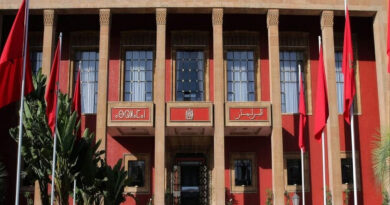
Morocco’s legislative elections of 23 September 2026 open a new chapter in the debate on political representation, the place of young people, and relations between the centre and the peripheries of the Kingdom. Beyond the distribution of seats among political parties, one question deserves particular attention: what does the emergence of young actors who seek to bring the concrete demands of Morocco’s deep interior into Parliament signify, especially when they favour the direct language of social needs over the conventional formulas of political communication? This question concerns more than generational renewal. It touches on the very substance of democratic representation, the ability of institutions to listen to citizens, and the possibility of transforming territorial frustrations into measurable public policies.
The election renewed multiparty competition while revealing the limits of electoral mobilisation. According to the results announced by the Ministry of the Interior, the Authenticity and Modernity Party (PAM) won 97 seats, ahead of the National Rally of Independents (RNI), with 66 seats, Istiqlal, with 65, and the Justice and Development Party (PJD), with 54. The announced turnout was 38.08%, compared with 50.86% in 2021 and 42.27% in 2016 (Ministry of the Interior, Kingdom of Morocco, 2026). These results provide the starting point for the analysis, not its conclusion: the composition of Parliament alone is insufficient to measure the depth of citizens’ trust or the quality of the relationship between elected representatives and those they represent.
A methodological clarification is necessary. The entry of young candidates into electoral competition and the expression of new demands have been documented by the international press, but the claim that a new generation has already transformed the language of Parliament requires separate demonstration. Three phenomena must therefore be distinguished: the entry of young actors into political life, their desire to break with traditional partisan discourse, and their actual ability to change the functioning of the parliamentary institution. These phenomena are related, but they are not interchangeable.
The present analysis draws on official results, reports published before the election, established theoretical works on political representation and social movements, and Morocco’s New Development Model. It also incorporates analysis of abstention on 23 September, which invites us to consider non-participation as an important indicator of the relationship between citizens and institutions, without legally equating it with a vote cast (Chtatou, 2026).
The central argument is as follows: the assertive, demands-driven voice of young people from marginalised territories can help transform Moroccan political representation, provided that its initial strength—its proximity to lived difficulties—is translated into institutional responsibility, parliamentary oversight, and tangible results. The challenge is not merely to bring the periphery into Parliament, but to enable it to influence the definition of national priorities.
1. The Electoral Paradox: A Renewed Parliament Facing Fragile Trust
Electoral figures establish the context in which this political voice must be analysed. The Ministry of the Interior announced a turnout of 38.08%, a decline of more than twelve percentage points compared with 2021. Parliament has 395 seats, distributed among fourteen political parties or groups that secured representation, according to data published by the Inter-Parliamentary Union (Inter-Parliamentary Union [IPU], 2026; Ministry of the Interior, Kingdom of Morocco, 2026). These figures do not, in themselves, demonstrate a constitutional legitimacy crisis, but they make it necessary to question the capacity of political parties to mobilise citizens on a lasting basis.
In my article published on 25 September 2026 in Le Monde Amazigh, “Who Represents the Abstentionists? Abstention as a Silent Vote in Morocco’s 23 September 2026 Legislative Elections” (Chtatou, 2026a), I specifically propose considering non-participation as a political signal that must be taken seriously, while emphasising that it is not legally a vote and does not produce any specific parliamentary mandate. This distinction is essential: abstention may reflect disenchantment, indifference, practical obstacles, or the conviction that no political offering corresponds to a voter’s expectations. It would therefore be mistaken to attribute a single intention to abstentionists.
Low turnout does not, moreover, mean that institutions have no legal legitimacy. Rather, it reveals a possible gap between the validity of procedures and the depth of citizens’ commitment. Elected representatives hold an institutional mandate, but their ability to convince citizens of the value of participation will depend on their capacity to deliver perceptible results. The problem thus lies in the relationship between formal representation and substantive representation: institutions may function in accordance with the rules while struggling to mobilise a significant part of the population.
This tension is particularly visible among young people. In a report published on 22 September 2026, Hajar Elkahlaoui describes candidates seeking to turn demands emerging from Generation Z mobilisations into electoral commitments. These demands concern, in particular, the quality of public services, employment, the equitable distribution of opportunities, and the accountability of elected representatives (Elkahlaoui, 2026). An Associated Press report likewise highlights how difficulties in accessing employment, deficiencies in public services, and a sense of inequality fuel distrust among some young people, while a number of younger candidates attempt to enter a political arena that remains difficult to access (Oubachir, 2026).
These elements support a preliminary conclusion: generational renewal is a possible response to the crisis of representation, but it does not automatically resolve it. Young people may enter institutions without persuading those who remain outside them to participate. Conversely, low electoral turnout does not prevent new forms of engagement from emerging. Parliament’s challenge is therefore to bring these two realities closer together: the existence of actors who wish to transform the system from within and that of citizens who continue to doubt its effectiveness.
2. Morocco’s Deep Interior: The Periphery as an Experience of Inequality
The expression “Morocco’s deep interior” refers here less to an administrative category than to a social and political experience. It encompasses territories and populations for whom access to public services, infrastructure, skilled employment, and decision-making centres remains difficult or unequal. This periphery may be rural, mountainous, oasis-based, peri-urban, or located in small towns where economic prospects remain limited. It is therefore defined not simply by geographical distance from Rabat or Casablanca, but by the actual distance between proclaimed rights and the real opportunities available to exercise them.
This approach helps avoid an oversimplified representation of Moroccan territory that opposes an entirely privileged centre to uniformly neglected peripheries. Disparities also exist within regions and cities themselves. Some rural areas have significant economic or tourism resources, while urban neighbourhoods continue to face unemployment, inadequate transport, or difficulties accessing healthcare. The periphery should therefore be understood as a relationship between territories, resources, and decision-making capacities.
The New Development Model, presented in 2021 by the Special Commission on the Development Model, recognises the importance of territorial convergence, the enhancement of human capital, and the restoration of trust in institutions (Commission spéciale sur le modèle de développement [CSMD], 2021). Its diagnosis emphasises the need to move beyond fragmented approaches to development in order to build a more productive economy, improve public services, and enable citizens to benefit more fully from the opportunities offered by their country. The central issue is now implementation: how can these broad directions be translated into concrete and equitably distributed improvements?
The analysis of the “Morocco of Territories” developed in my work on elections and territorial convergence (Chtatou, 2026b) provides a relevant framework for this question. Development cannot be assessed solely on the basis of the performance of major economic centres, the construction of emblematic infrastructure, or the country’s international visibility. It must also be measured by the opportunities available to inhabitants of less advantaged territories.
Does a school truly function as a public service if children must walk several kilometres to reach it? Is a health centre sufficiently operational if residents must travel to another province to obtain specialised care? Does an investment programme constitute a local success if young people from the region cannot access the jobs it creates? These questions illustrate the difference between the administrative presence of a facility and its social effectiveness.
Territorial justice therefore requires infrastructure to be considered a means of expanding citizens’ real opportunities. In Development as Freedom, Sen (1999) argues that development should not be reduced to the accumulation of wealth, but understood as the expansion of the substantive freedoms available to individuals. Applied to Morocco, this approach leads us to assess public policies according to their capacity to make education, mobility, healthcare, employment, participation, and individual autonomy genuinely possible.
This perspective gives particular significance to the voices of young people from Morocco’s deep interior. When they demand school transport, a functioning hospital, employment prospects, or an accessible administration, they are not simply making sector-specific requests. They are questioning how the state transforms its resources into effective rights. Their discourse thus becomes a critique of the territorial distribution of opportunities.
It would nevertheless be reductive to assume that all peripheries express the same priorities. The needs of the Rif are not the same as those of the High Atlas; the water constraints affecting south-eastern oases differ from those of the agricultural areas of the Souss; and the problems of peri-urban neighbourhoods are not identical to those of small mountain municipalities. A fair territorial policy must therefore combine common national guarantees with interventions adapted to local realities.
Territorial equality does not mean that every region must receive exactly the same investment. It requires differences in geography, cost, and need to be taken into account so that everyone has comparable development opportunities. This is the meaning of differentiated equality: treating territories according to their actual needs without turning their particular characteristics into a permanent justification for inequality.
3. From Political Jargon to an Assertive Voice of Demands
The concept of langue de bois, or political jargon, must be used precisely. It does not refer to all institutional discourse, nor to the necessary use of general concepts in the formulation of public policy. Rather, it describes a form of communication that privileges intentions, consensual formulas, and general promises without specifying responsibilities, deadlines, or expected results.
Expressions relating to the promotion of development, the mobilisation of potential, or the improvement of quality of life may have substantive content. They become problematic when they fail to enable citizens to determine what will actually be accomplished, within what timeframe, with what resources, and under whose supervision. Criticism of political jargon is therefore a criticism of the gap between discourse and action.
The assertive voice of the periphery follows a different logic. It begins with concrete situations and requires those in positions of responsibility to answer specific questions. Instead of speaking only about improving education, it asks why schools lack teachers or why some pupils have no school transport. Instead of promising better healthcare coverage, it questions the availability of doctors, waiting times for treatment, and the distances people must travel. Instead of celebrating investment, it asks what jobs are being created and whether local populations can access them.
This development should not be presented as a transformation that has already been accomplished throughout Parliament. Available sources establish the existence of a generation of candidates demanding more concrete and accountable politics, but they do not yet demonstrate that the discursive practices of the House of Representatives have been transformed as a whole. The distinction between political ambition and actual institutional change must be maintained.
The testimony of young actors gathered by Elkahlaoui (2026) is nevertheless revealing. Some candidates express their rejection of general promises and demand a genuine place in debate, decision-making, and the exercise of responsibility. The issue is therefore not simply to rejuvenate the political class, but to change the standards by which it is judged.
Bourdieu’s (1981) work on political representation sheds light on this phenomenon. The power to represent involves, among other things, speaking on behalf of a group, articulating its interests, and imposing a particular definition of its problems. This delegation can become a source of distance when representatives acquire interests, resources, and codes that separate them from those they claim to represent.
From this perspective, the direct language of prospective young elected representatives can be interpreted as a challenge to professional politicians’ monopoly over the formulation of social problems. The citizens concerned want their experiences expressed without being systematically reformulated as abstract promises. They demand that their representatives understand local realities, explain decisions, and accept responsibility for reporting on results.
However, simplicity of expression does not, by itself, guarantee political quality. Direct language can also oversimplify complex problems, assign blame without evidence, or favour denunciation over solutions. The decisive distinction is therefore not between popular language and institutional language, but between discourse that makes decisions verifiable and discourse that evades evaluation.
A genuine break with political jargon thus requires three things: clearly identifying problems, establishing institutional responsibility, and proposing solutions whose results can be assessed. Only under these conditions can an assertive voice of demands become an instrument of democratic transformation rather than merely a style of communication.
4. Generation Z: Between External Protest and Institutional Participation
Generation Z mobilisations in 2025 helped make visible the frustrations of some Moroccan young people concerning education, healthcare, employment, and the accountability of those in power. As the September 2026 elections approached, these concerns had not disappeared. Elkahlaoui’s report (2026) shows that some young people chose to try to enter electoral politics, while others continued to doubt the ability of political parties to respond to their demands. This diversity of attitudes is essential: Morocco’s youth are neither a unified organisation nor a political actor with a single programme.
In my article “Moroccan Youth and Party-Less Politics: Toward a New Grammar of Civic Participation” (Chtatou, 2026b), I distinguish disengagement from political parties from a lack of interest in politics. My analysis emphasises that young people may remain concerned about social justice, employment, corruption, and territorial inequalities while refusing to regard traditional parties as their principal vehicles of expression. Social media enables them to comment on current affairs, disseminate demands, and coordinate certain actions without formally joining an organisation.
This distinction helps explain why mobilisation outside political parties can coexist with the desire of some young people to become candidates or elected representatives. Their strategies differ, but they may respond to the same problem: the difficulty of translating social concerns into political decisions.
Tilly and Tarrow’s (2015) work on contentious politics shows that social movements do more than express discontent. They formulate public claims, create solidarities, and seek to change power relations. Protest can thus broaden the range of issues that institutions are compelled to examine.
In Morocco, however, the transformation of mobilisation into institutional participation raises a particular difficulty. The street and Parliament operate according to different timelines. Mobilisation often demands a rapid response, whereas parliamentary work involves procedures, negotiations, trade-offs, and budgetary constraints. Protest makes a problem visible, while institutional action must demonstrate its ability to change the policies that produce it.
These two forms of action can reinforce one another. Social movements help bring neglected demands to the fore, while representatives can turn them into parliamentary questions, legislative proposals, budget amendments, and mechanisms for scrutinising government action. This complementarity, however, requires elected representatives to maintain links with citizens and report on their initiatives.
The risk is institutionalisation without transformation. A young elected representative may gain visibility, master parliamentary conventions, and secure a position within party structures without changing the institution’s priorities. Conversely, a representative may use the mandate to raise long-marginalised issues, document deficiencies in public services, and build alliances around territorial reforms.
The difference therefore lies not in the age of representatives, but in how they exercise their mandate. Generational renewal becomes democratic transformation only when it changes practices, priorities, and accountability mechanisms.
5. The Crisis of Political Intermediaries: Who Can Legitimately Speak for the Territories?
Political parties occupy a central place in representative democracies. They select candidates, aggregate interests, develop programmes, and help form majorities. However, when citizens believe that these organisations are dominated by local notables, patronage networks, or leaders who are rarely replaced, their mediating role may lose credibility.
The question is not simply whether young people trust political parties. It concerns the concrete conditions of access to representation: who can secure a party nomination, finance a campaign, mobilise a local network, and become known to voters? Formal equality in the right to stand for election does not guarantee genuine equality of opportunity in gaining elected office.
Oubachir’s report (2026) describes the difficulties encountered by some young candidates, particularly voter scepticism and the obstacles associated with the resources needed to run a campaign. Elkahlaoui’s report (2026) also shows that several politically engaged young people want to move beyond occasional electoral communication and participate meaningfully in political decision-making.
These observations caution against idealising new political actors. A young candidate is not automatically more representative, more competent, or more honest than an experienced elected official. Likewise, a representative’s rural or peripheral origins do not guarantee that they will consistently defend the interests of the territory from which they come. Political legitimacy must be assessed on the basis of practices, commitments, and results.
It would also be mistaken to conclude that political parties have become unnecessary. Digital mobilisation can make problems visible, but it encounters difficulties when it comes to combining diverse demands into a coherent programme, negotiating compromises, and ensuring continuity in public action. Political organisations remain necessary, provided that they democratise their procedures and strengthen their capacity to listen to citizens.
A credible reform should, in particular, improve transparency in candidate selection, open internal leadership positions more widely to young people, reduce the financial barriers to candidacy, and enable party members to participate meaningfully in defining programmes. It should also strengthen parties’ presence in local communities beyond election periods.
A representative from Morocco’s deep interior must therefore meet a dual requirement. They must make demands that institutions have sometimes neglected heard, while demonstrating that they can use parliamentary mechanisms to achieve results. Their legitimacy rests neither exclusively on their origins nor on their generation, but on their ability to connect social experience, institutional deliberation, and public accountability.
6. Territorial Justice: From the Promise of Development to Effective Equality
The assertive voice of demands cannot be understood without examining the material conditions to which it responds. Demands concerning education, healthcare, employment, and infrastructure are not independent of one another. They form a set of opportunities whose absence can have cumulative effects: inadequate school transport encourages school dropout, difficult access to healthcare increases household expenditure, and a lack of skilled jobs accelerates young people’s departure for major cities or abroad.
The New Development Model recognises the need to improve human capital, strengthen social cohesion, and reduce territorial disparities (CSMD, 2021). Its ambition, however, requires moving beyond the announcement of national programmes to examine their actual distribution, quality, and continuity. Public policy cannot be assessed solely by the number of facilities built or the sums announced; it must also be assessed by the tangible improvement it brings to living conditions.
Sen’s (1999) capability approach is particularly useful in this respect. It directs attention to the real freedoms available to citizens, rather than merely their formal rights or the resources theoretically available to them. In a territory where schools are far away, public transport is scarce, and healthcare services are inadequate, opportunities for individual development remain limited even when rights are constitutionally recognised.
The requirement of territorial justice does not mean that every region should receive identical treatment. On the contrary, it means that policies must take geographical, economic, and social differences into account. The cost of providing services may be higher in mountainous or sparsely populated areas; water and infrastructure needs may differ between oases, agricultural plains, and urban peripheries. A fair allocation of resources must therefore be responsive to needs and accumulated deficits.
The concept of “differentiated equality” expresses this requirement: guaranteeing comparable rights and opportunities while adapting the instruments to local realities. Morocco’s deep interior does not necessarily demand that all territories be developed according to a single model. It demands recognition of their particular characteristics and genuine opportunities for residents in education, healthcare, employment, and mobility.
An assertive voice of demands can contribute to this transformation by making deficits visible and requiring those responsible to explain their decisions and trade-offs. But it must also move beyond a mere juxtaposition of local demands. Territorial justice requires a national convergence strategy, transparent financing mechanisms, and effective coordination between the state and territorial authorities.
7. Advanced Regionalisation: Bringing Decisions Closer to Citizens
Advanced regionalisation provides an institutional framework for bringing public action closer to the territories. Yet decentralisation does not automatically guarantee that local authorities possess the financial resources, human expertise, and administrative capacity necessary to meet local needs. A responsibility transferred without adequate means risks remaining merely theoretical.
For young representatives from peripheral territories, this question is essential. When they demand a health centre, a school, an employment programme, or a road, the relevant responsibilities may fall under several institutions. A lack of coordination can lead each administration to refer responsibility to another, leaving citizens without a clear answer.
The national Parliament can help reduce this opacity by questioning ministers about territorial disparities, examining budgets, and scrutinising the implementation of public policies. It can also propose reforms that clarify the allocation of responsibilities and strengthen the capacities of territorial authorities.
Young elected representatives could thus transform local demands into thoroughly documented cases. A healthcare claim could be supported by data on travel distances, waiting times for treatment, and available staffing. A demand concerning education could draw on data about school dropout, transport, and staffing needs. This approach would make it possible to move beyond the confrontation between general promises and general denunciations.
Regionalisation should therefore not be regarded solely as a question of administrative organisation. It is also an issue of democratic accountability. Citizens must be able to identify the institution responsible, know what resources have been allocated to a project, and verify the results achieved. Bringing decision-making closer to the territories makes sense only if proximity renders public action more accessible and easier to scrutinise.
8. The Risks of Co-optation and the Conditions for Lasting Transformation
The emergence of an assertive voice of demands does not guarantee that institutions will be transformed. The first risk is symbolic co-optation: parties may highlight the presence of young candidates to demonstrate that they are modernising, while retaining closed selection procedures and unchanged practices. In this case, generational novelty becomes a communications asset rather than a driver of change.
The second risk is territorial fragmentation. Local demands are legitimate, but they may compete with one another if they are not linked to a national reflection on priorities and resources. A representative must defend their territory while also contributing to policies that benefit society as a whole.
The third risk is oversimplification. Territorial problems often result from economic, geographical, administrative, and historical factors. Direct language can make them visible, but it must also explain their causes and propose feasible solutions. Without such rigour, denunciation risks replacing analysis.
Finally, the relationship between elected representatives and their constituents may weaken after the election. The constraints of parliamentary life, party obligations, and the pursuit of visibility can gradually distance representatives from the populations whose demands they championed. To limit this risk, territorial consultation must be institutionalised, regular reports on the exercise of parliamentary mandates must be published, and commitments made during the campaign must be monitored.
Five priorities can therefore be identified: making commitments measurable; democratising candidate selection; strengthening the resources of territorial authorities; improving budgetary transparency; and establishing an ongoing relationship between elected representatives and citizens. These measures alone cannot guarantee the restoration of trust, but they can reduce the gap between formal representation and effective accountability.
Conclusion: Making Parliament a Space for Territorial Convergence
The emergence of an assertive voice of demands carried by young people from Morocco’s deep interior reveals the tensions running through Moroccan political representation. It expresses a demand for proximity, territorial justice, and accountability that cannot be satisfied merely by changing faces or repeating electoral promises. The elections of 23 September 2026 produced a new parliamentary composition, but the turnout of 38.08% is a reminder that the ability of institutions to secure citizens’ engagement remains a major challenge (Ministry of the Interior, Kingdom of Morocco, 2026).
My modest contributions (Chtatou, 2026a, 2026b) place this phenomenon within a broader reflection on the transformation of political participation. Abstention may signal distance between citizens and party organisations, while digital mobilisation enables some young people to express themselves without joining traditional structures. These forms of participation are neither equivalent nor necessarily convergent, but both invite us to question the effectiveness of mechanisms of representation.
The assertive voice of the peripheries could help renew Morocco’s political contract if it retains three characteristics: a firm grounding in everyday realities, the ability to turn demands into concrete proposals, and an obligation to report on results. It must also avoid the pitfalls of symbolic co-optation, populist oversimplification, and the fragmentation of territorial interests.
Morocco’s deep interior is not a periphery external to the national project. It is an essential component of Moroccan society, and its expectations raise questions about the distribution of resources, the effectiveness of public services, and the coherence of development. The Rif, the High Atlas, the Souss, the Oriental, the south-eastern oases, and urban peripheries do not necessarily demand the same policies, but their inhabitants are entitled to comparable opportunities in education, healthcare, employment, mobility, and participation.
Democratic transformation will therefore not consist simply of replacing one political generation with another. It will require changes to candidate-selection practices, the strengthening of advanced regionalisation, greater budgetary transparency, and the use of parliamentary oversight as a genuine instrument of territorial justice.
The decisive question is ultimately simple: will the citizens who raised these demands observe a verifiable improvement in their living conditions? If the answer is yes, the peripheral voice will have contributed to renewing political representation. If it remains without effect, it risks becoming another disappointed promise.
The real challenge is therefore not merely to bring Morocco’s deep interior into Parliament, but to ensure that its realities exert a lasting influence on the definition of national priorities. The periphery is no longer asking only to be heard: it is demanding that institutions be held accountable for their decisions.
References
Bourdieu, P. (1981). La représentation politique : Éléments pour une théorie du champ politique. Actes de la recherche en sciences sociales, 36–37, 3–24. (https://doi.org/10.3406/arss.1981.2105)
Chtatou, M. (2026a, September 25). Qui représente les abstentionnistes ? L’abstention comme vote silencieux aux législatives marocaines du 23 septembre 2026. Le Monde Amazigh.
Chtatou, M. (2026b, September 15). Moroccan youth and party-less politics: Toward a new grammar of civic participation. Morocco World News.
Commission spéciale sur le modèle de développement. (2021). Le Nouveau Modèle de développement : Libérer les énergies et restaurer la confiance pour accélérer la marche vers le progrès et la prospérité pour tous. Kingdom of Morocco.
Elkahlaoui, H. (2026, September 22). Morocco’s youth take Gen Z protest demands to the polls. Al Jazeera.
Inter-Parliamentary Union. (2026). Morocco: House of Representatives election results, 23 September 2026. IPU Parline.
Ministry of the Interior, Kingdom of Morocco. (2026, September 24). 2026 legislative elections: PAM leads with 97 seats according to preliminary results—Minister of Interior. Maroc.ma.
Oubachir, A. (2026, September 20). Young people in Morocco split over whether politics can deliver change as election draws near. Associated Press.
Sen, A. (1999). Development as freedom. Alfred A. Knopf.
Tilly, C., & Tarrow, S. G. (2015). Contentious politics (2nd ed.). Oxford University Press.
Dr. Mohamed Chtatou is a senior professor of business communication at the International University of Rabat -IUR- as well at Mohammed V University in Rabat. He is currently a political analyst with Moroccan, Gulf, French, Italian and British media on politics and culture in the Middle East, Islam and Islamism as well as terrorism.