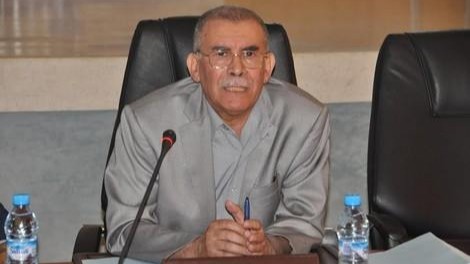
Mohamed Boudhan: Is Law 55.19 Enough to Improve the Administration’s Performance for the User?
There is no doubt that Law 55.19 on simplifying administrative procedures and formalities, whose application began at the end of March 2021, is evidence of a sincere and serious will to ease citizens’ suffering from the hell of the administration, which demanded of them, with what that costs in time, money, travel and nerves, many unnecessary documents and papers to obtain an ordinary, simple certificate, not concerning an investment or the subdivision of land to build multi-storey buildings. And despite some formulas and terms in this law, which express wishes more than legal obligation and carry a preachy load more than a legal one, such as: “The relationship between the administration and the user rests on the following general principles: 1. trust between the user and the administration…” (paragraph 1 of Article 4), “7. concern for continuous improvement of the quality of services provided to users” (paragraph 7 of Article 4)…, it has advanced content in protecting the user from the administration’s tyranny and oppression. It is not only about simplifying procedures and doing away with a set of documents the administration used to ask of the user: this law establishes a clear contract between the administration and the user, which imposes on the former a set of commitments toward the user, as Title II sets out, which means this user knows in advance what is due to him and what he owes in his relationship with the administration, which no longer treats him according to its fickle mood, depending on what is available and the circumstances, as with the time it took to produce the administrative decision, which could take a week, a month, months or more. This is what Law 55.19 corrected, fixing the maximum time for producing the decisions users request (paragraph 4 of Article 4 and paragraph 1 of Article 16).
All this, as a legal text, is fine, very fine.
But for the ordinary citizen, there is no simplification in administrative procedures and formalities, since he has to wait, to submit a request to renew his national identity card, for an appointment that can be as long as three months or more, followed by the time taken to process his request; wait two months or more to renew his driving license or his car’s registration card; and wait a long time among flocks of users in post offices (or outside in the public street, as the measures against “Covid-19” contagion required) until his turn comes to send or collect a registered letter…
In the example of renewing the national identity card, the problem may seem to be booking an appointment to submit the file for this renewal request. That is not so. On the contrary, this booking, if the “Covid-19” pandemic imposed it, must become compulsory and be applied by all administrations whatever the circumstances. So where is the problem? The problem is the long length of the appointment wait when it exceeds two months or more. And what is the solution to cut the length of the wait? The solution is to provide enough human resources. The shortage of staff who receive requests to issue and renew the national identity card in the centers set aside for this is large and appalling. This makes, on the one hand, these staff work in exhausting and uncomfortable conditions as they receive huge numbers of requests every day, leaving them not even the chance to answer incoming calls from their families. And makes, on the other hand, those requesting the national identity card wait longer to obtain it, because the length of the appointment is added to the length of processing. Without providing enough human resources in proportion to the growth in users’ requests, the citizen perceives no simplification in the administration’s handling of his requests.
This shortage of human resources also explains why renewing the registration card or the driving license is a veritable piece of real torment for citizens. Among the manifestations of this shortage and its consequences is that updating the data for a particular file on the website of “NARSA” (National Road Safety Agency) lags behind what has been completed in the provincial directorates of Equipment and Transport. This misleads the person following the stages of his request for a registration card or driving license on the “NARSA” site, as this card or license may be ready and he must obtain an appointment to collect it, yet the site’s data tell him that “the file has been received and is now being processed”, as happened to the author of these lines, whom the “NARSA” site still (we are today on May 16, 2021) misleads that his file is in progress while the new registration card the subject of that file is in his pocket.
The source of such problems from which the user suffers is therefore the dreadful shortage of human resources, as I said. If the offices of the provincial directorates of Equipment and Transport are always crowded with users to the point that the limited number of staff cannot meet their requests on time, what of after more than nine hundred thousand new files were added to the normal number of requests, according to the figures announced by the Ministry of Equipment and Transport after the Highway Code completed its tenth year? Has the ministry increased the number of staff in proportion to this huge number of new files for registration cards and driving licenses?
Even if we regard the national identity card, the registration card and the driving license as documents that do not fall within the concept of an administrative decision, although they are “a document the administration hands the user at his request in accordance with the legislative and regulatory texts in force”, according to the definition of the administrative decision in paragraph 2 of Article 2 of Law 55.19, citing these documents to show the scale of what citizens go through to obtain them is meant to show that what the user suffers when he goes to a public service to request a service or an administrative document is not only being asked to certify his signature and for certified true copies… (which Article 7 of Law 55.19 abolished, a measure limited to public institutions that does not apply to transactions between individuals nor between them and private institutions such as banks and various companies), but that he suffers more from long waiting, heavy crowding and slow processing. A suffering that the new procedures decided by Law 55.19 are not enough to ease, since its cause is the shortage of human resources, as I explained. On the other hand, the services the citizen visits more and more are of this type, that is, like the offices of the Ministry of Equipment and Transport, the national identity card offices, the tax offices, the civil status offices, the post offices…, that is, the offices from which a service is requested and not necessarily an administrative decision. And improving the performance of such public services for the user’s benefit needs not only simplifying administrative procedures and formalities, but needs more the provision of enough human resources, as I pointed out.
And among the additional sufferings of citizens who visit these services is waiting among flocks of users without priorities being regulated by order of arrival, which causes quarrels among users, each claiming to have been there before the other. Law 55.19, out of consideration for users, should have required the administration, as is practiced in some public and private administrations, to hand out ordinal numbers to users according to their priority, or to have the electronic device for issuing such ordinal numbers to avoid chaos and quarrels among users… Booking appointments on the site of the service concerned does not help avoid this chaos and these quarrels, because such appointments, as I found, most often set the time for the user to be at the administration by the hour and not by the minute. And when he arrives at the administration at the set hour he finds that a whole group of users have come at the same hour, which is also their appointment, obtained from the administration’s site, according to the latter’s estimate of the number of users the office concerned can receive within a full hour. Hence the pressing need remains for ordinal numbers that regulate priorities, unless appointments can be given by the minute and not only by the hour. The administration’s failure to step in to organize priorities in the waiting of queues of users expresses its disdain for this user whom it leaves to face chaos and disorder alone. And its stepping in to regulate priorities is proof of its respect for the citizen and user who visits its services.
That is why Law 55.19 is very useful to investors and businessmen who request, for example, import and export licenses, or housing subdivisions, or public transport… As for the citizen who is scorched by the chaos of waiting at the doors of administrations to submit a file, collect a certificate or ask for a service, his benefit from this law is very limited and goes no further than his exemption from certifying signatures and from copies true to the originals. He will notice the effect of this law only if the administration provides enough staff to speed up the pace of processing his requests within reasonable times, especially for documents and services that the provisions of Law 55.19 do not cover because they are not administrative decisions, like those we mentioned, such as the national identity card, registration card and driving license, and postal and tax services… This law could have been more useful, and for everyone, had it concerned all public services of the various administrations, and not only administrative decisions, whose concept paragraph 2 of Article 2 narrowed by focusing, using “in particular”, which indicates specification, on “authorizations, licenses, permits, certificates, accreditations and orders”.
Arabic version | French version
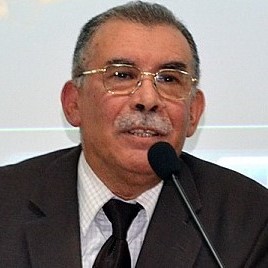
Mohamed Boudhan was an Amazigh writer, thinker, researcher and activist from the Rif, and publisher of the newspaper Tawiza. He was the author of many valuable books and articles on Amazigh identity. May he rest in peace.