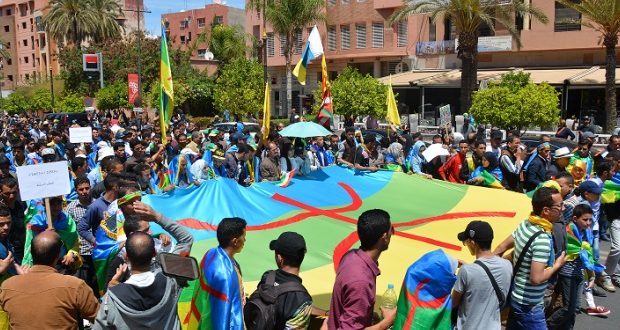
Amazigh language officialization faces institutional hurdles in Moroccan public policy
Academic researchers have emphasized the need to move beyond the mere legal recognition of the Amazigh language toward a genuine activation of its official status within institutional structures and public policies. During a public debate, participants called for an end to ad hoc and “charitable” approaches to Amazigh culture and arts, favoring instead an institutional vision that ensures cultural and territorial equity.
These recommendations were formulated during a national conference titled “Amazigh: Policies and Institutions,” organized by the Agadir Summer University on Saturday, November 7, 2026. The meeting served as a platform to diagnose the current state of the Amazigh language and examine the prospects for its integration into government sectors, particularly education, media, and culture.
Assessing the progress of ongoing projects, writer and human rights activist Ahmed Assid stated that achievements in the education and information sectors have not exceeded 14% to date. This figure comes despite the 22 years since the political recognition of the Amazigh language and 15 years since its constitutionalization. For Assid, these data confirm that the integration of the language into the gears of the state continues to stall.
Assid attributed this slow progress to persistent “retrograde mindsets” combined with a lack of government political will. He called for strong political commitment to accelerate the implementation of the official status of the Amazigh language, insisting that its promotion must be linked to the country’s overall development process rather than being reduced solely to its cultural and linguistic dimensions.
Regarding finances, Assid noted that the current government has allocated 2 billion dirhams to support the Amazigh language through affirmative action, compared to the 1 billion dirhams allocated by the previous administration. However, he pointed out that previous budgets were not invested optimally due to a lack of clear priorities. In this regard, he stressed the importance of building a genuine partnership between the government and civil society and defining precise priorities for funding to ensure support reaches those effectively working in Amazigh culture.
Assid also criticized the methods used to deploy the Amazigh language within public administrations, specifically regarding reception agents responsible for communicating with the public. He argued that outsourcing these roles to external companies has led to professional instability and other dysfunctions. Furthermore, he reported “practices described as racist and contemptuous within certain administrations,” despite the vital role these agents play in bridging the gap between the administration and Amazigh-speaking citizens.
For his part, artist and researcher Omar Aït Saïd urged a break from the “charitable” approach toward artists and Amazigh creation. He advocated for the institutionalization of cultural action through public policies that place Amazigh identity at the heart of the national cultural project to establish true equity.
Aït Saïd criticized the fact that Amazigh music is often treated as something external to Moroccan song. He proposed adopting the term “Moroccan song in the Amazigh expression” to consolidate its place on the national artistic scene and end its isolation from the country’s other musical expressions.
In the same vein, Aït Saïd called for the creation of regional radio stations across the Kingdom’s various regions, particularly in Drâa-Tafilalet, to document and broadcast local musical heritage. He emphasized the importance of transcribing oral Amazigh heritage, not only for preservation but also for its pedagogical integration into the educational system.
He also demanded the inclusion of Amazigh music and instruments, such as the ribab and the loutar, in conservatory curricula. He further called for strengthening the professional and digital training of Amazigh artists and groups to enhance their production and improve their presence on the artistic stage.
Finally, Aït Saïd addressed the impact of artificial intelligence on Amazigh music, noting that it presents both opportunities and challenges. He called for the development of technical tools that respect the specific nuances of the language, its pronunciation, and its melodies to avoid the production of digital content that lacks authenticity.
The interventions of Ahmed Assid and Omar Aït Saïd converged on the need to move past the stage of simple legal recognition. They argued for the institutional activation of the Amazigh language in public policies through mechanisms that support creators and producers, ensuring they benefit from allocated resources to achieve cultural and territorial justice.
Arabic version | French version