Backlash after Amazigh Teacher Recruitment Exam Excludes Amazigh Language Specialists and Opens the Door to Graduates from Other Disciplines
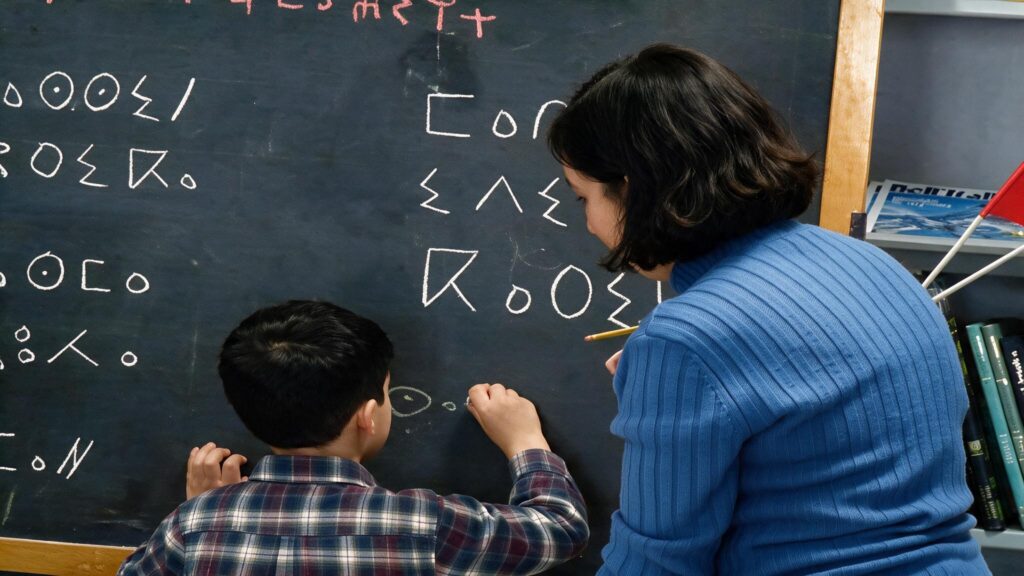
The announcement of recruitment exams for the November 2026 session at the Regional Centers for Education and Training Professions (CRMEF) has reignited debate over policies of discrimination and exclusion affecting the Amazigh language in Morocco. Candidates and educational advocates have voiced sharp criticism regarding the eligibility criteria and the content of written exams for primary-level Amazigh teaching positions.
This grassroots rejection aligns with a parliamentary inquiry from the Party of Progress and Socialism (PPS) group in the House of Representatives. In a written question to the Minister of National Education, Preschool, and Sports, the PPS group warned of the consequences of “flawed selection criteria and their impact on equal opportunity and the quality of the education system.”
Educational stakeholders are particularly concerned about the introduction of what they describe as “intruder” subjects in the exams. Candidates for Amazigh teaching roles are now required to pass written tests in Arabic or French, mathematics, and science, alongside their specialized subject, its pedagogy, and education sciences.
The National Coordination of Amazigh Language Teachers in Morocco has questioned the “pedagogical value of subjecting a specialist teacher to exams in subjects they will neither study at the regional centers nor teach after graduation.” The organization emphasized that “this type of testing hinders the recruitment of genuine expertise in Amazigh linguistics and culture, while undermining the national project to generalize the language.”
In this context, Member of Parliament Mohamed Qecha asked the minister for the “scientific and pedagogical justifications for integrating foreign languages, mathematics, and science into a specialized recruitment contest.” He noted that this approach “undermines the principles of equity and equal opportunity.” The MP also asked whether the ministry is prepared to revise the exam framework to focus strictly on linguistic skills, applied linguistics, culture, Amazigh pedagogy, and education sciences, in line with the graduates’ future professional duties.
From an academic perspective, Tayeb Amkroud, a specialist in the Amazigh language, believes that opening the 1,000 available positions to degree holders from various disciplines is a “pedagogical inconsistency.” He questioned “whether the same criteria would be applied to recruitment for Arabic, French, or English language positions.”
The specialist explained that current criteria favor non-specialists who score highly in scientific subjects over Amazigh studies graduates, who are better equipped to master the language’s lexical, phonetic, and syntactic structures. He warned that the six-month training period is insufficient to provide non-specialists with the necessary pedagogical skills. He advocated for restricting the contest to those with degrees in Amazigh studies and focusing the exams on the core subject and education sciences.
Sarah Zoubir, national coordinator of the National Coordination of Amazigh Language Teachers, stated that “the recruitment process suffers from major flaws, primarily the derisory number of positions allocated to the sector.” She argued that 1,000 posts are nowhere near enough, noting that “the effective implementation of language generalization requires significant human resources to match the more than 8,000 primary schools.” She added that such limited recruitment would prevent the ministry from meeting legal and organic deadlines, while perpetuating “improvisation and poor management.”
Sarah Zoubir also highlighted the repercussions of the “new formula” for the contest, noting that “including subjects unrelated to the specialty leads to blatant exclusion and injustice against Amazigh studies graduates, who possess the academic and linguistic legitimacy to teach the subject.” She called on the ministry to “immediately withdraw this formula and return to the previous model, which limited exams to the specialty and pedagogy, consistent with other disciplines across different educational levels.”
The union official clarified that the coordination does not oppose hiring graduates from other fields given the urgent need for teachers, but insisted that this requires “intensified training programs for university graduates and bilingual teachers already in schools.” She stressed the need to “provide justice to Amazigh studies graduates by exempting them from pre-selection—due to their limited numbers—allowing them to proceed directly to the exams, while utilizing other candidates after they have qualified.”
This alignment between grassroots actors and parliamentarians places the Ministry of National Education under pressure to harmonize selection criteria with the goals of generalizing the Amazigh language. Practitioners continue to wait for a revision that ensures “exams focus on specialized skills.”
Arabic version | French version