The claim of scientific absence and ideological dominance in Amazigh discourse
We have already noted that those who oppose their own Amazigh identity—national and identity-based “defectors,” in the original sense of the Arabic word jins—no longer justify their rejection by brandishing the “Berber Decree” scarecrow. This is especially true since it has been proven that the decree is nothing more than a historical fabrication with no basis in reality. However, rather than conceding to the progress and achievements of the Amazigh cause, they have simply shifted their tactics. They have moved away from the direct use of the “Berber Decree” myth to rely on its corollaries: pretexts that appear, on the surface, to be disconnected from the original fable that once fueled hostility among some Moroccans toward their Amazigh identity. Yet the goal remains unchanged: to “convince” others of the validity of rejecting, excluding, and opposing Amazighité.
Among these new arguments are those from detractors who claim to rely on science and objective academic research. They criticize activists within the Amazigh movement who, they argue, defend the cause from ideological, emotional, and subjective positions, lacking any scientific rigor. Consequently, they advise those interested in the issue to prioritize a purely scientific approach: treating the Amazigh issue as a subject for linguistic or anthropological study to understand culture, social structures, and their evolutionary factors. They thus advocate for keeping Amazigh demands strictly within a cultural and linguistic framework, rejecting any politicization or ideologization which they deem incompatible with the very nature of the subject.
This call to handle the Amazigh issue scientifically, far from politics and ideology, has a certain appeal. It is a recurring discourse among many researchers and academics who view the positions of Amazigh activists with suspicion—if not outright regarding them as outbursts of ideological extremism. These academics include Amazigh speakers working within the Amazigh studies departments established in several Moroccan universities. Some even go so far as to reject the Tifinagh alphabet, viewing it as an ideological choice rather than a scientific one. The fact that these voices come from the academic world gives their discourse an aura of seriousness and credibility, while simultaneously devaluing the weight of the Amazigh movement’s activist discourse.
No one disputes that scientific knowledge is a noble and necessary pursuit. It is all the more so when it comes to Amazigh identity, which has long been surrounded by untruths, rumors, and historical distortions. There is therefore no objection to adopting a scientific methodology to explore the depths of Amazigh language, culture, history, and society. What I wish to analyze, however, is the relationship between science and ideology in this specific context. Since ideology is often perceived as thought detached from reality—in contrast to science, which is seen as aligned with it—it becomes easy for some to conclude that Amazigh discourse is “unscientific,” relying as it does on ideological premises that would not withstand academic scrutiny.
Distinguishing between the realms of science and ideology:
Yet is it really so easy to free oneself from ideology, especially on a topic like Amazigh identity, when ideology surrounds us like the air we breathe, to borrow the words of Raymond Aron? It is certainly possible to set aside ideological influence, or at least mitigate it, by making a clear distinction between the domain of science and that of ideology. For instance, the scientific method requires a nuclear physicist to strictly observe the rules of research and perform all necessary experiments to test hypotheses regarding atomic energy, without worrying about potential harmful uses of that energy to the detriment of humanity, society, or states. By contrast, politicians, philosophers, preachers, environmentalists, and civil society organizations are entirely within their rights when they call for banning harmful applications of atomic power, particularly its use as a weapon of mass destruction. Even when nuclear physics specialists themselves campaign for a ban on nuclear weapons, the essential point remains that inside their laboratories and during their research, they adhere strictly to the rigorous rules of the scientific method.
This same reasoning applies to Amazigh identity once a distinction is made between its study as a scientific object and the advocacy for its development, promotion, and the universalization of its teaching. From a linguistic perspective, for example, although the human sciences are not exact sciences in the same vein as physics, the Amazigh language constitutes a scientific object whose study is subject to the methods of linguistic research. This work is conducted regardless of the stance taken by activists for the Amazigh cause concerning the results obtained, whether those findings satisfy them or provoke their rejection. At the same time, these very activists have the right to champion Amazigh identity and to demand that policymakers—rather than linguists—take decisions regarding its mandatory and standardized teaching, as well as its mandated use within state institutions as an official language. It goes without saying that this aspect, specific to Amazigh demands, is not independent of the ideological and political spheres. Should these demands therefore be abandoned and consigned to oblivion on the pretext of their political nature, so that Amazigh identity can finally obtain its “certificate of scientific recognition,” as claimed by proponents of an exclusively “scientific” approach to the issue?
The exclusion of Amazigh identity was ideological and political, not scientific:
We might potentially give credence to this “scientistic” plea if the exclusion of Amazigh identity in the wake of independence had been based on scientific truths. We are not referring here to the individual erasure practiced by certain Amazigh people themselves since their conversion to Islam—when they renounced their original roots to claim Arab descent—but rather to an exclusion that became official state policy. Had this marginalization been based on research or laboratory experiments proving the necessity of combating or excluding Amazigh identity, the argument would hold weight. Yet, no serious scientific research has ever reached such a conclusion. The exclusion of Amazigh identity thus remained the product of purely ideological motivations, and its implementation stemmed from strictly political decisions. This “identity mutation” imposed on Moroccans, aimed at substituting an Asian Arab affiliation for their African Amazigh roots—what is known as the policy of Arabization, which is unrelated to the Arabic language itself—was not decided following a scientific “discovery” mandating a change in the country’s collective identity. It is a purely ideological project adopted by the state, which turned it into a public policy backed by colossal resources. Similarly, the designation of Morocco as “Arab” is not the result of a scientific study demonstrating the necessity of such an affiliation, but rather an ideological conviction imposed through political decrees.
The exclusion of the Amazigh language, therefore, has nothing to do with science or scholarship; from start to finish, it represents the political implementation of ideological convictions. Yet, when advocates of Amazigh identity demand redress and recognition—calling for an end to this exclusion through compulsory and standardized education that would allow its use as an official state language—proponents of a supposedly “scholarly” discourse retort that these demands are ideological and political. They argue instead that the Amazigh language should remain confined to a strictly scientific and cultural framework. However, even if one were to concede that Amazigh demands lean more toward ideology and politics than science and culture, this would be both natural and logical. It is merely a reaction to an exclusion that is itself ideological and political, having no connection whatsoever to genuine scholarship. Despite such claims, these demands are grounded in numerous scientific truths. They demonstrate, for instance, that the “Berber Dahir” is nothing more than a historical fabrication designed to demonize and exclude Amazigh identity. Furthermore, they show that the supposed “Arab” origin of the Amazigh people and their language is a laughable myth, flatly contradicted by both historical and linguistic evidence.
If Amazigh demands appear heavily laden with ideology, it is because science proves powerless when it comes to dismantling exclusion. Scientifically demonstrating that the Amazigh language possesses its own grammar, vocabulary, and rules of conjugation, or that disparities among its spoken dialects stem from its exclusion from schools and prohibition in oral communication within administrations and public institutions, is not enough to prompt decisions to teach it and encourage its official use. Why? Because its exclusion from schools and institutions was not a scientific decision, as I have emphasized, but a political one stemming from ideological conviction. Granting the Amazigh language access to education, public administration, courts, and state institutions is not dictated by scientific knowledge; rather, it is governed by ideological convictions translated into political decisions. This dimension, inherent to ideology and politics, is bound in this context to state will. Only when the state demonstrates a serious and genuine will to promote Amazigh identity will scientific knowledge step in to guide it toward the best methods of implementation. The political will of the state, which answers the question of “why?” through its ideological convictions and directions, precedes scientific knowledge, which answers the “how?” of implementation. This explains why the immense scientific work accomplished by IRCAM since 2003 on the Amazigh language—standardizing grammar and spelling, compiling general and specialized dictionaries, preparing textbooks and learning materials, and defining pedagogical methods—has remained a dead letter. Despite its scientific rigor and the total absence of ideological discourse, this work was never put into practice. Why? Because the state, influenced by an anti-Amazigh ideology, does not wish to teach the Amazigh language to Moroccans and has therefore taken no political decision to implement such instruction. Consequently, the available scientific knowledge regarding language pedagogy remains useless as long as this instruction remains non-existent. If, however, state will to generalize this teaching were to emerge following a shift in ideological stance, existing linguistic and pedagogical studies would be mobilized to bring this project to fruition under the required conditions. The results of scientific research on Amazigh identity thus remain fruitless as long as the state feels no need to draw on them to promote the language, hampered as it is by a lack of political will rooted in an anti-Amazigh ideology.
Amazigh identity between object and subject:
This is why the call to build a scientific discourse on Amazigh identity—by breaking away from what proponents of this approach consider a harmful ideological and political discourse—is, in reality, a truth hijacked for fallacious ends. This call is inherently sound, as science benefits Amazigh identity just as it does any cause. However, it is perverted because its practical application would confine Amazigh identity to the status of a mere “object” of study, research, and scientific knowledge. It would then be approached with the clinical detachment required for a foreign subject with which one has no emotional or identity-based connection, as scientific objectivity demands. This is precisely what colonial studies did, producing rigorous research on the Amazigh language, the history of the Imazighen, their customs, social structures, songs, and oral heritage. However, all these works were dictated by an approach that treated Amazigh identity as a mere external subject. The goal was never for the Amazigh language to be taught as a mandatory and unified subject to all Moroccans, for it to become the language of the state and written production, or for the state itself to adopt a collective Amazigh identity. It was perceived only as a “thing” that piqued intellectual curiosity, or as a source of scientific findings intended for colonial use.
Maintaining Amazigh identity as an object, under the pretext of liberating it from the dominant ideological discourse of activists, amounts to reducing it to a dead entity—devoid of soul, consciousness, or will, and disconnected from human, social, and historical dynamics. Why? Because what links Amazigh identity to people, society, and history, and what breathes life and will into it, is not its position as a passive object, but its status as a positive and active “subject.” This is a subject that shapes history rather than being its mere object, that creates events rather than being a mere footnote, and that becomes the author of political decisions rather than their victim. The Amazigh movement fights for Amazigh identity to reclaim its natural place, not as a passive object, but as an active and influential subject capable of becoming the language of the state and of power, as well as the collective identity of that state, in harmony with the logic of history, geography, and demography. As for scientific research on Amazigh identity, despite its capital importance, it only reinforces its status as an object—a mere “thing” among others—when the state lacks the political will to use research results to develop, rehabilitate, and promote it. The discourse of the Amazigh movement, criticized by proponents of “scientism” for its ideological and political nature, is the only one carrying demands capable of elevating Amazigh identity from object to subject. We must not forget that what forced the constitutional recognition of the Amazigh language was not scientific research, but the Amazigh discourse and its demands, laden with ideology and politics. Furthermore, it can be argued that one of the historical errors of the Amazigh people, particularly since 1912, was the failure to develop political demands rooted in an Amazigh ideology. Consequently, France cannot be blamed for shaping an Arab state only to hand it over to its “Arab” heirs in Morocco, as it was faced only with political demands driven by an Arabist ideology. France ultimately granted these requests by establishing an Arabist state, as requested, before officially handing it over following the “Aix-les-Bains” negotiations in August 1955. Thus, the political exclusion of Amazigh identity, which began in 1912, was finalized.
Arabic version | French version
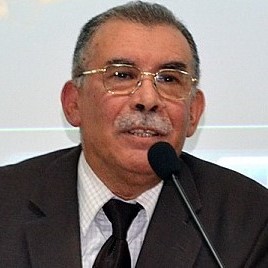
Mohamed Boudhan was an Amazigh writer, thinker, researcher and activist from the Rif, and publisher of the newspaper Tawiza. He was the author of many valuable books and articles on Amazigh identity. May he rest in peace.