Gadi Eisenkot And The Moroccan Moment In Israeli Politics: Are Moroccans Set To Rule Israel?
Key Takeaways:
On 7 November 2026 President Herzog tasked Gadi Eisenkot with forming a government after 67 Knesset members recommended him over Netanyahu, though he still needs a viable coalition within 28 days.
Eisenkot’s Moroccan Jewish family origins (Marrakech and Casablanca) and possible Amazigh surname etymology are presented as a potential milestone in Mizrahi advancement from social periphery to the centre of Israeli political power.
The article stresses that any premiership would be symbolic rather than ethnic rule, and that policy outcomes, coalition stability and responses to security and social challenges will determine its historical significance.
Introduction: A Moroccan Moment in Israeli Political History
The political emergence of Gadi Eisenkot as the candidate entrusted with forming Israel’s next government represents a potentially significant moment in the country’s social and political history. On 7 November 2026, President Isaac Herzog announced his intention to give Eisenkot, leader of the Yashar party, the mandate to form a government. The announcement followed consultations in which factions representing 67 members of the Knesset recommended Eisenkot, compared with 46 who recommended Benjamin Netanyahu; a further seven members did not endorse either candidate. The formal presentation of the mandate was scheduled for 8 November. Under Israel’s Basic Law: The Government, the designated candidate has 28 days to form a government, with a possible extension of up to 14 days. The distinction is important: receiving the mandate is not equivalent to becoming prime minister. Eisenkot must still negotiate a viable coalition capable of securing parliamentary confidence.
President+2
Yet the significance of this development extends beyond the immediate arithmetic of coalition formation. Eisenkot’s family origins connect him to the Moroccan Jewish community, one of the most important components of Israel’s Mizrahi population. His father’s reported origins in Marrakech and his mother’s in Casablanca place his family history within the long experience of Moroccan Jewry, whose members migrated to Israel in substantial numbers during the twentieth century. His rise from a family of Moroccan immigrants to the highest levels of the Israeli military establishment and subsequently to national political leadership raises a broader question: does his candidacy signal the culmination of a long process through which Jews of North African and Middle Eastern origin have moved from the social periphery towards the centre of Israeli political power?
The title, “Are Moroccans Set to Rule Israel?”, is deliberately provocative. It does not suggest that an ethnic community is about to take control of the Israeli state, nor that Moroccan-origin Israelis constitute a homogeneous political bloc. Rather, it draws attention to a historical transformation in the composition of the country’s political elite. For decades, the most influential institutions of the Israeli state were dominated by Jews of European origin, while many immigrants from North Africa and the Middle East experienced social marginalisation and cultural devaluation. Eisenkot’s potential premiership would therefore carry significance beyond his individual career: it would represent a possible milestone in the long struggle for Mizrahi recognition, representation and equality.
Moroccan Jewry: A Heritage of Cultural Pluralism
Understanding the significance of Eisenkot’s background requires an appreciation of the historical depth and cultural complexity of Moroccan Jewry. Jewish communities existed in North Africa long before the establishment of the modern State of Israel, and Moroccan Jewish life developed through centuries of interaction with the country’s Muslim and Amazigh populations. Its history cannot be reduced to a narrative of religious separation. It was shaped by local languages, regional economies, commercial networks, religious institutions and cultural exchanges, as well as by episodes of tension, insecurity and political change. Moroccan Jewish identity emerged within a plural society in which Jewish, Arabic, Amazigh, Andalusian and Mediterranean influences intersected.
The Jewish communities of Marrakech, Fez, Meknes, Casablanca, Essaouira, Tangier and numerous smaller towns and villages developed distinctive traditions. Urban communities maintained religious schools, synagogues, charitable institutions and commercial networks, while rural Jewish populations frequently lived in close proximity to Amazigh-speaking communities. Their everyday experiences were consequently shaped by regional conditions and local relationships. Moroccan Jewish history should thus be approached as part of the wider history of Moroccan society rather than as an isolated communal experience. Ben-Layashi and Maddy-Weitzman’s historical overview is particularly useful in showing how Jewish communities were embedded in the political and social transformations of Morocco over a long period.
Taylor & Francis Online+1
The mass migration of Moroccan Jews to Israel after the establishment of the state was similarly complex. It was influenced by Zionist mobilisation, decolonisation, Moroccan nationalism, economic aspirations, family networks, security concerns and changing political circumstances. Migration did not have one uniform explanation or follow a single trajectory. Aviad Moreno’s research on northern Moroccan Jewish emigration demonstrates the importance of interpersonal, communal and transregional networks in shaping decisions to migrate, while Yolande Cohen’s work highlights the interaction between colonial and Zionist forces and the personal memories of displacement. The experience varied across regions, families and generations.
The scale of this migration was considerable. According to the National Library of Israel, approximately 270,000 Moroccan Jews immigrated to Israel between 1948 and 2016, making Morocco the largest source of Jewish immigration among the Islamic countries. This demographic transformation profoundly affected both Moroccan society and Israel. For those who migrated, it involved not merely relocation but the reconstruction of family life, language, social relationships and cultural identity. Eisenkot’s family history belongs to this larger movement of people whose experiences helped transform the demographic and cultural character of Israel.
The Amazigh Dimension of the Name Eisenkot
One of the most distinctive elements of Eisenkot’s Moroccan heritage is the possible Amazigh origin of his family name. The surname appears in several related forms, including Azancot, Azencot, Azenkot, Azincot and Azincout. The ANU Museum of the Jewish People’s surname database identifies these variants as deriving from the Berber, or Amazigh, name Azenkadh, meaning “gazelle”. It also associates the name with geographical and tribal references in southern Morocco, including the Azza Izenkadh around the Tata oasis and the Oulad Izenkadh of Aït Djemel. This provides a credible historical basis for connecting the surname to the Amazigh linguistic and cultural environment of Morocco.
The proposed Tifinagh rendering, ⴰⵣⴰⵏⴽⵓⵜ (Azankut), offers a visual representation of the name in the writing system associated with Amazigh languages. However, scholarly caution is necessary. The historical surname forms and their proposed Amazigh etymology should be distinguished from a modern phonetic transcription into Tifinagh. The spelling ⴰⵣⴰⵏⴽⵓⵜ should therefore be presented as a proposed rendering, not as a historically attested family inscription or an unquestionably definitive reconstruction. The association with “gazelle” is supported by the ANU database, but the exact linguistic pathway between the historical Amazigh form and the modern surname would benefit from further specialist philological and genealogical research.
The cultural significance of this possible etymology is nevertheless substantial. It reminds us that Moroccan Jewish identity cannot be understood exclusively through the categories of Arab and Jewish, or Sephardic and Mizrahi. Moroccan Jewry developed within a multilingual and multicultural environment in which Amazigh languages and regional customs played an important role. Jewish communities in parts of Morocco shared geographical environments, commercial networks and everyday cultural practices with their Amazigh neighbours, while maintaining distinctive religious institutions and communal identities. A surname preserving an Amazigh linguistic trace would therefore offer a small but revealing example of the historical interweaving of Jewish and Amazigh experiences.
The possible meaning “gazelle” also provides an evocative symbolic connection with the natural and cultural landscape of North Africa. More importantly, it illustrates how family names can preserve traces of language and belonging across generations, even after migration and linguistic adaptation. Eisenkot’s surname thus becomes a point of entry into a larger discussion about the persistence of Moroccan cultural heritage within Israeli society. Its significance is not that it determines his political identity, but that it illuminates the layered historical origins of that identity.
The Ashkenazi–Mizrahi Divide and the Historical Struggle for Recognition
Eisenkot’s potential political ascent must also be situated within the historical relationship between Ashkenazi and Mizrahi Jews. Ashkenazi Jews originated principally in Central and Eastern Europe, whereas Mizrahi Jews came from the Middle East and North Africa. Although neither category is culturally homogeneous, the distinction became socially and politically consequential in Israel, particularly during the first decades after independence. The institutions of the new state were strongly influenced by European Jewish elites, many of whom had been central to the pre-state Zionist movement and the Labour establishment. Immigrants from North Africa and the Middle East entered a society whose political, cultural and administrative structures were already shaped by these dominant groups.
The process of integration was often difficult. Many Mizrahi families were settled in peripheral development towns or transit camps, where they faced limited economic opportunities, inadequate housing and weaker access to influential institutions. Their languages, religious customs, music and social traditions were sometimes regarded as less prestigious than the European cultural norms associated with the established elite. The result was a persistent gap between formal citizenship and substantive social recognition. Mizrahi Jews were fully part of the Israeli polity, but many experienced cultural devaluation and unequal access to the institutions through which national prestige and political influence were distributed.
The historiography of this experience is complex, and scholars disagree about the extent to which state settlement policies reflected deliberate ethnic discrimination or the practical difficulties of rapid immigration and nation-building. Research by Aziza Khazzoom, for example, examines the relationship between ethnicity, human capital and the placement of immigrants in development towns, while Oren David Kalman offers a more qualified interpretation of the emergence of Mizrahi enclaves, emphasising policy limitations and demographic developments rather than assuming a single deliberate strategy. Such debates underline the need to avoid simplistic explanations while recognising the structural inequalities that shaped Mizrahi experience.
The marginalisation was not merely economic. It involved the social status of cultural identity and the unequal distribution of symbolic power. The public representation of North African Jews through stereotypes contributed to a hierarchy in which European cultural practices were often treated as synonymous with modernity. The response of Mizrahi intellectuals, activists and political leaders was therefore not simply a demand for better material conditions. It was also a demand for dignity, recognition and the right to participate in defining Israeli national culture.
Eisenkot’s career challenges this historical hierarchy in a particularly visible way. His rise to become Chief of the General Staff demonstrated that a person from a Moroccan family background could reach the highest level of one of the state’s most prestigious institutions. His subsequent political emergence carries that trajectory into civilian life. Nevertheless, individual advancement does not automatically eliminate structural inequality. The significance of his candidacy lies in its capacity to symbolise a broader change in the boundaries of political legitimacy, not in any assumption that the historical Mizrahi question has been resolved.
The 1977 Mahapach: A Political Turning Point
The 1977 electoral victory of Menachem Begin and the Likud, widely known as the Mahapach, or upheaval, was a decisive moment in Israeli political history. It ended the long dominance of the Labour movement and brought a new political formation to power. Its importance, however, extended beyond the alternation of governments. The victory reflected a significant shift in the relationship between social groups and political institutions, particularly the growing political mobilisation of Mizrahi voters who felt alienated from the established Labour elite.
Begin’s political appeal was partly based on his ability to address the grievances of communities that believed they had been marginalised by the dominant political order. The Likud offered an alternative to Labour’s institutional and ideological dominance, and its electoral success drew support from voters whose dissatisfaction was rooted in social as well as political experience. Moroccan Jews formed an important part of this transformation, although they should not be treated as a uniform voting bloc. Their political preferences, like those of other Israeli communities, have varied according to generation, class, religion, geography and ideological orientation.
The 1977 upheaval also had consequences for religious politics and the development of Mizrahi political organisation. Nissim Leon’s research, discussed in the special issue of Israel Affairs devoted to the Mahapach, highlights the subsequent transformations within religious political communities, including developments that contributed to the emergence of Shas as a significant representative of Sephardi and Mizrahi ultra-Orthodox voters. The upheaval thus opened political space for new forms of mobilisation and representation.
The legacy of 1977 is essential to understanding Eisenkot’s present position. It initiated a long process through which Mizrahi voters and politicians increasingly shaped national politics. Yet political influence did not immediately translate into complete social equality. The transformation was gradual, uneven and contested. Eisenkot’s possible premiership would therefore represent not an isolated event but a further stage in a historical process that began decades earlier.
Electoral Geography and the Moroccan Political Legacy
The political influence of Moroccan-origin Israelis is also connected to the geography of migration and settlement. Many immigrant families were directed towards peripheral regions and development towns, particularly in the north and south. These areas often had fewer economic opportunities and less access to the institutions concentrated in Israel’s metropolitan centres. Over time, geographical marginality became intertwined with social identity and political mobilisation. Research on Mizrahi political activity in development towns has shown how demands for a fairer distribution of public resources and greater local representation became important elements of political participation.
ScienceDirect+1
Eisenkot’s upbringing in Eilat adds a geographical dimension to his biography. The city’s location at Israel’s southern extremity places it outside the traditional political and cultural centres of the country. His family’s Moroccan origins and his experience of growing up in a peripheral city connect his personal trajectory to the broader history of immigrant integration and regional inequality. Nevertheless, geography does not mechanically determine political attitudes. Residents of peripheral communities hold diverse political views, and shared ancestry does not guarantee common electoral behaviour.
The history of Moroccan-origin political leadership demonstrates this diversity. David Levy, whose family came from Morocco, became a major figure in the Likud and served as foreign minister and deputy prime minister. His career challenged the assumption that the highest political offices would remain the preserve of the established European-origin elite. His ability to mobilise voters from disadvantaged communities made him an important figure in the political transformation associated with the 1977 upheaval. His life and career became emblematic of Mizrahi social mobility and political representation.
Amir Peretz, born in Boujad, represents another trajectory. His rise within the Labour movement and his subsequent leadership of the party demonstrated that Moroccan-origin politicians were not confined to the political right. His career connected Moroccan Jewish identity with labour politics, social justice and the centre-left. Aryeh Deri, born in Meknes, represents yet another path through his leadership of Shas, a movement that became a major political vehicle for religious and socially conservative Mizrahi constituencies. Together, these figures demonstrate that Moroccan-origin political identity is not synonymous with a single ideology. It has found expression through the right, the centre-left and religious politics.
Eisenkot’s emergence adds a new dimension to this legacy. His authority derives not primarily from a traditional party machine or a religious constituency, but from his military career and his national profile as a former Chief of the General Staff. If he becomes prime minister, he would join a history of Moroccan-origin political leadership while potentially taking it to a new institutional level. His significance would lie in the convergence of military authority, political leadership and a family history rooted in Moroccan Jewish migration.
Military Authority and the Question of Political Leadership
Eisenkot’s military career is central to his political standing. He served in the Golani Brigade and advanced through successive command positions before becoming Chief of the General Staff in 2015. His career included senior operational responsibilities and leadership of the Northern Command. His appointment to the highest military position was significant not only because of his professional achievements but also because he became the first person of Mizrahi background to occupy that office.
The Israeli military has historically played a role extending beyond national defence. It has been an institution of social integration, professional advancement and national prestige. Military service has enabled individuals from immigrant and peripheral backgrounds to enter influential networks and acquire authority. At the same time, the military reflects the wider political conflicts of Israeli society, including disputes over occupation, security, the Palestinian question and the use of force.
Eisenkot’s military career should therefore be evaluated without romanticising it. His record, including his association with the Dahiya doctrine and his command responsibilities during periods of Israeli-Palestinian confrontation, forms part of the political legacy that any future government led by him would inherit. Moroccan ancestry does not automatically make a leader more moderate or more conciliatory. Nor does a Mizrahi background determine a particular position on the Palestinian question, regional security or relations with neighbouring states.
The distinction between symbolic representation and political ideology is fundamental. Eisenkot’s possible premiership would be historically significant because of the background he represents, but the substance of his leadership would have to be assessed through his policy decisions, coalition agreements and conduct in office. His family history cannot substitute for political scrutiny.
Morocco, Israel and the Cultural Significance of a Shared Heritage
Eisenkot’s Moroccan origins also invite reflection on the relationship between Morocco and Israel. This relationship has a history that predates the formal normalisation agreement announced in December 2020 within the framework of the Abraham Accords. It has been shaped by the historical presence of a substantial Jewish community in Morocco, the migration of Moroccan Jews to Israel, discreet diplomatic and security contacts, and the continuing importance of Moroccan Jewish heritage in the collective memory of both societies.
The normalisation process opened opportunities for diplomatic engagement, economic cooperation, tourism, technology, academic exchanges and cultural initiatives. It also formalised a relationship whose human foundations had existed for generations through family connections, religious traditions and shared historical memory. Moroccan Jews in Israel constitute an important human bridge between the two countries, although their political identities and individual attitudes cannot be assumed to be uniform. The relationship is consequently more complex than a conventional diplomatic partnership: it contains historical, cultural, religious, strategic and personal dimensions.
Morocco’s recognition of its Jewish heritage is an important part of this relationship. The preservation of synagogues, cemeteries, pilgrimage sites and museums, alongside the constitutional recognition of the Hebrew component of Moroccan identity, reflects an official commitment to presenting Jewish history as an integral part of the national narrative. This does not mean that historical relations were free of tension or that contemporary social attitudes are uniform. Rather, it demonstrates the political and cultural importance that the Moroccan state attaches to the preservation of its plural heritage.
A Moroccan-origin prime minister in Israel could potentially strengthen the symbolic dimension of bilateral relations. His family background might encourage greater attention to Moroccan Jewish history and provide opportunities for educational, cultural and academic exchanges. Nevertheless, ancestry alone cannot determine foreign policy. Israeli governments operate according to security priorities, domestic political constraints and international alliances, while Morocco must balance strategic cooperation with Israel against its longstanding support for Palestinian rights and its political and religious attachment to Jerusalem. As argued in the analysis of the Moroccan-Israeli geostrategic relationship, the durability of the partnership depends on the interaction between historical affinity and contemporary strategic interests (Chtatou, 2023).
Beyond Ethnic Symbolism: The Real Test of a Political Transformation
The possibility of Eisenkot becoming prime minister raises a fundamental question about the relationship between ethnic representation and democratic transformation. His appointment would be a powerful symbolic event, but symbolism alone cannot resolve the historical inequalities experienced by Mizrahi communities. The real significance of his leadership would depend on whether it translated into substantive improvements in social inclusion, regional development, educational opportunity, institutional representation and economic equality.
It would also be misleading to interpret his emergence as the political victory of a unified Moroccan constituency. Israelis of Moroccan origin have diverse political preferences and social experiences. Some support the Likud, others Shas, centrist parties or the centre-left. Their choices reflect a complex combination of religious beliefs, socioeconomic interests, security concerns, generational differences and ideological commitments. Moroccan ancestry is an important element of their collective history, but it does not erase their political diversity.
The same caution applies to the expression “Moroccans ruling Israel”. Democratic politics should not replace one ethnic hierarchy with another. The objective should be a political order in which individuals can attain leadership without their origins functioning as either an obstacle or an automatic qualification. Eisenkot’s candidacy is significant precisely because it challenges the historical assumption that the highest levels of Israeli leadership are naturally associated with a particular cultural background.
His immediate political challenge, however, remains the formation of a stable coalition. Although 67 members of the Knesset recommended him to receive the mandate, those recommendations do not automatically constitute a governing majority. The support of Arab-led parties, the positions of religious parties, disagreements over military conscription and competing political priorities complicate coalition negotiations. The Associated Press and the Financial Times have both highlighted the difficulty of reconciling these competing interests, including the possibility of external Arab-party support, negotiations with ultra-Orthodox parties or a broad unity government.
The political test is therefore whether Eisenkot can transform his electoral and institutional legitimacy into a government capable of governing effectively. If he succeeds, his leadership will be judged not only by its historical symbolism but by its response to the principal challenges confronting Israel: national security, democratic stability, social inequality, religious-secular relations, relations with Arab citizens, the Palestinian question and Israel’s international standing.
Conclusion: From the Moroccan Mellah to Jerusalem
Gadi Eisenkot’s emergence as the politician entrusted with the first opportunity to form Israel’s next government represents a potentially important moment in the history of Moroccan Jewish political integration. His family origins connect him to a community whose migration and settlement contributed profoundly to the demographic and cultural transformation of Israel. His military career demonstrates the growing presence of Mizrahi Israelis in the most influential state institutions, while his political emergence raises the possibility that the descendants of Moroccan immigrants may reach the highest executive office.
The historical importance of this development becomes clearer when viewed against the background of Moroccan Jewish migration, the Ashkenazi–Mizrahi divide and the political upheaval of 1977. The Mahapach opened new opportunities for Mizrahi mobilisation and helped reshape Israeli party politics. Figures such as David Levy, Amir Peretz and Aryeh Deri subsequently demonstrated the diversity of Moroccan-origin political leadership. Eisenkot’s possible premiership would represent a further stage in this process, bringing a Moroccan family background into the very centre of national executive authority.
The possible Amazigh origin of the surname adds a particularly compelling cultural dimension. The ANU Museum of the Jewish People identifies Azancot and related forms with the Amazigh name Azenkadh, meaning “gazelle”. The proposed Tifinagh transcription ⴰⵣⴰⵏⴽⵓⵜ (Azankut) offers a visual expression of this possible linguistic inheritance, while the distinction between the documented surname variants and the modern transcription must remain clear. This connection recalls the historical interweaving of Jewish and Amazigh communities in Morocco and challenges any interpretation of Moroccan Jewish identity as culturally uniform or detached from the wider North African environment.
Ultimately, the question “Are Moroccans set to rule Israel?” is less about ethnic power than about historical recognition. It invites reflection on how a community once perceived as peripheral has become increasingly visible in the political and institutional life of the state. If Eisenkot succeeds in forming a government, his premiership would not erase the inequalities experienced by earlier generations, nor would it automatically produce a more inclusive or conciliatory political order. Its significance would depend on what he does with the authority entrusted to him.
The journey from the Moroccan mellah to Jerusalem is therefore not simply a story of migration and political advancement. It is a story of cultural memory, social transformation, institutional integration and the renegotiation of national belonging. Eisenkot’s possible rise to the premiership would give this history a powerful contemporary expression. It would demonstrate that Moroccan Jewish history is not a marginal chapter in the story of modern Israel, but an integral part of its evolving political identity.
Eisenkot’s potential premiership should be understood as a milestone in the historical incorporation of Moroccan and wider Mizrahi communities into Israel’s political leadership, rather than as the beginning of ethnic rule. His possible Amazigh surname heritage adds a valuable cultural dimension, connecting contemporary Israeli politics to the plural Jewish, Amazigh and North African history of Morocco.
References
Ben-Layashi, S., & Maddy-Weitzman, B. (2010). Myth, history and realpolitik: Morocco and its Jewish community. Journal of Modern Jewish Studies, 9(1), 89–106. (https://doi.org/10.1080/14725880903549293?utm_source=chatgpt.com)
Chtatou, M. (2023). The Moroccan-Israeli geostrategic relationship: From a harmonious past to a promising future. Orbis, 67(2), 228–246. (https://doi.org/10.1016/j.orbis.2023.03.006?utm_source=chatgpt.com)
Cohen, Y. (2019). Zionism, colonialism, and post-colonial migrations: Moroccan Jews’ memories of displacement. Contemporary Review of the Middle East, 6(3–4). (https://doi.org/10.1177/2347798919872835?utm_source=chatgpt.com)
Kalman, O. D. (2021). From development towns to ‘Mizrahi enclaves’ – was it Mapai’s intentional policy? Middle Eastern Studies, 57(2), 327–341. (https://doi.org/10.1080/00263206.2020.1833323?utm_source=chatgpt.com)
Khazzoom, A. (2005). Did the Israeli state engineer segregation? On the placement of Jewish immigrants in development towns in the 1950s. Social Forces, 84(1), 115–134. (https://doi.org/10.1353/sof.2005.0106?utm_source=chatgpt.com)
Leon, N. (2018). Aftershocks of the 1977 Mahapach (upheaval) and their effect on religious politics in Israel. Israel Affairs, 24(6), 944–957. (https://doi.org/10.1080/13537121.2018.1530429?utm_source=chatgpt.com)
Moreno, A. (2020). Beyond the nation-state: A network analysis of Jewish emigration from northern Morocco to Israel. International Journal of Middle East Studies, 52(1), 1–21. (https://doi.org/10.1017/S0020743819000916?utm_source=chatgpt.com)
National Library of Israel. (n.d.). Moroccan Jewry.
ANU Museum of the Jewish People. (n.d.). Azencot: Origin of surname.
Lebel, U., Fuksman-Sha’al, M., & Orkibi, E. (2018). ‘Mahapach!’: The Israeli 1977 political upheaval—Implications and aftermath. Israel Affairs, 24(6), 939–943. (https://doi.org/10.1080/13537121.2018.1530428?utm_source=chatgpt.com)
President of the State of Israel. (2026, November 7). President Herzog concludes consultations and announces he will task Gadi Eisenkot with forming a government.
Associated Press. (2026, November 8). Israel’s president taps opposition candidate Eisenkot to form a government, in setback for Netanyahu.
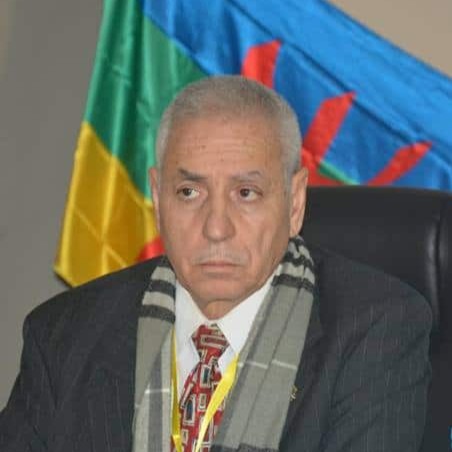
Dr. Mohamed Chtatou is a senior professor of business communication at the International University of Rabat -IUR- as well at Mohammed V University in Rabat. He is currently a political analyst with Moroccan, Gulf, French, Italian and British media on politics and culture in the Middle East, Islam and Islamism as well as terrorism.