National Federation of Amazigh Associations Proposes 30 Commitments to Parties Ahead of Elections
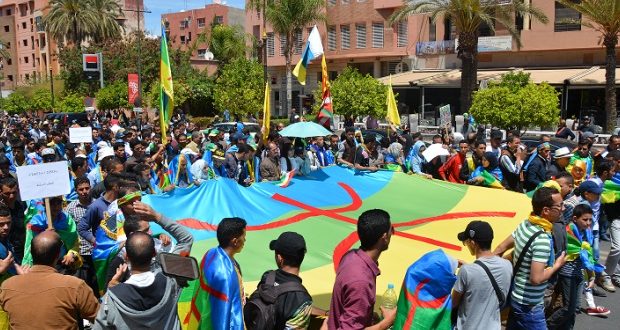
With Morocco’s legislative elections set for September 23, 2026 just a month away, the National Federation of Amazigh Associations has called on political parties to make the Amazigh cause a priority by incorporating a set of language- and culture-related commitments into their electoral platforms.
The organization laid out 30 legal and legislative commitments aimed at ensuring the effective implementation of the Amazigh language’s official status and its integration into public life. Among its demands is the use of the Amazigh language and the Tifinagh script in campaigns and electoral materials.
The Federation stressed the need to generalize Amazigh-language instruction in both public and private education, extend it to preschool, and broaden its reach to Moroccans living abroad. It also called for revising laws that restrict the language of the justice system to Arabic, amending nationality laws and cultural and artistic support legislation, and creating a national observatory to combat discrimination and implement relevant United Nations recommendations.
The group’s demands also include implementing Article 6 of Organic Law No. 04.16 on the National Council of Languages and Moroccan Culture, and strengthening the presence of Amazigh in audiovisual and print media by revising the specifications governing television and radio broadcasters to ensure Amazigh-language programming holds a central place across media outlets.
The Federation further called for purging public spaces, school curricula, and official discourse of expressions it describes as carrying “racist and exclusionary connotations,” such as “Arab Maghreb” and “Berber Dahir,” while urging that affirmative action be applied in policymaking and that measures be adopted to prevent material and immaterial dispossession affecting Amazigh tribes, in order to preserve Amazigh toponymy and halt the Arabization of its surroundings.
The organization also demanded an end to the exclusion of Amazigh language and culture among the diaspora, the application of equal treatment between the two official languages in decisions concerning Moroccans abroad, and greater support for Amazigh literature and the arts, including an end to the marginalization of Amazigh writers and artists and a larger share for them in the Ministry of Culture’s budget.
Among its final demands, the Federation called for working toward the creation of a union of the peoples of North Africa and the Sahel, continuing efforts to restore Amazigh’s historical standing in the region, and amending the second paragraph of Article 9 of Law No. 62.06 on Moroccan nationality.
Source: Amadal Amazigh – Jamal Bourfissi
Arabic version | French version