The MP and Tamazight: When Linguistic Hegemony Becomes a Standard for Judging Others
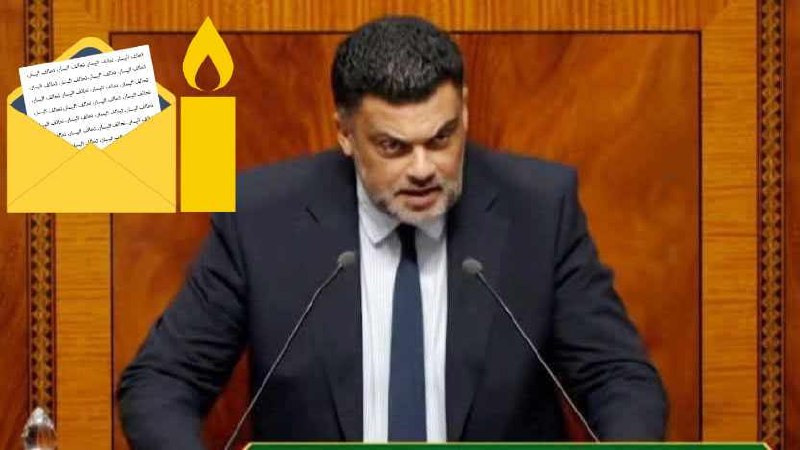
The intervention by MP Omar Mahmoud Benjelloun during the debate on the government program in the House of Representatives was not merely a critique of the session chair’s communication skills, as he later tried to justify. In my view, it raised an issue that goes far beyond a politician’s linguistic fluency, touching on the social and ideological representations that define the relationship between language, influence, legitimacy, and national identity. This issue is all the more glaring given the sharp, harsh, and hurtful tone of his remarks, as well as the undertones that, beyond political criticism, question the legitimacy of how others express themselves.
What is immediately striking about this episode is the contradiction between demanding high-quality official communication and the style of criticism chosen. While the MP certainly has the right to question government performance, including the clarity of discourse and accuracy of expression, this right does not shield him from scrutiny over his own communicative stance. Political speech is defined not only by words, but also by tone, rhythm, context, and the meaning it conveys to the listener. Raising one’s voice does not prove the strength of an argument, nor does harshness confer any additional legitimacy on what is said. Paradoxically, this criticism of government communication became a practice that itself lacked the restraint it demanded from others.
However, the most crucial issue lies in the implicit assumption that a specific accent or pronunciation serves as a yardstick for judging a speaker’s linguistic, or even political, competence. From a sociolinguistic perspective, there is no single “natural” accent that acts as an absolute benchmark for correct pronunciation in a living language. Languages manifest in multiple social and regional uses; their pronunciation patterns vary according to individuals’ socialization, regional origins, and educational and cultural backgrounds. What is often presented as proper or refined pronunciation is merely a variant that acquired normative status through specific historical and institutional processes.
As Pierre Bourdieu demonstrated in his 1982 work Language and Symbolic Power (Ce que parler veut dire), legitimate language does not gain acceptance solely through its linguistic value; it is bound up with social and political conditions that confer recognized authority on certain usages. Dominant elites, through the state, schools, civil service, and the media, help elevate their own accent, pronunciation, and vocabulary into standard norms of legitimate discourse. Thus, linguistic features associated with specific social positions become universal standards against which the speech of others is judged. This does not mean that linguistic codification or standardized rules for institutional communication are inherently illegitimate, but turning a difference in pronunciation into a sign of inferiority or incompetence is a discriminatory practice rooted in social hierarchy rather than linguistic necessity.
Consequently, criticizing the session chair for her accent or pronunciation—if that was indeed the core of the objection—cannot be considered an objective assessment of her political performance. A government official should be challenged on the clarity of their ideas, the coherence of their program, the accuracy of their data, and their ability to explain their choices, rather than their adherence to a phonetic model favored by cultural and political elites. Confusing communication competence with compliance to a dominant accent reveals the persistence of an elitist view of language that uses linguistic variation as a pretext for social devaluation.
This issue takes on a particular dimension in Moroccan society, where Arabic and the Amazigh language coexist in their diverse forms alongside a multitude of accents rooted in the country’s social and regional history. Demanding that everyone conform to a single model of pronunciation does not necessarily reflect a desire for quality communication; rather, it risks reproducing power dynamics that turn certain speech patterns into signs of social distinction and others into marks of marginality. Defending equality is incompatible with mocking linguistic differences or using them as a yardstick for judgment.
This perspective is inextricably linked to the question of identity raised by the MP’s remarks. He used the expression “our official language, namely the language of Dhad, Arabic,” a phrasing that reduces Morocco’s constitutional linguistic reality to a single language, despite Article 5 of the Constitution recognizing both Arabic and the Amazigh language as official languages. The issue is not the defense of Arabic, which is entirely legitimate, but its implicit positioning as the sole linguistic benchmark for Moroccans. This monolithic tendency, which symbolically marginalizes diversity, raises questions about the ability of certain leftist discourses to free themselves from the Arab nationalist legacy that has long shaped their vision of national identity.
Historically, this legacy cannot be understood without examining the transformations that accompanied the formation of the Moroccan national movement, particularly following the controversy surrounding the decree of May 16, 1930, known as the “Berber Dahir.” Certain ideological strands of the national movement helped construct a Moroccan identity centered on Arabic and Islam, while casting Amazigh distinctiveness in a negative political light, especially when associated with the colonial project. However, historical analysis requires distinguishing anti-colonial resistance—a liberating endeavor—from the exclusionary stances toward Amazigh identity that emerged in parts of the national movement’s discourse. Nor should these positions be generalized across all national actors or viewed as static since 1930.
The Shadow of Centralism
Traces of this mindset have persisted among certain nationalist and leftist currents, where linguistic and cultural uniformity has occasionally been presented as a prerequisite for political unity. Within these circles, Amazigh demands have often been viewed through the lens of a fear of fragmentation or as a potential threat to national harmony. This reveals a stark contradiction: a liberating framework that champions equality and social justice is frequently at odds with a persistent centralist vision that recognizes linguistic and cultural plurality only within the strict boundaries set by dominant political elites.
In this context, the MP’s invocation of resistance fighters and activists of Amazigh origin raises another methodological concern. Historical figures such as Abdelkrim Al Khattabi and Moha Ou Hammou Zayani cannot be retrospectively transformed into representatives of a contemporary partisan project. An Amazigh background does not inherently produce a leftist political affiliation, and participation in the anti-colonial resistance does not grant any political movement the right to monopolize the historical legacy of that struggle. History is not symbolic capital to be used to prove a party’s authenticity; it is a subject of study within its own specific social and political contexts.
Regarding the Unified Socialist Party (PSU), which identifies with a democratic leftist framework, questioning the discourse of its members or allies does not imply a denial of its stated positions on recognizing Amazigh identity. However, it does raise a legitimate question about the consistency between its proclaimed democratic principles and its actual discursive practices. Progressivism is not a status acquired simply through organizational membership; it is an intellectual and ethical posture that manifests in the respect for difference and the critique of power dynamics, including those related to language and culture.
Beyond Heritage and Identity Politics
Conversely, Amazigh identity must not be reduced to a political identity or a mere component of national heritage. It is a diverse historical, social, and linguistic reality deeply rooted in Moroccan territories. It cannot be boiled down to a single normative linguistic model or a centralized project of reconfiguration. Genuine recognition of the Amazigh language requires respect for its living forms, the conditions in which they circulate and develop, and the right of individuals to use them within society and state institutions. Defending its official status must not become a vehicle for legitimizing linguistic policies that reproduce centralism in the name of unity.
Regarding the funds allocated for the officialization of the Amazigh language, the real debate is not about political posturing over the two billion dirham figure, but about how public resources are translated into effective rights. The true benchmark is not the announced amount, but its distribution, execution rates, and concrete impact on education, administration, justice, and public services. The goal is to evaluate whether citizens can use their language without discrimination. Dismissing these funds as illusory without budgetary evidence is insufficient, just as their mere announcement is not enough to prove the success of government policy.
What warrants criticism in this episode is the lingering tension between a political discourse that claims to be liberating and democratic, and cultural or linguistic representations that risk reproducing the very exclusion they claim to overcome. It is inconsistent to champion social justice while treating linguistic difference as a flaw, or to wave the banner of equality while accepting an implicit hierarchy between the languages, dialects, and accents of citizens. Defending the Arabic language does not require the depreciation of Amazigh identity, and it grants no one a monopoly over the definition of Moroccan identity.
Opposing the approach taken by Omar Mahmoud Benjelloun does not necessitate aligning with the government. It is entirely possible to critique the Head of Government and their policies while simultaneously challenging the exclusionary visions that may be embedded in the discourse of their opponents. Critical independence requires a refusal to let the Amazigh cause become a tool for confrontation between the majority and the opposition, as the linguistic and cultural rights of citizens are neither partisan privileges nor objects of political compromise.
In conclusion, the issue raised by MP Omar Mahmoud Benjelloun’s intervention goes far beyond a dispute over linguistic performance or tone of voice. It poses a deeper sociological and political question: who holds the power to define “legitimate” language and “acceptable” accents within the nation-state? Who decides which ways of speaking represent distinction and correctness, while condemning others to mediocrity? The answer is not found in the rules of grammar, but in the history of power relations that have established the language and accents of the elite as universal norms. True liberation begins not only with a change in political rhetoric, but with the deconstruction of the power dynamics hidden behind what is presented as a natural and neutral linguistic standard. There is no real democracy without respect for linguistic diversity, no liberating left without a critical revision of its nationalist heritage, and no serious defense of the Amazigh cause without respect for its historical, social, and linguistic plurality.
Arabic version | French version
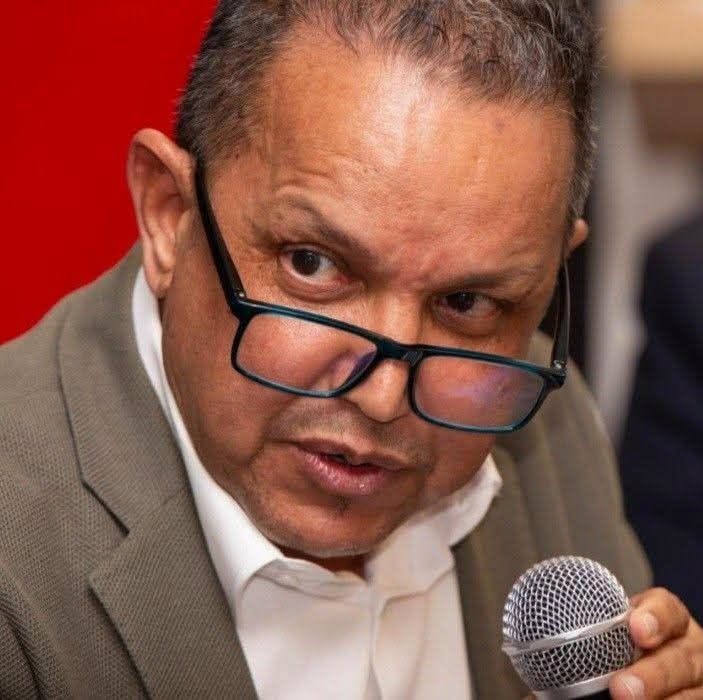
Professor of Sociology at Cadi Ayyad University in Marrakech.