The Arabist and Amazigh-Phobic Imaginary
Why do many Moroccans, especially among intellectuals and politicians, still reject Amazigh and oppose it, even after it was officially recognized in the July 2011 Constitution? Why do the holders of political decision-making power, state, government and parliament, still drag their feet over carrying out the decisions they themselves took, by virtue of their authority, governmental and legislative functions, in favor of Amazigh? Why is there a quasi-unconscious resistance to any real official status for Amazigh?
Yes, we know the cause is the collective Arabization policy Morocco has applied since 1912, which turned Moroccans, the victims of this policy, into transsexuals, in the national and identity sense of the word “gender”, after they gave up their Amazigh gender and usurped belonging to an Asian Arab gender. If this is established and known, what we want to add and clarify is that this policy, Arabizing and transforming, works to produce a Moroccan Arabist imaginary, which in turn works to reinforce this policy, justify it and reproduce it, and present it as ordinary and natural, to the point that the “Arabness” of Morocco and Moroccans, forged and usurped, becomes something natural and self-evident. And beside this Arabist imaginary there arises an Amazigh-phobic imaginary inseparable from it, as its negative and contrary face.
The concept of the imaginary:
The concept of the “imaginary” no longer means, in modern sociological studies, only what is negative and refers to the absence of reality and truth because the word is formed and derived from “imagination”, which is the opposite of reality. It has come to be seen as something positive and “full”, expressing a “full” and deep reality. This makes the sociological study of the imaginary a dive into the depths, going beyond what is superficial and apparent to identify the deep motives that move human societies, and to understand how the imaginary inspires the human being and drives him to act (Patrick Legros, Frédéric Monneyron, Jean-Bruno Renard and Patrick Tacussel, “Sociologie de l’imaginaire”, Armand Colin, 2006, pages 1 and 2).
Among the definitions given of the concept of the “imaginary”, we will adopt the following, which seems to bring together briefly the main elements making up this concept: “The imaginary is a store of images, representations, symbols, tales and myths formed historically in the collective memory or in the mind as a result of the process of interpretation by which a group tries to draw its internal reality or its reality with the other” (Mohamed Abdallah al-Hinai, “The Imaginary and the Idea That They Are Arabs”, journal “Al-Falaq” — click here to read the article). Let us note that interpretation, which this definition includes, and the construction of a particular conception of self and other that goes with it, are two essential elements of the imaginary. We will come back to this later in this discussion. What is the relation of the imaginary, in this technical sense, to what we have called an “Arabist imaginary” created by Arabization and the national and identity sex change, which creates at the same time, as a result of the same Arabist imaginary, an Amazigh-phobic imaginary?
The Moroccan Arabist imaginary:
If the Arabist imaginary is, on the basis of the previous definition, that store of images, representations, symbols, tales and myths…, revolving around the standing and value of Arabs and Arabism, formed historically in the Arab collective memory, and interpreted and used as a vision through which Arabs look at their reality and themselves, and at their relations with the non-Arab other, then this Arabist imaginary acquires new dimensions that make it richer, deeper and stronger when it comes to being used in Morocco and North Africa in general. For example, the place of Palestine in the Moroccan Arabist imaginary far exceeds its place in the Arabist imaginary of the countries of the Arab East. Likewise the myth of Idris I as founder of the first state in Morocco, which is a main component of the Moroccan Arabist imaginary, has no place in the Eastern Arabist imaginary. The presence of the myth that Arabic is a sacred language is stronger in the Moroccan Arabist imaginary than in the Arabist imaginary of the Arab countries of the Middle East. The myth of “noble descent”, which is part of the Moroccan Arabist imaginary, does not exist in the Eastern Arabist imaginary. The history of the Arab conquest of North Africa as a history of glories, heroes and sacrifices, which is part of the Moroccan Arabist imaginary, is almost absent from the Eastern Arabist imaginary, or at least that history is not taught with all the mythical glorification with which it is taught in Morocco. The presence of the myth of Arab unity in the Moroccan Arabist imaginary exceeds its presence in the Arabist imaginary of the countries of the Arab East where this myth appeared… and so on. In these examples I limited myself to what is originally Arabist and of certain Eastern Arab origin, deliberately avoiding mention of elements of the Moroccan Arabist imaginary whose difference from their counterparts in the Eastern Arabist imaginary might be explained by their having arisen in Morocco, such as: the myth of the “Berber Dahir” and the Christianization of the Imazighen, which is one of the most important elements of the Moroccan Arabist imaginary but does not exist in the Eastern Arabist imaginary, or the lie that the “National Movement” is what resisted colonialism, which is part of the Moroccan Arabist imaginary but entirely absent from the Eastern Arabist imaginary… Why does the original, that is, Eastern, Arabist imaginary become more fertile, stronger and deeper when used in Morocco as a Moroccan Arabist imaginary?
We saw, through the definition of the concept of the imaginary, that “interpretation” of symbols, facts, myths, figures, historical events…, is one of the mechanisms by which the imaginary works. And this interpretation is what makes the Moroccan Arabist imaginary differ from its origin, the Eastern Arabist imaginary, because it is a particular interpretation and therefore gives particular and exclusive meanings to the elements of the Eastern Arabist imaginary, in a way that makes it more fertile, stronger and deeper in its Moroccan form than in its Eastern form. Thus, for example, the Palestinian cause, the myth of Idris I, the sacredness of the Arabic language, the myth of “noble descent”, the Arab conquest of North Africa and the myth of Arab unity… are interpreted with particular meanings in the Moroccan Arabist imaginary, whereby these elements take on an added strength, richness and depth that they do not have in the context of their use in the ordinary and original, that is, Eastern, Arabist imaginary. But what directs this interpretation toward these particular meanings, which give those elements more strength, richness and depth in their use within the Moroccan Arabist imaginary?
The obsession with excluding Amazigh belonging:
It is the obsession with excluding Amazigh belonging, so that it is absent in Morocco as it is in the East, which allows Morocco to be on a par with the Arab East in terms of identity belonging and the unity of the Arabist imaginary. That is why the interpretation of those elements, such as the ones we cited, concentrates on what bears on this exclusion: if the Arab Palestinian cause, as it has become part of the Moroccan Arabist imaginary, is a national cause, that is, a Moroccan one, that means Morocco is also Arab like Palestine itself, which implies it is not Amazigh. If Idris I in the Moroccan Arabist imaginary is the founder of the first state in Morocco, whose age today is thirteen centuries as is repeated in this imaginary, then this state, since its founder is Arab, can only be Arab, which rules out its being Amazigh. If the Arabic language is more sacred in the Moroccan Arabist imaginary than in the Eastern Arabist imaginary, it is to justify excluding Amazigh on the claim that it is a “defiled” language, not of the rank of sacred Arabic. If the racist myth of “noble descent” occupies a prominent place in the Moroccan Arabist imaginary, it is in order to exclude Amazigh lineage as lowly and ignoble. If there is excessive glorification, in the Moroccan Arabist imaginary, of the Arab conquest of North Africa, it is because it is thanks to this conquest, as is repeated in this Moroccan Arabist imaginary, that Morocco became an Arab country, which means excluding its Amazigh identity. If the myth of Arab unity is still strongly present in the Moroccan Arabist imaginary, it is because it is the opposite of the fragmentation this imaginary ties to Amazigh. The function of this myth, in the Moroccan Arabist imaginary, is thus to exclude Amazigh and fight it by interpreting it as a factor of disintegration and fragmentation. And to reinforce and justify this exclusion of Amazigh, elements of local Moroccan origin are added to the Moroccan Arabist imaginary such as: the myth of the “Berber Dahir” and the Christianization of the Imazighen, and the lie that the “National Movement” is what resisted colonialism and saved the Imazighen from Christianization…
The Amazigh-phobic imaginary:
We thus observe that the particular meanings that the particular interpretation of the elements making up the Eastern Arabist imaginary gives, in order to turn it into a Moroccan Arabist imaginary, flow into the exclusion and erasure of Amazigh. Which results in the establishment of an Amazigh-phobic imaginary parallel to the first, linked to it by a causal inseparability and a relation of opposition and contrast, whose elements are made up of everything negative and derogatory counted to Amazigh and against it, such as tying it to racism, division and strife, paganism, fighting Arabic and Islam, allegiance to colonialism, gibberish and backwardness… Given the causal inseparability between the two imaginaries, Arabist and Amazigh-phobic, they truly form one imaginary, the Moroccan Arabist imaginary, which appears in its second form as an Amazigh-phobic imaginary, the negative face of the same Arabist imaginary. Without a Moroccan Arabist imaginary there can be no Amazigh-phobic imaginary. And without the latter the first cannot exist. The Moroccan Arabist imaginary is what produces and feeds the Amazigh-phobic imaginary. And the latter is what in turn produces and feeds the first.
As for the self and the other, as conceived by the process of interpretation which is an essential component of the imaginary as we saw in its definition, they do not mean, in the Moroccan Arabist imaginary, the same thing as in the Eastern Arabist imaginary. If the self in this Arabist imaginary means the Arabs, with the history, identity, culture, language, heritage and common destiny tied to them…, and the other means the different non-Arab, with whom the Arab has a conflictual relationship, as was the case with the Ottomans at the start of the twentieth century and then the West and colonialism, the self in the Moroccan Arabist imaginary means the Arabized Moroccans, that is, the counterfeit Arabs, transsexuals by disowning their Amazigh gender and usurping belonging to the Arab gender. And because these, being counterfeit and transformed Arabs, know they are not original and real Arabs, they continually make an exhausting effort to provide proof that they are Arabs. This proof is their hostility to their Amazighness, which they practice as a certificate by which they attest their forged Arabness. Thus the self is defined, in the Moroccan Arabist imaginary, by what negates it as an African Amazigh self. Arabism and the Arabs, Arab history, Arab identity and Arab culture, the Arabic language, Arab heritage and the common Arab destiny… matter to the Arabized, transsexual in sex, nation and identity, only to the extent that they prove they are not Amazigh. The result is that the other, in this Moroccan Arabist imaginary, is not the Ottomans, nor the West, nor colonialism, nor any non-Arab people, but Amazigh, with all it evokes of people, history, identity, culture, language and heritage…, with which they have a conflictual relationship because they look at it as a different “foreign” element they seek to fight and expel. And this is the content of the Amazigh-phobic imaginary, the negative face of the Moroccan Arabist imaginary, as I explained before.
The imaginary addresses the heart, not the reason:
And because it concerns the imaginary, which is a set of representations, visions, convictions, justifications, symbols and myths shared by a given group or society, as I explained, it is hard to persuade the holders of this imaginary to give it up on the grounds that it contains things far from the truth, from reality and from reason. That is hard because the imaginary does not address reason and logic, so that its adherents could be convinced they are wrong, but addresses the heart and feelings. And because it is tied to the heart and feelings, it exerts a strong influence on those who belong to it, as it crystallizes into social consciousness and then political convictions embodied in political decisions and practices. That is why the Arabization policy, which aims at the national sex change of Moroccans, is a political extension of the Amazigh-phobic imaginary. Without this Amazigh-phobic imaginary there would be no Arabizing policy. And this policy in turn reinforces this Amazigh-phobic imaginary, which contributes to further exclusion of Amazigh and hostility to it. And because it is a policy based on irrational decisions, since they come from the Amazigh-phobic imaginary which is not subject to reason and logic, as I showed for the imaginary in general, we observe that although the state has issued a whole arsenal of decisions and legislative texts in favor of Amazigh, relying on the principles of reason, logic and justice, this is met by the Amazigh-phobic imaginary standing up, with its irrational emotional contents, as I explained, as an obstacle on the road to carrying out those decisions and texts even when they are the result of applying reason, logic and justice.
Recovering the Amazigh imaginary:
The only solution is to move from an Arabist Amazigh-phobic imaginary to an Amazigh imaginary. And if this Amazigh imaginary will also be formed, since it is an imaginary, of images, representations, symbols, tales, myths and collective memory…, what matters is that it springs from the experiences of the Amazigh people, from its history and its homeland in Africa, expressing its aspirations and values, its hopes and pains, and its identity and linguistic uniqueness that makes it a people distinct from other peoples. This is the opposite of the dominant Arabist imaginary, producer of its Amazigh-phobic counterpart, springing from the experiences of the Arab human being, his history and his homeland in the Middle East, and expressing his aspirations and values, his hopes and pains, and his identity and linguistic uniqueness as an Asian Arab people. This Arabist imaginary constitutes, by its spread and propagation in North Africa, a dissonance and anomaly that need correction and straightening. And speaking of “anomaly”, it is worth recalling that the aim of entrenching this Arabist Amazigh-phobic imaginary is to achieve the sexual deviance, that is, identity and national deviance, by changing Moroccans from their Amazigh gender into an Asian Arab one.
Since independence the state has been indoctrinating Moroccans, through school curricula, with lies about their history in order to erase their Amazigh imaginary and plant in its place an Arabist Amazigh-phobic imaginary. But it has at last begun a campaign to correct this history by erasing those lies and replacing them with established scientific truths (see the article: “Is It the Beginning of the End of Invention and Falsification?” by clicking here), such as starting, in the study of Morocco’s history, from the “Jebel Irhoud man”. After dozens of years of teaching these historical truths, they will become part of the Amazigh imaginary. And what will give this imaginary its symbolism and legitimacy is not only its link to the historical and geographical reality that produced it, but also its link to scientific truths, as I said.
This correction of Morocco’s history taught in educational institutions is a model of what the recovery of the authentic Moroccan Amazigh imaginary should be, together with all the other elements that go into forming this imaginary, such as the Tifinagh script, the Amazigh calendar, the Ahidous art, the Amazigh flag expressing Amazigh identity, and historical Amazigh figures such as “Shoshenq”, “Massinissa”, “Jugurtha”, “Juba”, “Aksel”, “Dihya” and “Maysara al-Madghari”…, and historical events of particular symbolic significance such as the resistance of “Jugurtha” to the Roman occupation, and of “Dihya”, “Aksel” and “Maysara al-Madghari” to the Arab conquest…
The opponents of Amazigh know very well that preserving the Moroccan Arabist imaginary, with the Amazigh-phobic imaginary it produces, passes through suppressing the Amazigh imaginary. That is why they fight this imaginary and refuse to recognize its components, as with their denial of the Amazigh New Year and of the leader “Shoshenq” who founded this calendar, the excommunication of “Dihya”, “Aksel” and “Maysara” on the pretext that they fought Muslims, the claim that Tifinagh is a Phoenician script and not Amazigh, that the flag of Amazigh identity is a call to division, and that teaching the “Irhoud man” contradicts the provisions of the Qur’an which says God created man in the best form, as the parliamentarian Ali El Asri claimed, who questioned the Minister of National Education on October 6, 2020 about the reasons for teaching the “Irhoud man”, which confuses the pupil’s faith in his claim. It is clear that this campaign against teaching the “Irhoud man” is in truth a campaign against Amazigh, to prevent the establishment of an Amazigh imaginary in which the “Irhoud man” plays a main, central role around which the other Amazigh elements are organized, such as Tifinagh, the Amazigh calendar and the Amazigh flag… Which threatens the decline of the Arabist Amazigh-phobic imaginary, and with it the whole Arabist ideology that spreads through the spread of this Arabist Amazigh-phobic imaginary.
The case of the “Irhoud man” is only an example of the work the state must do to recover the Amazigh imaginary, as an imaginary consistent with the history and geographical space of the people who live in this space and made this history, and that expresses belonging to the collective Amazigh identity of the Moroccan people and the Moroccan state as an Amazigh state, in the territorial and national sense. That would be a start of breaking with the Arabist Amazigh-phobic imaginary without it meaning hostility to Arabism as an identity that we esteem and respect, and we esteem and respect its Arab holders in their Arab countries. Our problem is not with the real Arabs, but with the counterfeit Arabs, that is, the Imazighen who usurp belonging to Arabism although it rejects them and disowns them. That is why the other, here within the Amazigh imaginary, is neither the Arab, nor the West, nor any different people. This other is the Amazigh deviant in nation and identity, who considers himself Arab and works to impose his identity deviance on sound Moroccans by pursuing a policy of Arabizing them and attaching them to his usurped and forged Arabness. As for the self, within this same Amazigh imaginary, it is Amazigh, as language, culture, identity, history, people, human being and homeland…, as opposed to what the self is in the Arabist Amazigh-phobic imaginary where it was turned into what cancels and negates it, that is, into an Arab self, and a Berber one with regard to its Amazigh identity, that is, foreign to it in the Greek sense of the word “barbarian” (see the article: “When the Imazighen Turn Into Barbarians Hostile to Their Amazighness”, by clicking here).
Arabic version | French version
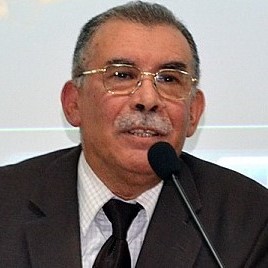
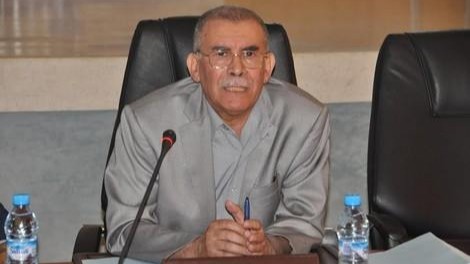
Mohamed Boudhan was an Amazigh writer, thinker, researcher and activist from the Rif, and publisher of the newspaper Tawiza. He was the author of many valuable books and articles on Amazigh identity. May he rest in peace.