License plates: Amazigh activists see no justification for excluding Tifinagh
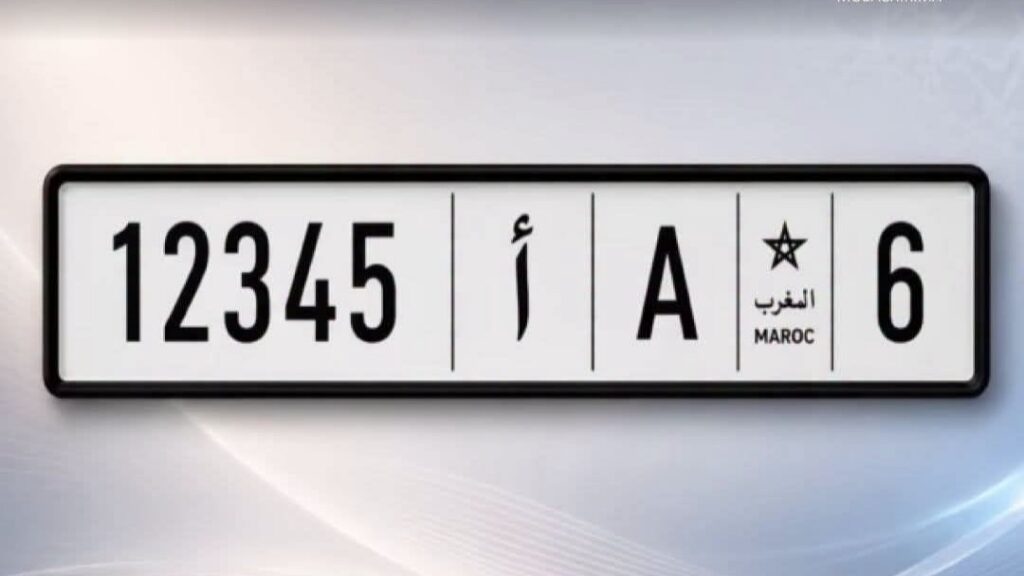
A recent change to Morocco’s vehicle registration system by the Ministry of Transport and Logistics, which adds a Latin equivalent to Arabic characters on standard-series plates, has revived debate over the place of the Amazigh language in the state’s administrative procedures, as Amazigh activists call for Tifinagh characters to be included on the same footing as Latin and Arab ones.
The change, recently published in the Official Bulletin, amends Article 21 of the ministerial order governing the registration of motor vehicles and trailers. The second part of the registration number will now consist of one or two Arabic letters in unified Moroccan script, accompanied by their Latin equivalent, whereas it was previously limited to the Arabic character alone.
Abdellah Baddou, a pedagogical inspector and Amazigh activist, links the change to a technical issue raised as far back as the first ministerial order that overhauled the registration system, when the Arabic character proved “impractical” for a number of uses. He notes that this difficulty arises in particular when Moroccan citizens drive their vehicles to Europe or other countries, since using a car in an international setting carries specific rights and obligations.
According to Baddou, the earlier amendment permitting the use of Latin characters, which took effect last year, came in response to pressure from certain countries that receive large numbers of Moroccan tourists — even though the letter correspondence is “often poorly done.”
The activist argues that if the justification for the change is primarily technical, then continuing to use the Arabic character on grounds of “sovereignty” raises a parallel question about the absence of the Amazigh character, maintaining that “there is no reason for the Arabic language to exist without the Amazigh language also existing,” and that insisting on Arabic “also requires including the Amazigh language, in line with the principle of equality and fairness between the two official languages.”
For his part, Adil Adasko, coordinator of the Amazigh youth collective Tamesna, argues that ambiguity persists over the mechanisms for implementing the Amazigh language as provided for in the Constitution, questioning whether officials are “treating it with a degree of inconsistency.” He stresses the need for the Amazigh language to appear alongside Arabic, both being official languages “with no hierarchy between them,” and calls for prioritizing the needs of Amazigh-speaking Moroccan citizens above all other considerations — including their presence in state documents such as vehicle registration lists.
Arabic version | French version