Fatima Ezzahra El Mansouri and the Limits of Moroccan Reform
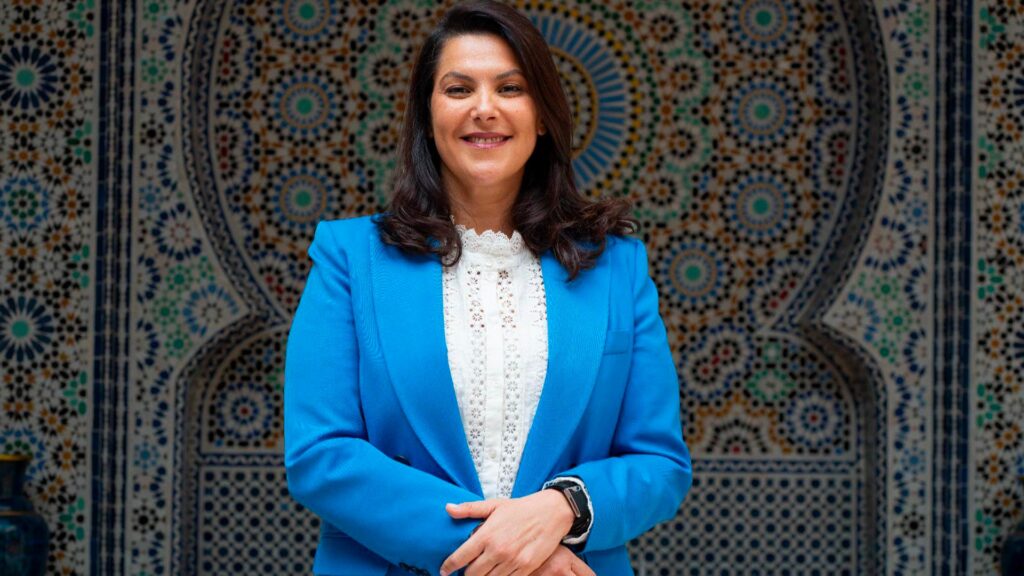
The appointment of Fatima Ezzahra El Mansouri as head of government on 29 September 2026 marks a significant moment in contemporary Moroccan politics. For the first time in the history of the kingdom, a woman has been entrusted with forming and leading the national government. Her appointment followed the legislative elections of 23 September 2026, in which the Authenticity and Modernity Party (PAM), whose collective leadership she coordinates, emerged as the leading party with 97 of the 395 seats in the House of Representatives.
Turnout reached only 38.08 percent, however, leaving the new government with the dual challenge of constructing a parliamentary majority and responding to a broader problem of political representation. Article 47 of the 2011 Constitution provides that the King appoints the Head of Government from the party that comes first in elections to the House of Representatives, while Articles 48 and 49 reserve the Council of Ministers, chaired by the King, for a number of strategic matters. El Mansouri’s appointment is therefore simultaneously an electoral consequence, a constitutional act and a royal decision.
Yet the importance of El Mansouri cannot be reduced to her being the first woman to occupy the country’s top political office. Her trajectory raises broader questions about access to political power in Morocco: who reaches the highest levels of government, through which networks, with what forms of political capital, and with what degree of autonomy within a political system in which the monarchy remains central?
El Mansouri combines several dimensions of Moroccan political life that are sometimes presented as opposites. She is a highly educated lawyer, former municipal leader, parliamentarian, minister and party leader, while also belonging to an established social milieu and to the founding generation of the PAM, a party historically associated with Fouad Ali El Himma, a close adviser to King Mohammed VI. Her trajectory is therefore better understood neither as an outsider’s independent conquest of power nor as simple promotion by the Palace. It illustrates instead how contemporary Moroccan elites are formed through the interaction of electoral legitimacy, territorial rootedness, professional competence, party organization, elite networks, and proximity to the monarchy.
From Marrakech to Rabat
El Mansouri’s political rise was neither sudden nor exclusively national. Born in Marrakech in 1976, she studied private law at Mohammed V University in Rabat, obtained postgraduate training in contract and business law at the University of Montpellier, and received a certificate in Anglo-Saxon law from Pace University in the United States. She subsequently worked as a lawyer specializing in land and real-estate matters and was admitted to the Marrakech Bar in 2005. This background is politically relevant because land, housing, urbanization, and territorial planning are among the most sensitive fields of Moroccan public policy. Her later ministerial responsibilities therefore corresponded closely to an area in which she already possessed professional expertise.
Her political career began in 2007 with the Movement for All Democrats, followed by her role as a founding member of the PAM in 2008. In 2009 she became president of the Marrakech municipal council, making her the first woman to hold the city’s mayoral office. She subsequently served in Parliament from 2011 to 2016 and again from 2016 to 2021, chaired the PAM National Council from 2015 to 2024, returned to the presidency of the Marrakech municipal council in 2021, and entered government in October of that year as Minister of National Territorial Planning, Urban Planning, Housing and City Policy. Since 2024 she has coordinated the PAM’s collective leadership. Her career thus represents an accumulation of experience across local government, Parliament, party organization and ministerial administration before reaching the national executive.
Marrakech is particularly important in this trajectory. Her first election as mayor in 2009 established a territorial political base before her ascent to the national executive. She defeated incumbent mayor Omar Jazouli in a municipal election in which the PAM participated in a coalition involving several parties. The significance of this episode lies not only in the symbolic fact that a woman became mayor, but also in the construction of a political identity rooted in a major economic, cultural, and tourist center. Her return to the municipal presidency in 2021 further suggests that her political resources cannot be explained solely by proximity to the Palace: she had accumulated local knowledge, electoral experience, and negotiating capacity of her own.
This trajectory is consistent with research on gender and political recruitment in Morocco. In one her studies about gender quotas in Moroccan politics, Anouk Lloren’s Lloren uses El Mansouri as an example of a woman who moved beyond quota-based representation to obtain a candidacy in a non-reserved constituency after establishing a reputation through municipal politics. Her case therefore illustrates how institutional mechanisms supporting women’s representation may open political opportunities, while individual experience, local visibility and party support can subsequently generate political capital that is not reducible to quotas.
Establishment and political autonomy
The opposition between the figure of the establishment politician and that of the autonomous actor is therefore too simple to capture El Mansouri’s trajectory. She is clearly an establishment figure in sociological and institutional terms. Her professional background, early association with the Movement for All Democrats, membership in the PAM’s founding generation and relationship to networks surrounding El Himma place her within circles that participated in the reconfiguration of Moroccan politics under Mohammed VI. The PAM’s origins and its historical relationship with El Himma have long made the boundaries between party politics and the royal establishment an important subject of political analysis.
At the same time, proximity to the establishment does not automatically mean absence of political agency. Moroccan political power has historically operated through overlapping networks rather than through a rigid separation between formal institutions and informal authority. Waterbury’s classic study emphasized segmented political structures, elite mediation and networks connecting the political center with local society. Tozy similarly highlighted political brokerage, institutional pluralism and the complex relationship among monarchy, parties and social elites. El Mansouri’s trajectory can consequently be viewed as a contemporary form of elite integration. That is, she operates inside the established system while accumulating resources that are specifically her own.
The concept of co-optation is useful here, provided it is not confused with complete political dependency. Co-optation describes the incorporation of influential individuals, local elites and new political actors into established institutional structures. As I have argued elsewhere, Morocco’s political development has involved gradual reform within an architecture in which monarchy, elected institutions and political elites interact without the complete displacement of monarchical centrality by party government. El Mansouri’s career fits this pattern of incorporation while leaving room for individual political agency.
Her trajectory also illustrates a contemporary form of political notability. Parties require candidates who can mobilize territorial networks, social relationships, and local recognition. A notable is therefore not necessarily a wealthy or traditional local intermediary; he or she may rather embody a territory and connect citizens to institutions. Marrakech has provided El Mansouri with precisely this type of territorial resource, strengthening her national visibility. Her political capital is consequently multidimensional: professional expertise, electoral experience, party authority, local legitimacy, elite networks and governmental experience coexist within the same political profile.
Political style and citizen proximity
El Mansouri’s public persona combines elite formation with political proximity. Her education and professional environment placed her within an educated and established social milieu, while municipal politics exposed her to neighborhoods, citizens, associations, businesses and administrative authorities. Local government thus became an important laboratory for a political style centered on management, territorial development and practical problem-solving.
The 2023 Al Haouz earthquake provides an instructive example. According to her account reported by Médias24, El Mansouri was in Rabat when the earthquake struck on 8 September 2023 and yet she made sure to reach affected populations approximately three hours later. At the time she was simultaneously mayor of Marrakech and minister responsible for housing and urban planning, placing her at the intersection of local crisis management and national administrative mechanisms. This episode contributed to an image based on presence and administrative coordination. It should not, however, be treated automatically as proof of superior governmental performance: visibility and effectiveness are distinct analytical categories.
More broadly, her public identity has tended to emphasize management, projects, urban governance, and territorial development rather than a strongly ideological political doctrine. She is not primarily identified with political Islamism, Arab nationalism or classical socialism; her profile is more closely associated with modernization, administrative competence, and institutional management. This distinction matters in a political environment where party distrust and abstention have become significant concerns.
The 38.08 percent turnout in 2026 means that a majority of registered voters did not participate. Yet it would be methodologically incorrect to interpret all abstention as rejection of political parties, because non-participation can reflect indifference, logistical obstacles, distrust, protest, disengagement or other motivations. Nevertheless, the scale of abstention creates a major challenge for political representation. It also makes the question of citizen proximity especially important for a government whose political language emphasizes competence and practical results.
The concept of neo-tribalism offers another way of interpreting this environment. Here neo-tribalism does not mean the literal survival of precolonial tribes, but the adaptation of family, territorial, relational and interpersonal solidarities to modern institutions. The expression “bak sahbi” captures a form of clientelism in which access to opportunities may be mediated by personal relationships and networks rather than impersonal institutional rules. Such practices can coexist with modern administration, elections, parliamentary institutions and digital citizenship.
El Mansouri occupies an interesting position within this environment. Her establishment connections give her access to elite networks, while her local career provides territorial visibility. The question for her government is whether relational and territorial capital can be converted into broader institutional legitimacy based on transparency, competence, and equal citizenship. This question is particularly relevant to younger generations, among whom demands for merit, accountability and equal access have become increasingly visible in debates about political trust.
Territory, notability and the new Morocco
The importance of Marrakech also points toward a wider question about the territorial organization of Moroccan politics. Marrakech is not simply an electoral constituency; it is a major tourist, cultural and economic center. Political legitimacy acquired there can become a national political resource.
This is why the emerging idea of a “Morocco of Territories” is relevant to El Mansouri’s trajectory. Advanced regionalization should not be understood only as administrative decentralization. It also raises questions about territorial citizenship, political representation and the distribution of public resources. If regionalization merely reproduces existing networks at another administrative level, the institutional form changes without necessarily transforming the underlying relationships of representation.
El Mansouri’s career reflects both dimensions. Her political legitimacy is territorially rooted, but her territorial capital has also been incorporated into national institutions. The important analytical question is therefore not whether territorial politics is inherently desirable or undesirable, but how territorial rootedness interacts with democratic representation and elite networks. Political parties need candidates with social and territorial capital because such candidates can mobilize voters; excessive reliance on notables, however, can also encourage personalized politics and weaken programmatic competition.
El Mansouri does not resemble the traditional rural notable. She is urban, professionally trained, internationally educated, and politically institutionalized. Yet the mechanism of political-capital accumulation retains an important similarity: political legitimacy is partly built through the capacity to connect institutions with a territory and its networks. The contemporary notable may therefore be a lawyer, mayor, minister or party leader whose capital derives simultaneously from education, administrative competence, urban visibility and social connections. The social form has changed, while the mediating relationship between center and territory remains important.
Change and continuity with a woman at the top
El Mansouri’s appointment is historically significant for the representation of women. Morocco had never previously had a woman as the head of government, and she became the second woman to head a government in the Arab world after Tunisia’s Najla Bouden. The appointment therefore carries symbolic significance for women in Morocco and for the broader evolution of female representation in Arab political systems.
Yet symbolic representation and institutional redistribution are not synonymous. A woman can occupy the highest governmental office while the constitutional architecture of the monarchy remains intact. Article 42 defines the King as Head of State, Supreme Representative of the Nation and Supreme Arbiter among its institutions; Article 47 governs the appointment of the Head of Government; Article 48 places the Council of Ministers under royal chairmanship; and Article 49 assigns it powers in several strategic areas. El Mansouri’s government should therefore be understood as a transformation within the political system rather than as a transformation of the system itself.
This distinction is central to understanding Moroccan political development. Political change in the country has often proceeded through institutional adaptation rather than revolutionary rupture. Elections, parliamentary institutions, civil society, and administrative modernization have developed within a monarchical framework, a process that can be described as incremental democratization. El Mansouri’s appointment is consequently both a major change in gender representation and an instance of institutional continuity.
The gender question should also be considered beyond symbolism. Morocco has adopted institutional mechanisms intended to strengthen women’s political participation, but descriptive representation does not automatically produce substantive policy change. Women may enter institutions through elite networks and still become important agents of institutional transformation; conversely, female representation does not by itself guarantee changes in policy or political practice.
El Mansouri’s trajectory is notable because it has been built primarily around professional competence, municipal governance, territorial planning, and party leadership rather than an explicitly feminist political identity. Her gender is an important part of the historical significance of her appointment, but it is not the sole foundation of her political career. One dimension of normalization occurs when women become ordinary actors throughout the political chain: lawyers become ministers, mayors become party leaders and parliamentarians become heads of government. El Mansouri’s career illustrates this institutional normalization.
Governing after a low-turnout election
The circumstances of El Mansouri’s accession make the governing challenge particularly demanding. The PAM obtained 97 seats, while the RNI won 66, Istiqlal 65 and the PJD 54, with the remaining seats distributed among other parties. The PAM result is therefore a plurality rather than a parliamentary majority, requiring coalition-building and negotiation.
More broadly, the new government inherits a political environment marked by low participation. Abstention cannot legally be considered a vote, nor can it be reduced sociologically to a single political message. Its scale nevertheless raises questions about the relationship between citizens and political institutions. For El Mansouri, whose public profile emphasizes proximity and competence, governmental credibility will depend increasingly on whether public action produces tangible improvements in services, employment, housing, education, health and territorial equality.
The issue is especially relevant for younger Moroccans. My analysis of GENZ212 and neo-tribal clientelism identifies demands for greater transparency, meritocracy and equal citizenship. But these themes should not be generalized to all young people or all abstainers, because they form part of a wider debate about political trust and institutional performance. The legitimacy of the new government will therefore depend not only on the historic character of El Mansouri’s appointment but also on the relationship it establishes between public institutions and citizens.
Fatima Ezzahra El Mansouri’s rise is best understood as the result of political accumulation within the Moroccan institutional order. Her career combines elite social background, professional expertise, territorial rootedness, electoral experience, party organization, ministerial responsibility and proximity to the establishment. These elements do not necessarily contradict one another; together they constitute the multidimensional political capital through which she reached the head of government.
Her trajectory also illustrates the changing nature of Moroccan political elites. The contemporary notable need not be a traditional local intermediary. He or she may be a highly educated lawyer, mayor, parliamentarian, minister or party leader whose capital is simultaneously professional, territorial, institutional and relational. El Mansouri represents this hybrid form of political leadership particularly clearly.
Her political style is likewise hybrid: establishment connections coexist with local experience; professional expertise with electoral politics; national responsibility with territorial rootedness in Marrakech. Her experience during the 2023 earthquake and her municipal and ministerial careers have contributed to an image of practical proximity. Whether that image will translate into effective national governance remains an open empirical question.
The gender dimension is equally significant. Her appointment crosses a historic threshold in Moroccan representation, but it does not displace the constitutional centrality of the monarchy. The new government therefore illustrates the coexistence of gender transformation and institutional continuity. Morocco can integrate new categories of political actors without necessarily replacing the political architecture within which they operate.
The decisive issue will consequently be how this historic representation is converted into governmental legitimacy. El Mansouri inherits a fragmented Parliament, low electoral participation, territorial inequalities and demands for greater merit, transparency and effectiveness. Her political challenge is to reconcile the different sources of capital that produced her rise—elite networks, party organization, territorial legitimacy, professional competence and institutional proximity to the monarchy—with citizens’ expectations of responsible and effective government.
Her government is therefore significant not simply because a woman has reached the highest governmental office, but because her trajectory reveals how Morocco’s political establishment is itself evolving. The central question is no longer whether a woman can govern Morocco. It is how a political system characterized by strong institutional continuity can integrate new actors, new forms of representation and new expectations of citizenship while maintaining its existing constitutional architecture.