Dr. Ksouri and the Amazigh Identity Complex
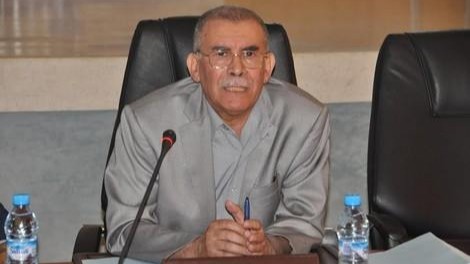
Commenting on a statement made to a French newspaper by the head of Algeria’s constitutional revision committee—who asserted that Islam would be permanently removed from the constitutive elements of identity, “so that one can be Algerian without being Muslim, Amazigh, or Arab”—Dr. Driss Ksouri wrote the following in a Facebook post dated June 9, 2020:
“For the record and for history, this idea is very old and dates back to the 19th century. Ending the Ottoman Empire was aimed at creating separate states. In itself, that posed no logical problem, as Muslims had always lived that way despite the caliphate. What is new is for each state to have its own history—so-called national history—its own flag, and its own motto. That is how a narrow nationalism was revived and began gradually replacing shared culture and religion. Then, because a national history now existed, people began searching for an ancient national history from the pre-Islamic era, giving rise to Pharaonism in Egypt, Phoenicianism in Lebanon, and many others. But that is an old version. The new version, genetically modified like a toxic tomato, is the odious racist Amazigh trend.”
Let us examine Dr. Ksouri’s remarks a little more closely.
Sacrificing the caliphate for the Arab race:
“Ending the Ottoman Empire was aimed at creating separate states. In itself, that posed no logical problem, as Muslims had always lived that way despite the caliphate.” Why did Dr. Ksouri fail to specify which states were created to destroy the Ottoman Empire, or with whose backing, merely implying that they were simply Muslims? In reality, these were the new Arab micro-states born out of the 1916 Sykes-Picot Agreement, not Muslim states in the broader sense as he tries to insinuate. If he sees no issue with dismantling the Ottoman Empire, it is because that dismantling aimed to establish Arab entities, even at the cost of sacrificing the Islamic caliphate. To serve this Arab ethnic objective, there was nothing wrong with eliminating non-Arabs—the Ottomans—and destroying the caliphate itself. This ethnic motive, which drove the Arabs who welcomed the Sykes-Picot Agreement at the time, is also evident in Dr. Ksouri’s own analysis of that historical period.
Where did this narrow nationalism originate?
“That is how a narrow nationalism was revived and began gradually replacing shared culture and religion.”
Yet where did this narrow nationalism truly begin, and at whose initiative? Certainly not in Morocco, which remained a unified state both during and after the Protectorate, just as it had been before. It began among those who applauded the Sykes-Picot Agreement because it granted them separate national entities based on ethnic criteria, setting them apart from the Turks. That is what drove them to call upon Christian foreign powers to end the Islamic caliphate, solely because it was led by non-Arabs. That course of action gave rise in the Arabian Peninsula—which had merely been a province under Ottoman rule—to more than a dozen micro-states, each with its own flag, motto, currency, national culture, and even religious sect. Division, fragmentation, secessionism, and parochial nationalism therefore have nothing to do with Morocco as an Amazigh country; rather, they are an inherent feature of ethnic, nationalist Arabism in the Middle East.
What is wrong with each state having its own national history?
“Then, because a national history now existed, people began searching for an ancient national history from the pre-Islamic era, giving rise to Pharaonism in Egypt, Phoenicianism in Lebanon, and many others.”
And what is the problem if people explore their ancient, pre-Islamic history? There is no justification—neither moral, religious, nor legal—to ban historical knowledge simply because it concerns ancient national history prior to the arrival of Islam. To do so would be to impose a brand of fascist censorship on knowledge and science unprecedented in history. Why, to remain consistent in his position, has Dr. Ksouri not called for a ban on excavations regarding ancient pre-Islamic history in the Arabian Peninsula, where Islam first emerged? He knows full well that hundreds of studies—both old and new, conducted by Arabs as well as Orientalists—have explored the pre-Islamic history of the Arab region. He also knows that the study of pre-Islamic literature is a discipline in its own right within the field of Arabic literature. Why, then, has he not denounced these studies that focus on the pre-Islamic past of the Arabs? Or is what is permitted for Arabs forbidden for other peoples, who are supposedly expected to satisfy themselves solely with Arab history under the pretext of its link to Islamic history? Arab ethnic motives remain the primary driver of Dr. Ksouri’s writings when he addresses Amazigh identity—the complex that poisons his existence. His references to other non-Arab peoples, such as the Pharaohs and Phoenicians, serve only as a pretext to bring up Amazigh identity, which represents a heavy burden he can neither bear nor tolerate. This undoubtedly explains his refusal to admit that the Imazighen produced scholars who served Islam, as evidenced by one of his posts where he wrote: “Read your history before they erase it: more than two-thirds of Islamic scholars are Persian, the rest come from the Arabs, Turkmen, Sarajevo, Tashkent, Bukhara, India, and Africa.” Note how he refused to mention the Imazighen, settling instead for “Africa”—a generalization he did not apply to those from Asia or Europe. The contradiction is glaring: he advises us to read our history before it is erased, yet he is the one erasing it by striking the Imazighen from the record.
Furthermore, what is the fault of the Egyptians, or other non-Arab peoples, if they possess historical monuments—still standing and visible to all—that date back to the pre-Islamic era? Must they demolish and disappear them to satisfy Dr. Ksouri’s whims? And what is the fault of the Imazighen if the oldest Homo sapiens, discovered at Jebel Irhoud, is a part of their ancient history? What is their fault if the Roman occupation belongs to their pre-Islamic history? Even if they were to deny these historical realities to comply with Dr. Ksouri’s wishes, such denial would not erase those facts or change the history that contains them as events that truly occurred.
Preserving Only a Culture of Allegiance and Dependency:
What Dr. Ksouri feigns to dread, according to his fallacious justification, is that this ancient and distinct history might “revive a narrow nationalism that gradually comes to replace our common culture and religion.” To preserve what we share with the Arab Mashreq, he suggests we must sacrifice what he calls this “narrow nationalism,” along with the entire pre-Islamic history it carries. Following this logic to preserve commonality, we would also have to abandon the cause of our Moroccan Sahara—since it is not a shared cause uniting us with all Arabs—nor should we demand the return of Ceuta and Melilla, as this claim is not shared by the broader Arab world. Furthermore, we would have to renounce the Maliki school of jurisprudence, as the Arabs of the Mashreq do not share this rite with us. These are the logical, catastrophic consequences of Dr. Ksouri’s reasoning: to abandon and deny everything that is not Arab, solely to retain what is “common.” And what exactly is this commonality? It is the history and culture of allegiance to the Arabs, from an era when many non-Arabs, such as the Imazighen, were mawali (clients) to these Arabs, serving them with submission and docility. It is true that the facts and the history of this relationship between the non-Arab client and his Arab master are something they share. And this is precisely what he believes should be preserved as a common history and culture. As for what preceded this relationship—when the “client” in question was free before being reduced to servitude—or what followed his liberation from his master’s service and his subsequent emancipation, all of this must be obscured, neglected, and excluded from all research, because it is a “history” from which the Arab element is absent. Focusing on what is “common” ultimately amounts to prioritizing a relationship of submission and dependency, mirroring the bond between a client and his master. This is the culture and history Dr. Ksouri deems acceptable for us: a history of humiliation, submission, and dependency. Yet, if he were truly imbued with the values of justice and human rights, he would have called for interest and pride in national and local cultures out of a sense of equity and recognition, rather than marginalizing them to serve the narcissism of Arabocentrism under the guise of a slandered Islam.
The truth about the genetically modified version:
“And that is an old version. As for the new version—genetically modified like toxic tomatoes—it is the hateful and racist Amazigh trend.”
For Dr. Ksouri, Amazigh claims—which is what he means by the “Amazigh trend”—represent a new, genetically modified version of the Pharaonist movements that appeared in Egypt and the Phoenicianist movements in Lebanon.
Let us be somewhat scientific. Genetically modified living organisms, whether plants or animals, are those that have undergone a modification and transformation of the hereditary elements and genes that determine their original natural identity. This identity lies in their original natural characteristics, which classify them as belonging to a particular genus—such as a tree that produces bitter fruit—to give them an artificial identity. This artificial identity is chosen and imposed by genetic engineering to produce other characteristics, contrary to their initial natural properties, which link them to another genus—as if that tree shifted from the genus of bitter-fruited trees to that of sweet-fruited ones.
Who, then, in Morocco has undergone a modification and transformation of the elements of their original natural identity—drawn from their African Amazigh homeland—stripping them of the characteristics of belonging to their original natural type, Amazigh and African, and attaching them to a foreign, Arab and Asian type? Is it not those who claim to be Arabs and assert that Morocco is Arab, led by Dr. Ksouri? Who, then, are the Arabs in Morocco? Are they not those who have been modified in terms of identity and who have changed their type (in the sense of nationality and identity) in order to draw closer to the original Arab version? Even more than that: even the hereditary factor, in its biological sense, is present in this identity modification and change of type, through the invocation of “Sharifian” lineages—that is, modified, transformed, and non-original lineages, in other words, non-Amazigh ones. And there exist, as everyone knows, bodies and institutions that issue administrative certificates attesting to the operations and stages through which the identity modification and change of type of the person concerned have passed—just like the administrative certificates required by law in European countries, which must detail the various genetic modification operations undergone by genetically modified agricultural or animal products, GMOs (genetically modified organisms), intended for consumption.
The modified version in Morocco, in terms of both identity and type, is therefore the one embodied by Dr. Ksouri and his likes—usurpers of an Arab genealogy, who are themselves victims of this alteration they call Arabization. As for the natural, original version, it is represented by those who remain attached to their authentic Amazigh belonging, which has undergone neither modification nor falsification. That is why people who have been modified in their identity and have changed their type, like Dr. Ksouri, despise Amazighness. Why? Because as long as it exists and has not been permanently eradicated, as was hoped after independence, it exposes the Moroccan proponents of Arabization who have changed their type—that is, their national and identity belonging—and proves that they are merely a modified and artificial version of the true Arabs. Hence their hatred toward Amazighness, which they do not hesitate to brand as racist and odious.
Who is the real racist?
But who is the real racist? Is it the Amazigh person attached to their Amazighness, their belonging, and their origins, who calls for their language, culture, identity, and history to be cared for, while respecting Arabic, Arabness, and Arabs in their original homeland without seeking to impose their Amazigh identity on them? Or is it the one who fights against this Amazighness and forces upon its bearers what he regards as his own language, culture, identity, and history? For if this Amazigh person, who advocates for the promotion of their language, identity, culture, and history, is racist, then the Chinese, the Japanese, the French, the Italians… would all be racists, since they all defend their language, their culture, their identity, and their history. That is why, when Dr. Ksouri characterizes Amazigh demands as racist and odious, he is actually resorting to what Kateb Yacine called “The thief crying ‘Thief!’”—namely, the ruse of the thief who calls for help by claiming to have been robbed in order to conceal the theft he himself has committed.
The monarchy is light-years ahead of Ksouri’s position on Amazighness:
In following Driss Ksouri’s publications, one is struck by the conviction that he is a monarchist who admires the King, praising his wisdom, foresight, and the soundness of his positions. In one of his posts, he writes: “The positions of His Majesty King Mohammed VI make you truly proud to belong to this country and its history. The Moroccan monarchy is a national monarchy at the vanguard of reform.” This is a beautiful sentiment that one would hope to find in every Moroccan. Yet, is Driss Ksouri unaware that this very King—for whom he hides neither his affection nor his loyalty, and whom he praises for his decisions and actions—is the same monarch who created the Royal Institute of Amazigh Culture by royal decree (dahir), and who gave instructions in his speech of March 9, 2011, for the new Constitution to establish the official status of the Amazigh language? Of course he knows this. If he knows it, then—according to his own logic, which views Amazigh demands as “hateful racism”—it would mean that the King responded to racist and hateful demands that sow discord and spread hatred and division. Driss Ksouri finds himself in such contradiction with his own writings that it becomes impossible to believe what he says. Indeed, if “the positions of His Majesty King Mohammed VI make you truly proud to belong to this country and its history” and “the Moroccan monarchy is a national monarchy at the vanguard of reform,” then Driss Ksouri should have been proud of the King’s position on Amazigh identity. He should have been proud of the reforms the King achieved regarding Amazigh identity and proud of the royal response to Amazigh demands, instead of claiming they stem from a hateful racism “seeping with venom like poisoned tomatoes.” This demonstrates that the monarchy is light years ahead of Driss Ksouri in its stance on Amazigh identity, while he remains anchored to the myth of the “Berber Decree” without moving an inch.
The “Berber Decree” as the sole reference for approaching Amazigh identity:
Indeed, he remains fixated on the myth of the “Berber Decree,” which prevents him from conceptualizing Amazigh identity outside of this fabrication. This is why what he wrote twenty years ago—at a time when there was no recognition of Amazigh identity, no teaching of the language, no dedicated television channel, no institute to promote it, and no Constitution to make it official—is exactly what he repeats today, reducing these demands to “hateful racism.”
For example, in the Kuwaiti weekly Al-Moujtama – Review of Muslims Throughout the World, he wrote a seven-page feature in issue 1392 (dated March 14 to 27, 2000) titled: “The Amazigh Trend in the Arab Maghreb between the Cultural and the Political.” The cover headline read: “Amazighity beats the drums of war against Arabic.” The primary analytical tool Driss Ksouri used to approach this topic was conspiracy theory in its most crude and backward form. Regarding Morocco, he placed heavy emphasis on the myth of the “Berber Decree” and its supposed consequences: division, racism, fragmentation, sectarianism, and the entire litany of the “Latif” prayer. Today, after all the recognition Amazigh identity has achieved, after all its demands received a favorable response from the highest authority in the land, and after it has become an official language, Driss Ksouri repeats exactly what he said in March 2000: that its demands are nothing but “hateful racism.” No change has occurred in his position despite all the developments the Amazigh issue has undergone since that date. Why?
The reason is that the sole source he relies on to understand the Amazigh question is neither the breadth of these developments, nor the gains achieved in its favor, nor its constitutional recognition as a language and identity, but rather the myth of the “Berber Decree.” This myth was the first to frame Amazigh identity as “hateful racism” and to call for the recitation of the “Latif” prayer to seek protection from it. It is not necessary for Driss Ksouri to mention the “Berber Decree” by name for us to understand that he draws from it and relies on it for his stance on Amazigh identity. What confirms this borrowing and dependency is his repetition of the famous “Latif” rhetoric when he characterizes what he calls the “Amazigh trend” as hateful racism—an expression that belongs exclusively to the lexicon of the “Berber Decree” myth.
While the Amazigh cause has liberated itself from the myth of the “Berber Decree,” the underlying problem is that Moroccan intellectuals like Driss Ksouri have yet to do the same. This liberation is difficult for them. Why? Because it would involve, and even necessitate, breaking free from the legacy of the “National Movement,” the very architect of the “Berber Decree” myth.
Arabic version | French version
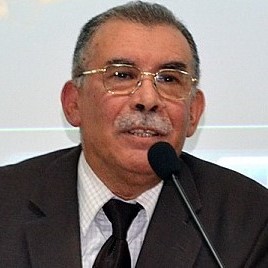
Mohamed Boudhan was an Amazigh writer, thinker, researcher and activist from the Rif, and publisher of the newspaper Tawiza. He was the author of many valuable books and articles on Amazigh identity. May he rest in peace.