Ahmed Assid Criticizes Marginalization of Morocco’s Local Amazigh History and Deconstructs the Path of Identity Formation
Thinker and researcher Ahmed Assid has criticized the sidelining of Morocco’s local history in school curricula adopted after independence. He argued that the nationalist movement’s ideology constructed a narrative rooted in an outside geography rather than drawing on Moroccan territory and its archaeological remains. Instead, he called for viewing Moroccan identity as an original fabric that, through contact with multiple components, produced a distinctive cultural and religious synthesis.
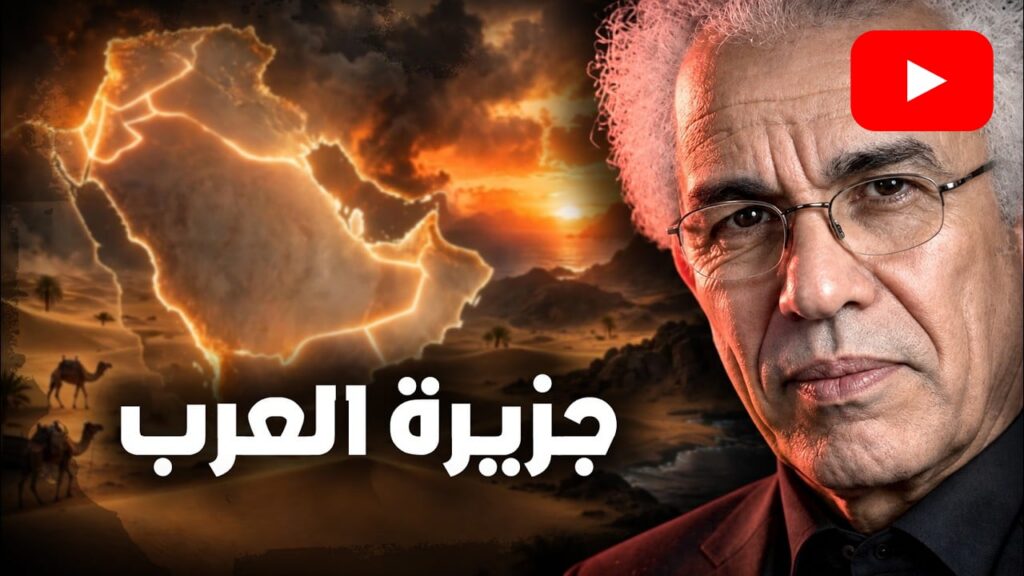
In his remarks, Ahmed Assid noted that the first post-independence history curriculum, in the 1960s and 1970s, opened with a lesson devoted to “the Arabian Peninsula,” based on the premise “that we came from somewhere.” According to him, those classes presented Morocco’s history as that of foreigners and passing peoples—marked by the arrival of the Phoenicians, then the Romans, the Vandals, the Byzantines, and finally the Arabs, up to the offensives of France and Spain—thereby erasing the role of Moroccans themselves in shaping the history of their region.
Challenging this narrative, Assid drew on modern archaeological findings. According to him, these attest to the existence of the oldest agricultural society outside the Nile Valley prior to the arrival of the Phoenicians, as well as the earliest cranial surgery in Taforalt. They also reveal the oldest tools used for making leather clothing, dating back 150,000 years, and the oldest Homo sapiens remains in the world, dating back 315,000 years. He stressed that a civilization is built from its geography—through language and dialects, customs and traditions, architecture, agriculture and agricultural engineering, urban planning, as well as spiritual, moral, and religious values, temple building, and worship rituals.
Turning to the concept of identity, Assid recalled the definition formulated by Aristotle in his logic 2,500 years ago, which defines identity through the immutable characteristics distinguishing one thing from another. However, he warned that applying this notion to anthropology and history poses a problem: peoples who build their civilization on their geography do not live in isolation, but take in other components and populations, blending them into their original fabric through a dual process of rooting and synthesis.
Assid used the metaphor of a “carpet” to illustrate the makeup of Moroccan identity. In his view, Amazigh identity represents the original weave, dating back several millennia, into which other threads and colors have been inserted over the course of historical interactions—both through wars, such as with the Romans and Byzantines, and through exchanges, such as with the Phoenicians. In this context, he rejected claims that Moroccans’ identity is solely Amazigh, with no presence of Arabic or Islam, while maintaining that elements arriving from outside do not remain in their raw state, but acquire a Moroccan and Amazigh imprint through contact with the local environment.
The speaker then drew a sociological distinction between “religion,” as original texts, and “religiosity,” as understanding and practice shaped by each country’s cultural and social context. In this regard, he cited the experience of Malcolm X and the “Ummah” movement in the United States, explaining that African American Islam took shape in light of a culture born of 500 years of slavery and servitude. He also mentioned countries where Muslims, Jews, and Christians are buried in the same cemetery, adding that early historians reported that Muslim exegetes explained verses to Persians according to their language, culture, and proverbs, and to Arabs according to their culture and language.
Assid affirmed that discussing forms of religiosity and the ways religions are instrumentalized does not mean questioning religion itself. He noted that human beings are responsible for using religious texts for good or for the destruction of countries, as has occurred in the history of Judaism, Christianity, Islam, and other traditions, reiterating his statement: “Religion is not responsible for human errors; it is humans who are responsible for reading, understanding, explaining, and interpreting religion for good or for ill.”
In conclusion, Assid argued that this Amazigh synthesis manifested in language through the emergence of Darija, as a third language born from the interaction between the Amazigh language and Arabic in a Moroccan context. It was also expressed in religiosity through the interpretive efforts of local jurists, citing the example of jurists from Sus who ruled and innovated on matters of jurisprudence 300 or 400 years ago. On this point, he expressed astonishment at the positions taken by certain hardliners during the debate over the Family Code, who reject issues that Sus jurists have already moved past and that no longer pose a problem for them.
Video: Ahmed Assid’s YouTube channel (in Arabic)
🎬 Video link : https://youtu.be/quYTQsBKXN8
Arabic version | French version
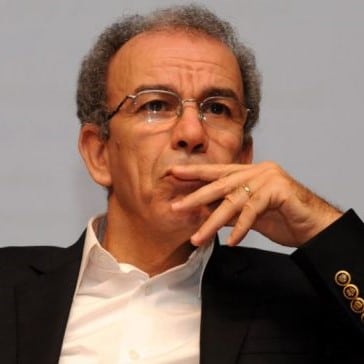
Ahmed Assid is a writer, poet and researcher in Amazigh culture, and a human rights activist who campaigns for Amazigh causes and for human causes in general.