Funding the Implementation of Amazigh’s Official Status: Between Shifting Government Choices and the Challenge of Institutionalization
The debate over implementing the official status of the Amazigh language has evolved beyond mere constitutional recognition or the completion of legal and institutional frameworks. It has shifted toward a scrutiny of the material and financial conditions necessary to transform this recognition into effective practice across all areas of public life.
Following the recognition of the Amazigh language as an official language in the 2011 Constitution and the adoption of Organic Law No. 26.16 in 2019, the primary challenge is now moving from the institutionalization of recognition to the institutionalization of implementation. This transition requires integrated public policies, qualified human resources, clear institutional mechanisms, and sustainable financial mobilization.
In this context, financing should not be viewed as a simple technical parameter or a supporting measure for executing public policy. Instead, it serves as a primary indicator to evaluate the seriousness of political and institutional commitment toward implementing the official status of the Amazigh language. Budgetary choices largely reflect the priority this project holds within the government’s agenda. They also reveal the vision adopted for its management and the willingness to bear the economic and institutional costs over the medium and long term. Constitutional recognition, regardless of its symbolic and legal weight, remains limited in scope if it is not supported by sufficient and regular financial credits capable of moving legal provisions from words to reality.
As such, the changes to the financial framework dedicated to implementing the official status of the Amazigh language are particularly significant. They represent more than a simple change in name or accounting formula; they raise deeper questions about the stability of government choices, the mechanisms used to mobilize resources, and the place of the Amazigh language within the architecture of public policy.
The government of Saad Eddine El Othmani developed an integrated government plan for implementing the official status of the Amazigh language. Subsequently, the government of Aziz Akhannouch committed in its 2021–2026 program to creating a special fund to finance this project starting in 2022. This fund was intended to serve as the state’s financial mechanism to integrate the Amazigh language into education, legislation, administration, media, communication, cultural creation, and public services. This commitment was accompanied by a budget allocation intended to gradually reach one billion dirhams by 2025.
However, it is clear that this commitment was not fulfilled through the creation of an autonomous fund specifically named for the implementation of the official status of the Amazigh language. Instead, a different financial formula was chosen: integrating the funding into the Public Administration Modernization Fund. Its remit was expanded under Article 18 of the 2023 Finance Act and reorganized by Decree No. 2.23.245 on May 8, 2023, under the title “Public Administration Modernization, Digital Transition Support, and Use of the Amazigh Language Fund.”
Under this choice, the Amazigh language was integrated into a multi-sectoral financial mechanism, sharing the same institutional and management framework as administrative modernization and digital transition. While this orientation allowed for the funding of certain projects related to the use of the Amazigh language within public administration, it also sparked a debate about the appropriateness of grouping projects that differ in nature, objectives, and fields of intervention into a single financial tool. The Amazigh language is not merely an additional component of administrative modernization, nor can the implementation of its official status be reduced to improving administrative communication or facilitating user access to public services. It is a multidimensional national project, placed under the patronage of His Majesty King Mohammed VI, spanning education, legislation, media, culture, justice, administration, and various fields of public life.
Consequently, the problem is not necessarily that the funding is housed in a multi-purpose fund, but rather whether this formula can guarantee the visibility of budgetary priorities specific to the Amazigh language. It must ensure sufficient resources and allow government departments to carry out their commitments according to an integrated vision. When multiple sectors are funded by the same mechanism, it becomes crucial to establish clear programming for credits, define the share allocated to each sector, and ensure that the Amazigh language is not relegated to a secondary component within broader budgetary priorities. It is also essential to distinguish between announced credits, amounts actually committed, expenditures made, and concrete results achieved on the ground. Announcing a financial package does not necessarily mean it will be spent or translated into projects with a tangible impact.
Breaking with the current formula, the 2027 Draft Finance Act introduces a new orientation based on the creation of an autonomous special purpose account titled the “Fund for the Implementation of the Official Status of the Amazigh Language.” Its resources and expenditures would be supervised by the Head of Government’s office. These funds would be intended to finance operations and projects related to the integration of the Amazigh language into priority areas of public life, with previous commitments and conventions being transferred to this new fund. If adopted, this system would involve restructuring the financial setup in place since 2023 and returning to an independent financial mechanism dedicated to this project.
This return holds both institutional and political significance, as it raises the question of where the Amazigh language should fit within the state’s financial management system. Establishing an autonomous financial framework could highlight the specific nature of this undertaking, clarify government responsibility, and facilitate the monitoring of allocated resources and expenditures. Furthermore, it could provide better conditions for coordination between the relevant government departments.
However, the autonomy of a fund does not, in itself, guarantee efficiency. Necessary reforms cannot be reduced to a mere modification of the legal or accounting architecture of funding. The true value of any financial mechanism remains tied to its ability to provide regular and sufficient resources and to convert them into feasible, measurable projects and programs.
This raises a fundamental question: does the challenge lie in the absence of an autonomous fund, or in the limitations of funding governance and its implementation mechanisms? Past experience allows for a distinction between two complementary levels: the mobilization and allocation of resources, and their management and transformation into results.
An autonomous financial mechanism can exist without possessing sufficient or regular resources, just as significant credits can be allocated without necessarily impacting the pace of integrating the Amazigh language into public services.
Consequently, financial autonomy must go hand-in-hand with an autonomous vision, its own programming, and a clear definition of responsibilities. This ensures the fund does not become a mere additional financial vessel without a substantial change in management logic.
Furthermore, the nature of this project requires moving beyond the logic of annual and situational funding toward multi-year budget programming. This must account for the deadlines set by Organic Law No. 26.16 and link allocated credits to milestone objectives and sectoral commitments. Integrating the Amazigh language into the administration, for example, is not just about putting up signs or translating a few documents; it requires training human resources, upgrading reception and communication units, developing administrative procedures, creating digital tools, and providing public services in the Amazigh language. The same applies to education, media, and other sectors where integration calls for continuous investment and coordinated action across institutions.
Similarly, linguistic and cultural justice—essential dimensions of equal citizenship—cannot be achieved solely by proclaiming equality between the two official languages in the Constitution. It requires meeting practical conditions that ensure citizens can use their official language and access public services without linguistic discrimination.
From this perspective, funding becomes a lever for linguistic equity, rather than mere public spending for administrative or technical costs. Any delay in mobilizing resources or weakness in their direction impacts the pace of reducing inequalities in service access, as well as the ability of the Amazigh language to move from legal recognition to a natural presence in public spaces.
It is equally essential to establish results-based governance, making funding a tool for planning, monitoring, evaluation, and accountability. This involves setting precise indicators to measure the progress of integration in each sector, conditioning financial support on performance, and publishing data on programmed credits, disbursed amounts, and completed projects—while assigning responsibility for delays or unmet goals. Coordination must also be strengthened between government departments and the Permanent Ministerial Commission for the implementation of the official status of the Amazigh language. This effort should draw on the scientific and institutional expertise of the Royal Institute of Amazigh Culture (IRCAM) to ensure complementarity between planning, funding, execution, and evaluation.
Ultimately, the issue is not the number of funds created by governments or the variety of names they have carried, but the ability of budgetary choices to ensure the sustainability of the project to implement the official status of the Amazigh language. The goal is to create conditions for its transition from legal commitment to social and institutional impact. True institutionalization is measured not only by the existence of laws and institutions but by their ability to produce tangible, lasting results in citizens’ lives.
Therefore, if adopted, the creation of an autonomous fund for implementing the official status of the Amazigh language must serve as an opportunity to rebuild funding governance on clearer and more effective foundations, rather than a simple technical revision of the previous framework. The Amazigh language needs a stable financial policy that moves beyond scattered initiatives and one-off credits, laying the groundwork for a long-term public commitment that makes funding part of an institutional contract regarding the effectiveness of its official status.
Indeed, the transition from the institutionalization of recognition to the institutionalization of results depends on three inseparable conditions: a political will that ensures continuity, sufficient and regular financial resources for implementation, and public governance that ensures their proper use and impact measurement. Otherwise, the recognition of the Amazigh language risks remaining advanced on paper while its integration in practice falls short of constitutional and societal expectations.
Arabic version | French version
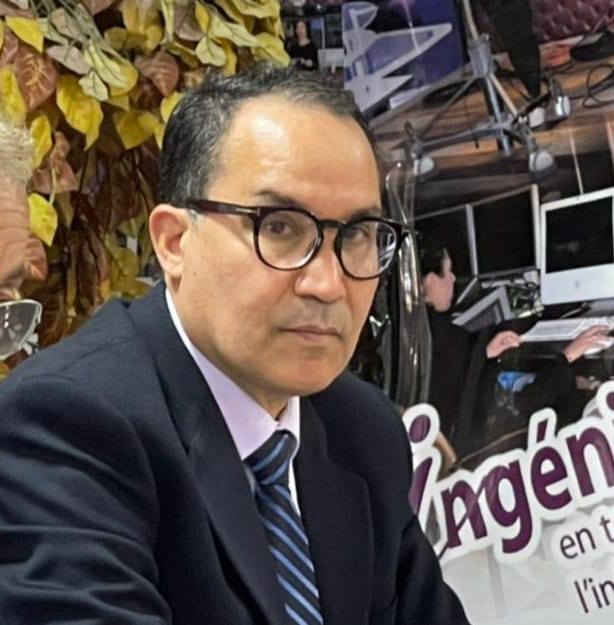
Journalist with a doctorate in political science and constitutional law, and a writer and researcher on the Amazigh cause.