Why Morocco’s New Development Model Is Doomed to Fail
Much has been said lately about the Moroccan development model—its failure, and the search for an alternative or “new” model. This phrase, “development model,” has become the latest favorite topic for the “essays” practiced by political and intellectual elites, who use it to occupy themselves and distract public opinion. Yet, despite the abundance of this rhetoric, those engaging in it have never truly addressed the core nature of this model, its characteristics, or its foundations. Understanding these elements is essential to grasping the causes of its failure and enabling the construction of a new model on entirely fresh ground, distinct from the previous one. This is the only way to prevent the new development model from repeating the same failures.
There is no doubt that several factors define development models depending on the country. Beyond the overarching ideological choices that influence economic direction—such as the adoption of capitalism or socialism—there is the issue of natural resource abundance or scarcity. A country with oil, water, rivers, and fertile land will necessarily have a different economic development plan than one poor in resources. However, despite its importance, the natural element remains secondary to the human factor. When properly skilled, the human element represents a renewable and inexhaustible wealth, unlike natural resources such as minerals, oil, or gas. This is why the most advanced countries are not necessarily those with the most natural resources, but those that have invested in people, turning them into a precious resource capable of generating all others. We can therefore say that the foundations of a development model, and of progress in general, come down to the optimal exploitation of available resources, a fairer distribution of income, and the exemplary training of the individual to create wealth and improve quality of life. Let us keep these defining elements in mind, as we will return to them later.
Corruption: A Pillar of the Makhzen State
In Morocco, everyone speaks of corruption. Long before the question of the development model arose, it became a rhetorical cliché for the political and intellectual elite, whether in the opposition (if a real opposition even exists) or among supporters of the Makhzen state’s choices. The promise to fight corruption has thus become a near-devotional ritual, featured in every electoral program and political speech, whether from administrative, Islamist, or leftist parties. If there is one thing all political currents in Morocco agree on, it is the recognition of this plague’s endemic and terrifying nature.
Yet, this is not merely about “petty corruption”—the kind criminalized by law but which the state is reluctant to prosecute. We are talking here about “grand corruption,” the most dangerous form, which is not explicitly punished by law, making it virtually licit and tolerated. This grand corruption operates as a form of institutional and structural rent-seeking, manifesting through bonuses, gifts, privileges, and various gratifications. It includes the granting of licenses for the exploitation of fisheries and mineral resources, transport permits, and appointments to high-ranking positions. It also involves the occupation of highly paid “ghost” jobs and the unjustified expansion of the number of parliamentarians and ministers with exorbitant salaries to serve the logics of co-optation and clientelism so dear to the Makhzen. Furthermore, it encompasses the creation of purely formal national institutions and councils whose leadership—and the staggering incomes that come with it—is entrusted to relatives or loyalists. Added to this is the formation of facade commissions whose members receive millions in allowances, the distribution of state-owned land at derisory prices to those considered “servants of the state,” the granting of exceptional pensions to ministers and parliamentarians outside any legal framework, tax exemptions for those close to power, and the public funding of pilgrimages. All these rent-seeking practices, as numerous as they are varied, allow for enrichment without cause, without labor, and without production. They constitute the “grand corruption” for which no one—neither the decision-makers nor the beneficiaries—is held accountable, as it is viewed as quasi-legitimate. If the state turns a blind eye to petty corruption and fails to apply the law against the predators of public funds, it is because grand corruption protects the petty kind; the latter is often the work of those who serve the interests of the system’s primary beneficiaries.
Because this grand corruption is considered virtually legal, it is inherent to the Makhzen state and serves as its primary mechanism for managing affairs. It has become a pillar of the existence, survival, and longevity of this state, on par with territory, the people, or political power. Consequently, one can understand the importance of corruption to the Makhzen system and the difficulty—indeed, the impossibility—of eradicating it: doing so would mean shaking one of the very foundations of the state. Corruption in Morocco is therefore not a circumstantial, accidental, or marginal phenomenon; it is structural and constitutive, immanent to the nature of the Makhzen system (see “Philosophy of Corruption in Morocco” in the book “Sur l’identité amazighe du Maroc“). Henceforth, the question is no longer how the Makhzen state lives off corruption, but whether it is capable of surviving without it.
What is the link between corruption, development, and the development model?
We previously established that the elements states rely on to build their development models are natural resources and, crucially, the human element. The ultimate goal of any development model is the creation of wealth, the results of which are manifested in progress and an improved quality of life. However, just as Morocco is distinguished by an endemic and predominant corruption that has become a pillar of the state, it is equally distinguished by the construction of its development policy—or its development model—upon that very same pillar of corruption. While other nations exploit their natural resources and develop their human capital to achieve development and create wealth, Morocco also exploits its resources and shapes its human capital, but not to achieve development or wealth. Instead, it does so to cultivate corruption and create the conditions for its propagation and entrenchment.
How do the exploitation of natural resources and the “qualification” of the human element facilitate the spread of corruption?
When individuals are granted, for instance, deep-sea fishing licenses, private mining and quarrying permits, or plots of public land, the exploitation of these resources does indeed generate wealth. However, this wealth benefits only the recipients of these privileges, whose fortunes grow and capital multiplies without them having to provide the labor, effort, or work typically required to accumulate such assets. This represents enrichment without legitimate legal or moral cause; it is essentially no different from possessing stolen property. Consequently, while the exploitation of these resources swells the private coffers of the beneficiaries, it impoverishes the nation. The public is stripped of the revenue from its own resources through this individualized exploitation, whereas these assets should have served the people rather than an elite of influencers, loyalists, and those close to the corridors of power. Instead of these resources contributing to broad-based development for the entire population, those in charge of the economy, finance, and the public domain distribute them as rewards and political kickbacks to those they deem servants of the “Makhzenian” state—loyal partisans and those within inner decision-making circles. In this environment, the necessary conditions for development and progress evaporate, as corruption dictates the exploitation and distribution of natural wealth. This corruption uses these resources not for the collective good, but to ensure its own expansion and entrenchment. This corrupt system of resource exploitation—designed to buy consciences and allegiances while perverting political life—extends into the service and commercial sectors. Exploitation licenses that generate wealth without genuine work or effort, such as transport, import, or investment permits (agréments), are graciously handed out to cronies and loyalists.
As for the development of the human element—a role crucial to any authentic progress—under a policy of systemic political corruption, it takes the form of “qualifying” the political and partisan elite to accept, profit from, and participate in this very corruption. In this context, “qualification” means grooming individuals for graft. This is what has allowed this scourge to dominate and impose itself with unparalleled arrogance, unchecked by any authority. Indeed, political parties that denounce corruption during election campaigns—claiming that their absolute priority in Parliament or government will be fighting graft and despotism—are not actually denouncing corruption itself. In reality, they are lamenting their own exclusion from its spoils and largesse. This is why, the moment they enter Parliament or government and receive their share of salaries and positions born of this near-institutionalized corruption, they fall silent. If they do speak, it is only to repeat the famous phrase, “Let God forgive the past” (Afou Allahu ‘amma salaf), as former Head of Government Abdelilah Benkirane once did, reassuring the corrupt and their bribers that they are safe from any prosecution or accountability. Thus, the policy of political “qualification” for corruption succeeds in compromising opponents, drawing them into the system. They become its practitioners, protectors, and reproducers—the very fuel and engine of the machine. Consequently, involvement in corruption has become the primary tool used by the Makhzen to domesticate opponents and contain those who refuse to submit to its authoritarianism.
Corruption leads to more poverty, oppression, and authoritarianism:
The pillaging of natural resources, which belong to the people, is not enough on its own to fund this corruption. As previously explained, such corruption is indispensable to the Makhzen state, serving as the very pillar of its existence and survival. Because maintaining this system requires ever-increasing funds to satisfy its many clients, beneficiaries, and participants, the Makhzen state resorts to increased taxation and massive borrowing. National debt has reached staggering and alarming heights, leading to a decline in purchasing power for Moroccans and the degradation of state-provided social services. Naturally, it is the people who must repay these debts while buckling under the weight of taxes. These austerity measures imposed on citizens serve only to secure the wealth and well-being of the class that benefits from corruption, whether it be the ruling elite or the political and partisan figures at their service. This provides the answer to the question the King once asked in a speech: “Where is the wealth?” The answer is simple: that wealth is being swallowed by corruption.
Given the staggering amount of money devoured by corruption, one can conclude that Morocco is actually an extremely wealthy country. This is because it effectively operates with two budgets: one for state expenditures and another dedicated to the costs of corruption. This means that if it were not for this epidemic of corruption, the state would have no need to burden its citizens with taxes or rely on foreign debt. The general state budget would be more than enough to cover all public spending. The benefits would naturally translate into a higher standard of living for the population and improved quality in public and social services, such as health and education.
It is clear that as long as corruption remains a systemic state policy and a pillar of the regime’s existence—devouring billions in public funds every year—no real progress or success in development is possible. The funds that should be allocated to national development projects for the benefit of all citizens are instead diverted to finance corruption and expand the fortunes of a class of corrupt actors and their enablers.
One consequence of this scourge is that its proliferation fuels a rise in the very repression and authoritarianism that gave birth to the corruption in the first place. This cycle is evident in the Makhzen state’s increasing use of crackdowns and bans against peaceful protesters who stand up against corruption. These citizens demand that the corrupt be held accountable and call for a fair distribution of wealth based on merit and hard work rather than rent-seeking and political bribery. The state also employs “judicial violence” to crush these peaceful movements, as seen in its response to the Hirak Rif and the protests in Jerada. Thus, authoritarianism breeds corruption, which in turn requires even more authoritarianism to protect and sustain itself, ultimately resulting in even greater oppression.
An alternative development model:
After the admission of the failure of Morocco’s development model, a new model is currently being prepared (as of December 2018) with the expectation that it will be efficient and capable of generating wealth and employment. What are the conditions for this second model to succeed? The answer lies in analyzing the causes of its predecessor’s failure. Why did it fail? Because it was built on, emanated from, and fed back into corruption. Consequently, the sine qua non for the success of the new development model is ending corruption. This presents a genuine dilemma for the Makhzenian state: for its model to succeed and generate real development, it must eradicate the corruption that hampers all progress. Yet, if it eliminates corruption, it destroys one of the pillars of its own existence and longevity, as explained above. Will the Makhzenian state risk sacrificing one of its foundations, even at the peril of its own survival?
Faced with this impasse, it seems the only solution capable of preserving the state while ensuring the success of the development model is to sacrifice the “Makhzenian” dimension of the state—the very source and cause of corruption. This requires rebuilding the state on non-Makhzenian foundations: democratic principles where the law takes precedence over any other rule, custom, or instruction shielding corruption. This entails applying the law to criminalize and ban all forms of rent-seeking—practices that the policy of corruption has transformed into legitimate activities—and holding both the corrupt and the corrupters accountable, regardless of their rank or responsibilities.
Rebuilding the state on non-Makhzenian foundations also requires a complete overhaul and ethical reform of political activity. It means making a definitive, serious, and rigorous break from the conception of politics as a means of personal enrichment and wealth accumulation, as it is practiced today. If the Makhzen is the source and cause of corruption, it is because it has successfully turned political activity into a shortcut to rapid wealth—to the point where entering politics has become an investment sector yielding colossal profits for its participants. One need only look at the examples of party leaders and human rights, leftist, or opposition activists who were neither wealthy nor well-off before entering politics as parliamentarians, ministers, or high-level appointees. In just a few years, they have become extravagantly wealthy elites, owning real estate, residing in luxury villas, and holding substantial bank accounts.
When politics is no longer seen as a path to fortune, and when the Makhzenian component of the state fades to make way for a state governed by the rule of law, any development model—regardless of its flaws—will be more effective and fruitful than one designed by the finest experts and economists but implemented under the grip of corruption. Therefore, the success of the new development model does not depend on its preparation by commissions of experts or consultancies; it simply requires ending the policy of corruption that makes the failure of any development project certain and inevitable. Continuing to draft and apply a new model without dislodging the monster of corruption amounts to perpetuating and reproducing the same practices, with the inevitable consequence of repeating previous failures. The new development model will fail just like its predecessor, for the same causes always produce the same effects.
Arabic version | French version
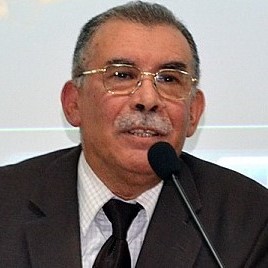
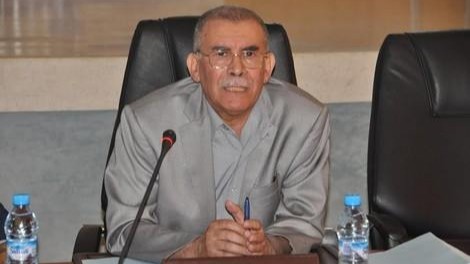
Mohamed Boudhan was an Amazigh writer, thinker, researcher and activist from the Rif, and publisher of the newspaper Tawiza. He was the author of many valuable books and articles on Amazigh identity. May he rest in peace.