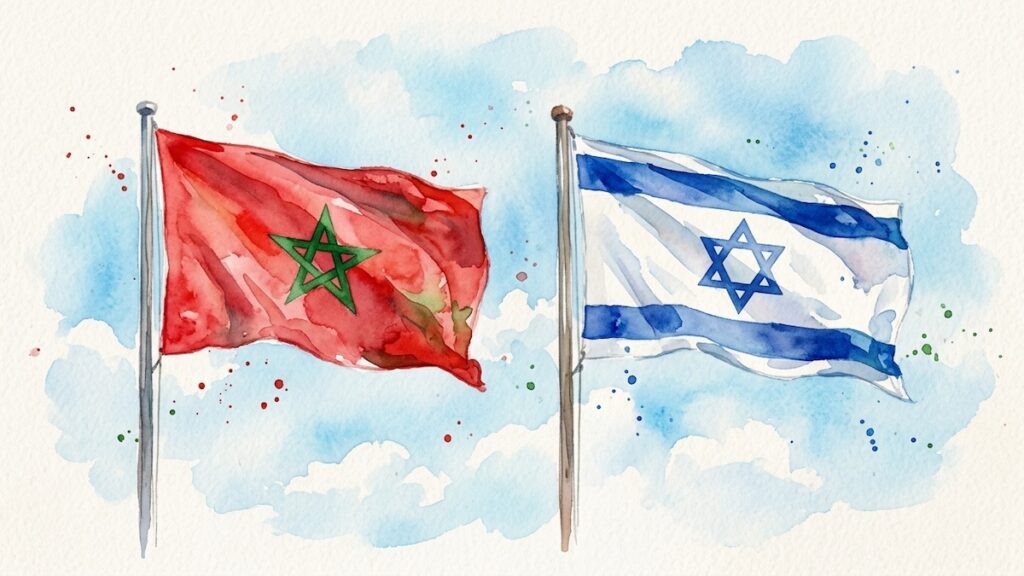
Morocco And Israel: A 2,000-Year-Old Covenant Of Coexistence: From Judeo-Berber Roots To A Strategic Alliance
Key Takeaways:
Moroccan Judaism developed over two millennia through interaction among indigenous Amazigh populations, ancient Jewish communities, and later Sephardic refugees after 1492, producing a distinctive Maghrebi synthesis embedded in Moroccan society despite legal inequality and episodic violence.
The twentieth-century mass emigration to Israel created a large diaspora that retained strong cultural attachment to Morocco, providing a human foundation that the 2020 Abraham Accords later formalized into a multidimensional strategic partnership.
While the relationship draws on shared heritage and mutual strategic interests, its sustainability remains constrained by the unresolved Palestinian question, Moroccan public opinion, and the need to distinguish historical affection from contemporary political disagreement.
The historical relationship between Morocco and its Jewish population constitutes one of the most enduring examples of Jewish-Muslim interaction in the Mediterranean and North African worlds. Extending over approximately two millennia, this relationship developed through successive migrations, cultural encounters, religious exchanges, commercial networks, political transformations, and shared historical experiences.
Moroccan Judaism emerged as a distinctive civilizational formation, shaped by the interaction of indigenous Amazigh populations, ancient Jewish communities, Arab-Islamic civilization, and successive waves of Sephardic immigration, particularly following the expulsions from Spain and Portugal. Its historical development cannot be understood through a simple narrative of uninterrupted harmony, since it also involved legal inequality, episodes of persecution, political vulnerability, and periodic violence. Nevertheless, Jewish communities remained deeply embedded in Moroccan society and contributed significantly to its economic, intellectual, artistic, and cultural development.
The mass emigration of Moroccan Jews during the twentieth century, particularly to Israel, transformed this historical relationship without extinguishing its emotional and cultural foundations. The Moroccan Jewish diaspora in Israel preserved a powerful attachment to its ancestral homeland, producing a transnational identity in which Israeli citizenship and Moroccan cultural belonging coexist. This historical connection acquired renewed geopolitical significance with the restoration of Moroccan-Israeli diplomatic relations in December 2020 under the Abraham Accords.
The present essay argues that the rapprochement between Rabat and Tel Aviv should be understood as the convergence of three interrelated processes: a long-standing civilizational relationship, the institutionalization of transnational historical connections, and the strategic recalibration of regional and international alliances. It examines the Judeo-Amazigh substratum, Sephardic migration, the mellah, royal protection, the Vichy period, the Aliya, the preservation of Moroccan Jewish heritage, the strategic partnership, and the continuing tension between normalization and the Palestinian question. It concludes that Morocco’s historical experience offers important resources for contemporary debates about interfaith coexistence, peace education, and the possibilities and limitations of a new Mediterranean and Middle Eastern political imagination.
1. Introduction: A historical relationship that transcends diplomatic normalization
The relationship between Morocco and Israel presents an exceptional case in contemporary international relations because its historical foundations are considerably older than the political entities and diplomatic arrangements through which it is currently expressed. Unlike bilateral relationships established primarily through treaties, strategic calculations, or commercial interests, the Moroccan-Israeli relationship possesses a substantial human and civilizational dimension rooted in the historical experience of Moroccan Jews and their descendants. The Jewish presence in Morocco, conventionally traced across approximately two millennia, has generated a cultural relationship whose effects continue to be felt in both countries. Moroccan Jews were not merely a religious minority residing within a predominantly Muslim society; they were participants in the historical construction of Moroccan civilization, contributing to its commercial networks, urban institutions, intellectual traditions, artistic production, religious landscape, and connections with the wider Mediterranean world. Their departure during the twentieth century therefore represented more than a demographic transformation: it constituted the dispersal of an important component of the country’s historical identity, while simultaneously creating a substantial Moroccan-origin community in Israel whose emotional attachment to its ancestral homeland has remained remarkably resilient (Ben-Layashi & Maddy-Weitzman, 2010; Zafrani, 1998, 1999; Chtatou, 2023).
The frequently repeated expression among Moroccan Israelis that their feet are in Israel but their hearts remain in Morocco captures the particular character of this relationship. It describes an emotional geography in which migration has not necessarily produced cultural severance, and in which the acquisition of a new national identity has not required the abandonment of an older historical belonging. The attachment manifests itself in the preservation of Moroccan Arabic and Judeo-Arabic expressions, the transmission of family narratives, the celebration of Moroccan Jewish festivals, the perpetuation of culinary and musical traditions, the veneration of ancestral rabbis, and the continued pilgrimage to Jewish shrines and cemeteries in Morocco. For many families, the ancestral homeland is not an abstract memory but a tangible landscape of cities, neighbourhoods, houses, synagogues, cemeteries, and sacred places. This attachment has been transmitted across generations, including among descendants who were born in Israel and have never personally experienced the Morocco remembered by their grandparents. The phenomenon is therefore not adequately described as nostalgia: it constitutes a form of transnational cultural belonging in which historical memory continues to shape contemporary identity (Cohen, 2019; Zafrani, 1998; Chtatou, 2023).
The historical relationship must nevertheless be approached with scholarly precision. The notion that Moroccan Muslims and Jews have always lived in perfect harmony would be as misleading as the opposite claim that their history was characterized by permanent religious antagonism. Moroccan Jewish life developed within a hierarchical legal and political order in which the status of non-Muslim communities was historically differentiated. The institution of dhimma provided a framework of protection while simultaneously establishing particular obligations and restrictions. The experience of Jewish communities varied considerably according to dynasty, locality, economic circumstances, political stability, and the disposition of individual rulers. Periods of intellectual prosperity, commercial integration, and royal protection alternated with discrimination, forced displacement, persecution, and violence. The 1465 massacre in Fez, the recurrent insecurity experienced by some Jewish communities, and the restrictions associated with particular political regimes must therefore be included in any serious historical account. The analytical significance of Moroccan Jewish history does not depend on demonstrating that coexistence was perfect; rather, it lies in understanding how a Jewish population remained an integral part of Moroccan society despite changing political circumstances and structural religious inequalities (Ben-Layashi & Maddy-Weitzman, 2010; Gottreich, 2007; Kenbib, 1994; Chtatou, 2023).
This distinction is essential to the central argument of the present essay. The Moroccan-Israeli relationship should be understood through the interaction of historical memory, cultural continuity, royal institutions, diaspora connections, and contemporary geopolitical interests. The Abraham Accords did not create the human relationship between Morocco and Israel; they provided a diplomatic framework through which a historically embedded relationship could be reconfigured. Conversely, the existence of a shared historical inheritance does not automatically explain every strategic decision taken by Rabat or Tel Aviv. The recognition of Moroccan sovereignty claims over Western Sahara by the United States, Morocco’s security calculations in North Africa, Israel’s interest in expanding its diplomatic and technological partnerships, and Washington’s regional diplomacy were all important elements in the 2020 agreement. The relationship is therefore simultaneously historical, societal, diplomatic, and geopolitical, and its future will depend on the ability of these dimensions to coexist (Ben-Layashi & Maddy-Weitzman, 2010; Maghraoui, 2025; Werenfels, 2024; Chtatou, 2021; Chtatou, 2023).
The essay advances five interconnected propositions. First, Moroccan Judaism developed through a long process of interaction between ancient Jewish communities, indigenous Amazigh populations, Mediterranean migrations, and Arab-Islamic civilization, producing a distinctive cultural formation that cannot be reduced to a single genealogical origin. Second, the arrival of the Megorashim after 1492 transformed Moroccan Jewish religious, linguistic, intellectual, and commercial life, creating a particularly rich synthesis of indigenous and Sephardic traditions. Third, the Moroccan monarchy, especially during the reign of Mohammed V and subsequently under Mohammed VI, has occupied an important position in the political and symbolic protection and recognition of Jewish heritage, although the historical record requires a nuanced assessment rather than uncritical hagiography. Fourth, the migration of Moroccan Jews to Israel created a major transnational community whose continuing attachment to Morocco has become an important social foundation for bilateral relations. Fifth, normalization has developed into a multidimensional strategic relationship, but its sustainability remains conditioned by the Palestinian question, Moroccan public opinion, and the wider geopolitical transformations of the Mediterranean, North Africa, and the Middle East.
2. The ancient Jewish presence in North Africa and the formation of Moroccan Judaism
The history of Moroccan Jewry must be situated within the wider history of Jewish settlement in North Africa, a region whose Mediterranean ports, commercial networks, and trans-Saharan connections facilitated population movements long before the emergence of modern nation-states. Jewish communities were established in different parts of the Maghreb during antiquity, although the precise chronology of their earliest settlement in Morocco remains difficult to establish. The destruction of the First Temple in Jerusalem in the sixth century BCE is frequently invoked in traditional accounts of North African Jewish origins, but such narratives should be distinguished from independently verifiable archaeological evidence. The presence of Jewish communities in Roman North Africa is considerably better documented through inscriptions, funerary remains, and literary references. In Morocco, archaeological and epigraphic evidence associated with Roman sites, including Volubilis, provides evidence of Jewish presence in antiquity, although the interpretation and dating of individual discoveries require caution. The broader historical picture suggests that Jewish settlement in the region developed through multiple processes, including commercial migration, displacement, religious affiliation, and subsequent demographic interaction with indigenous populations (Hirschberg, 1963; Stillman, 1979; Zafrani, 1998; Andreeva et al., as discussed in Chtatou, 2023).
The significance of this ancient presence is not simply chronological. It demonstrates that Jewish communities were part of the North African Mediterranean environment before the Arab-Islamic conquests and that their subsequent history cannot be interpreted exclusively through the framework of Islamic minority status. When Islam expanded across North Africa during the seventh and eighth centuries, it encountered a region already characterized by considerable religious, linguistic, and political diversity. Indigenous Amazigh communities maintained their own political structures, languages, customary practices, and religious affiliations, while Jewish populations participated in commercial and urban networks extending across the Mediterranean and the Sahara. The subsequent Islamization and Arabization of the Maghreb did not erase this diversity; rather, they created new conditions within which older communities adapted, interacted, and developed new cultural forms. Moroccan Judaism consequently emerged through a long process of historical accommodation and cultural exchange, rather than through a single founding event (Hirschberg, 1963; Kenbib, 1994; Zafrani, 1998; Chtatou, 2023).
One of the most intriguing dimensions of this history concerns the relationship between Jewish communities and the Amazigh populations of North Africa. The expression Judeo-Amazigh cultural substratum refers to the accumulated linguistic, social, religious, and cultural interactions between Jewish and Amazigh communities over many centuries. It should not be treated as a claim that all Moroccan Jews descended from Amazigh converts to Judaism, nor should the existence of cultural similarities be mistaken for proof of a single ethnic origin. The historical record instead suggests a complex pattern involving Jewish migrants who settled among Amazigh populations, indigenous individuals and groups who adopted Judaism, intermarriage, bilingualism, and the adaptation of religious practices to local social environments. The extent of Judaization among pre-Islamic Amazigh groups remains contested in the historiography, and the evidence does not justify treating the entire Jewish population of North Africa as the product of mass conversion. Nevertheless, the presence of Jewish communities in Amazigh-speaking regions, their use of Berber languages, and their participation in local social structures are important elements of the historical record (Hirschberg, 1963; Levy, 2013; Stillman, 1979; Chtatou, 2021; Chtatou, 2026).
The Judeo-Amazigh relationship is particularly visible in the linguistic history of Moroccan Jewry. Jewish communities did not constitute a linguistically isolated population. They adopted the languages of their immediate environments, developing distinctive forms of Judeo-Arabic and, in certain regions, speaking Amazigh varieties as their everyday vernacular. Simon Lévy’s research on the Arabic dialects of Moroccan Jews demonstrates the considerable linguistic diversity of these communities, whose speech patterns reflected regional geography and prolonged interaction with surrounding populations. In the High Atlas and other Amazigh-speaking areas, Berber languages remained important domestic and communal languages, while Jewish populations in northern Morocco also maintained Judeo-Spanish traditions. Hebrew, meanwhile, retained its religious and liturgical significance, although it also functioned as a language of scholarship and correspondence within wider Jewish intellectual networks (Lévy, 2013; Zafrani, 1998; Chtatou, 2021).
This linguistic plurality is more than an ethnographic curiosity. It reveals the extent to which Moroccan Jewish identity developed through participation in the cultural environment of the Maghreb. A Jewish family living in the Atlas Mountains could speak Amazigh at home, use Hebrew in religious contexts, and participate in commercial exchanges conducted in Moroccan Arabic. Such multilingualism created forms of social competence and cultural familiarity that connected Jewish communities to the wider Moroccan world. It also helps explain why the migration of Moroccan Jews to Israel did not necessarily dissolve their cultural identity: the languages and customs that had been transmitted through generations became markers of collective belonging in the new environment. The persistence of Moroccan Arabic, Judeo-Arabic expressions, Amazigh vocabulary, and distinctive religious melodies among Moroccan Israelis demonstrates that cultural memory can survive geographical displacement (Lévy, 2013; Cohen, 2019; Zafrani, 1998; Chtatou, 2023).
The cultural interaction between Jewish and Amazigh communities also extended into economic and social organization. In many rural areas, Jewish families were involved in crafts, trade, metalworking, jewellery, and other occupations that complemented the agricultural activities of surrounding communities. The distribution of economic roles varied considerably across regions and historical periods, and it would be misleading to present a rigid division of labour between Jews and Amazigh Muslims. Nevertheless, the interdependence of rural and urban economies created repeated occasions for cooperation, exchange, and the development of local relationships. Jewish traders connected villages to regional markets, while Muslim and Jewish artisans participated in overlapping systems of production and distribution. Such relations were not necessarily egalitarian, but they demonstrate that Jewish life was embedded in the material economy of Moroccan society rather than existing as an isolated communal enclave (Kenbib, 1994; Gottreich, 2007; Levy, 2013; Chtatou, 2026).
The religious dimension of this interaction deserves equal attention. Moroccan Judaism developed within a wider North African environment in which sacred places, saintly figures, pilgrimage, blessings, and the spiritual authority of religious specialists occupied important positions. Jewish communities maintained their own theological traditions and religious institutions, yet certain practices developed in forms that were culturally intelligible to Muslim neighbours. The veneration of Jewish saints, the pilgrimage to the tombs of revered rabbis, and the social importance of sacred sites sometimes attracted participation or respect across religious boundaries. Issachar Ben-Ami’s study of Jewish saint worship and Judeo-Muslim pilgrimages in Morocco provides an important ethnographic account of this phenomenon, demonstrating that shared sacred geography could become a point of interaction even where theological interpretations remained distinct (Ben-Ami, 1990; Zafrani, 1998; Chtatou, 2022; Chtatou, 2023).
The cave of Kaf al-Moumen in Sefrou, popularly associated with the memory of a Muslim and a Jewish saint, illustrates the symbolic significance of this shared religious landscape. Such sites should not be used to claim that Islam and Judaism became indistinguishable in Morocco; their doctrinal differences remained substantial, and each community maintained its own religious authorities and ritual practices. Their significance lies instead in the capacity of local communities to recognize sacred places associated with the other, and in the development of a social environment where religious difference did not necessarily preclude mutual reverence. These practices provide an important historical context for understanding the distinctive forms of Moroccan convivencia, although they must be interpreted with attention to the inequalities and tensions that also shaped communal relations (Ben-Ami, 1990; Zafrani, 1998; Chtatou, 2026).
3. The Judeo-Amazigh cultural substratum: Identity, memory, and the limits of historical reconstruction
The concept of a Judeo-Amazigh cultural substratum deserves particular attention because it challenges simplified accounts of Moroccan national and religious identity. Conventional historical narratives have often presented Moroccan Jews primarily as descendants of Iberian Sephardic refugees, thereby underestimating the antiquity and indigenous dimensions of Jewish life in North Africa. The Sephardic contribution was unquestionably transformative, but Moroccan Judaism existed long before 1492. The Toshavim, or established communities, maintained traditions that reflected their long residence in the Maghreb, and some Jewish populations were deeply integrated into Amazigh-speaking rural environments. The distinction between indigenous and immigrant communities was never absolute, since centuries of migration, conversion, intermarriage, and cultural exchange continually reshaped communal identities. The resulting Jewish population was therefore historically heterogeneous, combining ancient North African lineages, Amazigh cultural influences, Arab-Islamic linguistic and social environments, and later Sephardic traditions (Hirschberg, 1963; Zafrani, 1998; Ben-Layashi & Maddy-Weitzman, 2010; Chtatou, 2021).
The historical discussion of Judaized Amazigh groups is often associated with the account of Ibn Khaldun, who reported that certain Berber tribes had practiced Judaism before the Arab conquest. His account has attracted considerable attention because it provides a medieval textual reference to Jewish affiliation among parts of the Amazigh population. Yet Ibn Khaldun’s narrative cannot be treated as a comprehensive demographic census, nor does it establish that all or most later North African Jews descended from those groups. The history of the Kahina, the legendary or historical Amazigh leader associated in later traditions with resistance to the Arab conquest, has likewise been appropriated by different national, religious, and ideological narratives. The responsible scholarly approach is to recognize the existence of Jewish Amazigh groups while resisting the temptation to turn fragmentary historical evidence into an all-encompassing origin myth (Hirschberg, 1963; Stillman, 1979; Chtatou, 2026).
The importance of the Judeo-Amazigh substratum is therefore cultural and historical as much as genealogical. It draws attention to shared patterns of social organization, vernacular language, regional identity, customary practices, and economic life. It also highlights the inadequacy of treating Jewish, Arab, and Amazigh identities as mutually exclusive categories. A Moroccan Jew could be Jewish in religious affiliation, Amazigh in linguistic and regional belonging, and Moroccan in political and cultural identification. These dimensions were not necessarily experienced as competing identities. Rather, they formed overlapping layers of belonging that were shaped by family history, locality, occupation, religious practice, and historical circumstances. Such complexity is central to understanding Moroccan national identity and its constitutional recognition of multiple historical components (Lévy, 2013; Zafrani, 1998; Chtatou, 2021; Chtatou, 2023).
This point has particular relevance for contemporary Morocco. The recognition of Amazigh identity in the 2011 Constitution and the acknowledgment of the Hebrew tributary within the country’s historical identity create an official framework in which Jewish and Amazigh heritage are not treated as marginal additions to an otherwise homogeneous national narrative. The constitutional preamble describes Moroccan identity as forged through the convergence of Arab-Islamic, Amazigh, and Saharan-Hassani components and enriched by African, Andalusian, Hebraic, and Mediterranean influences. This formulation is significant because it presents the Moroccan nation as the historical product of convergence rather than cultural uniformity. It also provides a constitutional foundation for heritage policies that recognize Jewish history as part of the country’s national patrimony (Kingdom of Morocco, 2011; Chtatou, 2023).
The Judeo-Amazigh substratum also complicates the assumption that the relationship between Jews and Muslims in Morocco began only after the Arab conquest. The two communities interacted within a wider North African environment whose social and cultural foundations predated Islam. Subsequent Islamization did not simply replace earlier cultural structures; it incorporated, transformed, and reinterpreted many of them. This helps explain the persistence of certain shared customs, regional practices, and sacred geographies across religious boundaries. The historical relationship between Moroccan Jews and Muslims must therefore be examined within a longue durée framework that includes pre-Islamic, Islamic, and modern periods rather than being confined to the history of the dhimma (Zafrani, 1998, 1999; Ben-Layashi & Maddy-Weitzman, 2010; Chtatou, 2026).
4. The Megorashim of 1492: Sephardic exile and the transformation of Moroccan Judaism
The expulsion of the Jews from Spain in 1492 constituted a decisive turning point in the history of Jewish communities across the Mediterranean, and Morocco became one of the principal destinations for refugees seeking to escape the religious and political transformations of the Iberian Peninsula. The decree issued by the Catholic Monarchs, Ferdinand of Aragon and Isabella of Castile, compelled Jews who refused conversion to leave the kingdoms of Spain. The subsequent expulsions and forced conversions in Portugal further intensified the movement of Jewish populations towards North Africa, the Ottoman Empire, and other Mediterranean territories. For Morocco, the arrival of these refugees represented a major demographic and cultural development, introducing new intellectual traditions, commercial expertise, liturgical practices, linguistic influences, and institutional forms into an already established Jewish society (Gerber, 2021; Benbassa & Rodrigue, 2000; Zafrani, 1998).
The newcomers became known as the Megorashim, meaning the expelled, while the established Moroccan Jewish communities were commonly referred to as the Toshavim. These designations reflected differences in historical experience and cultural practice, although the boundaries between the groups gradually became less rigid. The Toshavim possessed traditions shaped by centuries of life in the Maghreb, while the Megorashim brought with them the intellectual and religious inheritance of Sepharad, including distinctive liturgical rites, rabbinical scholarship, commercial networks, and memories of Iberian Jewish civilization. The encounter was not always harmonious: differences in ritual practice, communal authority, legal interpretation, and social organization produced tensions in certain localities. Over time, however, interaction and institutional accommodation generated a distinctive Moroccan Sephardic synthesis that incorporated both indigenous and Iberian elements (Zafrani, 1998; Ben-Layashi & Maddy-Weitzman, 2010; Chtatou, 2023).
The importance of the Megorashim lies partly in the intellectual transformation they brought to Moroccan Jewish life. Sephardic refugees included rabbis, scholars, physicians, merchants, translators, and individuals with experience in the commercial and administrative structures of Iberian society. Their arrival strengthened the intellectual institutions of Moroccan Jewry and contributed to the development of religious jurisprudence, biblical commentary, Hebrew poetry, philosophy, and communal education. Fez, already a major centre of scholarship and commerce, became an important site of this intellectual interaction. Other cities, including Tetouan, Meknes, Marrakech, and later Essaouira, also developed significant Jewish communities whose religious and cultural institutions reflected the interaction of local and Sephardic traditions (Zafrani, 1998; Kenbib, 1994; Gerber, 2021).
The Sephardic contribution also reshaped Moroccan Jewish linguistic culture. Judeo-Spanish traditions remained particularly important in northern Morocco, while Judeo-Arabic continued to dominate in many urban and rural communities. Hebrew functioned as a language of religious scholarship and liturgical expression, and Amazigh remained an everyday language in some rural Jewish communities. This linguistic diversity reveals that the arrival of Sephardic refugees did not erase the older cultural foundations of Moroccan Judaism. Instead, the Megorashim entered an already plural environment and contributed to its further development. The result was not a uniform Sephardic identity but a complex cultural synthesis in which Iberian traditions were localized and transformed through prolonged interaction with the Maghreb (Lévy, 2013; Zafrani, 1998; Chtatou, 2021).
The commercial consequences were equally important. Sephardic refugees brought experience in Mediterranean trade, financial intermediation, international correspondence, and commercial organization. Their networks connected Moroccan cities to ports and markets in Iberia, the Ottoman Empire, Italy, France, and other parts of Europe. Jewish merchants frequently acted as intermediaries between Moroccan authorities and foreign commercial interests, while some prominent families developed relationships with the Sultan’s court. The position of Jewish merchants within the Moroccan political economy illustrates the extent to which religious minorities could occupy influential economic roles despite their differentiated legal status. The institution of the Tujjar as-Sultan, or Sultan’s merchants, is particularly revealing of the relationship between commercial expertise, diplomatic mediation, and royal authority (Kenbib, 1994; Schroeter, 1988; Gottreich, 2007).
The Sephardic transformation of Moroccan Judaism should therefore be understood as a process of cultural integration rather than simple demographic replacement. The Megorashim did not create Moroccan Jewish civilization from nothing, nor did they preserve an unchanged Iberian identity after migration. They entered a society with its own established Jewish communities and became participants in a new cultural formation. The resulting Moroccan Jewish civilization was at once Sephardic and Maghrebi, shaped by Hebrew scholarship, Judeo-Arabic and Judeo-Spanish linguistic traditions, Amazigh influences, Arab-Islamic intellectual environments, and Mediterranean commercial networks. This synthesis helps explain the distinctive character of Moroccan Jewish identity and the enduring emotional attachment of its descendants to Morocco (Zafrani, 1998; Ben-Layashi & Maddy-Weitzman, 2010; Chtatou, 2023).
5. The mellah: A space of communal identity, separation, and interaction
The mellah occupies a central position in the historical geography of Moroccan Judaism and provides an important perspective on the relationship between Jewish communal autonomy and the political structures of the Moroccan state. The word mellah, generally associated with the Arabic word for salt, came to designate the Jewish quarter in Moroccan cities. The establishment of the mellah of Fez during the fifteenth century is conventionally associated with 1438, although historians have noted that the relocation of Jewish residents from different parts of the old medina may have occurred progressively rather than through a single administrative decision. The development of Jewish quarters in other Moroccan cities followed different historical trajectories, reflecting the political and demographic circumstances of each locality. These quarters were not merely residential districts; they constituted complex social environments in which religious institutions, commercial establishments, educational activities, family networks, and communal authorities interacted with the surrounding Muslim city (Gottreich, 2007; Kenbib, 1994; Chtatou, 2023).
The mellah must be understood through its contradictory functions. On the one hand, it represented a spatial distinction between Jewish and Muslim populations and could embody restrictions imposed upon a religious minority. On the other, it provided a framework for communal organization, religious continuity, and a degree of protection during periods of political instability. The proximity of some mellahs to royal palaces or administrative centres was sometimes associated with the authorities’ desire to protect Jewish populations, although the historical circumstances of their establishment varied and should not be reduced to a single protective rationale. In certain cities, the mellah was a densely populated and economically vibrant neighbourhood containing synagogues, schools, markets, workshops, charitable institutions, and residential buildings. Its inhabitants participated in the wider urban economy while maintaining institutions through which communal life could be reproduced across generations (Deshen, 1989; Gottreich, 2007; Kenbib, 1994; Chtatou, 2023).
The economic life of the mellah illustrates the extent of interaction between Jewish and Muslim populations. Jewish artisans and merchants participated in commercial networks that connected neighbourhood markets to regional and international trade. Goldsmithing, silverwork, tailoring, jewellery production, textile trading, and other crafts became associated with Jewish artisans in several Moroccan cities, although occupational patterns varied considerably by locality and period. Muslim and Jewish merchants frequently depended on one another for access to goods, credit, transportation, and commercial information. Such economic interdependence did not eliminate religious distinctions or social inequalities, but it generated repeated contact and practical cooperation. The marketplace thus became one of the everyday spaces in which the larger Moroccan society was reproduced through interaction among communities with different religious affiliations (Kenbib, 1994; Schroeter, 1988; Gottreich, 2007).
Fez provides a particularly revealing example. Its mellah developed within a larger urban environment characterized by royal institutions, religious scholarship, artisanal production, and commercial activity. Jewish merchants were connected to the city’s regional and international trading networks, while Jewish religious institutions contributed to its intellectual and cultural life. The neighbourhood’s synagogues, cemeteries, traditional houses, and commercial streets remain important material evidence of the Jewish contribution to Moroccan urban history. The same is true of the historic Jewish quarters in Marrakech, Meknes, Tetouan, and Essaouira, each of which reflects a distinctive relationship between local urban development and Jewish communal organization (Gottreich, 2007; Zafrani, 1998; Chtatou, 2023).
The mellah also provides a corrective to the tendency to treat Jewish-Muslim coexistence as an exclusively philosophical or theological phenomenon. Coexistence was reproduced through the ordinary activities of urban life: buying and selling, repairing houses, sharing streets, negotiating commercial transactions, exchanging services, and participating in the cultural environment of the city. Such interactions created forms of familiarity that were not necessarily reflected in formal political or legal equality. The distinction is important because it allows the historical experience to be understood in its complexity. The mellah was simultaneously a space of difference and a space of contact, a site of communal preservation and a component of the larger Moroccan urban system. Its history therefore illustrates the possibility of sustained interaction within a society where religious communities did not necessarily possess identical legal or political status (Ben-Layashi & Maddy-Weitzman, 2010; Deshen, 1989; Gottreich, 2007).
6. Convivencia and Moroccan Jewish-Muslim relations: Beyond the romanticization of coexistence
The concept of convivencia has acquired considerable importance in discussions of medieval Iberian history and contemporary interfaith relations. Derived from the Spanish verb convivir, meaning to live together, the term is frequently employed to describe forms of interaction among Muslims, Christians, and Jews in al-Andalus. Its historical interpretation remains contested because the Iberian experience included intellectual collaboration and cultural exchange as well as political conflict, legal inequalities, religious persecution, and episodes of violence. Historians have consequently cautioned against treating convivencia as a permanent condition of religious harmony or as evidence that medieval societies had achieved modern notions of pluralism and equality. Nevertheless, the concept retains analytical value when used to examine the institutional and everyday conditions under which communities with different religious identities maintained sustained social interaction (Menocal, 2002; Nirenberg, 1996; Chtatou, 2024; Chtatou, 2026).
Morocco provides a particularly interesting setting in which to examine the historical dimensions of convivencia. Its Jewish communities lived within a predominantly Muslim society over many centuries, developing religious institutions and cultural traditions while participating in wider economic and social networks. The historical experience was not identical to that of al-Andalus, and the two should not be treated as interchangeable. Nevertheless, both illustrate the importance of cultural interaction, intellectual exchange, and the capacity of religious communities to develop forms of social coexistence despite theological differences and unequal political arrangements. Moroccan Jewish history is especially revealing because the relationship extended across different geographical environments, from imperial cities and Atlantic ports to mountain villages, agricultural settlements, and trans-Saharan commercial centres (Zafrani, 1998, 1999; Ben-Layashi & Maddy-Weitzman, 2010; Chtatou, 2026).
The shared religious landscape constitutes one of the most fascinating aspects of this experience. Jewish and Muslim communities maintained distinct systems of religious authority, worship, and theological interpretation, but they sometimes interacted through practices involving sacred places, saintly figures, healing traditions, blessings, and pilgrimage. Jewish saints were venerated within Jewish communities, while certain pilgrimage sites also attracted Muslim visitors or enjoyed broader local recognition. These practices did not imply theological convergence, nor should they be interpreted as evidence that religious boundaries had disappeared. Rather, they demonstrate that religious difference could coexist with shared cultural understandings of sacred geography and spiritual authority. Ben-Ami’s research on Jewish saint worship and Judeo-Muslim pilgrimages in Morocco provides a particularly valuable ethnographic foundation for understanding this dimension of Moroccan religious life (Ben-Ami, 1990; Zafrani, 1998; Chtatou, 2023).
The cultural proximity between Jewish and Muslim communities was also visible in music, cuisine, language, craftsmanship, and family traditions. Moroccan Jewish music developed within the wider musical environment of the Maghreb, incorporating Andalusian, Arab, Amazigh, and Hebrew elements. Jewish musicians participated in the transmission of Andalusian musical traditions, while Moroccan Jewish liturgical compositions often reflected local musical forms. Similarly, culinary practices evolved through the interaction of religious dietary requirements and regional ingredients, producing a distinctive Moroccan Jewish cuisine that remains influential in Israel and among diaspora communities. These shared cultural repertoires should not obscure the differences between Jewish and Muslim religious traditions; rather, they illustrate the capacity of communities to participate in a common cultural environment while preserving distinctive religious identities (Zafrani, 1998; Chetrit, 2010; Chtatou, 2022).
Moroccan convivencia should therefore be understood as a historically situated pattern of interaction rather than an idealized model of perfect equality. Its strengths lay in the durability of social relationships, the institutional recognition of Jewish communal life, the existence of shared cultural spaces, and the recurring involvement of the monarchy in relations with Jewish communities. Its limitations included legal differentiation, economic vulnerability, episodic violence, and dependence on political authority. Recognizing these limitations does not diminish the historical importance of coexistence; on the contrary, it makes the analysis more credible and provides a stronger foundation for contemporary peace education. A historical model becomes useful not when its imperfections are concealed, but when its mechanisms, achievements, and failures are examined critically (Ben-Layashi & Maddy-Weitzman, 2010; Nirenberg, 1996; Maghraoui, 2025; Chtatou, 2026).
7. The Moroccan monarchy and Jewish communities: Protection, political authority, and historical continuity
The relationship between the Moroccan monarchy and Jewish communities constitutes one of the most important institutional dimensions of Moroccan Jewish history. The Sultan’s position as political ruler and, within the Moroccan Islamic tradition, Commander of the Faithful created a distinctive framework for relations between the state and religious minorities. Jewish communities were recognized as subjects of the Sultan and were incorporated into the political and administrative structures of the Moroccan state, even though their legal status remained differentiated. The monarchy’s relationship with Jewish merchants, communal leaders, and religious authorities was shaped by political calculations, economic interests, diplomatic considerations, and the broader responsibilities associated with maintaining order within a religiously diverse society. At different moments, royal protection provided an important counterweight to local hostility or administrative discrimination, although the degree of protection depended on the political circumstances of each period (Kenbib, 1994; Schroeter, 1988; Ben-Layashi & Maddy-Weitzman, 2010).
The Jewish community’s relationship with the monarchy was particularly visible through the activities of influential commercial families who served as intermediaries between the Sultan and foreign governments. Jewish merchants possessed linguistic abilities, commercial connections, and knowledge of European institutions that could be valuable to the Moroccan court. Some served as diplomats or informal representatives, helping facilitate negotiations with European powers and connecting the Moroccan economy to international trading networks. Their position illustrates the complex relationship between minority status and political influence: a community could remain legally differentiated while producing individuals who occupied important positions in commercial and diplomatic life. This institutional relationship also contributed to the historical memory of the monarchy as a protector of Jewish communities, a memory that has subsequently acquired considerable significance in contemporary Moroccan identity (Schroeter, 1988; Kenbib, 1994; Chtatou, 2023).
The reign of Mohammed V occupies a particularly important position in this historical narrative because it coincided with the Second World War and the imposition of Vichy antisemitic legislation in Morocco. The Sultan’s relationship with his Jewish subjects has become one of the most frequently invoked examples of royal protection and Moroccan solidarity. However, the historical record is more complicated than the popular narrative sometimes suggests. Morocco was a French Protectorate, and the Vichy authorities exercised substantial administrative power. The Sultan retained political and symbolic authority but operated within a colonial structure that constrained his freedom of action. The application of anti-Jewish legislation involved the French Resident-General and the Moroccan administration, and the Sultan’s role must be examined within this institutional context rather than through a simplified narrative of either total resistance or complete acquiescence (Assaraf, 1997; Satloff, 2006; United States Holocaust Memorial Museum, n.d.).
The Vichy regime introduced discriminatory measures that affected Jewish education, professional participation, property, and residential arrangements. The 1940 Statut des Juifs and subsequent legislation increasingly restricted the rights of Jewish populations across French-controlled North Africa. In Morocco, the legal position of Jews was shaped by the interaction between French colonial authority and the pre-existing institutions of the Sultanate. The 1941 legislation intensified the racial classification of Jewish populations and imposed further restrictions. Jewish communities experienced professional exclusions, educational quotas, administrative discrimination, and economic insecurity. The relocation of some Jewish families from European residential districts to the mellahs was also contemplated and selectively implemented, with particularly damaging consequences in certain cities (United States Holocaust Memorial Museum, n.d.; Satloff, 2006).
The historical memory of Mohammed V frequently emphasizes his alleged refusal to accept the racial logic of Vichy antisemitism and his insistence that Moroccan Jews were Moroccan subjects rather than outsiders. The well-known anecdote in which the Sultan supposedly declared that he had no Jewish subjects but only Moroccan subjects has become a powerful expression of national solidarity. Robert Satloff’s research has contributed to the international visibility of this narrative, documenting accounts of the Sultan’s interventions and his efforts to preserve aspects of Jewish communal life. Nevertheless, scholars have debated the precise extent of his resistance, particularly because he formally affixed his seal to the application of certain Vichy measures in Morocco. The United States Holocaust Memorial Museum emphasizes that anti-Jewish legislation was implemented with the approval of the Sultan, while also noting that the Moroccan authorities used various means to delay or moderate its implementation and that Mohammed V intervened in support of Jewish communal interests in particular circumstances (Satloff, 2006; United States Holocaust Memorial Museum, n.d.).
The appropriate historical conclusion is therefore neither to portray Mohammed V as having completely prevented the implementation of Vichy antisemitism nor to dismiss the significance of his interventions. The Sultan operated within a constrained colonial environment, and the historical record indicates a combination of formal accommodation, administrative implementation, and efforts to mitigate particular consequences. The symbolic importance of his relationship with Moroccan Jews subsequently became part of the monarchy’s national narrative, especially after independence. It is also important to distinguish the detention and forced-labour camps established in North Africa from the Nazi extermination centres in occupied Europe. Moroccan Jews were not collectively deported to Auschwitz, and claims that Mohammed V personally prevented such a deportation should not be presented as established historical fact. The more defensible argument is that the Sultan maintained a relationship of political and symbolic solidarity with his Jewish subjects and intervened in certain circumstances to defend communal interests (Assaraf, 1997; Satloff, 2006; United States Holocaust Memorial Museum, n.d.).
This episode has acquired enduring significance because it connects the historical memory of Moroccan Jews with the contemporary political identity of the kingdom. The monarchy’s subsequent emphasis on Jewish heritage, the constitutional recognition of the Hebrew component of Moroccan identity, and the restoration of Jewish religious and cultural sites have reinforced the symbolic continuity between the pre-independence Sultanate and the contemporary state. The memory of Mohammed V consequently serves not only as a reference to the past but also as a political and cultural resource through which Morocco presents itself as a society whose historical identity includes Jewish heritage. This narrative should be examined critically, but its significance in shaping Moroccan-Israeli relations and the identity of Moroccan Jews in Israel is undeniable (Ben-Layashi & Maddy-Weitzman, 2010; Maghraoui, 2025; Chtatou, 2021; Chtatou, 2023).
8. The great Aliya: Migration, rupture, and the transformation of Moroccan Jewish life
The mass emigration of Moroccan Jews during the twentieth century constitutes one of the most consequential demographic transformations in modern Moroccan history. At the time of Moroccan independence in 1956, the country’s Jewish population was commonly estimated at approximately 250,000 to 270,000 people, making it one of the largest Jewish communities in the Arab world and the largest in North Africa. Within a few decades, the overwhelming majority had emigrated, principally to Israel, but also to France, Canada, and other destinations. The transformation was not the result of a single event or a uniform decision. It emerged from the interaction of Zionist mobilization, the creation of Israel, colonial legacies, Moroccan nationalism, changing economic opportunities, regional insecurity, and individual family aspirations. Any serious explanation must therefore avoid reducing the migration either to an entirely voluntary ideological movement or to a single narrative of forced expulsion (Bensimon-Donath, 1963; Bensoussan, 2019; Cohen, 2019; Ben-Layashi & Maddy-Weitzman, 2010).
The creation of the State of Israel in 1948 transformed the political and religious horizons of many Moroccan Jews. For some, the establishment of a Jewish state represented the realization of a religious aspiration that had been transmitted across generations. For others, Israel offered opportunities for social mobility, education, employment, and participation in a new national project. Zionist organizations developed networks that facilitated migration, while changing political circumstances in Morocco increasingly influenced the decisions of families considering departure. The migration process was also shaped by the wider Arab-Israeli conflict, the uncertainties of decolonization, and the changing position of Jewish communities in newly independent states. The motivations of individual migrants differed considerably, and oral histories reveal a diversity of experiences that cannot be captured by a single explanatory framework (Cohen, 2019; Bensoussan, 2019).
The Moroccan authorities initially restricted Jewish emigration to Israel after independence, reflecting the political sensitivities associated with the Arab-Israeli conflict and the position of the kingdom within the Arab world. These restrictions generated clandestine migration networks and negotiations involving Moroccan officials, Israeli representatives, and international Jewish organizations. The sinking of the ship Egoz in January 1961, which resulted in the deaths of forty-four Moroccan Jewish migrants, became a particularly tragic episode in the history of clandestine emigration and contributed to renewed pressure for a negotiated arrangement. Following discussions involving representatives of the Moroccan monarchy and Jewish organizations, an agreement facilitated organized emigration under the auspices of the United Hebrew Immigrant Aid Society (HIAS). The resulting Operation Yachin, conducted between November 1961 and December 1964, brought approximately 89,742 Moroccan Jews to Israel, according to the historical account published by Indiana University Press (Cohen, 2019; Indiana University Press, n.d.).
The migration was accompanied by profound social and cultural consequences. Entire neighbourhoods lost much of their Jewish population, commercial networks were disrupted, religious institutions became underused, and the everyday interactions that had connected Muslim and Jewish families over generations became less frequent. In cities such as Fez, Marrakech, Meknes, and Tetouan, the demographic transformation altered the social composition of historic neighbourhoods and contributed to the gradual disappearance of certain forms of shared urban life. The departure of Jewish artisans and merchants also affected local economies, although the consequences varied according to region and occupation. The transformation was not merely a matter of population statistics; it involved the loss of a distinctive social world whose institutions and cultural practices had developed over centuries (Zafrani, 1998; Cohen, 2019; Chtatou, 2023).
The emotional consequences of migration were equally significant. For many Moroccan Jews, departure involved leaving behind relatives, friends, homes, ancestral cemeteries, religious institutions, and familiar landscapes. The migration experience was often accompanied by uncertainty about the future and the challenge of adapting to a new social and linguistic environment. Moroccan Jews arriving in Israel encountered a society whose institutions were strongly influenced by European Jewish cultural norms. The social hierarchy of the early Israeli state frequently marginalized immigrants from North Africa and the Middle East, who were categorized as Mizrahim and experienced forms of socioeconomic disadvantage and cultural discrimination. The integration of Moroccan Jews was therefore a complex process involving the negotiation of religious identity, national belonging, class position, and cultural recognition (Cohen, 2019; Bensoussan, 2019).
Nevertheless, the departure did not destroy the emotional relationship with Morocco. In many cases, migration intensified the symbolic importance of the ancestral homeland. The places left behind became central elements of family memory, while food, music, religious practices, and language served as instruments of cultural continuity. The expression that Moroccan Israelis have their feet in Israel but their hearts in Morocco captures this experience with particular precision. It expresses a dual belonging in which Israel represents the country of citizenship and contemporary national life, while Morocco remains the ancestral homeland and the source of a distinctive cultural identity. The relationship is not necessarily characterized by political contradiction; rather, it demonstrates the capacity of diasporic communities to maintain multiple layers of belonging (Cohen, 2019; Zafrani, 1998; Chtatou, 2023).
The Mimouna celebration offers a particularly revealing example of this continuity. Traditionally celebrated at the conclusion of Passover, Mimouna has become an important expression of Moroccan Jewish identity in Israel. Its characteristic hospitality, foods, music, and communal gatherings reproduce elements of the Moroccan cultural environment and communicate a memory of Jewish-Muslim social interaction. In Israel, the celebration has developed beyond the boundaries of family ritual to become a widely recognized cultural event associated with Moroccan Jewish heritage. It demonstrates how a tradition rooted in a particular geographical and social environment can be transmitted, transformed, and institutionalized within a new national context. The continued celebration of Mimouna also challenges the assumption that migration necessarily results in cultural assimilation and the disappearance of regional identities (Zafrani, 1998; Cohen, 2019; Chtatou, 2023).
The pilgrimage to Moroccan Jewish shrines provides another illustration of the enduring relationship. The tombs of revered rabbis and religious figures remain important elements of the spiritual geography of Moroccan Jews, and visits to these sites are often associated with family memory, religious devotion, and the reaffirmation of ancestral belonging. For many Israeli families of Moroccan origin, returning to Morocco involves visiting ancestral towns, cemeteries, synagogues, and pilgrimage sites. Such visits are not simply touristic activities; they represent acts of remembrance and cultural reconnection. They also create opportunities for renewed interaction between Moroccan Muslims and visiting Jews, demonstrating that migration has not eliminated the social relationships through which the historical connection was originally sustained (Ben-Ami, 1990; Cohen, 2019; Zafrani, 1998; Chtatou, 2023).
9. Moroccan Jewish identity in Israel: Diaspora, cultural resilience, and the preservation of ancestral memory
The integration of Moroccan Jews into Israeli society produced a complex process of cultural adaptation. During the first decades of the State of Israel, the dominant national narrative emphasized the creation of a unified Jewish society, but the cultural norms associated with European Jewish immigration frequently occupied a privileged position. North African and Middle Eastern Jews were expected to adapt to institutions and social conventions that did not always recognize the richness of their own cultural traditions. Moroccan Jews consequently experienced the tensions associated with migration, social mobility, and cultural marginalization. Yet these pressures did not eliminate their distinctive identity. Over subsequent generations, Moroccan Jewish traditions became an influential component of Israeli cultural life, particularly in music, religious observance, cuisine, popular culture, and political participation (Cohen, 2019; Bensoussan, 2019).
The preservation of Moroccan Jewish identity has been facilitated by family networks, religious institutions, cultural associations, and the transmission of collective memory. Moroccan Arabic, Judeo-Arabic expressions, traditional songs, liturgical melodies, culinary practices, and family celebrations have remained important markers of belonging. The memory of cities such as Fez, Marrakech, Meknes, Sefrou, Tetouan, Essaouira, and Casablanca continues to shape the identity of many families whose descendants were born in Israel. The ancestral homeland is reproduced through stories told by grandparents, photographs of former neighbourhoods, inherited recipes, and visits to Morocco. Such practices demonstrate that cultural identity is not necessarily determined by the geographical location in which an individual is born or resides. It can be transmitted through family memory and collective cultural practices across generations (Cohen, 2019; Zafrani, 1998; Chtatou, 2023).
The Moroccan-origin population in Israel also constitutes an important social bridge between the two countries. Its members include political figures, businesspeople, academics, religious authorities, cultural personalities, and ordinary families whose lives connect Israel to Morocco through personal and ancestral relationships. This population provides a human infrastructure for tourism, cultural exchange, academic collaboration, and commercial cooperation. The relationship is particularly significant because it is not dependent exclusively on diplomatic institutions. Family visits, religious pilgrimages, cultural festivals, and personal networks can continue even during periods of political tension. In this respect, the Moroccan Jewish diaspora represents a transnational community whose historical memory contributes to the social foundations of contemporary bilateral relations (Ben-Layashi & Maddy-Weitzman, 2010; Cohen, 2019; Chtatou, 2021; Chtatou, 2023).
The relationship should not, however, be understood as a simple continuation of an unchanged Moroccan identity. Younger generations of Moroccan Israelis are increasingly shaped by Israeli institutions, Hebrew-language education, contemporary Israeli culture, and the social experiences of their parents and grandparents. Their connection to Morocco may be more symbolic than experiential, and the transmission of cultural memory requires active institutional support. The preservation of Moroccan Jewish heritage in Israel and Morocco is therefore a shared responsibility involving educational institutions, museums, cultural associations, religious organizations, and academic researchers. Without such efforts, the historical relationship risks becoming increasingly dependent on nostalgia rather than living cultural practice.
10. The constitutional recognition of Jewish heritage: Morocco’s plural national identity
The recognition of Jewish heritage as an integral component of Moroccan national identity has become one of the most significant developments in the kingdom’s contemporary cultural policy. The 2011 Constitution provides an especially important framework because its preamble explicitly identifies the Hebrew tributary as one of the historical influences that have enriched Moroccan identity. The constitutional formulation describes the national identity as forged through the convergence of Arab-Islamic, Amazigh, and Saharan-Hassani components and enriched by African, Andalusian, Hebraic, and Mediterranean influences. This recognition is important not merely because it acknowledges the historical presence of Jewish communities, but because it places that presence within the official understanding of Moroccan nationhood (Kingdom of Morocco, 2011; Chtatou, 2023).
The constitutional recognition of Hebrew heritage should be understood within a broader process of rethinking Moroccan identity. The kingdom’s history cannot be reduced to a single linguistic, ethnic, or religious tradition. Arab-Islamic civilization has played a central role in the formation of the state, but Moroccan identity has also been shaped by Amazigh populations, Saharan and African connections, Andalusian migrations, Jewish communities, and Mediterranean exchanges. The constitutional preamble acknowledges this historical complexity and provides a normative foundation for cultural policies that recognize the contributions of different communities. The significance of this approach lies in its capacity to present national identity as historically plural while maintaining the centrality of the country’s Islamic institutional framework (Kingdom of Morocco, 2011; Maghraoui, 2025).
The preservation of Jewish heritage has also acquired an institutional dimension through the restoration of synagogues, cemeteries, mellahs, and other historic sites. The Bayt Dakira institution in Essaouira represents an important example of this development. Dedicated to the preservation and presentation of Moroccan Jewish memory, it provides a space in which Jewish religious history and Moroccan national heritage can be examined together. The restoration of historic sites in Fez, Marrakech, and other cities similarly demonstrates that Jewish heritage is increasingly understood as part of the kingdom’s cultural patrimony. These initiatives are significant because they communicate that the history of Moroccan Jews is not exclusively the concern of the descendants of emigrants; it is also part of the historical inheritance of the Moroccan nation (Cardeira da Silva, 2018; Maghraoui, 2025; Chtatou, 2023).
The inclusion of Jewish history in educational programmes is equally important. For many young Moroccans, the Jewish presence in their country is now encountered primarily through textbooks, museums, heritage sites, and public commemorations rather than through everyday interaction with Jewish neighbours. Education can therefore help reconstruct historical knowledge that has become less accessible as a result of demographic change. Teaching Moroccan Jewish history should include the ancient presence of Jewish communities, the Judeo-Amazigh cultural substratum, the Megorashim, the development of the mellah, the contribution of Jewish merchants and intellectuals, the Vichy period, the mass Aliya, and the contemporary diaspora. Such an approach would enable students to understand that Moroccan civilization developed through interaction among different communities and that Jewish heritage is an intrinsic component of national history (Kenbib, 1994; Zafrani, 1998; Chtatou, 2023).
The educational dimension should also avoid transforming Jewish heritage into an instrument of diplomatic propaganda. Its value lies in historical accuracy, critical inquiry, and the recognition of cultural plurality. Students should learn about the achievements of Jewish-Muslim coexistence while also examining legal inequalities, episodes of violence, and the political circumstances that shaped migration. A balanced educational approach can contribute to the development of a more sophisticated understanding of religious difference and national identity. It can also help counter antisemitism and other forms of religious prejudice by demonstrating the historical contributions of communities that have sometimes been marginalized or forgotten.
11. From historical memory to diplomatic relations: The evolution of Moroccan-Israeli contacts
The contemporary diplomatic relationship between Morocco and Israel did not emerge suddenly in December 2020. Its development involved several decades of informal contacts, security cooperation, migration negotiations, diplomatic mediation, and changing regional circumstances. Even before Moroccan independence, representatives of the Zionist movement maintained contacts with Moroccan authorities concerning Jewish emigration and the future of Jewish communities. Following independence in 1956, the relationship continued through informal channels despite the absence of diplomatic recognition. The Moroccan monarchy’s position within the Arab world, its historical relationship with Jewish communities, and its connections with Western governments created a distinctive diplomatic environment in which communication with Israel remained possible even during periods of regional tension (Ben-Layashi & Maddy-Weitzman, 2010; Lerman & Kerouad, 2024; Chtatou, 2021).
The establishment of diplomatic liaison offices in Rabat and Tel Aviv in 1994 represented an important moment in the institutionalization of these contacts. The development occurred within the wider atmosphere generated by the Oslo peace process and the expectation that Arab-Israeli relations might gradually be transformed through negotiations between Israel and the Palestinians. Morocco’s decision reflected its interest in supporting diplomatic dialogue while maintaining its historical and political commitments within the Arab and Islamic worlds. The relationship nevertheless remained vulnerable to developments in the Palestinian territories. The outbreak of the Second Intifada in 2000 led Morocco to close the liaison offices, demonstrating that bilateral relations could not be insulated from the wider Arab-Israeli conflict (Ben-Layashi & Maddy-Weitzman, 2010; Lerman & Kerouad, 2024; Chtatou, 2021).
The closure of the liaison offices did not eliminate all contacts. Informal communication, security cooperation, tourism, and commercial exchanges continued in different forms. Israeli citizens of Moroccan origin maintained relationships with their ancestral homeland, while Moroccan authorities preserved channels of communication that could be activated when diplomatic circumstances permitted. The relationship therefore possessed a degree of continuity that distinguished it from a completely new diplomatic initiative. This historical background is important because it demonstrates that normalization in 2020 was not an isolated event but the culmination of a longer process involving strategic interests, social connections, and the changing international environment (Lerman & Kerouad, 2024; Maghraoui, 2025; Chtatou, 2021).
The announcement of restored diplomatic relations in December 2020, under American auspices, transformed this relationship into a formal strategic partnership. The trilateral declaration involving Morocco, Israel, and the United States provided for the restoration of diplomatic contacts, the establishment of direct flights, and the expansion of economic and technical cooperation. The agreement also included the American recognition of Moroccan sovereignty over Western Sahara, a decision of major significance for Rabat’s foreign policy. The normalization process therefore brought together several distinct interests: Morocco’s objective of strengthening international support for its territorial position, Israel’s interest in expanding diplomatic relations in the Arab and Muslim worlds, and the United States’ objective of consolidating regional partnerships and advancing the diplomatic architecture associated with the Abraham Accords (United States Department of State, 2020; U.S. Congressional Research Service, 2021; Maghraoui, 2025).
The agreement should consequently be understood through both historical and geopolitical frameworks. The historical relationship between Moroccan Jews and Muslims provided a distinctive social foundation, while the strategic calculations of the three governments created the conditions for formal normalization. The American recognition of Moroccan sovereignty over Western Sahara was particularly important because it connected the bilateral agreement to one of Morocco’s central national priorities. For Israel, the relationship opened opportunities for diplomatic, commercial, technological, and security cooperation with a strategically positioned North African monarchy. For Washington, it represented an additional component of the regional diplomatic architecture developed under the Trump administration. These interests were complementary in certain respects, but they were not identical, and the long-term development of the relationship would depend on the capacity of the parties to manage their different priorities (Maghraoui, 2025; Lerman & Kerouad, 2024; Chtatou, 2023).
12. The Abraham Accords: A diplomatic turning point and the institutionalization of historical connections
The Abraham Accords represented a significant transformation in the diplomatic environment of the Middle East because they challenged the conventional assumption that the resolution of the Palestinian-Israeli conflict must precede the establishment of formal relations between Israel and Arab governments. The agreements initially involved the United Arab Emirates and Bahrain, with Morocco subsequently joining the diplomatic process in December 2020. Sudan also became associated with the broader framework, although its subsequent political instability complicated implementation. The agreements did not eliminate the Palestinian question, nor did they resolve the fundamental disagreements concerning borders, sovereignty, refugees, settlements, and Jerusalem. Instead, they established a new diplomatic framework in which certain Arab governments pursued normalization through the direct negotiation of their national interests, strategic priorities, and economic opportunities (International Crisis Group, 2021; Maghraoui, 2025).
The Moroccan case nevertheless possesses distinctive characteristics. Whereas the normalization of relations between Israel and some Gulf states was primarily driven by strategic, technological, economic, and security considerations, the Moroccan relationship also draws upon an exceptionally deep historical connection involving a substantial population of Moroccan Jewish origin in Israel. This does not mean that historical affinity alone explains the agreement, but it does mean that the bilateral relationship possesses a social and cultural infrastructure that can facilitate cooperation beyond formal diplomatic institutions. The Moroccan Jewish diaspora provides a network of familial, commercial, religious, and cultural connections that gives the relationship a human dimension. In this respect, normalization can be interpreted as the institutionalization of a relationship whose social foundations had survived several decades of diplomatic interruption (Ben-Layashi & Maddy-Weitzman, 2010; Lerman & Kerouad, 2024; Chtatou, 2021; Chtatou, 2023).
The trilateral declaration of December 22, 2020, established the basis for renewed diplomatic relations and expanded cooperation in a variety of fields. The restoration of diplomatic representation, direct flights, commercial exchanges, and technological partnerships created opportunities for the gradual development of bilateral relations. The agreement also included the American recognition of Moroccan sovereignty over Western Sahara, which was a central element of the diplomatic bargain from Rabat’s perspective. The connection between normalization and Western Sahara demonstrates the importance of territorial questions in shaping contemporary international relations. It also reveals the transactional dimension of the agreement, which should not be obscured by historical narratives concerning Jewish-Muslim coexistence (United States Department of State, 2020; U.S. Congressional Research Service, 2021; Maghraoui, 2025).
The significance of the Abraham Accords should therefore be examined at several levels. At the diplomatic level, they created formal mechanisms through which Morocco and Israel could maintain regular government-to-government relations. At the economic level, they opened opportunities for trade, investment, tourism, and technological exchange. At the security level, they provided an institutional framework for cooperation in defence and intelligence. At the cultural level, they facilitated renewed contact between Israeli citizens of Moroccan origin and their ancestral homeland. Finally, at the geopolitical level, they connected the Moroccan-Israeli relationship to the wider strategic architecture involving the United States, the Gulf states, and the evolving balance of power in the Middle East and North Africa (Lerman & Kerouad, 2024; Maghraoui, 2025; Chtatou, 2023).
One of the most important characteristics of the Moroccan approach has been the attempt to maintain diplomatic relations with Israel while continuing to articulate support for Palestinian national aspirations. Morocco has historically supported the establishment of an independent Palestinian state and has maintained a particular institutional responsibility concerning Jerusalem through the King’s chairmanship of the Al-Quds Committee of the Organization of Islamic Cooperation. The Moroccan position has therefore involved an attempt to reconcile bilateral normalization with continuing diplomatic support for Palestinian rights. Whether this balance can be maintained under increasingly difficult regional circumstances remains one of the central questions concerning the future of the partnership (United States Department of State, 2020; Maghraoui, 2025; Chtatou, 2023).
13. The strategic dimension: Defence, intelligence, and the transformation of regional security relations
Defence and security cooperation have become particularly important dimensions of the Moroccan-Israeli partnership. The two countries signed a memorandum of understanding on defence cooperation in November 2021 during the visit of Israeli Defence Minister Benny Gantz to Rabat. The agreement established a framework for institutional military contacts, training, intelligence cooperation, defence technology, and the development of industrial partnerships. Its importance lay partly in the fact that it formalized a relationship that had previously operated through less visible channels. The agreement also reflected the convergence of strategic interests in an increasingly complex North African and Middle Eastern security environment (Lerman & Kerouad, 2024; Maghraoui, 2025).
Morocco’s defence modernization programme has been influenced by several considerations, including the Western Sahara dispute, regional competition, technological requirements, and the changing military capabilities of neighbouring states. Israel, meanwhile, has developed significant technological expertise in air defence, surveillance, unmanned aerial systems, intelligence, electronic warfare, and military communications. The convergence of these capabilities and requirements has created opportunities for cooperation that extend beyond conventional military procurement. It has also introduced a new dimension into the regional strategic environment, particularly in the context of Morocco’s longstanding rivalry with Algeria (Werenfels, 2024; Lerman & Kerouad, 2024; Maghraoui, 2025).
The Moroccan-Algerian rivalry cannot be understood exclusively through the bilateral relationship between Rabat and Algiers. It is rooted in competing national narratives, the unresolved Western Sahara dispute, historical disagreements concerning regional leadership, and divergent approaches to North African security. The deterioration of relations between the two countries, culminating in the severance of diplomatic relations in August 2021, has contributed to the militarization of regional politics and the weakening of prospects for Maghrebi integration. In this context, Morocco’s cooperation with Israel provides access to technologies and strategic relationships that may contribute to its defence modernization. However, the development also raises questions concerning regional perceptions of military balance and the potential consequences of introducing additional external actors into an already tense security environment (U.S. Congressional Research Service, 2021; Werenfels, 2024; Lerman & Kerouad, 2024).
It is important to distinguish between the legitimate defence objectives of the Moroccan state and the broader geopolitical consequences of military cooperation. Security partnerships can contribute to deterrence, intelligence exchange, and technological modernization, but they can also intensify perceptions of threat among neighbouring states. The long-term stability of North Africa would benefit from a regional security environment in which military modernization is accompanied by diplomatic communication, confidence-building measures, and renewed efforts to address unresolved political disputes. Morocco’s relationship with Israel should therefore be evaluated not only in terms of the capabilities it provides but also in relation to its implications for the wider Maghreb (Werenfels, 2024; Lerman & Kerouad, 2024).
The defence relationship also has an industrial and technological dimension. Cooperation in military electronics, surveillance systems, unmanned technologies, and air defence may create opportunities for knowledge transfer and the development of domestic technical capacity. However, the benefits of such cooperation will depend on the extent to which it produces sustainable industrial partnerships rather than remaining limited to procurement agreements. Technology transfer, local training, research collaboration, and the development of Moroccan technical expertise are therefore important criteria for assessing the economic and strategic value of the partnership.
14. Economic diplomacy: Agriculture, water security, innovation, and technological cooperation
The economic dimension of Moroccan-Israeli relations offers considerable opportunities because the two countries possess complementary capabilities in several areas of strategic importance. Morocco has significant agricultural resources, an expanding industrial base, an ambitious renewable-energy programme, and an established network of commercial relations across Africa and Europe. Israel has developed considerable expertise in irrigation, desalination, wastewater recycling, precision agriculture, biotechnology, digital technologies, and agricultural research. The convergence of these capabilities could support cooperation in areas that are directly relevant to Morocco’s development priorities, particularly water security and agricultural sustainability (Lerman & Kerouad, 2024; Maghraoui, 2025).
Water represents one of the most important potential fields of cooperation. Morocco faces structural water challenges resulting from recurrent droughts, climate change, population growth, agricultural demand, and the uneven distribution of water resources. The country’s agricultural sector remains particularly vulnerable to variations in rainfall, while urbanization and industrial development increase pressure on available supplies. Israel’s experience in drip irrigation, wastewater treatment, desalination, and water-management technologies could provide useful technical knowledge for Moroccan institutions and enterprises. Nevertheless, successful cooperation would require adaptation to local geographical and economic conditions rather than the simple transfer of technological models developed elsewhere.
The agricultural dimension is equally important. Precision agriculture, greenhouse technologies, improved irrigation systems, seed development, and the efficient use of agricultural inputs could contribute to greater productivity and resilience. Cooperation could involve universities, agricultural research centres, private companies, and public institutions, creating opportunities for joint research and training. The objective should be to develop partnerships that strengthen Moroccan technological capacity and contribute to sustainable development, rather than creating excessive dependence on imported technologies.
Renewable energy offers another promising area. Morocco has invested considerably in solar and wind energy and has positioned itself as an important actor in the emerging green-energy economy. The country’s geographical position, renewable-energy resources, and connections with European markets create opportunities for the development of green hydrogen and other forms of clean energy. Israeli expertise in energy storage, water management, digital monitoring, and technological innovation could complement these ambitions. Cooperation could also involve research into the relationship between renewable energy and desalination, an area of growing importance in water-stressed countries (Lerman & Kerouad, 2024).
The digital economy provides further opportunities for collaboration. Israel’s technology sector has developed expertise in cybersecurity, artificial intelligence, digital health, financial technologies, and advanced communications. Morocco’s growing digital economy and its ambition to strengthen its position as a technological platform linking Europe and Africa create opportunities for commercial partnerships and knowledge exchange. Universities and innovation centres could play a particularly important role by developing joint research programmes, entrepreneurship initiatives, and technical training. The value of such cooperation should be assessed through its contribution to local innovation, employment, and the development of sustainable economic capabilities.
Tourism is another important component of the relationship. The large number of Israelis of Moroccan origin creates a distinctive market for heritage tourism, religious pilgrimage, and family visits. Direct air links facilitate mobility, while the restoration of Jewish heritage sites creates opportunities for cultural tourism. Such visits can also contribute to the preservation of historical memory and the revitalization of local economies. However, tourism should not be reduced to a commercial activity alone. Its cultural significance lies in the possibility of reconnecting descendants of Moroccan Jewish families with ancestral places and creating opportunities for interaction with contemporary Moroccan society (Cohen, 2019; Maghraoui, 2025; Chtatou, 2023).
15. Morocco, Israel, and Africa: The emergence of a wider geopolitical dimension
One of the most interesting dimensions of the Moroccan-Israeli relationship concerns its potential implications for Africa. Morocco has developed an extensive diplomatic and economic presence across sub-Saharan Africa, supported by banking institutions, telecommunications companies, agricultural enterprises, religious networks, and infrastructure investments. The kingdom’s African policy has increasingly emphasized South-South cooperation, economic integration, and the development of strategic partnerships with countries in West and Central Africa. Israel, for its part, has sought to expand its technological and diplomatic presence across the continent, particularly in agriculture, water management, health technology, security, and innovation. The convergence of Moroccan regional networks and Israeli technological capabilities creates opportunities for cooperation that extend beyond the bilateral framework (Lerman & Kerouad, 2024; Werenfels, 2024).
Morocco’s position as a gateway between Europe, the Mediterranean, and sub-Saharan Africa is particularly relevant. Its commercial institutions and infrastructure connect the kingdom to a growing number of African markets, while its diplomatic relationships provide access to regional political networks. Israeli companies interested in African markets may therefore find Morocco a useful partner for developing commercial projects, research programmes, and technological initiatives. Such cooperation could be particularly relevant in agriculture, water management, renewable energy, digital services, and healthcare. However, the development of these partnerships should be based on the needs and priorities of African countries rather than simply on the strategic interests of Rabat and Tel Aviv.
The African dimension also raises questions concerning regional competition and the international positioning of Morocco. The kingdom has sought to strengthen its diplomatic presence within the African Union and expand its economic relationships with states across the continent. Its relations with Israel may contribute to this strategy by providing access to technological expertise and additional diplomatic networks. Nevertheless, African states possess their own foreign-policy priorities and positions concerning Palestine, Israel, and the wider Middle East. Moroccan-Israeli cooperation will therefore need to demonstrate practical value and political sensitivity if it is to develop into a sustainable framework for continental engagement (Lerman & Kerouad, 2024; Werenfels, 2024).
The Atlantic dimension of Moroccan foreign policy also deserves attention. Morocco’s geographical position and its efforts to strengthen economic connections with West Africa provide opportunities for triangular cooperation involving African states, European partners, and Israeli technological institutions. Such projects could address practical development challenges, including agricultural productivity, renewable energy, water scarcity, and digital infrastructure. The success of this approach will depend on the extent to which it generates shared economic benefits and contributes to the development priorities of participating countries.
16. The United States and the strategic architecture of the Moroccan-Israeli partnership
The United States has played a central role in the development of Moroccan-Israeli relations, particularly through the diplomatic initiative that led to the December 2020 agreement. Washington’s involvement reflected several strategic interests, including the expansion of the Abraham Accords, the strengthening of partnerships with regional allies, and the promotion of a diplomatic framework intended to reduce the political isolation of Israel in the Arab world. The American recognition of Moroccan sovereignty over Western Sahara was a particularly important element of the arrangement, demonstrating how regional normalization could be connected to the national priorities of individual states (United States Department of State, 2020; U.S. Congressional Research Service, 2021).
The American-Moroccan relationship possesses a long historical foundation. Morocco was the first country to recognize the independence of the United States in 1777, and bilateral relations have subsequently developed through diplomatic, military, economic, and cultural cooperation. Morocco has also maintained a significant relationship with Washington through its role in regional security, counterterrorism, Mediterranean diplomacy, and African affairs. For Israel, the United States remains its principal strategic ally. The American role in facilitating Moroccan-Israeli normalization therefore brought together two important bilateral relationships within a wider diplomatic framework.
The Western Sahara dimension is particularly consequential. Morocco considers the territory an integral part of its national territory and has consistently sought international support for its autonomy proposal. The American recognition in December 2020 represented a significant diplomatic development for Rabat, although the status of Western Sahara remains disputed internationally and continues to be addressed within the United Nations framework. The relationship between normalization and American recognition illustrates the extent to which foreign policy decisions can involve interconnected national interests. It also demonstrates that the Abraham Accords were not simply agreements about religious coexistence or economic cooperation; they were part of a wider process of strategic bargaining (U.S. Congressional Research Service, 2021; Maghraoui, 2025).
The strategic configuration can be understood as a triangular relationship. Morocco contributes geographical access, diplomatic networks, and an established presence in Africa; Israel provides technological capabilities, security expertise, and commercial opportunities; and the United States offers diplomatic support and a broader strategic framework. Yet the three countries do not possess identical priorities. Morocco must maintain its regional and domestic legitimacy, Israel must navigate its relationships with Arab governments and the Palestinian question, and Washington must reconcile its regional interests with wider international commitments. The durability of the partnership will depend on the ability to manage these differences without reducing the relationship to a temporary convergence of interests.
17. The Palestinian question: The central political and moral challenge to normalization
The Palestinian question remains the most significant political challenge facing the Moroccan-Israeli relationship. Morocco’s historical and cultural connection with Jewish communities does not eliminate its longstanding political commitment to Palestinian national aspirations. The kingdom has consistently supported the principle of an independent Palestinian state and has maintained an institutional role concerning Jerusalem through the King’s chairmanship of the Al-Quds Committee of the Organization of Islamic Cooperation. This position reflects the historical importance of Jerusalem within Moroccan religious and political consciousness, as well as the kingdom’s broader diplomatic commitments within the Arab and Islamic worlds (United States Department of State, 2020; Maghraoui, 2025).
The restoration of diplomatic relations in 2020 did not formally abandon Morocco’s support for Palestinian rights. The trilateral declaration explicitly referred to the King’s position on Palestine and Jerusalem. Nevertheless, the agreement generated controversy among Moroccan political parties, civil society organizations, and sections of the population who considered normalization premature in the absence of progress towards Palestinian statehood. The issue became particularly sensitive following the outbreak of the Gaza war after the Hamas attacks of October 7, 2023. The scale of Palestinian suffering, the destruction of civilian infrastructure, and the humanitarian crisis generated widespread public anger and contributed to the intensification of demonstrations opposing Israeli military operations and normalization (Maghraoui, 2025; Werenfels, 2024).
The tension between official diplomacy and public opinion is an important feature of contemporary Moroccan foreign policy. The monarchy has maintained diplomatic relations with Israel, while continuing to articulate support for Palestinian rights. Moroccan society, however, contains a range of political and ideological positions, and opposition to normalization has become a significant point of convergence among Islamist, leftist, nationalist, and other political currents. The relationship between the state and public opinion should therefore be examined through the broader framework of domestic foreign-policy politics rather than treated as a simple division between government and society (Maghraoui, 2025; Werenfels, 2024).
Survey evidence reinforces the importance of this distinction. Arab Barometer reported that support for normalization in Morocco declined from 31 percent in 2022 to 13 percent in the 2023–2024 survey period following the outbreak of the Gaza war. These figures should be interpreted in relation to the survey’s specific methodology and time frame, but they demonstrate that public attitudes can change significantly in response to regional developments. The Arab Opinion Index 2024–2025 also recorded a substantial decline in support for diplomatic recognition of Israel in Morocco. These findings indicate that historical familiarity with Moroccan Jews should not be confused with public endorsement of the policies of the Israeli government (Arab Barometer, 2025; Arab Center for Research and Policy Studies, 2025).
This distinction is particularly important for the central argument of the present essay. The historical relationship between Moroccan Jews and Muslims constitutes a social and cultural inheritance, whereas the relationship between Morocco and the State of Israel is a diplomatic arrangement subject to political circumstances. The two dimensions may reinforce one another, but they are not identical. Moroccan citizens can recognize the historical contribution of Jewish communities to their national civilization while opposing Israeli military operations or particular policies towards the Palestinians. Likewise, Moroccan Israelis can retain a profound attachment to Morocco while possessing their own political perspectives concerning Israel and the Middle East. A credible account of the relationship must therefore recognize the legitimacy of historical affection and political disagreement simultaneously (Maghraoui, 2025; Werenfels, 2024; Chtatou, 2026).
The Palestinian question also raises a broader theoretical issue concerning the limits of diplomatic normalization. International relations are frequently conducted through government agreements that do not necessarily reflect the preferences of all citizens. While states possess the authority to establish diplomatic relations in accordance with their national interests, the durability of such relationships may depend on their capacity to secure some degree of societal legitimacy. In the Moroccan case, the historical relationship with Moroccan Jews may facilitate cultural understanding, but it cannot automatically resolve disagreements concerning occupation, Palestinian sovereignty, civilian protection, or the future of Jerusalem. A sustainable relationship will require political dialogue that acknowledges these concerns rather than attempting to marginalize them.
18. Morocco as a bridge between Jewish and Muslim societies: The potential of peace education
Morocco’s historical experience offers an important resource for contemporary peace education because it demonstrates that Jewish-Muslim relations cannot be understood exclusively through the prism of contemporary Middle Eastern conflict. The kingdom’s Jewish communities participated in a wider North African society for centuries, developing cultural practices, commercial networks, and religious institutions that were shaped by prolonged interaction with Muslim neighbours. This experience provides a valuable historical context for examining how communities can maintain distinct religious identities while sharing cultural and social environments. It also offers an opportunity to challenge the assumption that religious difference inevitably leads to permanent antagonism (Zafrani, 1998; Ben-Ami, 1990; Chtatou, 2026).
The educational value of Moroccan Jewish history lies partly in its capacity to introduce students to the complexity of religious coexistence. Rather than presenting Judaism and Islam as entirely separate civilizations, educational programmes can examine their shared historical references, intellectual interactions, legal traditions, philosophical debates, and cultural exchanges. Such an approach should not minimize theological differences or political disagreements. On the contrary, it should encourage students to understand how religious traditions developed through both interaction and contestation. The study of Moroccan Jewish heritage can therefore contribute to a more sophisticated understanding of the relationship between religious identity and national belonging.
The Abraham Bridge Initiative (TABI), conceived as a next-generation leadership innovation laboratory connecting Israel, the Jewish world, and the broader Muslim world, offers one possible framework for translating historical memory into contemporary dialogue. Its potential value lies in combining leadership development, educational innovation, cultural exchange, and practical cooperation. Such initiatives should not be limited to ceremonial interfaith meetings. They could include university partnerships, joint research programmes, student exchanges, historical exhibitions, language projects, and the development of educational materials examining Jewish-Muslim relations in North Africa and the wider Mediterranean.
The Moroccan experience could be particularly relevant to educational programmes examining the Judeo-Amazigh cultural substratum, the history of the Megorashim, Moroccan Jewish religious traditions, the contribution of Jewish merchants to Moroccan society, and the preservation of Jewish heritage. These subjects could provide opportunities for students from Morocco, Israel, Europe, and North America to engage with historical evidence and explore the ways in which collective memory shapes contemporary identity. They could also encourage the development of a more inclusive understanding of Mediterranean civilization.
However, peace education must remain intellectually credible. It should not be transformed into an instrument for legitimizing particular government policies or suppressing legitimate political criticism. The historical record must be presented in its complexity, including the inequalities and episodes of violence that affected Jewish communities, the experiences of migration and displacement, and the continuing political and humanitarian challenges associated with Palestine. Dialogue cannot be sustained by requiring participants to abandon their convictions or remain silent about injustice. Its purpose should be to create the intellectual and institutional conditions under which disagreements can be addressed without dehumanization or the rejection of the other.
The concept of Moroccan convivencia may therefore contribute to contemporary peacebuilding, but it should not be presented as a ready-made solution to the Israeli-Palestinian conflict. The Moroccan historical experience involved Jewish communities living as minorities within an established political system, whereas the Israeli-Palestinian conflict involves competing national movements, territorial claims, occupation, security concerns, and questions of sovereignty and self-determination. The two situations are structurally different. Moroccan convivencia can provide insights into cultural interaction, social trust, and the preservation of religious plurality, but it cannot substitute for a political settlement addressing the fundamental rights and aspirations of Israelis and Palestinians (Nirenberg, 1996; Maghraoui, 2025; Chtatou, 2026).
19. The theoretical significance of the Moroccan-Israeli relationship
The Moroccan-Israeli relationship offers an interesting case study for international relations theory because it illustrates the interaction of historical memory, national interests, institutional arrangements, and transnational communities. Realist approaches emphasize the importance of national security, military modernization, regional competition, and strategic alliances. From this perspective, Morocco’s relationship with Israel can be examined through its security concerns, its rivalry with Algeria, its interest in strengthening relations with Washington, and its position concerning Western Sahara. Israel’s interests include expanding diplomatic relations in the Arab world, developing new commercial opportunities, and strengthening its regional security partnerships. The American role reflects the wider objective of constructing a diplomatic architecture that connects regional partners and supports Washington’s strategic priorities (Lerman & Kerouad, 2024; Maghraoui, 2025; Werenfels, 2024).
Liberal institutionalist approaches draw attention to the role of diplomatic agreements, economic interdependence, technological cooperation, and institutional exchanges in shaping international relations. The Abraham Accords provide a framework through which Morocco and Israel can develop cooperation in trade, tourism, agriculture, technology, defence, and education. These institutional mechanisms can create relationships that extend beyond the immediate political circumstances in which normalization occurred. The development of commercial networks, research partnerships, and cultural exchanges may contribute to the long-term stability of bilateral relations by generating practical interests in their continuation.
Constructivist approaches provide a third perspective by emphasizing the importance of identity, collective memory, historical narratives, and shared understandings. The Moroccan-Israeli relationship is particularly relevant to this approach because a substantial part of its social foundation derives from the historical experience of Moroccan Jews and their descendants. The persistence of Moroccan cultural identity among Israeli citizens demonstrates that national identity is not always determined by a single territorial or political framework. Historical memory can continue to shape political relationships long after migration and demographic transformation have altered the original social environment.
The relationship therefore illustrates the limitations of explanations based exclusively on material interests. Strategic considerations help explain the timing and institutional structure of normalization, but they cannot fully account for the emotional attachment of Moroccan Israelis to their ancestral homeland or the importance of Jewish heritage within contemporary Moroccan national identity. Conversely, historical affection cannot explain the defence agreements, American diplomatic decisions, or the relationship between normalization and Western Sahara. A comprehensive explanation must therefore combine realist, liberal institutionalist, and constructivist perspectives.
The most distinctive feature of the Moroccan-Israeli relationship is precisely this convergence of historical and contemporary dimensions. It is simultaneously a relationship between states, a relationship between societies, and a relationship between communities whose identities have been shaped by a shared geographical and cultural history. The analytical challenge is to understand how these different levels interact and under what circumstances they reinforce or undermine one another.
20. Structural challenges and the future of the partnership
Despite its historical foundations and strategic opportunities, the Moroccan-Israeli relationship faces several important challenges that will shape its future development. The first concerns the Palestinian question and the humanitarian consequences of the Gaza conflict. The continuation of regional violence has demonstrated that bilateral normalization cannot be insulated from the political and moral concerns of wider Arab and Muslim societies. The Moroccan monarchy has maintained diplomatic relations with Israel while reiterating its support for Palestinian rights, but the gap between official diplomacy and public attitudes remains significant. The future of the relationship will therefore depend partly on the evolution of the Israeli-Palestinian conflict and the extent to which diplomatic progress can be accompanied by meaningful political movement towards Palestinian self-determination (Arab Barometer, 2025; Maghraoui, 2025; Werenfels, 2024).
The second challenge concerns the relationship between strategic cooperation and regional stability. Defence agreements may contribute to Morocco’s military modernization, but they also operate within an environment characterized by competition and mistrust. The Moroccan-Algerian rivalry remains unresolved, while the Western Sahara dispute continues to shape the security calculations of both countries. The expansion of military cooperation should therefore be accompanied by diplomatic efforts aimed at reducing regional tensions and preserving the possibility of future Maghrebi integration. A security partnership cannot by itself resolve the structural problems of North Africa, and its long-term value will depend on whether it contributes to stability rather than intensifying regional polarization (U.S. Congressional Research Service, 2021; Lerman & Kerouad, 2024; Werenfels, 2024).
The third challenge concerns the economic dimension. Technological cooperation must generate tangible benefits for Moroccan society, including employment, research capacity, industrial development, and improved public services. The transfer of expertise in water management, agriculture, renewable energy, and digital technologies should contribute to national development objectives rather than remain limited to commercial transactions. The relationship will be more sustainable if it produces visible benefits for universities, businesses, local communities, and public institutions.
The fourth challenge concerns the preservation of Moroccan Jewish heritage. This heritage should not be treated merely as an instrument of diplomatic relations with Israel. It belongs to Morocco’s national history and deserves protection independently of contemporary geopolitical circumstances. Synagogues, cemeteries, manuscripts, traditional music, Judeo-Arabic literature, Amazigh-speaking Jewish traditions, and historic mellahs constitute part of the country’s cultural patrimony. Their preservation should be understood as an obligation towards future generations and as a contribution to the broader history of Mediterranean civilization.
The fifth challenge concerns the changing character of Moroccan Jewish identity in Israel and elsewhere in the diaspora. Younger generations may possess a less direct relationship with Morocco than their grandparents, and the transmission of cultural memory requires sustained educational and institutional investment. Cultural festivals, university partnerships, family visits, religious pilgrimages, and heritage programmes can help preserve these connections. However, the relationship must also adapt to contemporary realities rather than depend exclusively on nostalgic representations of the past.
Finally, the partnership must recognize the distinction between historical affection and political agreement. Moroccan Jews and Muslims share an important historical inheritance, but this does not mean that they hold identical views concerning Israel, Palestine, or contemporary Middle Eastern politics. The durability of the relationship will depend on its ability to accommodate disagreement while preserving the human and cultural connections that give it distinctive significance.
21. Conclusion: A civilizational relationship entering a new geopolitical phase
The relationship between Morocco and Israel constitutes a remarkable historical phenomenon because it brings together two millennia of Jewish presence in North Africa, centuries of cultural interaction between Jewish and Muslim communities, the transformation of Moroccan Judaism through Sephardic migration, the experience of twentieth-century emigration, and the contemporary strategic convergence of two states. Its foundations are therefore considerably deeper than the diplomatic agreements through which it is currently expressed. The Abraham Accords have provided an institutional framework for a relationship whose human, historical, and cultural dimensions developed over many centuries.
The Judeo-Amazigh cultural substratum represents one of the most fascinating components of this history. It demonstrates that Moroccan Judaism developed through prolonged interaction with indigenous North African populations and that Jewish identity in Morocco cannot be reduced to a single ethnic or migratory origin. The arrival of the Megorashim after 1492 subsequently transformed the religious, intellectual, linguistic, and commercial life of Moroccan Jewry, creating a distinctive synthesis of indigenous Maghrebi and Sephardic traditions. The mellah became an important institutional and spatial expression of Jewish communal life, simultaneously reflecting social differentiation and the integration of Jewish populations into the wider Moroccan urban environment.
The relationship between Moroccan Jews and the monarchy also occupies a central position in this history. The Vichy period and the reign of Mohammed V remain particularly significant because they illustrate the complex relationship between colonial authority, royal responsibility, and the protection of Jewish communities. The historical record requires a nuanced assessment of the Sultan’s actions, recognizing both the implementation of discriminatory legislation and the interventions through which he supported Jewish communal interests. The subsequent incorporation of this memory into Moroccan national identity demonstrates the enduring political and symbolic importance of the monarchy’s relationship with Jewish heritage.
The great Aliya transformed Moroccan society by dispersing the overwhelming majority of its Jewish population across Israel, Europe, North America, and other destinations. Yet migration did not eliminate the emotional attachment to Morocco. Moroccan Israelis have maintained a distinctive cultural identity through language, religious practices, music, cuisine, family memory, and pilgrimage. Their continued relationship with their ancestral homeland constitutes an important transnational connection linking the two countries beyond the formal structures of diplomacy.
The contemporary monarchy has reinforced this historical continuity through constitutional recognition, educational initiatives, and the preservation of Jewish heritage sites. The 2011 Constitution’s acknowledgment of the Hebrew tributary within Moroccan identity represents a particularly important expression of the kingdom’s understanding of its historical plurality. These initiatives demonstrate that Jewish heritage is not simply an external legacy associated with Israel or the diaspora; it is part of Morocco’s own national inheritance.
The restoration of diplomatic relations in December 2020 created new opportunities for cooperation in defence, intelligence, technology, agriculture, water management, trade, tourism, and education. The American role and the connection with Western Sahara were central to the diplomatic arrangements, demonstrating that normalization was also a product of strategic bargaining. The subsequent development of bilateral cooperation has therefore reflected the convergence of historical familiarity and contemporary national interests.
Nevertheless, the Palestinian question remains a major challenge to the relationship. The historical affection between Moroccan Muslims and Jews cannot be interpreted as unconditional support for the policies of the Israeli government, and the existence of diplomatic normalization does not eliminate the political and humanitarian concerns associated with Palestine. The future of the partnership will depend partly on the ability of both governments to recognize this distinction and to maintain a diplomatic framework that accommodates legitimate concerns about Palestinian rights and regional stability.
The deepest contribution of the Moroccan experience to contemporary international relations lies in demonstrating that historical memory can survive migration, that cultural belonging can transcend geographical boundaries, and that religious difference does not necessarily prevent the development of durable social relationships. Moroccan Jews have maintained a powerful connection to their ancestral homeland while becoming fully integrated into Israeli society. Morocco, meanwhile, has increasingly recognized Jewish heritage as an integral component of its national identity. This relationship provides a distinctive example of how historical continuity and contemporary geopolitical interests can interact.
The Moroccan-Israeli relationship should therefore be understood neither as a sentimental reconstruction of an idealized past nor as a purely transactional diplomatic arrangement. It is a multidimensional relationship rooted in history, sustained by transnational communities, institutionalized through diplomacy, and shaped by contemporary strategic interests. Its future significance will depend on whether these different dimensions can reinforce one another while accommodating the political realities of the wider Middle East.
Ultimately, the most important inheritance connecting Morocco and its Jewish diaspora is not a diplomatic treaty, a military agreement, or a commercial arrangement. It is the historical memory of a society in which Jewish communities contributed to the making of national civilization and in which their descendants continue to recognize Morocco as an ancestral homeland. The Abraham Accords have opened a new chapter in this relationship, but they did not write its first pages. Those pages were written over centuries in the cities, villages, markets, synagogues, mellahs, and shared cultural landscapes of Morocco.
The enduring challenge is to ensure that the historical relationship becomes a source of constructive cooperation rather than a resource used selectively for geopolitical purposes. If Morocco and Israel can preserve their historical connections while recognizing the legitimate rights and aspirations of Palestinians and Israelis alike, the relationship may contribute to a broader Mediterranean and Middle Eastern dialogue about coexistence, cultural pluralism, and peace.
References
Abitbol, M. (1989). The Jews of North Africa during the Second World War. Wayne State University Press.
Arab Barometer. (2025, June 23). Foreign Affairs: Arab public opinion constrains normalization with Israel.
Arab Center for Research and Policy Studies. (2025). Arab Opinion Index 2025.
Assaraf, R. (1997). Mohammed V et les Juifs du Maroc à l’époque de Vichy. Plon. Bibliographic record.
Ben-Ami, I. (1990). Culte des saints et pèlerinages judéo-musulmans au Maroc. Maisonneuve et Larose. Bibliographic record.
Ben-Layashi, S., & Maddy-Weitzman, B. (2010). Myth, history and realpolitik: Morocco and its Jewish community. Journal of Modern Jewish Studies, 9(1), 89–106. (https://doi.org/10.1080/14725880903549293?utm_source=chatgpt.com).
Bensoussan, G. (2019). Jews in Arab countries: The great uprooting. Indiana University Press.
Chtatou, M. (2021, February). The Judeo-Amazigh cultural substratum in modern Morocco. Amazigh World News.
Chtatou, M. (2021, January 5). Understanding Moroccan normalization with Israel. The Washington Institute for Near East Policy.
Chtatou, M. (2022, July 5). The shared beliefs of Muslims and Jews in Morocco. Eurasia Review.
Chtatou, M. (2023). The Mellah of Fez: Abode of Moroccan Jews and center of their activities. Sephardic Horizons, 13(1).
Chtatou, M. (2023). The Moroccan-Israeli geostrategic relationship: From a harmonious past to a promising future. Orbis, 67(2), 228–246. (https://doi.org/10.1016/j.orbis.2023.03.006?utm_source=chatgpt.com).
Chtatou, M. (2023, March 28). Salient aspects of Moroccan Judaism. Eurasia Review.
Chtatou, M. (2024, July 29). ‘Convivencia’, what is it all about?. Eurasia Review.
Chtatou, M. (2026). Lessons from Al-Andalus: Convivencia and the possibility of coexistence. Contemporary Review of the Middle East. Advance online publication. (https://doi.org/10.1177/23477989261358920?utm_source=chatgpt.com).
Chtatou, M. (2026, February 21). The Judeo-Amazigh cultural substratum: An integrated analysis of North African ethno-religious synthesis. Eurasia Review.
Chtatou, M. (2026, July 11). Can Moroccan convivencia be applied to Gaza and the West Bank to bring peace, security, and development to Palestinians and Israelis?. Eurasia Review.
Cohen, Y. (2019). Zionism, colonialism, and post-colonial migrations: Moroccan Jews’ memories of displacement. Contemporary Review of the Middle East, 6(3–4), 338–351. (https://doi.org/10.1177/2347798919872835?utm_source=chatgpt.com).
Deshen, S. (1989). The Mellah society: Jewish community life in Sherifian Morocco. University of Chicago Press.
Gerber, J. S. (2021). The Jews of Muslim Spain. In P. I. Lieberman (Ed.), The Cambridge history of Judaism. Cambridge University Press. (https://doi.org/10.1017/9781139048873.009?utm_source=chatgpt.com).
Gottreich, E. (2007). Marrakesh and the Jews of Morocco: The urban milieu in the late nineteenth century. Lexington Books.
Hirschberg, H. Z. (1963). The problem of the Judaized Berbers. The Journal of African History, 4(3), 313–339. (https://doi.org/10.1017/S0021853700004278?utm_source=chatgpt.com).
Indiana University Press. (n.d.). Zionism and the Hispanic Moroccan diaspora.
Kenbib, M. (1994). Juifs et musulmans au Maroc, 1859–1948: Contribution à l’histoire des relations intercommunautaires en terre d’Islam. Faculté des Lettres et des Sciences Humaines, Université Mohammed V.
Kingdom of Morocco. (2011). Constitution of the Kingdom of Morocco.
Lerman, E., & Kerouad, N. (2024, August 1). The Moroccan-Israeli relationship: New horizons and the prospects of cooperation in Africa. Jerusalem Institute for Strategy and Security.
Lévy, S. (2013). The Arabic dialects of Jews in Morocco. In Encyclopedia of Jews in the Islamic World. Brill. Publication information.
Maghraoui, D. (2025). The multiple layers of Morocco’s normalization with Israel. In Risks, resilience and interdependency (pp. 257–275). Springer. (https://doi.org/10.1007/978-981-96-7167-0_10?utm_source=chatgpt.com).
Nirenberg, D. (1996). Communities of violence: Persecution of minorities in the Middle Ages. Princeton University Press.
Schroeter, D. J. (1988). Merchants of Essaouira: Urban society and imperialism in southwestern Morocco, 1844–1886. Cambridge University Press.
Stillman, N. A. (1979). The Jews of Arab lands: A history and source book. Jewish Publication Society.
U.S. Congressional Research Service. (2021). Morocco: Background and U.S. relations.
United States Department of State. (2020, December 22). Joint declaration between the United States, Morocco and Israel.
United States Holocaust Memorial Museum. (n.d.). Anti-Jewish legislation in North Africa.
Werenfels, I. (2024). Of friends and foes: Israel and Iran in the Maghreb—Perceptions and instrumentalisation (SWP Research Paper 2024/RP 08). German Institute for International and Security Affairs. (https://doi.org/10.18449/2024RP08?utm_source=chatgpt.com).
Zafrani, H. (1998). Deux mille ans de vie juive au Maroc: Histoire et culture, religion et magie. Eddif.
Zafrani, H. (1999). The Judaeo-Muslim cultural world in Morocco: Written and spoken. Diogenes, 47(187), 71–82. (https://doi.org/10.1177/039219219904718707?utm_source=chatgpt.com).
Dr. Mohamed Chtatou is a senior professor of business communication at the International University of Rabat -IUR- as well at Mohammed V University in Rabat. He is currently a political analyst with Moroccan, Gulf, French, Italian and British media on politics and culture in the Middle East, Islam and Islamism as well as terrorism.