Staunch Defender of Arabic Admits the Language Is Static
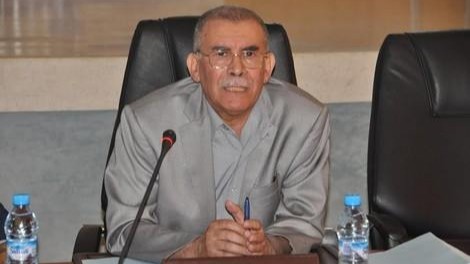
In a video published on YouTube (https://www.youtube.com/watch?v=eF8uEHn8RE0), Member of Parliament and university professor Al Mokri Abouzaid El Idrissi claims that Europeans and Americans have undertaken, in a “very, very, very secret” manner—a phrase he repeated literally three times—the translation of their national archives into the Arabic language. These archives reportedly include political, military, historical, scientific, and cultural records. According to his statements, they are making Arabic the official language of these archives in order to secure and preserve them exactly as they are for the next “six or seven centuries.”
Despite the strangeness, the fantastical nature, the absurdity, and the narcissistic glorification of the Arabic language inherent in this discourse, it nevertheless reflects an accurate idea and a correct understanding of the function and role of Arabic, as well as that of the other languages whose archives are supposedly being translated. To fully grasp this analysis, one must look past the bizarre, mythological, and narcissistic dimensions of Al Mokri Abouzaid El Idrissi’s remarks to focus on his explanation of why Western countries would be incentivized to translate their national archives into Arabic. What, then, is this reason? Why are languages other than Arabic unsuitable for long-term preservation? And why would Arabic be the language most capable of ensuring this preservation?
Why are languages other than Arabic unsuitable for archive preservation?
Because these languages, in which the current archives of the countries wishing to translate them into Arabic are written, will have undergone profound transformations in six or seven centuries, as Al Mokri Abouzaid El Idrissi explains. Their morphological rules and syntactic tools—such as pronouns and function words—as well as their lexicon and vocabulary in particular, will have changed considerably. Consequently, the current documents making up these archives will become unintelligible in six or seven centuries, or will be understood in an altered way, distorting their meaning and denaturing their original content. This would assign meanings to the archival documents that do not align with their true initial substance, which would amount to the outright loss of the national archival heritage of these countries. Indeed, what would be the point of owning archival documents if no one is any longer able to understand their essence?
It is precisely to prevent this foreseeable loss of national archives—which hold the nation’s memory and history—in six or seven centuries, a loss caused by the erosion of the meaning of words used over such a long period, that these Western countries have supposedly turned to translation into Arabic. For what reason? Because Arabic, as Professor Al Mokri Abouzaid El Idrissi explains and as we will later demonstrate with explanatory examples, is the only language whose morphological rules, syntactic tools, and word meanings do not alter over the course of six or seven centuries or more. It keeps the same rules, the same tools, and the same meanings conveyed by its vocabulary intact, without the passage of centuries causing the slightest modification to its structures or its sense.
We see, therefore, as previously noted, that the idea of translating European and American archives into the Arabic language is based on a coherent logic and stems from a correct understanding of the specific characteristics and functions of both European languages and the Arabic language.
Indeed, arguing that in six or seven centuries, the present-day languages in which European and American archives are recorded—such as Spanish, French, English, German, Russian, Italian, and others—will become unintelligible due to their evolution and particularly the shifts in their vocabulary, is a thoroughly sound, accurate, well-known, and widely accepted premise. Although today (in September 2018), anyone fluent in French can spontaneously read and understand contemporary texts like French newspaper articles, this does not mean they are capable of reading and understanding Old French texts. This is true of the French text known as the “Oaths of Strasbourg” (Les serments de Strasbourg), written in AD 842; the “Sequence of Saint Eulalia” (La cantilène de Sainte Eulalie), dating back to the year 880 (“Séquence de sainte Eulalie”, Encyclopédie Universalis); and “The Song of Roland” (La Chanson de Roland), composed at the beginning of the 12th century (“Chanson de Roland”, Encyclopédie Universalis). A fluent French speaker’s inability to read such texts written in an Old French that is more than seven centuries old (to stick to the timeframe cited by Mr. Al Mokri Abouzaid El Idrissi) stems not merely from the presence of obsolete terms that one could simply look up in a dictionary. Beyond having morphological rules and syntactic tools distinct from those of modern French, it is primarily due to the fact that these ancient terms with obscure meanings have quite simply vanished and do not appear in any standard French dictionary. For instance, in the “Oaths of Strasbourg” we find words such as Amur, Deo, poblo, and fradre, which mean in modern French Amour (love), dieu (god), peuple (people), and frère (brother) (https://fr.wikipedia.org/wiki/Serments_de_Strasbourg#Les_manuscrits); in the “Sequence of Saint Eulalia,” the phrase and words Elle no’nt eskoltet, manatce, preiement, and virginitét, which mean in modern French Elle n’écoute pas (she does not listen), menace (threat), prière (prayer), and virginité (virginity) (http://w3.restena.lu/cul/BABEL/T_CANTILENE.html); and in “The Song of Roland,” the words reis, Espaigne, Emperere, and muntaigne, which mean in modern French roi (king), Espagne (Spain), empereur (emperor), and montagne (mountain) (https://fr.wikisource.org/wiki/La_Chanson_de_Roland/Joseph_B%C3%A9dier/La_Chanson_de_Roland/Texte). All these terms are entirely absent from standard French dictionaries. Even assuming some of these words could be guessed, the divergence in morphological rules, syntactic mechanisms, and grammatical structures between Old French and modern French renders their comprehension extremely difficult, if not impossible. That is why, if simply consulting a dictionary were enough to decipher these Old French texts, reading and understanding them would pose no difficulty whatsoever; after all, any fluent French speaker can encounter unfamiliar words even in modern newspaper French and simply consult a standard dictionary to find their exact meaning.
These examples drawn from French apply just as much to other European languages, such as Spanish, Italian, German, or English. For the latter, it is difficult today for someone proficient in modern English—capable of reading and understanding contemporary newspapers—to decipher Old English texts. This is true, for instance, of the manuscripts known as the Anglo-Saxon Chronicle, written in the 11th and 12th centuries, or the Old English version of the Lord’s Prayer (“Our Father”). One finds terms there such as Fæder, heofonum, nama, or willa, which correspond in Modern English to Father, heaven, name, and will. Even with access to specialized dictionaries to explain these forgotten words, the radical evolution of morphological rules, grammatical tools, and syntactic structure between this archaic form and the modern language makes understanding these texts extremely arduous, if not impossible. This mirrors the exact observation made regarding Old French. The intellectual Al Mokri Abouzaid El Idrissi goes even further in his discourse, asserting—with a hint of exaggeration—that it is sometimes difficult to grasp the meaning of certain terms in the works of the 19th-century French physician Claude Bernard, a relatively recent period in the history of a language.
Imagine for a moment that these texts written in Old French or Old English constituted the entirety of the national archives—which, in part, they do—for France, Great Britain, or the United States. It would surely mean the certain loss of an inestimable heritage. According to the logic of Al Mokri Abouzaid El Idrissi, Western leaders have become aware of this danger. He contends they have thus set out, before it is too late, to translate their current archives into Arabic. Their aim would be to safeguard against a time, six or seven centuries from now, when their modern languages will have become archaic forms that no one can any longer read or understand.
Why is Arabic better suited than any other language for preserving archives?
Regarding Arabic, the situation is radically different from the languages mentioned by Al Mokri Abouzaid El Idrissi. As we have pointed out, the gulf between the ancient forms of French or English (dating back more than seven centuries) and their modern counterparts makes them difficult to read. In contrast, anyone who masters Arabic today and reads the press fluently is automatically equipped to read and understand the most ancient texts of Arabic literature. This range extends from the Mu’allaqat (the Hanging Odes) to the orations of Quss ibn Sa’ida, as well as the works of major classical figures such as Ibn Hisham, Al-Tabari, Al-Jahiz, Ibn Khaldun, or Ibn Arabi. To be sure, a modern reader might stumble over the meanings of certain specific words, but this is a phenomenon that occurs with equal frequency when reading contemporary works or modern journalism. In such cases, the reader simply needs to consult a dictionary to resolve any ambiguity or lack of clarity. The fundamental—and profound—difference between Arabic and the Western languages cited by Mr. Al Mokri Abouzaid El Idrissi lies in the fact that the latter mutate and evolve through the centuries. Their lexicon, morphology, and grammatical mechanics (pronouns, functional particles, etc.) shift to the point of creating a clean break between ancient and modern forms. Arabic, however, retains its original form in terms of meaning, structure, morphology, and syntax, despite the passing of centuries. Because its rules and structure are stable and immutable, a dictionary is all that is required to understand any obscure word, whether ancient or modern. In this sense, Arabic appears as a static and fixed language, whereas European languages are transformative and ever-changing.
One might argue that our analysis of French and English—models that apply to many other languages—raises certain questions. One could point to the transition from oral tradition to written form or the institutionalization of an official language to explain the divergence between ancient and modern variants. We have intentionally set these arguments aside, despite their potential relevance, as our goal is to follow the thread of Al Mokri Abouzaid El Idrissi’s reasoning to its ultimate and logical conclusions. The point we are making about Arabic being a “static” and “immutable” language is a reality that is difficult to contest. Its morphosyntactic rules, its linguistic connectors, and its underlying structure—the very elements that constitute the soul of a language—remain identical to what they were when Arabic was taking shape in the pre-Islamic era and the early days of Islam. Even its vocabulary has maintained stable meanings, even as it has expanded to include new terminology. This explains why any modern-day Arabic speaker can read texts from the Jahiliyya (the pre-Islamic era) with the simple aid of a glossary for archaic terms. This immutability is strikingly apparent when one sees a middle school student reciting and understanding the chant Tala’ al-Badru ‘Alayna exactly as its authors understood it fourteen and a half centuries ago, as if they were contemporaries.
La langue entre extinction et immortalité
What is the significance of this distinction between the Arabic language and other tongues, such as the European or American languages cited by Al Mokri Abouzaid El Idrissi?
This implies that these languages—because they are not fixed and transform over centuries—are destined for disappearance and extinction. Their morphological, grammatical, and syntactic rules, as well as their vocabulary, change so much that contemporary speakers can no longer understand what was written in the past. This fate awaits them even if they keep the same name, such as French, English, or Spanish. According to Al Mokri Abouzaid El Idrissi, everything written in these languages more than six or seven centuries ago is considered “extinct,” as it is no longer possible to read or grasp its meaning after so much time. In contrast, he argues that Arabic is an immortal language, protected from fading away because it remains immutable. Its rules and the meanings of its words, which retain their original definitions, do not change regardless of the passage of centuries. Arabic dictionaries compile these meanings; thus, any reader who stumbles upon a word in an ancient or modern text can refer to them to find a ready-made explanation, identical to the one used when the word first appeared, even if that was dozens of centuries ago.
It follows that national archives written in these “perishable” languages—as opposed to “immortal” Arabic—are themselves threatened with disappearance. According to the logic of Al Mokri Abouzaid El Idrissi, Westerners have understood this: they have supposedly begun translating their national archives into the eternal Arabic language to guarantee their immortality and avoid the extinction promised to their own languages.
The logical consequences of Al Mokri Abouzaid El Idrissi’s reasoning
What logical conclusions can be drawn from Al Mokri Abouzaid El Idrissi’s reasoning regarding the characteristics and functions of “immortal” Arabic compared to other “perishable” languages?
The first conclusion is that, despite the apparent paradox, the tendency toward extinction that threatens languages other than Arabic—such as the European languages cited as examples—is precisely what makes them living, relevant, and useful in daily life. This allows them to adapt to their era, evolve over the years, and renew themselves alongside scientific, economic, social, and political innovations. These languages are so vibrant and dynamic that, following Al Mokri Abouzaid El Idrissi’s logic, they are not suited for preserving archives; archives are stable and fixed, while these languages are in constant motion and perpetual regeneration.
The second conclusion is that, again despite the paradox, the “immortal” character attributed to Arabic is precisely what makes it an extinct and nearly dead language. It is frozen; it does not change, keep up with the times, evolve over centuries, or renew itself in the face of scientific, economic, social, or political developments. Therefore, Al Mokri Abouzaid El Idrissi was right to assert that Arabic is the language best suited for preserving archives. As a rigid and stagnant language existing outside of time—untouched by the passing centuries—it is itself an archive intended to preserve the debris of the past. Consequently, it is not suitable for expressing the realities of the present; it is only useful for the past, things of the past, and everything that belongs to the past. It is a museum and archival language par excellence—a language of death—insofar as archives consist of “extinct” and “dead” data that are no longer in use today but are kept solely for their historical value, much like the memory of departed ancestors. Honoring it would therefore mean allowing it to fulfill its function as a linguistic museum, specializing in the preservation of everything “dead”—archives, heritage, and vestiges—without attempting to impose it upon what is new, modern, or rooted in the present.
The third conclusion, which complements the previous one, is that despite the paradox, the language at risk of extinction is not the one that changes, adapts, and evolves to the point where it can no longer fix archives. On the contrary, it is Arabic that is threatened, because it is a frozen, static, and mummified language. It does not change or evolve, which—as Al Mokri Abouzaid El Idrissi admits—makes it the most qualified for preserving archives, which are by definition data that must remain immutable. Does the extinction of a language not consist precisely of the cessation of its change, evolution, and renewal, causing it to remain a carbon copy of what it was centuries ago?
Listening to the remarks of Al Mokri Abouzaid El Idrissi, I was struck by how this fierce defender of Arabic reached the same conclusion I have consistently repeated: Arabic is a half-dead, or half-alive, language because it only survives through writing after losing the primary vital function of any language—daily oral use. By following a different path and a different line of reasoning, he arrived at the same conclusion by demonstrating that Arabic is the ideal language for archiving. Its role is thus akin to that of museums, whose mission is to preserve the tools and heritage products that bear witness to bygone historical eras.
Language of archives and language of instruction:
The fact that Arabic is a language of archives and heritage—a mummified language identical to what it was fifteen centuries ago—would hardly concern us if it were not imposed as the language of instruction. What impact, then, does its archival and museum-like function have on its pedagogical and educational function, and what link exists between the two?
We have observed that it is difficult today for a person proficient in French or English to read and understand texts written in those languages in the 12th century. Why? Because the language learned at the end of the 20th or start of the 21st century expresses the ideas and thought of this era, unlike that of the 12th century, which mirrors a bygone world and mindset. In contrast, Arabic possesses an archival and museum-like nature; it is a frozen and stagnant language that has neither changed nor evolved since its formation during the Jahiliyya and the first century of Islam. Consequently, someone who masters it in the 21st century is capable of reading and understanding texts from the pre-Islamic era, such as the Mu’allaqat. However, since the link between language and thought is inseparable, using Arabic as the language of instruction and training amounts to forcing students to think like the ancients of the Jahiliyya and early Islam, according to their reality, circumstances, and needs. Since today’s Arabic is a carbon copy of that of past centuries—which, as Professor Al Mokri Abouzaid El Idrissi asserts, makes it more suitable than any other language for preserving archives—it follows that those who receive an education in Arabic in the 21st century are actually being trained to think according to a medieval mentality. They adopt this “archival mentality” in which Arabic excels compared to other languages, by Al Mokri Abouzaid El Idrissi’s own admission. This explains why education in Morocco is archaic, unable to keep pace with its time or adapt to scientific, technological, economic, and social developments. It is a prisoner of a museum, heritage, and backward-looking mentality, due to a language of instruction that is, by its very nature, archival and ancestral. This is why the spirit of creativity and innovation, as well as the ability to face and solve problems, are absent from our school curricula. They are supplanted by the memorization and parroting imposed by the very nature of the Arabic language—a language of storage and preservation. This language, which has remained identical to itself for fifteen centuries, dictates pedagogical goals centered on forming an individual who thinks like their ancestors, rather than forming a modern citizen equipped with contemporary skills, expertise, and knowledge. Our education can only progress and become useful, productively modern only if the language of instruction is connected to its era, in step with scientific and social realities, and freed from its role as a guardian of heritage. For the reasons cited by Al Mokri Abouzaid El Idrissi, Arabic cannot fulfill this role because it is a frozen, immobile, and stagnant language. It is therefore worth reiterating that Arabic only poses a problem when used as the language of instruction and training. Conversely, teaching it as a language is not only problem-free but desirable, given its religious status and its archival function in preserving heritage.
Arabic version | French version

Mohamed Boudhan was an Amazigh writer, thinker, researcher and activist from the Rif, and publisher of the newspaper Tawiza. He was the author of many valuable books and articles on Amazigh identity. May he rest in peace.