The Amazigh: Free Men or Conquered and Dependent Subjects?
What use is there in boasting of one’s freedom if one is incapable of protecting it?
If the name “Amazigh” signifies “the free man,” as is commonly understood, this may not simply be a case of a people’s tendency toward self-glorification or claiming exceptional virtues to distinguish themselves from others. The name could well reflect reality, suggesting that the most prominent trait of the Amazigh individual is a visceral attachment to freedom—to the point of prioritizing it above all other values and principles. There are numerous indications of this attachment and its primacy.
Why have the Amazigh, since antiquity, failed to establish states with historical continuity—meaning enduring states rather than the ephemeral structures that rise and fall, of which the Amazigh have seen several models—as has been the case for the Chinese, Japanese, Persians, Greeks, or Romans? Could it be that their love for freedom, their devotion to it, and their refusal to relinquish even the smallest portion of it constituted obstacles to the emergence and permanence of an Amazigh state? The relevance of this question becomes clear once one understands that life within a state requires individuals to renounce a portion of their natural liberties in favor of a collective will represented by the state. This social and political contract, with its constraints, obligations, and laws, far exceeds the framework of life within a tribe or a confederation of tribes—even when the tribe possesses a form of political power to oversee its affairs and make decisions for its defense, as was practiced in Amazigh tribal organizations.
However, while state organization—through the constraints and laws it imposes—restricts the natural liberties and rights of individuals more than tribal organization does, it has the advantage of being far more capable than the tribe of protecting those same liberties and rights when they are threatened by hostile foreign powers. This is where the state organization surpasses the tribal organization regarding freedom, as illustrated by the following question: what is the use of freedom if the one who possesses it cannot guarantee and protect it, thus leaving themselves exposed to enslavement and the deprivation of all forms of liberty?
Is this not precisely what happened to the Amazigh? By failing to found states with historical continuity, preferring instead to live free from the constraints and laws of a state, they found themselves unable to repel the assaults of foreign powers due to a lack of a regular army, sufficient manpower, and adequate equipment—elements that can only exist under the aegis of an established state. This would explain why they have consistently been the prey of foreign invasions, despite the fierce resistance they offered the occupiers—a resistance, however, waged by tribes and not by states. The paradoxical result was that their attachment to liberty, by preventing the creation of durable states, led them to lose that very liberty as they fell under the yoke of foreign powers. Thus, they transitioned from the status of free men to that of a conquered people.
The ultimate loss of freedom is the loss of identity:
This loss of freedom resulting from foreign occupation—an experience shared even by peoples with millennia-old states, such as the Persians, Greeks, or more recently the Chinese and the French—is not our primary concern. What matters to us is that during the Arab conquest, the Amazigh lost not only their freedom but also their very essence and existence. Let us explain and clarify this point.
Although the Arab occupation of Amazigh lands was the shortest in history prior to the 20th century—lasting barely ninety years before collapsing irreversibly following the “Battle of the Nobles” in 740 AD, which saw the destruction of the Umayyad army stationed in North Africa—it was paradoxically the longest in its consequences. While the Amazigh people reclaimed their land and sovereignty after ending Arab rule in 740, the persistent influence of that era caused them to begin losing their existence as a distinct people defined by territory, identity, and language. While the Arab occupier retreated after 740, they were replaced by the Imazighen themselves. I am referring here to those who used Islam—or were used by Islam—to affiliate themselves with the Arab ethnicity and disown their own Amazigh heritage. In this way, by abandoning their natural, original identity for a false and usurped Arab one, the Amazigh individual began to lose their freedom, becoming a dependent and submissive being. Furthermore, they became a conquered and erased entity after renouncing their existence as Imazighen, sacrificing the dignity of their identity for the myth of Arab lineage. The most absolute and cruel defeat is not merely losing land and liberty to an invasion, but losing the identity and sense of belonging that form the very foundation of one’s being. By losing the very condition of existence—one’s identity—one ends up losing everything, for they cease to exist.
From the “Cradle of the Free” to the Cradle of the Defeated:
Since this identity-based defeat, the Amazigh individual who chose to renounce their heritage to adopt an Arab one has become a dependent rather than an independent being, and a conquered soul rather than a free one. They have become a void, having ceased to exist as an Amazigh. To complete this erasure, they hijacked their own Amazigh language to forge an “Arab” tongue—Darija—using it to extinguish the very identity that gave birth to this dialect. If they were to admit that they shaped Darija specifically to kill their roots, they would at least be showing a measure of logic and honesty, remaining conscious of their own acts and intentions. The tragedy, however, is that they stubbornly believe this dialect is not the product of mutating Imazighen, but a language born among Arabs in their original homelands and imported later to Amazigh territory. This is why they brandish it and take pride in it as a banner of their “Arabness,” much like actual Arabs take pride in their language as a core part of their real identity. Thus, this defeated individual—once a free Amazigh, now a subaltern who has sacrificed the dignity of their identity—has become a prisoner of a total existential fraud, both in terms of identity and language.
For a long time, this appropriation of Arab lineage remained a numerically marginal and individual phenomenon, despite its accompanying identity falsifications and the erasure of the essence of the free man. However, it never stopped gaining ground. This expansion, which was once slow and whose effects could only be measured over centuries, saw a lightning-fast acceleration at the start of the 20th century. Specifically because of the French occupation of Morocco, this process of Amazigh identity mutation became a collective issue. It was no longer a matter of isolated individuals or tribes, but a true matter of state. The transmutation of Moroccan identity was elevated to a national priority and public policy under the name of “Arabization”—which was, in reality, a policy of national and identity conversion.
Through the state’s adoption of this policy of identity transformation, every mechanism of society has been mobilized to serve this objective. Islam, as practiced in Morocco, has become a tool for this transformation (despite this contradicting its actual teachings). The Arabic language, in the way it is taught and imposed, does not aim for linguistic mastery but rather serves as a vehicle for this fundamental shift in nature. The education system does not seek to produce competent citizens equipped with knowledge and skills, but rather to shape individuals who have traded their Amazigh identity for an Arab one. Similarly, political parties, instead of organizing citizens for active participation in public affairs, work toward their Arabization and the mutation of their identity.
Through hegemony, comprehensiveness, and state sponsorship, this identity transformation has come to represent the norm and the natural state of affairs, while the preservation of one’s Amazigh heritage has been relegated to the status of an anomaly. The result is what Moroccans are experiencing today: a people without a clear identity or true sense of belonging. This is because the actual Arabs—to whom these converted Moroccans believe they belong—reject this affiliation, which they recognize as a false claim. By moving from the status of free men—proud of an Amazigh identity that granted them glory and dignity—to that of the defeated and the subordinate, these Moroccans yearning for Arabness find themselves begging for the recognition of others, like illegitimate children seeking adoption. They lost the dignity they drew from their original identity the day they renounced their Amazigh heritage. Consequently, the “Cradle of the Free,” the phrase by which the national anthem describes Morocco, has become the cradle of the vanquished, the defeated, and the dependent, stripped of the dignity of their identity and the pride of their belonging.
The aberrant consequences of an abnormal situation:
The danger of this identity-based defeat does not lie solely in the loss of freedom, dignity, and essence for those who suffer it. The real peril is that these “converts” have turned into fierce enemies of the Amazigh language and culture and everything related to them. This behavior reveals a profound self-hatred and malice toward one’s own roots. It is an attitude not found among actual Arabs, who display no hostility toward Amazigh identity and do not fight against it. This confirms, once again, that these Arabized Imazighen are not true Arabs; otherwise, they would not feel such aversion toward Amazigh identity nor seek, by every means, to annihilate it by imposing this transformation—which they call Arabization—on the rest of the Moroccans who remain intact, those who have not yet succumbed to the abjection of this national and identity-based deviance.
One of the grave consequences of this “deviance”—at once sexual, national, and identity-based—is that these “identity-converts,” in a national and identity sense, have succeeded in convincing authentic Imazighen that they are, in fact, Arab by identity and affiliation, rather than Amazigh. This situation has led the latter to petition these “converts” for recognition—after Lyautey forged a state for them that represents the culmination of this identity mutation in modern Morocco—demanding they care for their language and recognize their Amazigh identity. Thus, an inherently absurd situation produces equally absurd results: those who remained principled and proud of their identity find themselves asking denatured beings, who are enslaved and have renounced their own dignity, to restore an Amazigh identity that was excluded by the very policy of conversion—to recognize it and work toward its development. This surreal posture only confirms what these “converts” seek: to be perceived as Arabs rather than as converted Imazighen. Yet, those who most desperately need to recover their identity—the foundation of the dignity they lost along with their Amazighness—are precisely these individuals who traded their true essence for the myth of Arab belonging on Amazigh land. As a result, they have lost their Amazigh identity without acquiring the promised Arabness; historically and geographically, they are sons of North Africa, not the Middle East. This is why “true” Arabs do not recognize them as their own. They have lost everything—both Amazighness and Arabness—finding themselves in a state of “identitylessness,” without roots and, above all, without identity-based dignity. Such dignity can only be founded on a clear, embraced, and recognized belonging. The height of the paradox is that they take a strange pride in this voluntary servitude they have chosen and in this identity distortion—or even erasure—that they have ultimately accepted.
What is the solution to end this identity distortion in Morocco?
Faced with this process of alteration and voluntary identity servitude—which has become the new opium of Moroccan intellectuals, politicians, and leaders—there are only two solutions to break these chains, restore the freedom of Moroccans as free Imazighen, and recover their dignity by reclaiming their African Amazigh identity.
The first of these solutions, though it demands infinite patience and could span decades, lies in continuing the struggle led by “healthy” Moroccans—those who have remained conscious and proud of their Amazigh heritage. The goal is to treat this pathology of “national deviance” and stop the distortion affecting the collective identity of Moroccans. The loss of this identity has led to the loss of their collective dignity, which is intrinsically linked to their authentic roots. The objective is to bring them into alignment with who they truly are—namely, their Amazigh belonging—to liberate them from this voluntary servitude and return them to their original freedom. This is the path chosen by the Amazigh Movement, the spokesperson for those Moroccans who have remained principled, preserved their collective identity, and resisted the pressures of conversion. Since the dawn of the third millennium, the struggle of this movement has yielded undeniable gains for Amazighness. Above all, it has begun to awaken—slowly but surely in the face of accelerating Arabization—an awareness among some “converts” that they are, in their deepest identity, Amazigh and not Arab.
However, one of the strategic errors of this movement is limiting its defense of Amazigh identity to just one segment of the population: those who have not yet been affected by the blight of national and identity denaturation. This is precisely what the “converts”—who view themselves as an Arab majority facing a small Amazigh minority—desire. For the Amazigh Movement’s actions to be truly effective, it must demand the liberation of all alienated Moroccans from the yoke of this identity-based servitude, with the State leading the way. The State must conduct itself as a Moroccan state endowed with an Amazigh identity. This requires the movement to shift to a new discourse, centered on the Amazigh identity of the State before that of individuals or groups.
The second solution, which is political in nature, is expected from the true holder of effective power in Morocco: the Monarchy. This would occur on the day the Monarchy decides that Morocco is a state with an Amazigh identity, along with all the political changes necessary to align with this reclaimed identity. Such a move would facilitate the “re-Amazighization” of “converted” Moroccans so that they, too, may recover their original identity. While this political outcome might draw a smirk from those who, due to deep alienation and a culture of voluntary servitude, can no longer even conceive of the Moroccan state explicitly and officially declaring its Amazigh identity, it is by no means an absolute impossibility.
We should remember that no one would have predicted that the Ottoman Empire would transition from a religious system based on the Caliphate to a secular state where religion no longer played a political role, nor that its language, written in Arabic characters for centuries, would abandon that alphabet to adopt the Latin script. Such upheavals were unthinkable at the time. Yet, in 1923, when the true master of power in Turkey, Mustafa Kemal Atatürk, decided to abolish the Caliphate, proclaim a secular republic, and impose Latin characters, what seemed impossible became normal, acceptable, and was even hailed by all political forces. Similarly, in a Muslim country like Tunisia, no one would have imagined that publicly breaking the fast during Ramadan would become a commonplace and authorized practice. But when the late President Habib Bourguiba appeared on television in the middle of Ramadan in 1962, drinking a glass of orange juice to declare that fasting harmed the economy and productivity and that everyone was free not to comply, the gesture was accepted because it emanated from the highest authority. Now, let us imagine, following the example of these two events that revolutionized politics, language, and religion, that King Mohammed VI were to declare in one of his speeches that Morocco is a state of Amazigh identity, in perfect harmony with its African territorial roots. Imagine him calling for a revision of public policies related to identity and a reform of educational, media, and religious programs to root this identity and make Moroccans proud of their Amazigh heritage. What would happen? We would see party general secretaries, ministers, and parliamentarians competing in their zeal to proclaim that this royal decision is an act of wisdom they had long awaited, as it restores truth and corrects the injustices committed against the Amazigh identity of Morocco and its people.
It would be irrelevant to object—among those who admit the feasibility of this solution—that such a rupture imposed unilaterally by the Sovereign would be the enshrining of authoritarianism or a dictatorship imposing its will from above, in defiance of the popular will. This objection does not hold, for the essence of tyranny is to enslave peoples and restrict their freedoms. However, when the purpose of a political decision, even a unilateral one, is to emancipate subjugated populations, free them from their voluntary servitude, and restore their tarnished dignity, it is intrinsically democratic, wise, and just. The goal is to transform Morocco so that it is no longer a land of the vanquished, but a true “land of free men,” ending the scourge of alienation and identity denaturation. It matters little then whether the decision emanates from a single man or an elected government; only the objectives and results count, not the means. If this decree, which frees Moroccans from their voluntary alienation, must be labeled dictatorial, then welcome to this authoritarianism and welcome to this dictatorship.
This is why I believe that the responsibility for delivering Moroccans from the scourge of this national and identity-related anomaly, freeing them from their voluntary servitude, and restoring Morocco’s identity sovereignty so that it may truly be a land of free men, lies primarily with the leaders, the holders of power, and the masters of political decision-making.
Arabic version | French version

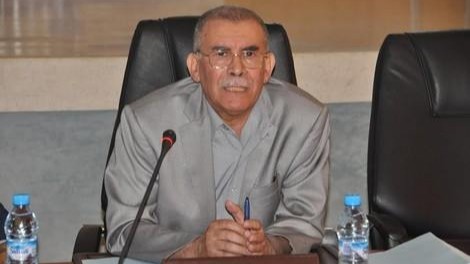
Mohamed Boudhan was an Amazigh writer, thinker, researcher and activist from the Rif, and publisher of the newspaper Tawiza. He was the author of many valuable books and articles on Amazigh identity. May he rest in peace.