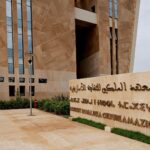
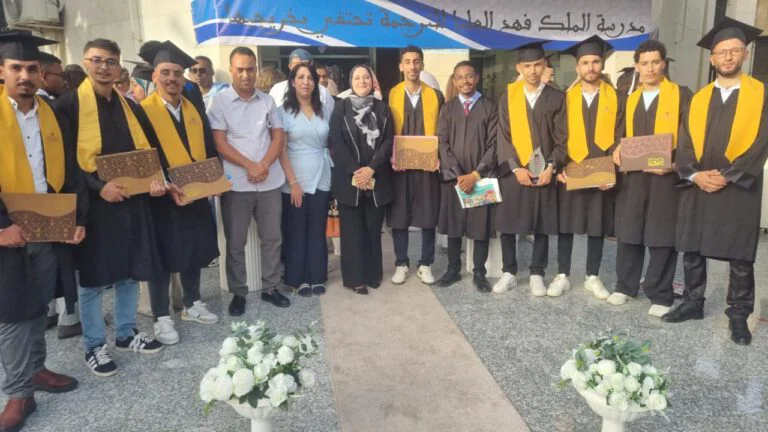
The graduation of the first cohort of translators specializing in written translation to and from the Amazigh language, at the King Fahd School of Translation in Tangier, has reopened questions about the pace at which the language’s official status is being implemented, more than a decade after its constitutional recognition in 2011. The event took place as part of the school’s 38th graduation ceremony, held under the auspices of Abdelmalek Essaâdi University for the 2025-2026 academic year.
This cohort represents the first academic elite formally trained in professional translation between Arabic, Amazigh and French. Yet according to Amazigh rights advocates, public administrations, courts and media outlets still lack the human resources needed to put the Amazigh language into everyday use. This is despite several years having passed since the adoption of organic law No. 26.16, which sets out the stages for implementing the language’s official status and its integration into education and priority areas of public life.
The ceremony brought together 109 graduates and also marked the first cohort to complete a master’s program in Arabic-Chinese-English, in the presence of university officials, faculty members and graduates’ families.
Speaking at the event, school director Mohamed Kharchich said the creation of this Amazigh translation program reflects the institution’s commitment to national initiatives supporting the language. He added that the school also plans to launch an interpreting program between Arabic, Amazigh and French, in order to meet growing demand from national institutions for skilled professionals in this field.
Observers of the Amazigh cause say that while such academic initiatives are significant, they need to be matched by broader institutional momentum, including the actual hiring of these graduates within public administrations and services. Without that, they warn, the training risks having no concrete impact on language access to public services. It remains to be seen whether this cohort, and those that follow, will be able to close the persistent gap between the legal framework enshrining Amazigh’s official status and its real-world implementation in administration, justice, education and the media.
Source: Amadal Amazigh
Arabic version | French version