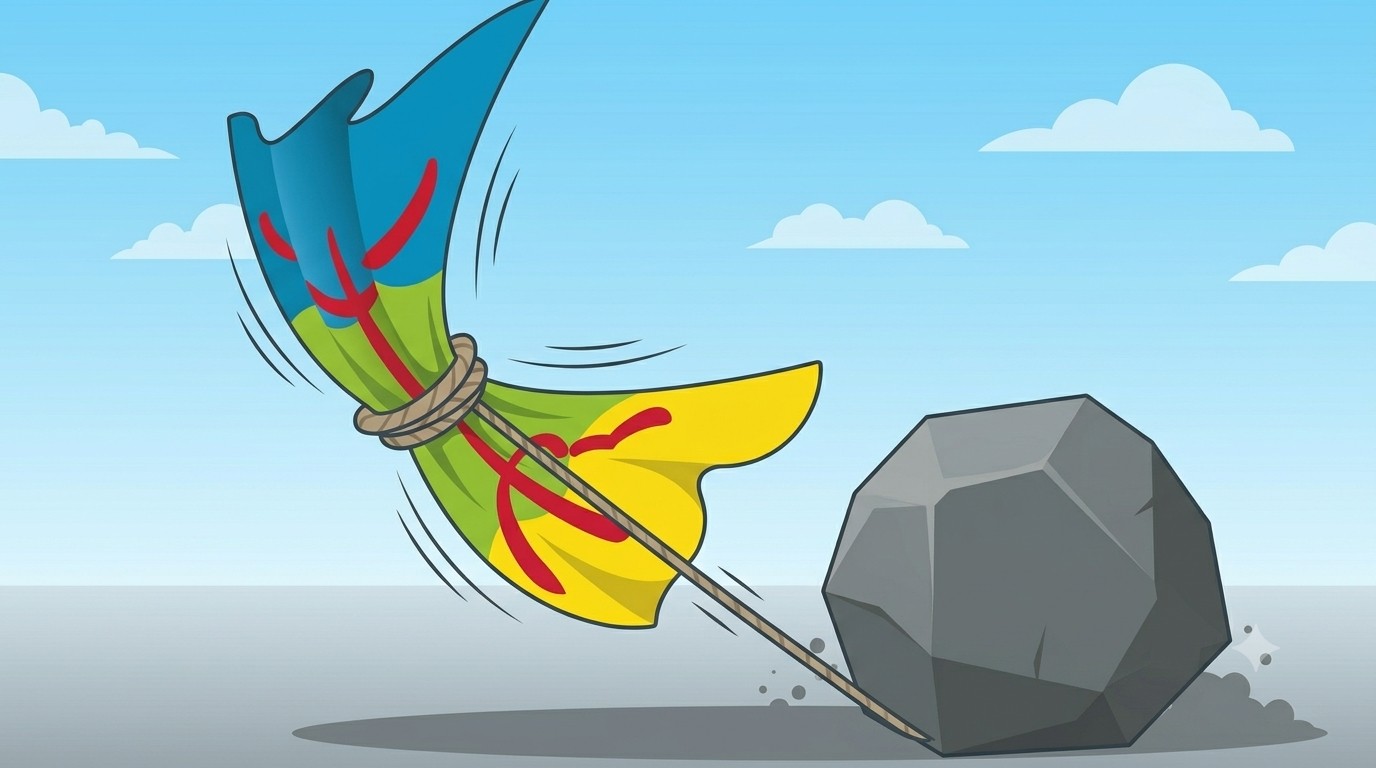
The Royal Speech and the Amazigh Identity of the Land of Marrakech
The question of Amazigh identity in the land of Marrakech is at once a historical, cultural and political issue. It goes beyond recognition of the language and heritage to a deeper question: how are the country’s history and identity presented in official discourse? Amazigh identity is not just one cultural element among others. It is a historical legacy deeply rooted in Tamazgha, which for centuries helped shape the region’s languages, cultures, societies and political entities.
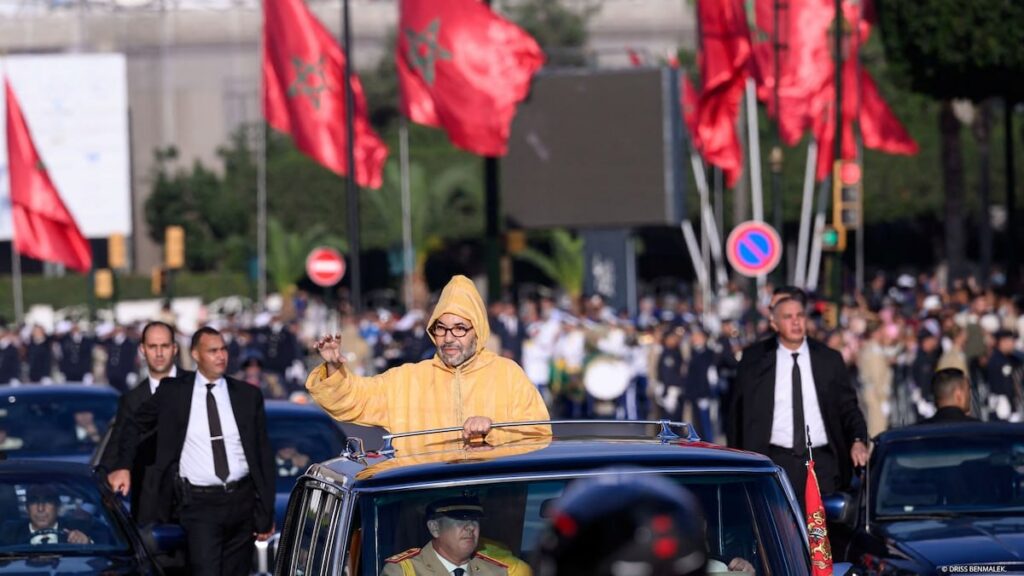
It is in this light that the royal speech delivered to Parliament on October 9, 2026 raises questions about how national identity is presented. It refers to the antiquity of the nation and the monarchy, to religious identity and to civilizational pluralism, without explicitly mentioning the Amazigh language in the passage devoted to these elements.
This is not about denying the constitutional recognition the Amazigh language has received, or ignoring the official decisions that have strengthened its presence. It is about asking a legitimate question: why are some elements of identity clearly highlighted in official discourse, while the country’s historical Amazigh roots are not recalled with the same clarity?
I. Reading the royal speech of October 9, 2026
The royal speech states:
“Morocco is one of the oldest nations in the world, under the banner of an ancient monarchy, one of the oldest in history. Moroccans have every right to be proud of our authentic religious identity, under the Commandery of the Faithful, and of their distinctive civilizational identity, rich in the plurality of its components.”
The speech also recalls a sentence the King had already uttered in 2014:
“The dearest feeling to my heart, in my life, is my pride in being Moroccan.”
Pride in belonging to the nation and in knowing its political and religious history is understandable. But this passage raises a problem: the Amazigh language is not explicitly mentioned, even though the subject is historical antiquity and civilizational identity.
If the Amazigh language is an essential component of national identity, as earlier official speeches have affirmed, why does it not appear clearly in a speech devoted to the nation’s antiquity and history? Should this be read as meaning that it is invoked on specific occasions but fades when the general narrative of the country’s history and identity is presented? Or are these simply matters of wording and of the speech’s purposes?
The absence of a given term does not allow us to conclude that there was a deliberate intention to marginalize the Amazigh language. But comparing speeches does allow for a serious debate on how consistently it features in the official conception of national identity.
II. The Kingdom of Mauretania and Amazigh historical memory
One cannot speak of the antiquity of the land of Marrakech without recalling its ancient history, including the Amazigh kingdoms and political entities that preceded the Islamic periods by several centuries.
The ancient Kingdom of Mauretania is one of the most striking examples. Its history is tied to the Amazigh peoples of the region and to their political and military relations with Mediterranean powers. It should be distinguished from the Roman province of Mauretania Tingitana, created later by the Romans: these are two different historical periods, whose political and geographical borders must not be confused.
Among the historical testimonies worth recalling is that of the Roman historian Livy. In his History of Rome (Book XXIX, chapter 30), he reports that Baga, king of the Mauri, supplied Massinissa with a military escort of four thousand men. The account reveals the existence of a local political entity capable of making military and diplomatic decisions amid the rivalries of the ancient Mediterranean.
Recalling these facts does not amount to claiming that the modern Moroccan state is the direct institutional heir of the Kingdom of Mauretania, or that dynastic or political continuity can be established on the basis of historical analogies alone. It does mean that the region’s history is older than the periods on which some official narratives focus, and that the ancient Amazigh kingdoms deserve their place in the national historical memory.
A further question arises: is the absence of the ancient Kingdom of Mauretania from the royal speech linked to historical and political sensitivities between the Makhzen and the Rif? Was it avoided despite its place in ancient Amazigh history? Or is it simply a drafting choice?
This question remains a hypothesis for debate and research, not an established fact: the mere absence of a reference to Mauretania does not provide sufficient evidence that the omission was intentional and politically motivated. Likewise, delimiting the geographical area of the ancient kingdom and its relationship to the Rif is a matter for specialized historical study, not for projecting today’s borders onto the past.
Asking the question remains legitimate all the same, because writing history is not only a matter of reviewing the past: it also means choosing what to recall and what to leave out of the general narrative.
III. From the Ajdir speech to the 2011 Constitution and the 2023 decision
Official discourse on the Amazigh language has gone through important stages that cannot be ignored when assessing the 2026 speech.
In the Ajdir speech, delivered on October 17, 2001 on the occasion of the creation of the Royal Institute of Amazigh Culture, the place of the Amazigh language in national identity was clearly recognized. That speech was a major political and institutional milestone in the process of official recognition of the Amazigh language.
On March 9, 2011, the royal speech presented, among the foundations of the constitutional reform:
“The constitutional enshrinement of the plural nature of the unified Moroccan identity, rich in the diversity of its tributaries, with Amazigh identity at its core, as a heritage shared by all Moroccans.”
Then came the Royal Cabinet communiqué of May 3, 2023, which made the Amazigh New Year an official, paid national holiday. It reaffirmed that the Amazigh language is an essential component of authentic Moroccan identity and a shared heritage of all Moroccans, without exception.
These milestones show that official recognition of the Amazigh language is neither incidental nor marginal. That is why the absence of an explicit mention in one passage of the 2026 speech deserves discussion, particularly when the subject is defining the nation’s antiquity and its civilizational identity.
Still, one must distinguish the absence of a reference in a particular speech from proof of a general official retreat from recognizing the Amazigh language. The former can be observed and compared; the latter requires broader analysis covering public policy, legislation, budgets and actual implementation.
IV. Amazigh identity, religion and cultural pluralism
It is important to distinguish the country’s historical and linguistic identity from the religious affiliation of its society. Islam is a religion; Amazigh identity is a linguistic, cultural and historical identity rooted in the region. There is no necessary contradiction between Amazigh belonging and Islam.
Amazigh communities embraced Islam, helped spread it, helped build Muslim states and societies, and also contributed to thought, jurisprudence, architecture and literature. But adopting Islam does not necessarily mean giving up the Amazigh language, or becoming Arab in historical origin.
Similarly, linguistic and cultural pluralism does not necessarily imply separate national identities. Several languages and traditions can coexist within the same national space, with each community keeping its historical and cultural specificity.
From this perspective, one can take pride in Islam and the country’s political history while explicitly recognizing that Amazigh roots form an essential part of it. The point is not to set Amazigh identity against Islam or against national belonging, but to move beyond views that make recognition of one element conditional on marginalizing another.
The problem lies not in speaking of religion or civilizational pluralism, but in the risk that the notion of pluralism becomes a general formula that does not sufficiently highlight the place of the Amazigh language as an official language and an integral part of local history.
V. From constitutional recognition to implementation
Article 5 of the 2011 Constitution provides that the Amazigh language is an official language of the State, as a shared heritage of all Moroccans without exception. This constitutional recognition obliges public institutions to move from theoretical proclamation to concrete application.
It is not enough to celebrate the Amazigh language at official ceremonies, or to describe it as a tributary of identity, if its presence remains limited in education, administration, the courts, the media and public services.
Effective implementation requires mobilizing the necessary human and financial resources, expanding Amazigh-language teaching, enabling citizens to use it in dealings with administrations, and strengthening its presence in the media and cultural institutions, while respecting the diversity of its local linguistic expressions.
Recognition of the language must also go hand in hand with preserving historical memory: documenting ancient kingdoms, archaeological sites and inscriptions, and encouraging scientific research into the history of Amazigh societies. Language and history are inseparable in safeguarding collective memory.
Assessing official discourse therefore cannot stop at words: it must also measure how consistent they are with public policy and constitutional commitments. The key test is not how many times the word “Amazigh” appears in speeches, but the standing the language enjoys in institutions and in daily life.
Reading the royal speech of October 9, 2026 through the lens of Amazigh identity opens a debate on the relationship between official discourse and the historical memory of the land of Marrakech. When the speech recalls the nation’s history, the antiquity of the monarchy, religious identity and civilizational pluralism, it becomes legitimate to ask where Amazigh roots stand in that picture.
This question does not deny the official milestones that have strengthened recognition of the Amazigh language, from the Ajdir speech to the 2011 Constitution and the 2023 decision to make the Amazigh New Year a national holiday. It does stress the need for that recognition to remain clear and consistent, and not be limited to certain occasions or formulas.
Likewise, evoking the ancient Kingdom of Mauretania and other Amazigh kingdoms should be part of a comprehensive historical approach, grounded in sources and scholarly rigor, that leaves room for politically sensitive questions without turning hypotheses into foregone conclusions.
True recognition of Amazigh identity is not achieved by simply describing it as one of the tributaries of national identity. It requires acknowledging its historical roots and its linguistic and cultural standing, and ensuring its effective presence in education, administration, the media and collective memory. Pluralism is not fulfilled by proclaiming that different components exist, but by doing them justice in how the country’s history, present and future are represented.

Saïd Khottour
Arabic version | French version