Toward a Reframing of the Ties Between Amazigh Identity, Islam, and Darija
Why the Arabs Did Not Arabize the Amazigh People
There is a profound degree of truth in the assertion attributed to the Algerian scholar Abdelhamid Benbadis, who claimed that the inhabitants of North Africa are all Amazighs whom Islam has “Arabized.” This did not occur because Islam inherently promotes Arabization, or because it requires non-Arab Muslims to abandon their original roots and adopt an Arab identity for their faith to be valid—such a notion would contradict the very teachings and ultimate purpose of the Islamic message. Rather, it is because the Amazigh people themselves utilized Islam as a vehicle for Arabization and the renunciation of their own identity. This was done without being asked to do so by Islam itself, or by the Arabs with whom these Amazighs sought an undue connection. In the interest of truth and fairness, the Arabs should not be blamed for the Arabization of the Imazighen, nor should they be held responsible for the latter’s denial of their origins or their adoption of a manufactured Arab identity. We must acknowledge that it was the Amazighs who chose this identity shift—first as individuals, before it evolved into a collective phenomenon—moving from their original and authentic Amazigh heritage to a counterfeit and usurped Arab one. It is also crucial to recognize that their sole motivation was Islam, and that the Arabs played no direct or intentional role in this transformation.
From the Confusion of Islam and Arabness to the Conflation of Islam and Politics
It is essential to understand that while this use of Islam for Arabization by the Amazighs initially stemmed from a confusion between religion and “Arabness,” a second factor eventually emerged. This involved the exploitation of that primary confusion to create another: the conflation of Islam with politics—specifically, with power and governance. This dynamic is reinforced by the famous adage that “Islam is both religion and state.” If the initial confusion between Islam and Arabness drove the Amazigh individual to renounce his identity and invent Arab ancestry so that his faith would be “correct”—based on a misguided belief born of false consciousness—the second confusion between Islam and politics encouraged that same usurpation for a different purpose: to hold political office, exercise leadership, and access the halls of power. Thus, claiming an Arab lineage became not only a perceived condition for the “validity” of an individual’s faith but also an indispensable prerequisite for holding positions of political authority.
Over time, and through repeated practice, the conflation of Islam and politics eventually overshadowed the confusion between Islam and Arabness; the latter simply became a tool in service of the former. In the Amazigh’s distorted perception, born of identity alienation, being a proper Muslim required abandoning his heritage to claim Arab descent. This, in turn, qualified him to serve in political roles as a governor, emir, or sultan. The relationship between these three elements—Islam, Arabness, and politics—resulted in a specific equation: since Islam is seen as inseparable from Arabness, and inseparable from politics (as the foundation of the state and the nation), it follows that Arabness is inseparable from the exercise of power. It thus became the very bedrock upon which the state and political authority were built.
From Victims of Deception to its Architects
Initially, the Amazigh people were the victims of a crude and naive deception. Whether through inadvertence or a lack of discernment, they came to believe that the highest level of Islamic practice could only be reached by being Arab, as this would bring them closer to the lifestyle and traditions of the Arab Prophet. This belief facilitated the blurring of lines between Islam and Arab identity, prompting many Imazighen to cast aside their own heritage in favor of an Arab lineage they believed would elevate their spiritual standing. Instead of exposing this simplistic ruse and rejecting it—as other non-Arab peoples like the Persians did early on by distinguishing Islam from Arabness—many Amazighs accepted and adopted it. They eventually went further, deliberately seizing upon this deception to serve their own interests and, in turn, misleading the rest of the Amazigh population. They thus transitioned from being victims of this historical trickery to being the primary actors using it to manipulate their own kin.
Because this ruse relies in part on the misconception that it was the Arabs who imposed it on the Imazighen, this belief became “proof” that the Imazighen practicing the deception were actually Arabs. The trap then snaps shut, creating a seamless illusion: actual Imazighen end up believing that those claiming Arab origins truly possess them. This encouraged even more Imazighen to employ the same tactic against their own, fueling the spread of two racist myths: first, the supposed superiority of Arab lineage over Amazigh ancestry, and then the ultimate expression of racism within this narrative—the myth of the “Sharifian lineage.” This latter is presented as a rank superior not only to Amazigh identity but even to ordinary Arab descent. Given the religious, social, economic, and especially political privileges guaranteed by the myth of Sharifian lineage in particular, and Arab ancestry in general, the usurpation of an Arab identity became a literal “Eldorado” toward which everyone rushed to seize its precious metal.
Thus, what began as a foolish and naive ruse evolved into a clever and Machiavellian imposture. It is orchestrated by Imazighen to deceive other Imazighen into obtaining religious, social, economic, and political privileges without effort or merit. The proof of this Machiavellian nature lies in the fact that most dynasties that ruled Morocco after its conversion to Islam sought to base their legitimacy on the ethno-racial myth of “Sharifian lineage.” More absurdly, administrative certificates are still issued in the 21st century to attest to this noble ancestry. This effectively validates a form of racism, as these documents rest on the conviction that one lineage is intrinsically superior to others, as suggested by the very concept of “nobility of blood.”
From the deception of lineage to the myth of an Arabic Darija:
To prevent the deception from being unmasked, another ruse reinforced it: the classification of Darija as an Arabic language and, by extension, its speakers as Arabs. However, the Imazighen who usurped Arab ancestry are the same ones who adopted Darija when they sought to express themselves in Arabic to prove their alleged descent. But since Arabic had already lost its role in daily oral communication—a situation that persists today—and was no longer used for spontaneous exchange, they spoke it by modeling their speech patterns on the Amazigh language. They used Arabic vocabulary but with Amazigh meanings and syntactic structures, creating a version of Arabic that is nothing more than a literal translation of their own mother tongue. This confirms that the first speakers of Darija were Imazighen who literally translated the Amazigh language into Arabic, in both substance and form.
This dual mystification, both genealogical and linguistic, has borne fruit. Today, Moroccans who speak Darija are convinced they are Arabs of Arab descent. The constant expansion of Darija, for well-known reasons, mechanically drives Arabization, as its speakers identify as Arab. While the first imposture—the usurpation of lineage—gave rise to the second—the myth of the Arab identity of Darija speakers—this causal relationship reversed once Darija became rooted in Morocco. Now, the act of speaking Darija serves as proof of that lineage’s authenticity. Darija has thus become the most effective tool for the “generic conversion” of Moroccans, shifting them from their original, natural Amazigh identity to a manufactured and borrowed Arab one.
The consequences of this double deception go beyond this form of deviance—that is, national and identity-related—which pushes countless Amazigh people to disown their origins. They also fundamentally affect “healthy” Imazighen, those who have preserved their identity and language. These individuals also fall into the trap of believing that Darija speakers are ethnically and linguistically Arab. Once accepted by these Imazighen, this deception acquires the status of an established truth and an indisputable reality.
The Darija trap: How the Amazigh movement lost its way
Consequently, the primary victims of this ruse are not those who denied their identity to claim Arab ancestry, but rather the Amazigh activists who view these converts as Arabs and their Darija as an Arabic language. This is the trap in which the Amazigh movement has ensnared itself. Its struggle to restore Amazigh identity is based on the flawed premise that Morocco is divided between Imazighen who speak their native tongue and Arabs who speak their “Arabist” language, Darija. This explains the particular sensitivity many activists feel toward Islam, which they perceive—as fellow victims of the deception—as a tool used against them by those they believe to be Arabs. The same applies to their hostility toward Darija. By falling for this trick, the Amazigh movement creates two major problems: one linked to Islam, the other to Darija. While it may believe the solution to the former lies in secularism, it forgets that secularism is not necessarily a prerequisite for restoring Morocco’s Amazigh identity or ending identity alienation. After all, the most fervent enemies of Amazigh identity are the proponents of Arab nationalism, which is a secular ideology. As for the problem of Darija, the Amazigh movement remains evasive regarding the future of the language and its speakers. If silence implies that Darija should continue to dominate, it would be tantamount to admitting that Imazighen are only a tiny minority compared to the Darija-speaking “Arabs.” This is why Darija represents a complex challenge: not because it threatens the existence of the Amazigh language itself, but because its speakers are perceived as Arab. The Amazigh movement fuels this problem by validating this perspective. If this is the case, what will it do with Darija and those who speak it? This is the dead end created by recognizing Darija as an Arabic language and its speakers as Arabs. How, then, can this dilemma be resolved?
Reclaiming Darija: Integrating the dialect into its Amazigh roots
The solution lies in returning Darija to its origins and its profound reality. What, then, is this origin? The truth is that Darija is a language born on Amazigh soil, in North Africa, and its first speakers were the Imazighen themselves. When they sought to adopt the language of the Quran, they literally translated their Amazigh thoughts into Arabic because, as previously mentioned, Classical Arabic had lost its function as a medium for daily communication. Thus, Darija emerged as a language that is Arabic in its vocabulary but Amazigh in its meaning and structure; it is Arabic in its outward appearance and body, but Amazigh in its essence and soul. The key takeaway here is that Darija is a linguistic product created and spoken for the first time in history by Imazighen on their own land. It is therefore an Amazigh product, defined by its geographical and human roots as much as by its semantics and syntax.
If this is the true nature and origin of Darija, the solution is to integrate it fully into Amazigh identity. This requires, first and foremost, an awareness of this lineage, followed by an educational effort to demonstrate that Darija belongs to the Amazigh world through its human, territorial, and structural identity—and that its speakers are, consequently, Imazighen. As this awareness spreads, the perceived “threat” that Darija poses to the Amazigh language will gradually vanish. Paradoxically, the Amazigh movement currently exacerbates this problem by treating Darija as an “Arabist” language. Reintegrating Darija into the fold of its Amazigh mother would end this conflict over legitimacy. While such an integration may seem utopian today, it is only because the Amazigh movement remains too attached to the idea of an “Arabic” Darija, preferring to view it as an adversary. Yet, for this reconciliation to succeed, it must first become a demand championed and defended by the actors of the Amazigh movement themselves.
The integration of Islam into Amazigh identity:
This principle of integration also applies to Islam in Morocco and North Africa more broadly. If religion has been—and continues to be—instrumentalized to Arabize populations and marginalize Amazigh identity, it is because it is being used to impose an “Arabist” vision of the faith. Under this conception, embracing Arabism and relinquishing Amazigh identity become near-prerequisites for the validity of one’s faith, as previously explained. Consequently, many Imazighen were trapped by the notion that their practice of Islam would only be complete if they became Arabs, prompting them to invent fictional Arab genealogies.
Putting an end to this ideological exploitation—which, in fact, contradicts the fundamental teachings of the religion—simply requires integrating Islam into the Amazigh reality. It would then become an ally of local identity rather than a weapon wielded against it. Integrating Islam into Amazigh identity merely means applying its principles regarding the identity of non-Arab peoples. One of these principles is that sincere conversion in no way requires a people to renounce their original nature to embrace the Arab ethnicity. Islam advocates neither the Arabization of peoples nor their dissolution into an Arab identity. It is precisely this principle that today enables one and a half billion non-Arab Muslims—Persians, Turks, Afghans, Pakistanis, Indonesians, Indians, Chinese, Russians, and many others—to maintain their respective identities. Through its stance on the diversity of nations, Islam should serve as a bulwark for Amazigh identity, guaranteeing its permanence and its distinction from Arab identity. By recognizing and respecting non-Arab peoples, it shields Amazigh identity from assimilation and prevents this forced “ethnic mutation.” In short, integrating Islam into Amazigh identity amounts to using its teachings to combat Arabization policies, since the latter run contrary to divine will. From this religious vantage point, advocating Arabization is akin to “shirk” (polytheism/associationism), as it is an attempt to transform what God created as an African Amazigh people into an Asian Arab people, thereby defying the decree and choice of the Creator.
Consequently, defending Morocco’s Amazigh identity becomes a practical implementation of the very principles of Islam, whereas promoting Arabization constitutes a violation of them. This is why, strictly speaking, no genuine Islamist movement exists in Morocco as long as current organizations continue to champion Arabization, thereby acting in direct contradiction to the foundations of the religion they claim to serve.
However, this integration of Islam into Amazigh identity cannot fully succeed unless the state itself embraces this vision. This will only be possible when the state becomes genuinely Islamic in the noble sense of the term—that is, when it assumes and proclaims its Amazigh identity. As long as it claims to be an Arab state and practices Arabization to reinforce that allegiance, it will be operating outside Islamic principles. Can a state claim to be Islamic while pursuing Arabization policies that the religion condemns? In conclusion, the state’s return to its Amazigh identity—a territorial and historical identity—simultaneously constitutes a return to authentic Islam and to the application of its principles regarding respect for the diversity of peoples.
Arabic version | French version
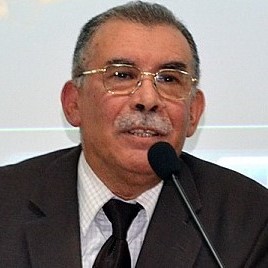
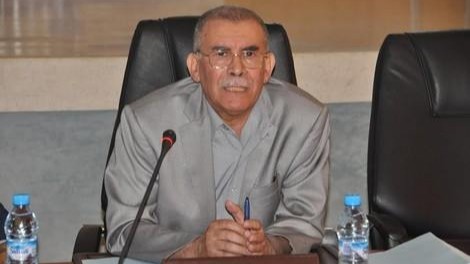
Mohamed Boudhan was an Amazigh writer, thinker, researcher and activist from the Rif, and publisher of the newspaper Tawiza. He was the author of many valuable books and articles on Amazigh identity. May he rest in peace.