The Scourge of Francophones in the Book: “For a Cultural Revolution in Morocco
Among the new concepts introduced by the Moroccan writer and thinker Hassan Aourid in his book For a Cultural Revolution in Morocco (Najah El Jadida Printing House, Casablanca, first edition 2018, 342 pages; second edition 2019)—which I consider a treatise on the philosophy of education—are those of the “Francophone” and the “postcolonial man.” These two notions, however, refer to the same reality and share the same core essence; the only difference lies in the specific contexts in which one is used over the other.
In the Moroccan context, the term “Francophone” refers to a Moroccan who is steeped in French culture and fluent in the French language, prioritizing its use over national languages and championing French values in the hope that they will spread and be adopted by fellow citizens. The author is scathingly critical of this Moroccan Francophone type; in fact, he launches a vigorous and fierce attack against them (pages 185 and 186). On the surface, this may seem strange and even inexplicable. How can a modernist intellectual like Professor Aourid—who has immersed himself in French Enlightenment thought, was educated in the French language, has written several books in French, contributes to various cultural and media outlets in that language, and lectures and teaches political science at the university level in French—how can he attack Francophonie and Francophones? Is he not one of them? Indeed, is he not one of their most prominent and celebrated figures?
To resolve this ambiguity, the author clarifies that he draws a sharp distinction and a clear boundary between the French language—as a medium for thought, science, knowledge, Enlightenment, and emancipation—and “Francophonie” as a colonial legacy (page 186). Consequently, he writes regarding Francophones: “Users of French are not necessarily proponents of free thought, even if they often adopt a rational outlook on an individual level. In general, however, they find no issue in accommodating and defending archaic institutions, much like the colonial administration that instrumentalized the old Makhzen—or ‘Sherifian’ by its own designation—and utilized the zaouias while allowing them to sink into obscurantism, exploitation, and even debauchery, reinforcing fatalism by encouraging the cult of Sufi orders” (page 185). He further adds that these Francophones constitute “one of the pillars of neocolonialism” (page 186).
It is at this point that the Francophone converges with what the author calls the “postcolonial man,” effectively forming a single phenomenon. This remains true even though Aourid discusses the latter independently of the former, addressing them in two different contexts separated by 140 pages.
What, then, is the postcolonial man? One of his most defining traits, as the author explores on page 41, is a cynical disposition—specifically, the act of feigning belief in and defending something that he actually rejects or even condemns in private. This is precisely what the French Protectorate officials did, the author notes, when they upheld archaic Makhzen traditions and encouraged backward superstitions and religious beliefs, even as they harbored an inner contempt for both the practices and the practitioners, whom they deemed primitive and ignorant. Mr. Aourid explains that today’s technocrat follows this same pattern: he bolsters authoritarianism, protects corruption, and remains silent in the face of injustice, despite an education in France and an immersion in Western culture that ostensibly rejects such things. This cynical technocrat is the modern Moroccan incarnation of the colonial official. Consequently, Aourid argues that “the cultural revolution to which we aspire can only be achieved through a new man” (page 41). This “new man” is defined primarily by what he is not—the antithesis of the postcolonial man. Describing this new Moroccan archetype, the author writes: “He is a man who breaks with the ‘man of gleaning,’ that product of a specific context who is content to merely transmit what he has been told; he also breaks with the hybrid man, who possesses modern techniques—or some of them—but whose mind remains weighed down by tradition, lacking precision, drowning in generalities, and unable to pose existential questions—at least not outside traditional frameworks—preferring instead to parrot the views of the ‘Ancients.’ Finally, he breaks with the model of the colonial man—whom I call the postcolonial man—who is skilled in modern techniques, possesses a rational mental structure, and understands the philosophical depth of material progress, yet maintains a utilitarian relationship with traditionalist currents. Deep down, he detests these traditions even as he submits to them, much like the proponents of colonialism did in the past. Furthermore, he operates under the influence of that demoralizing sentiment: cynicism—the act of believing in nothing while acting as if one does. Anyone working to build the framework we desire must move beyond this postcolonial man, who is embodied today by so many technocrats. We can neither clone the traditional man nor revive the hybrid model, for neither possesses the vital spark required to clear a path or conquer new horizons for the cultural revolution we seek” (page 41).
This cynical behavior, characteristic of the postcolonial individual, is—though the author does not state it explicitly—an attitude inherently linked to Francophones. This is evident, for instance, in the way they use their high-ranking government and political positions to defend policies they secretly despise. A prime example is their imposition of Arabic as the sole language of instruction; they champion it despite their personal dislike for the language, their contempt for its speakers, and their refusal to let their own children study in it. The result is that their cynicism has pushed the education system into its current abyss. By defending what they do not believe in and imposing on the Moroccan people what they would never accept for themselves or their offspring, they have fundamentally failed the nation.
Francophonie, as it is practiced in Morocco, is less a national face for the colonial protectorate’s administration and more an exercise in cynicism par excellence. This becomes glaringly evident when these Francophones “rush to defend archaic structures—not out of conviction, but to safeguard their interests, just as the colonial administration once did. It is they who push for obscurantist practices under the pretext of the spirit of Islam” (page 185), Hassan Aourid writes. If the objective of these Francophones is to bind Morocco to France, it is not so the country might emulate it in terms of democracy, liberty, rights, progress, and social justice, but rather to ensure it remains financially and economically beholden to it, subordinated to its dictates and its interests. This dependence and submission serve the interests of a Francophone caste that represents “a continuation of the colonial system,” as the author puts it. Aourid further distinguishes the French language itself from Francophone behavior, noting: “How many proponents of Francophonie fail to master French, speaking it instead like a tour guide? Their grasp of modernity is akin to a guide’s knowledge of a foreign language: it is restricted to a few stereotypical, repetitive expressions they mistake for technique and conduct.”
For the guardians of the Francophone temple, it matters little whether one masters the French language or is imbued with a spirit of free and critical thought. What is essential is to sing the praises of the cultural centers affiliated with Francophone institutions and to cozy up to capital to sponsor and fund their events. You are not required to be proficient in French, but merely to master its jargon. There is no expectation for you to assimilate the values of Enlightenment philosophy or emancipatory thought; a few technical terms and a network of personal connections are sufficient. They are “not intellectuals; their only horizon is the transfer of techniques, such as structural adjustment programs, certain UNESCO reports, or human development methods. They are responsible for the decay of education and what has been termed the fight against poverty and precarity. Some have even held high-level responsibilities within the education system despite being entirely ignorant of the Arabic language […]. Their command of the French language is mediocre, never rising above professional jargon and banal conversation. They are an extension of the colonial system and its haughty vision; they are nostalgic for the colonial era or seek to resurrect it. They maintain close economic, financial, and emotional ties with France, collaborate with the security services, and have mouthpieces in the media where they exercise a form of censorship or perpetuate police-state approaches in other guises, even as they now mobilize certain Arabic-language writers” (page 186).
Thus, instead of treating the French language as a “spoil of war”—as Kateb Yacine famously put it and as recounted by Hassan Aourid—these Francophones turn it into a defeat through their cynical, haughty, and colonial behavior, ensuring the country remains trapped in a cycle of dependency and underdevelopment. Their connection to France, therefore, has nothing to do with the French language or Enlightenment thought; it is aimed solely at preserving their own economic and financial interests.
This new concept of the “post-colonial man,” embodied by Moroccan Francophones—specifically those occupying high-ranking positions within the state—serves as a vital interpretive lens, offering genuine explanatory power and a pedagogical function. It is, in effect, a pivotal concept for understanding Morocco’s political and economic landscape. While there is a consensus in denouncing endemic corruption, rising authoritarianism, the looting of public funds, impunity, mediocre social services, the crumbling education system, and the failure of development projects, the root cause must be sought in the fact that the state is steered by these “Francophones,” as defined by Hassan Aourid. Political, economic, financial, and security decisions are in their hands. This is entirely logical given that the modern Moroccan state is itself a Francophone structure, a direct heir to France and a creation of Resident General Lyautey. This explains why these Francophones are, in Morocco, a mirror image of the colonial man; by fulfilling their role as post-colonial figures, they merely reproduce the administration of the Protectorate. Consequently, Francophonie, as described by the author, appears as the flip side of the Arabization policy: just as Francophonie failed to help Moroccans master the French language but instead made the country dependent on France, the Arabization policy failed to produce mastery of Arabic. Instead, it made Moroccans dependent on “Arabness,” pushing them to usurp an identity and fiercely defend a manufactured one. This paradox becomes clear once one understands that this Arabization policy was decided and imposed by these very same Francophones who, ironically, despise the Arabic language and do not want it for their own children.
All of this demonstrates that no serious reform or true renaissance can emerge in Morocco without one prerequisite: ending the hegemony of this “Francophone man” over the state apparatus and decision-making centers.
One can easily imagine the satisfaction of Arabization advocates seeing Hassan Aourid attack their Francophone rivals, labeling them a plague that hinders Morocco’s progress and prevents its liberation from underdevelopment, dependency, and a culture marked by corruption and despotism. These Arabizing circles will certainly seize upon this anti-Francophone stance to legitimize their crusade against those they accuse of defending the colonizer’s language and marginalizing Arabic. But they should not get ahead of themselves. They would do well to pause and reflect. If they imagine that Hassan Aourid—simply because he is attacking Francophones—rejects French and defends Arabic in the same way they do, they are making a dual error.
First, they have failed to grasp that, in Hassan Aourid’s writing, the term “Francophone” is a new concept that bears no direct link to the actual use of the French language itself.
Second, since the term “Francophone” has been detached from the linguistic issue, the author’s opposition to this elite does not signify any hostility toward the French language. On the contrary—and this is where their joy may turn to anger—Hassan Aourid advocates for teaching science in French starting from primary school. He states bluntly that experience has demonstrated “the failure of teaching scientific subjects in the Arabic language.” To temper the ire of the Arabizers, he specifies: “not because of an intrinsic deficiency in the Arabic language, but because its speakers produce neither science nor technology” (page 161).
This preference for French in science education highlights the innovative meaning of the “Francophone” concept developed in the book “For a Cultural Revolution in Morocco.” The author calls for adopting French as a vehicle for scientific knowledge, but only after stripping it of the political “Francophonie” that weaponizes the language merely to keep Morocco in a state of political, economic, and financial dependence on France.
Arabic version | French version
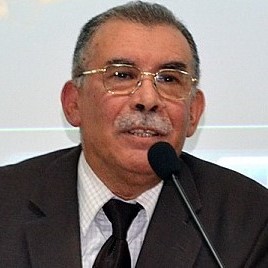
Mohamed Boudhan was an Amazigh writer, thinker, researcher and activist from the Rif, and publisher of the newspaper Tawiza. He was the author of many valuable books and articles on Amazigh identity. May he rest in peace.