If Arabic Is the Language of the Quran, Why Impose It Beyond the Sacred Sphere?
Whenever opinions emerge—whether from official circles or private spheres—suggesting the need to reconsider Arabic as the language of instruction for pedagogical or cognitive reasons, the self-proclaimed “guardians of the temple” of the Arabic language immediately rise up in protest. This occurred, for instance, during the 2018-2019 school year when terms from Darija were introduced into a primary school textbook. These defenders mobilize to thwart, reject, and discredit such views, going so far as to demonize the authors and incite public opinion against them.
We will not delve into the details of their arguments supposedly based on educational and learning sciences, even though it is easy to dismantle them and prove their falsity, as they lack any serious scientific or pedagogical foundation. We will not address them because, for these defenders themselves, such arguments are merely incidental. Their fundamental argument—the one they first wield against their adversaries to prove that Arabic is the most legitimate and capable language for instruction in all respects—is that Arabic is the language of the Quran. They draw this argument like a sword to terrify and silence their opponents.
On the surface, this response seems unassailable: who would dare claim or even doubt that Arabic is the language of the Quran? Yet, the goal of using the Quran as a weapon is not to confirm a historical and religious fact that no one disputes. Rather, it is to assert, if only implicitly, that anyone who rejects Arabic as the language of instruction is, in reality, rejecting the Quran itself. This is the source of the deterrent power provided by the “Quranic weapon” in linguistic debates: it is a formidable tool that cuts short any discussion by gagging the opponent and leaving them speechless. This forced silence occurs because the interlocutor finds it impossible to debate the status of Arabic in relation to the Quran. It is clear that those who brandish the Quran against their critics would never have succeeded in silencing them if they had not managed to pull them onto a terrain where religious arguments override reason, logic, and science. This is what Dr. Abdellah El Haloui called “smuggled fallacies” aimed at hijacking linguistic debate in his analytical article published by Hespress titled “Darija or Arabic” (click here to read the article).
However, in this article, we intend to block this unjustified “trafficking” that extracts the question of the language of instruction from its natural context—the pedagogical and scientific field. We will shift the debate to this famous “language of the Quran,” precisely because those who use it as a shield are the ones who introduced it into the discussion on the language of instruction. We will analyze it within this original framework, even though the “language of the Quran” remains a subject entirely foreign to the issue of teaching knowledge.
When proponents of Arabization—hoping to muzzle opposition and close the debate in their favor—tell those calling for a revision of the language of instruction that Arabic is the language of the Quran, the response proves completely sterile and irrelevant. It is of no use because it falls outside the subject at hand: the language used to transmit knowledge. Such a response would only be pertinent if the opposing side—viewed as an enemy by the Arabizers—claimed that Arabic was not the language of the Quran, or that Arabic would cease to be so if subjects were taught in another language. Choosing a language other than Arabic for instruction has no connection to the Quran or its linguistic expression; it does not affect them, change them, or cause them any harm. These two issues—the language of instruction on one hand and the language of the Quran on the other—are distinct and independent. Striking proof of this is that more than 1.5 billion non-Arab Muslims do not use Arabic as their language of instruction, yet this in no way alters their Islamic faith or the sacred status of the Quran and its language. I reiterate that our point here concerns exclusively and deliberately Arabic as a medium of instruction, not as a language to be studied, which is a universal practice among these non-Arab-speaking Muslim populations.
However, the most blatant contradiction into which those who wield the “language of the Quran” as a weapon fall—when they demand that this Quranic tongue be the medium of instruction, that is, the tool for a student’s intellectual, cognitive, and scientific development—is that they remove it from its specific domain, the Quran, to make it a language of instruction. By doing so, they transform it into a non-Quranic language, which invalidates the very argument that its sacred status should prohibit the use of any other language in education. Precisely because Arabic is the language of the Quran, it should not be employed outside this scriptural sphere; otherwise, it loses its nature as a Quranic language. This is the impasse facing proponents of Arabization: they argue that the medium of instruction must be Arabic because it is the language of the Quran, but if the language of the Quran is used to teach secular sciences and knowledge, it can no longer remain exclusively the language of the Quran. Why and how is this the case?
The Quran is an immutable text, in the positive sense of the term, meaning it undergoes no change, transformation, or evolution. While human understanding of it may vary across eras and among commentators, the text itself, in its language and expressions, remains fixed and permanent; it is indeed eternal, as it is the word of God. Conversely, a language of instruction is a human utterance—fluid, evolving, and shifting—that differs from one era to another, and even from one person to another. However, the language of the Quran ceased to be a living tongue the moment it was revealed; since that date, it has remained a preserved text to be recited or a written text to be read. This is precisely what has happened to the Arabic language: because it is the language of the Quran, it has become a language for reading and writing, but one no longer used in daily speech—that is, in the oral exchanges of everyday life. This situation has rendered it a quasi-dead—or quasi-living—language, as it no longer animates life as a language of spontaneous communication. Paradoxically, its connection to the Quran, from which it derives its strength and longevity, is exactly what has made it a weak and stagnant language. This justifies why it should be taught as a necessary subject for reading the Quran and performing the five prayers, or for those wishing to specialize in its jurisprudence, literature, and culture, but not as a medium of general instruction. Its dependence on the Quran has, as we have noted, made it static and stagnant, living outside of time, without change or evolution. Consequently, it can accompany neither our era nor modern scientific, technological, and economic innovations, which are nonetheless the primary functions of a language of instruction. One of the most ardent defenders of Arabic has himself acknowledged this stagnant character (to view the subject, click here).
For Arabic to claim the status of a language of instruction, centuries of oral use would have needed to provide it with opportunities for evolution. It would have had to drift far enough from the language of the Quran that, to a non-specialist reader in the 21st century, the sacred text would appear written in a different language from the Arabic they learned and mastered. This is exactly what has occurred with living languages: 10th-century French or English differs radically from 21st-century French or English in terms of lexicon, syntax, grammar, and conjugation. This evolution is so profound that a non-specialist cannot read or understand texts from that distant era. Yet, the 21st-century Moroccan student receives their education in the language of the Quran, the language of a Revelation from fifteen centuries ago. This means that the language has remained immobile, frozen in a stationary state, without movement or transformation, precisely because it is the language of the Quran.
Furthermore, from a pedagogical and cognitive perspective, the language of instruction should be the student’s mother tongue or, failing that, a simple language that is easy to acquire and adapted to their mental development and age. However, the language of the Quran—imposed by proponents of Arabization as the language of instruction—is a transcendent language. Is it not, after all, the word of God? It is complex and obscure in many of its meanings and expressions. It even happens that adults who have mastered it perfectly do not grasp all the subtleties of its texts; what, then, can be expected of a fourteen-year-old? Indeed, it is this complexity that explains the multiplicity of Quranic exegeses, whereas in a normal and natural language, those who master it orally and in writing should understand one another without major divergence. Who can claim to understand clearly and unequivocally Quranic expressions such as “By the snorting steeds…” (Wal-‘âdiyâti dab-hâ), “Indeed, We have granted you Al-Kawthar…”, “Cruel, and moreover, base-born” (‘Utullin ba’da dhalika zanîm), “A day of grim and glowering faces” (Yawman ‘abûsan qamtarîrâ), or “He has sent down the Furqân” (the Criterion)? Consequently, the respect due to the language of the Quran would require teaching it as a language linked to the requirements of religion and worship—as is done in all non-Arab Muslim countries—or teaching it as a subject of study, rather than a medium of instruction, for those who choose to specialize in its literature, heritage, and culture, or using it for written, journalistic, poetic, or novelistic production. Adopting it as the language of instruction constitutes a double offense: first, against the language itself, by forcing it into domains where it is powerless because they are foreign to its original vocation of religion and heritage; and second, against education, by using an archaic and religious linguistic tool to train students living in the 21st century, rather than the 7th century, when the language of Revelation was crystallized.
Thus, the instrumentalization of religion, by brandishing the banner of the “language of the Quran,” succeeds in sabotaging educational reform. Yet, this reform depends above all on optimizing the language of instruction, which must be chosen according to rigorous pedagogical, cognitive, and training criteria. Just as the intrusion of the religious into politics corrupts the latter by transforming it into a metaphysical and backward form of management—prioritizing salvation in the hereafter at the expense of earthly well-being guaranteed by economic and social development—it also harms religion itself by making it appear as a system that supports despotism and represses freedom of expression and thought. Similarly, imposing religious dogma on a purely linguistic and pedagogical debate corrupts education by condemning it to sterility and failure. Finally, it disserves the very language it claims to defend by casting it as solely responsible for the dysfunctions and the collapse of our educational system.
Arabic version | French version
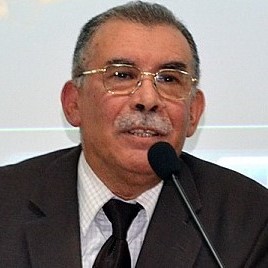
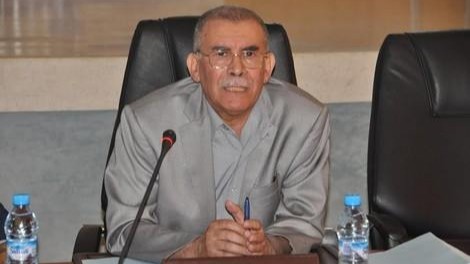
Mohamed Boudhan was an Amazigh writer, thinker, researcher and activist from the Rif, and publisher of the newspaper Tawiza. He was the author of many valuable books and articles on Amazigh identity. May he rest in peace.