Why Teach in Arabic If It Is Not a Requirement for Religion, Identity, or Science?
I should clarify from the outset that my analysis focuses exclusively and deliberately on the adoption of Arabic as the primary language of instruction. As for teaching Arabic to Moroccans for its religious, historical, and cultural significance, that is not a subject of disagreement or debate. I do not believe a single Moroccan is calling for the complete abandonment of Arabic or the elimination of its instruction altogether. The scope of this discussion rests on distinguishing—in both function and objective—between a “language of instruction” and a “taught language.” Nor is this debate about the policy of Arabization itself; that policy has nothing to do with the Arabic language or pedagogy, but is rather a discriminatory policy aimed at engineering an identity shift among Moroccans, transforming their Amazigh and African heritage into an Arab and Asian affiliation.
One merit of the controversy sparked this year by the inclusion of Darija words in a primary school textbook is that it reignited the issue of the language of instruction. In truth, this question has remained open ever since education was linguistically Arabized. For proponents of Arabization, this debate has always been fueled by preconceived ideological stances. They defend teaching in Arabic by arguing, first, that it is essential to Islam as the language of the Quran; second, that it is a language of identity; and third, that it is capable of providing intellectual training for students across various fields of science, thought, and culture. Let us analyze this threefold relationship linking Arabic to Islam, identity, and cognitive development—the very foundation used by “Arabizers” to justify its role as the primary language of instruction.
Is teaching in Arabic a requirement for the validity of Islam?
Although this question should not even arise, given how obvious the negative answer is, it remains relevant. Indeed, the primary weapon brandished by advocates of Arabization against those calling for another language of instruction is the assertion that Arabic is the language of the Quran. By this, they imply that it is indispensable to the practice of Islam. It is therefore necessary to dispel any ambiguity or misunderstanding regarding the link between Arabic as a language of instruction and the Islamic faith.
— Non-Arab Muslim countries represent 1.5 billion believers. Some teach Arabic as a secondary language, but none use it as their primary language of instruction. Are these vast numbers of non-Arab Muslims who do not study in Arabic any less Muslim than the Arab minority who does?
— Morocco has a high illiteracy rate, exceeding 30%. These citizens can neither read nor write Arabic. Does this render their Islam incomplete or unacceptable? Are their prayers rejected and their fasting invalidated because they have not mastered formal Arabic?
— Were our uneducated ancestors, whether they spoke Darija or Amazigh, excluded from Islam before the French protectorate because they recited Quranic verses in their prayers without fully understanding their exact meaning, due to a lack of Classical Arabic?
— Was the Islam of Moroccans deficient during the era when Arabic was not the main language of instruction, from independence up until the 1980s?
Through these questions, we aim to demonstrate that using the “Arabic is the language of the Quran” argument to impose it in schools is, at best, a naive stance repeated by uneducated individuals who fall victim to a widespread culture of sanctified ignorance. More often, however, this stance stems from hypocrisy, bad faith, and political maneuvering. It amounts to vile and sneaky blackmail: its perpetrators force Moroccans to choose between Arabic as a language of instruction or placing their faith in jeopardy, thereby exploiting the deeply ingrained conditioning that ties Arabic intrinsically to Islam in the popular psyche.
We thus see that justifying the choice of Arabic on religious grounds is not merely a weak and incoherent argument; it is a false, misleading, and fallacious claim. It is the favored tool of manipulators and charlatans: Arabists seeking an identity shift (both national and cultural), mediocre and hypocritical politicians, and populists who exploit Islam for gain. All of them demonstrate total indifference to the future of the nation, an absolute future that depends on quality, adapted education. They have deliberately sacrificed this education on the altar of a disabled, half-dead language that can yield nothing but an equally disabled and dying educational system.
What, then, is the point of adopting Arabic as the main language of instruction if doing so is not a religious prerequisite for being a good Muslim?
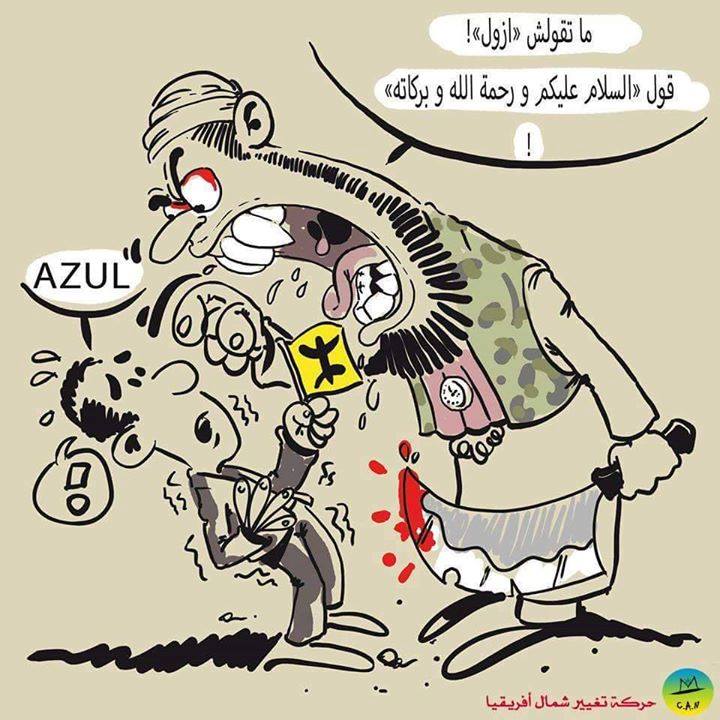
Is Arabic the language of Moroccan identity?
Another pillar of the arabization advocates’ argument is their tedious, repetitive claim that Arabic is the language of identity. Abandoning it for another language of instruction would thus be equivalent to denying that identity. Whether identity is defined through Islam—as political Islamists do—or through Arab nationalism, casting Arabic as the sole emblem of Moroccan identity is equally misguided, deceptive, and obscurantist. Why?
First, because identity exists independently of religion, which is a variable that can emerge, endure, or disappear. Arabs have always been Arab in their identity, whether they were pagans during the Jahiliyyah period, or Muslims and Christians as they are today. Similarly, Moroccans have always been Amazigh in their identity, whether they practiced Judaism, as during the era of Queen Dihya, Christianity under Roman and Byzantine rule, or Islam as is the case today.
As for language, as a component of identity that should be preserved and used for education, it is the one tied to the territory where it originated and to which it belongs. This is true of Arabic, which emerged in its native home in the Arabian Peninsula. Consequently, in Morocco as throughout North Africa, the language of identity is the Amazigh language, as the indigenous tongue. Added to it for historical reasons is Darija, which is also a language of identity since it was born in North Africa rather than imported from outside. Arabic, by contrast, came from elsewhere, just like Phoenician and Latin in ancient times, or French and Spanish more recently. It therefore has no link whatsoever to the collective identity of Moroccans, which is an Amazigh and African identity. As for those who claim that Arabic is Morocco’s identity language, they are individuals denying their Amazigh roots. Having chosen—or undergone—a form of identity, national, and even sexual “transmutation,” they now seek to impose it on Moroccans who remain true to themselves by preserving their Amazigh identity.
What, then, is the point of adopting Arabic as the main language of instruction if it is not a necessary condition for preserving the Amazigh identity of Moroccans?
The Language of Instruction: The Heart of Morocco’s Education Crisis
Although our educational system suffers from numerous material problems—funding, infrastructure, equipment, human resources—and pedagogical issues—training, curricula, content, teaching methods—these remain secondary compared to the main issue: the language of instruction and training. What worsens the situation is that officials fail to realize, or refuse to acknowledge, that the language of instruction is the primary cause of our system’s underdevelopment, declining standards, and mediocre performance. This becomes obvious when observing that every reform intended to improve the system has succeeded only in deepening its failure. Why? Because these reforms have never addressed the root of the problem: the language of instruction, which, as I have emphasized, can only be reformed by being replaced. Yet the latest so-called “revolutionary” reforms, introduced under Framework Law 51-17 on the education, training, and scientific research system, stipulate in Article 28 the requirement to “adopt Arabic as the main language of instruction.” This is persisting in trying to cure the ailment with what causes it. It explains why the disease is worsening, threatening to reach an incurable stage of “metastasis.”
Indeed, the crisis facing Morocco’s education system is worsening because attempts are being made to cure it with the very thing that weakened it: Arabic. Yet the symptoms of this disease—which has grown into an epidemic ravaging the school system—only emerged after the decision to “adopt Arabic as the primary language of instruction” in primary and secondary education in the late 1970s. That period was marked by the appointment of a minister specifically tasked with overseeing this Arabization policy, the late Azzeddine Laraki. Why, then, has Arabic become an ailment gnawing at the “health” of education and threatening it with cardiac arrest?
Is Arabic suited to the scientific and cognitive development of students?
In reality, this is the fundamental question at the heart of the debate over the language of instruction. Issues surrounding religion and identity are merely secondary, serving only to counter the fabrications and misrepresentations of Arabists. The latter link Arabic to religion and identity solely to force its adoption in schools, serving an ideology designed to defend their own narrow interests with complete disregard for the well-being of the nation and its citizens.
But why would Arabic be responsible for Morocco’s educational disaster and represent a disease weakening its body to the point of threatening cardiac arrest, as I claimed? For a simple reason: it is itself a sick, impaired, and powerless language. It has lost its oral communication function, which is the primary and original source of any language’s vitality. It is no longer the native tongue (mother tongue) of anyone in the world, nor is it the language of daily use for any human group. This means it has lost the primary and necessary condition for a language’s survival. Stripped of this vital function—oral practice and daily use—it has become a crippled language, half-alive or half-dead, surviving solely in written form. This stands in stark contrast to fully living languages, which thrive first through spoken use before moving to the written word (see the article: “What Arabic Lacks Is Its Use in Everyday Life”).
Why is it a problem if Arabic is used only in writing? The real issue lies in the fact that when a student enters school, they already master their native tongue, or another language picked up on the street from playing with children for whom it is a mother tongue. This is the case, for instance, of the Amazigh child who acquires a fluent command of Darija from playmates in an Arabic-speaking neighborhood. It is through one or both of these languages that the child communicates within the family, in public spaces, at the local grocery store, or with friends. Logically, the language of instruction should be a natural extension of this linguistic foundation. Instead, this child is suddenly confronted with Standard Arabic—a foreign language they do not know, do not speak, and do not understand at all. This gulf between the language of the home and street on the one hand, and the language of instruction and school on the other—a reality that proponents of Arabization ignore or pretend not to see—is precisely the dividing line between the conditions for educational success and the root causes of systemic academic failure like the one we are currently experiencing (for further details, see the article: “The Real Reasons Behind Students’ Poor Command of Arabic”). Why is this the case? Because by adopting Standard Arabic as the language of instruction, the school ultimately subverts its primary mission. Since Arabic is not used in everyday life and bears no connection to the learner’s mother tongue, the goal is no longer to teach students how to structure coherent thought or acquire knowledge, skills, and scientific understanding. Instead, the top priority becomes learning Arabic itself, merely to gain access to other subjects later on. This language acquisition process can consume a student’s entire school career without even guaranteeing genuine mastery, precisely because the language is absent from daily social interactions. Thus, the medium—the language—becomes an end in itself, overshadowing the original purposes of education: equipping students with knowledge, scientific training, skills, and expertise. Ultimately, learners finish their education devoid of real knowledge or technical know-how, having spent all their time struggling to master a complex language perceived as an insurmountable obstacle simply because it is neither living nor spoken in their environment.
Given the inseparable link between language and thought—with language playing a crucial and decisive role in structuring and developing reasoning through the concepts and meanings it conveys—a language that is handicapped and limited by being merely “semi-living,” like Classical Arabic, inevitably constrains the intellectual faculties and overall education of those taught through it. This is the root cause of the chronic deficiencies and flaws in the Moroccan education system ever since Arabic was imposed as the medium of instruction in the late 1970s; before then, from independence until that period, it was merely one subject taught alongside others. While French and other foreign languages such as English or Spanish are not native to Moroccans either, using them as mediums of instruction—in the absence of the country’s true native and natural languages, Amazigh and Darija—proves far more effective and productive than relying on Classical Arabic. Why? Because these foreign tongues are, above all, natural, living languages spoken daily in their countries of origin. Moroccan students even manage to converse among themselves in these languages once they have learned them. In contrast, no Moroccan will ever use Classical Arabic to have an everyday conversation with a fellow countryman, even if both speakers hold doctorates in Arabic language and literature or have published numerous works in the language.
Ultimately, although Classical Arabic—despite its limitations and obvious inability to serve as a spoken language in real-life communication—can remain a written language of great prestige, endowed with an exceptional brilliance that only those ignorant of its history, literature, and intellectual richness could deny, it may at most be suited to certain specific fields. These include politics, the print press, publishing, literary creation, novels, poetry, religious preaching, lyricism, satire, eulogies, or university-level instruction. However, it proves completely ill-suited to delivering successful instruction and useful training to primary and secondary school students. Why? Because it is during this pivotal period, spanning from preschool to the baccalaureate, that a student’s thinking takes shape, fundamental cognitive skills are acquired, and their worldview, understanding of society, and grasp of history crystallize. When a merely “semi-living” language shapes the genesis of this reasoning and the development of these skills, these intellectual foundations themselves become semi-living: deficient, incomplete, backward, and ill-suited, given language’s crucial influence on the development of thought. This is precisely what makes Classical Arabic inherently unsuited to the acquisition of exact sciences, such as physics, chemistry, astronomy, medicine, biology, or engineering. To be sure, a scientist who received initial training in a living, everyday language can certainly use Classical Arabic later—for instance, to deliver university lectures. In that specific case, the language will no longer pose an obstacle to mastering a discipline already assimilated through a different linguistic medium.
The most serious issue with language, when imposed as the primary medium of instruction, lies in the fact that students learn every foreign language at school based on their primary linguistic foundation. When that foundation is a living language of everyday use that students master fully, learning foreign languages becomes easy, natural, and effective. This explains why Moroccan students suffer from deep-seated deficiencies in learning and mastering foreign languages. Why? Because they already suffer from a major inability to master Classical Arabic, which, as the primary medium of instruction, nevertheless serves as the base and anchor for acquiring other languages (an issue I explored in depth in my article titled “Have Mercy on the Arabic Language, O Arabizers!”).
Arabic, Politics, and Power
Despite the catastrophic results of the Arabization of education in Morocco and the imposition of Arabic as the primary language in primary and secondary schools—outcomes that officials are by no means ignorant of—the authorities stubbornly persist in scuttling education through Arabization, unconcerned that they are thereby jeopardizing the future of both the nation and its citizens. Could they truly be unaware that the fundamental problem facing education is the language of instruction, and that resolving it requires changing it above all else? Of course not; they know it full well. The proof is that their own children do not study in Arabic, and they themselves have barely mastered the language—a language they never needed to attain their influential high offices. Why, then, do they impose on the public what they refuse for themselves and their own children?
This is because Arabic, as a language intrinsically linked to religion, heritage, traditionalism, and Salafism, is inseparable from absolutism, serving as its linguistic counterpart. It operates much like religion itself, utilized and monopolized by the theocratic state as one of its main instruments of domination. This is blatantly obvious in the case of the Makhzen state in Morocco, which bases its legitimacy on Islam, of which Arabic is treated as an indispensable element. It is clear, therefore, that while Arabic has been a disaster for education, dragging it down, it remains a blessing for the ruling power by bolstering its religious legitimacy. This explains why the Moroccan state operates its vital administrative machinery in French while governing in Arabic. Consequently, establishing a true democracy is difficult when the language of power is one that the people do not master and do not use as their native, natural mother tongue, as is the case with the Amazigh language and Darija. This situation has effectively held Moroccans hostage to the Arabic language, preventing any genuine surge in development. Education, the engine of that development, finds itself handicapped, paralyzed, and shackled by Arabic, keeping it from recovering and moving forward.
Given the nature of the Moroccan political system and the cowardice of the political class, no genuine educational reform capable of changing the language of instruction appears to be on the horizon. Such a change would demand a degree of political and moral courage that is consistently lacking, both within the ruling regime and among political parties that have become mere cogs in the system. In its political usage, Arabic serves as an additional tool of repression. This repression culminates in depriving Moroccan citizens of optimal development and the full realization of their potential through a successful education system that could foster intellectual innovation, scientific production, and technological invention.
What, then, is the point of maintaining Arabic as the primary language of instruction if it is not a prerequisite for a student’s intellectual and scientific training? What is more, why cling to it when it is neither a guarantee of preserving Morocco’s Amazigh identity, nor a requirement for the piety of Moroccans, nor the guarantor of an effective and productive educational system?
Arabic version | French version
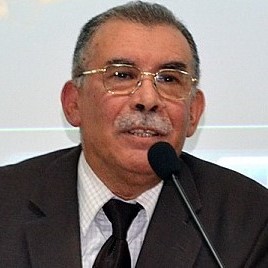
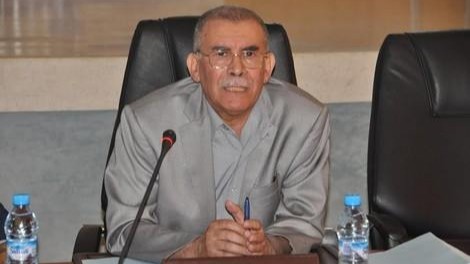
Mohamed Boudhan was an Amazigh writer, thinker, researcher and activist from the Rif, and publisher of the newspaper Tawiza. He was the author of many valuable books and articles on Amazigh identity. May he rest in peace.