MP Azouggagh Calls on Ministry of Culture to Launch a Project to Protect the Amazigh Toponymy
MP Azouggagh urges the Minister of Culture to launch a national effort to protect Moroccan place names and restore original city names
Historical names such as Mogador, Anfa, and Tamesna re-ignite the debate over preserving geographic memory and national identity components
A parliamentary initiative has reopened the debate on place-naming policies in Morocco. Lawmaker Lhoucine Azouggagh has submitted a written question to the Minister of Youth, Culture, and Communication regarding the protection of national toponymy and the preservation of the historical and original names of towns and geographic areas against alteration or distortion. The MP called for a national project to rehabilitate geographic designations with proven historical and linguistic roots, while integrating their academic meanings into school textbooks and official dictionaries.
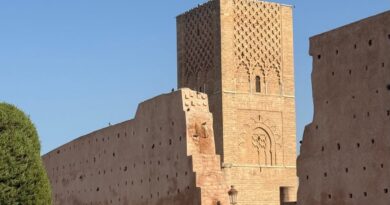
This move comes amidst recurring debates over the historical name of the city of Essaouira and calls to restore its original designation, “Mogador” or “Mogadir,” which is considered an integral part of the city’s civilizational, cultural, and historical heritage.
In his parliamentary question, Lhoucine Azouggagh stressed that place names are far more than mere administrative or geographical markers. Instead, they serve as a cornerstone of collective memory and national identity, preserving within their linguistic and historical structure the traces of successive civilizations and cultures in Morocco.
The MP noted that numerous place names, particularly those with Amazigh roots, have faced erasure, alteration, or substitution throughout various historical periods. He argued that part of this process occurred in the post-independence era, driven by a narrow vision of identity that marginalized the rightful place of Amazigh, Hebraic, African, and Mediterranean components within Morocco’s cultural diversity.
Three forms of place-name alteration
Analyzing this phenomenon, Lhoucine Azouggagh outlined three main manifestations of place-name changes. The first involves the outright replacement of historical designations with new names, such as substituting “Anfa” with Casablanca or “Fdalate” with Mohammedia.
The second form concerns the distortion of the original names’ pronunciation and linguistic structure, altering their linguistic features. In this regard, the MP cited the transformation of “Azila” into Asilah or “Tittawen” into Tétouan.
According to the parliamentary question, the third aspect lies in the spread of unscientific interpretations regarding the names of several cities and regions, including Safi, Morocco, Marrakesh, Tangier, Foum El Hassan, Chtouka, Massa, and Agadir. The lawmaker argued that this situation requires rigorous scientific correction based on historical, linguistic, and anthropological research, moving away from anecdotal explanations disconnected from reliable academic sources.
Constitutional framework and preserving geographic memory
The lawmaker cited the provisions of the 2011 Constitution, which established the Amazigh language as an official language of the state and a common asset for all Moroccans, while guaranteeing the protection of all expressions of national identity.
He also referenced international conventions and standards on preserving linguistic and cultural rights and protecting toponymy. He emphasized that rehabilitating national place names requires a comprehensive approach capable of integrating the country’s historical heritage and diverse cultural and linguistic ties.
Lhoucine Azouggagh clarified that restoring original names does not undermine historical designations that emerged later, citing the example of Kenitra, where the national name replaced the colonial designation. He reaffirmed that reviewing place names requires a clear distinction between the deliberate alteration of original memory and developments driven by legitimate historical and national contexts.
Government measures and coordination mechanisms
In concluding his inquiry, Lhoucine Azouggagh called on the Minister of Culture to detail the measures the government plans to adopt to initiate a review of Moroccan toponymy, restore original city and regional names, and establish their historical and scientific meanings.
He also asked the minister about the feasibility of incorporating these place names and their scientific definitions into school curricula and official dictionaries, to protect collective memory against falsification and unsubstantiated interpretations.
Finally, the MP requested clarification on the mechanisms the ministry intends to establish to monitor this issue, in coordination with relevant government departments, researchers, experts, and civil society, in accordance with the Constitution and Organic Law No. 26.16 on the implementation of the official status of the Amazigh language.
This parliamentary initiative places the issue of place names at the heart of cultural and institutional debate. It raises issues deeper than simple naming conventions, touching on the preservation of Moroccan memory, the protection of its linguistic roots, and their active presence in education, academic research, and public policy.
Arabic version | French version