Speech disorder in Moroccans
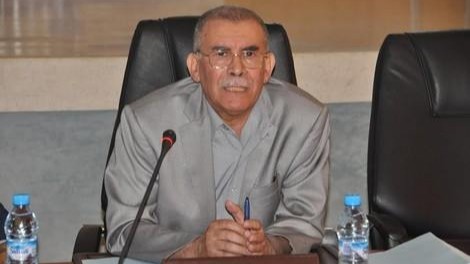
A Moroccan lawmaker recently bore the brunt of clear injustice when a prepared speech he delivered during a public parliamentary session on Monday, December 20, 2021, was turned into an object of ridicule and mockery after circulating widely on social media alongside a heavily ironized comment: “Witness the massacre of Arabic by a representative of the nation.” This countless representative was unfairly treated by the media as if he were the first and only person to butcher Arabic on live television, even though daily scenes of a similar nature can be witnessed on Arabic-language channels broadcasting from outside Morocco.
Proponents of arabization endlessly repeat that the goal of this policy is to equip Moroccans with mastery of the Arabic language and to generalize its use. Where then are this mastery and this generalized use if parliamentary and government officials prove incapable of expressing themselves—or even reading—in correct Arabic? Yet anyone who examines the nature and specificities of Arabic will quickly understand that arabization can engender anything except the gift of oral fluency for Moroccan speakers. Why? Quite simply because Arabic is a language that lost its function of oral communication centuries ago, transforming into a mere language of writing and reading rather than verbal transmission. Consequently, and as I have already emphasized in previous debates, it is a semi-living or semi-dead language. Since it is acquired only through written learning and not through oral practice, anyone who attempts it—no matter how well-versed they are in its literature, grammar, or vocabulary—will never manage to express themselves spontaneously and easily. Indeed, the exercise remains unnatural, tinged with artificiality and constraint, because it is a written language that does not exist in daily life as a tool for exchange and dialogue. This is why we observe that a Moroccan who masters French, English, Spanish, or any other living language is capable of discoursing and expressing themselves spontaneously and with ease, without the slightest confusion or awkwardness. Why? Because these languages, unlike Arabic, are used in everyday communication in addition to their written usage.
It is well known that this singular situation of Arabic—a purely written language devoid of daily usage—has severely harmed the effectiveness of the Moroccan educational system ever since it was established as the language of instruction and training. Because of this lack of anchoring in everyday life, a written stamp permeates our entire educational system. Students thus learn Arabic not to use it in their ordinary existence, but to read and write what has been put down on paper. This bars them from any natural and effortless expression, regardless of their level of writing proficiency. Thus, we find students preparing impeccable doctoral theses in Arabic, written in a noble and polished language that attests to their excellent competence, yet who struggle to express themselves during their oral defense to the point of giving the impression that they are not the authors of the brilliant work they are presenting. Similarly, the head of a public institution capable of drafting memos and reports in perfectly mastered Arabic will find themselves, when called upon to answer questions orally during a press conference, mishandling the language much to the dismay and uproarious laughter of the audience. This dissociation between the language of instruction and the language of daily life is among the major causes of the failure of our educational system, which is founded on a language foreign to daily reality.
Furthermore, this schizophrenia generates a fragile and psychologically vulnerable personality. Incapable of expressing themselves spontaneously and easily, as I mentioned, before an audience in this Arabic that was nevertheless taught to them, individuals are seized by embarrassment and confusion every time they take the floor in public—whether in parliament, at a press conference, during an academic defense, or at a party or union meeting. They thus develop a sense of powerlessness, weakness, and incompetence that undermines their self-confidence and triggers a genuine linguistic block. They come to dread expressing themselves in Arabic for fear of making errors or grammatical mistakes that would expose them to mockery and derision. The resulting embarrassment and confusion only heighten their own suffering as they martyr Arabic. It is therefore normal that Arabic provokes such a block as soon as its scriptural function is subverted to turn it into a spoken idiom. Indeed, when a Moroccan uses Arabic orally, their tongue is literally tied, because the Arabic they employ is not a natural organ of speech—speakers possess only a throat, not a pen. Yet Arabic is a language made to be written, not to be pronounced like a living dialect dedicated to everyday exchanges.
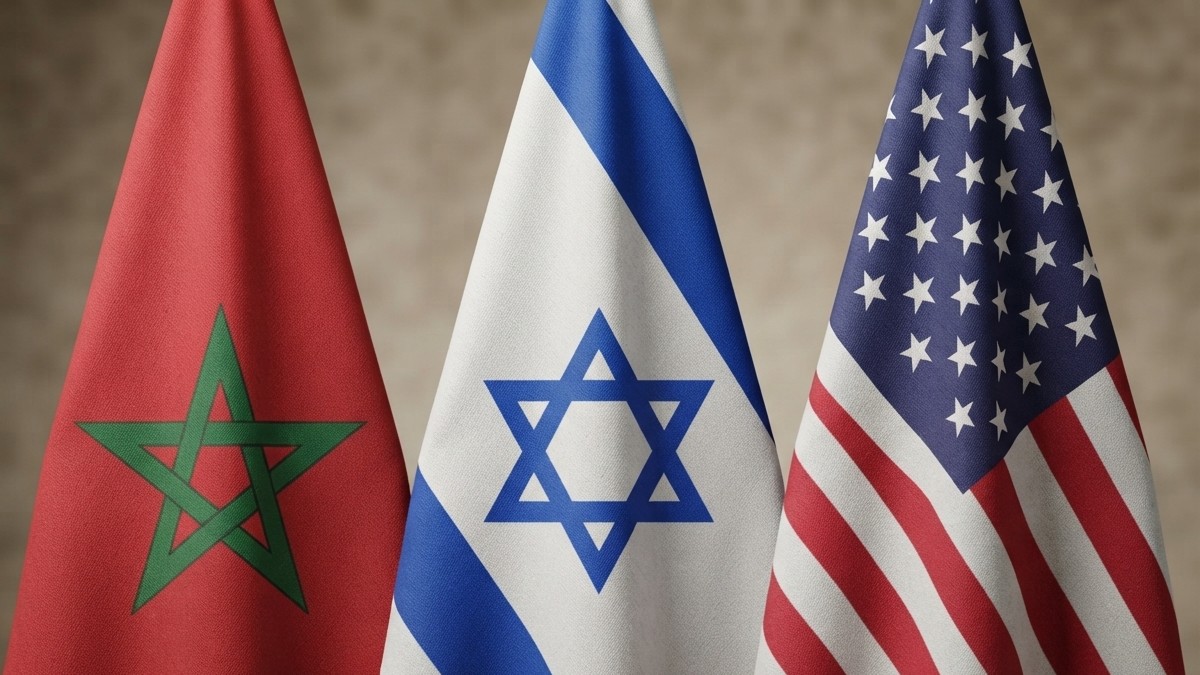
We observe that these negative feelings, which generate this block—shyness, loss of confidence, a sense of inferiority, and helplessness among many Moroccans speaking Arabic before a public—do not affect, at least not to the same degree, genuine Middle Eastern Arabs when they speak Arabic, despite gross and unforgivable mistakes that far surpass those committed by Moroccans in the same language. Why this difference? Quite simply because the identity and linguistic alienation of Moroccans has conditioned them to turn into “perfectionists,” forcing themselves to surpass authentic Arabs in their mastery of Arabic. The same applies to all other Arab causes, much like those Moroccans who refuse normalization under the pretext of supporting Palestine, even though the Palestinian Authority itself beat Morocco to the punch by normalizing its relations with Israel.
But why do these same Moroccans, seized by awkwardness and confusion when expressing themselves in Arabic, not resort to their maternal Darija—or to Amazigh for the speakers concerned—which they handle, unlike Arabic, with spontaneity and ease? It is because the linguistic inferiority complex from which they suffer has persuaded them that their Darija is an inferior and vulgar patois, and that using it, particularly in an official setting such as a plenary parliamentary session broadcast live before millions of viewers, betrays a low level of education, as it is a despised language spoken by uneducated illiterates. Let us remember the furious campaign waged at the start of the 2018–2019 school year against Darija, when a handful of familiar terms—such as “baghrir,” “briouates,” and “ghriba”—were introduced for pedagogical reasons into a primary school textbook. This initiative had been rejected and roundly condemned by intellectuals, parliamentarians, and political figures, who considered that these popular expressions threatened Morocco’s linguistic security and national identity, and constituted an aberration and a distortion of national identity (see the article: “What does the rejection of familiar ‘baghrir’ and the acceptance of unknown ‘soudoud’ mean?” by clicking here). They thus laid bare their contempt—the fruit of an identity and nationalist mutation that has ravaged Morocco and North Africa in general—toward their own original and national languages (Amazigh and Darija), while glorifying the languages of others and rejecting everything that proves authentically local and Moroccan. The contempt that these Moroccans harbor for their Darija actually reflects their self-hatred, embodied by this dialect, the legitimate heir of Amazigh. This is what compels them to be convinced that expressing themselves in Darija is worse than making mistakes while speaking Arabic. They thus live a double bind: if they resort to the dialect in public and official occasions, they fear seeing their value crumble in the eyes of an audience that would perceive them, according to their own internalization, as ignoramuses and illiterates wielding the language of the plebs. And if they opt for Arabic in order to confer impact and authority upon their words—an equally internalized belief—they prove incapable of handling it correctly, spontaneously, and with ease, as it is essentially a tool for writing and not for conversation. Their absolute nightmare, even for the most advanced among them, remains the grammatical error, that Lahn which even university professors of Arabic themselves fail to avoid. This obsession, coupled with the desire to express themselves in the flawless manner they imagine is demanded of them, brings back the block in the form of slips of the tongue, confusion, and profound embarrassment perceptible to all. Conversely, authentic Arabs feel no awkwardness in stringing together gross mistakes when speaking Arabic, nor in using their dialects in official assemblies without experiencing the slightest sense of discomfort or inferiority. Thus Moroccans, prisoners of this linguistic block, undergo genuine terror that plunges them into tragi-comic dead ends when they obstinately try to discourse in Arabic while knowing full well that they will fail, since Arabic remains a language of record and written fixation rather than everyday speech, as I have already noted.
The solution to the linguistic block of Moroccans is known to all, but no executive political official wants it. It consists of teaching Amazigh—and with it its daughter Darija—not in a symbolic or superficial manner, but seriously, effectively, obligatorily, and in a unified way, so that it becomes a school and written language used in state administrations, institutions, and courts. This involves putting a definitive end to the rift existing between the language of school and that of life, the original source of this linguistic block that I have evoked, while preserving Arabic as the language of worship, Muslim law, and cultural heritage.
Arabic version | French version
Amazigh writer, thinker, researcher and activist from the Rif, and publisher of the newspaper Tawiza. He is the author of many valuable books and articles in the spirit of the Enlightenment.