The Arabizing Role of Palestine in Morocco
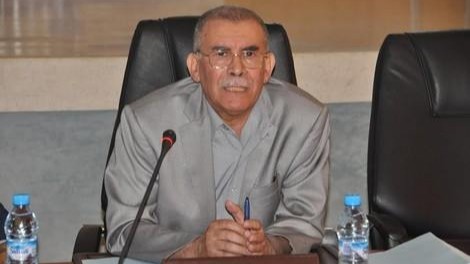
In a video broadcast on YouTube on December 15, 2020, Professor Abouzaid El Mokrie El Idrissi spoke about the normalization of relations between Morocco and Israel. He declared that the two worst events Morocco experienced during the first twenty years of the 21st century were the ratification, at the end of July 2019, of Framework Law 51.17—which signaled a retreat from the Arabization of education—followed by December 10, 2020, the day the normalization of relations between the Kingdom of Morocco and the State of Israel was announced. While Professor Abouzaid El Mokrie El Idrissi is known through his statements, interventions, and conferences for excessive enthusiasm and a penchant for delusional hyperbole disconnected from reality, this detachment actually expresses another, very tangible reality, quite different from the fantasy world he evokes in his speeches. For instance, when he claimed that Europeans and Americans had undertaken, in a “very, very, very secret” manner—repeating the phrase three times word for word—to translate their national archives into Arabic to preserve them and keep them intact over the centuries, he was actually explaining, without realizing it or intending to, that Arabic is a static language. He implied its immobility makes it better suited than any other for preserving archives (see the article: “A Fervent Defender of Arabic Recognizes it is a Static Language” in the book: “Sur l’arabe, le darija et la transidentité identitaire“). Similarly, when he illustrated the notion of identity during a conference by using the example of a “given race,” this example actually reflected his racist posture toward the Amazigh people far more than it clarified the concept of identity (see the article: “El Mokrie El Idrissi Abouzaid or Limitless Amazighophobia” in the book: “De l’amazighité et de l’amazighophobie”). Today, by establishing a link between the Palestinian cause—through his condemnation of the normalization of Moroccan-Israeli relations—and the decision to roll back Arabization, he is effectively confirming, likely without realizing or intending to, that the Palestinian cause fulfills exactly the same function as the Arabic language in Morocco. What, then, is this function?
It is not the linguistic function that the Arabic language is supposed to fulfill. Otherwise, what would the Palestinian cause, as a national liberation struggle against occupation, have to do with a subject related to languages of instruction? What brings the Palestinian cause and the question of the Arabic language together is neither the language of instruction nor the linguistic Arabization carried out by Arabic as a language, but rather real Arabization:
— ethnic, which does not aim to spread the Arabic language, but to instill and anchor in Moroccans the conviction that they constitute an “Arab” people of Arab origins;
First is the political dimension, which does not aim to spread the Arabic language, but rather to instill and cement the conviction among Moroccans that their state is Arab and governed by an Arab power.
Second is the dimension of identity. This, too, does not seek to promote the Arabic language itself, but instead works to instill and solidify the belief that Morocco is an Arab country with an inherently Arab identity.
Finally, there is the ideological dimension. This works to shape a false consciousness among Moroccans, perpetuating their subordination to the Arab Mashreq in terms of identity, culture, language, art, and religion. This is achieved through doctrines such as Wahhabism or the ideology of the Muslim Brotherhood (see the article: “Arabization and Identity in Morocco”, from the book On Arabic, Darija, and Identity Reassignment).
Within this framework of actual Arabization—which is simultaneously ethnic, political, ideological, and identity-driven—the Arabic language is not merely a linguistic tool; it acts as a vehicle for identity and belonging. This was acknowledged by Abouzaid El Mokrie El Idrissi in the same speech when he argued that the issue of the Arabic language is not “a question of renaissance, progress, and leadership,” but rather a question of the “essence of existence, independence, and the preservation of identity.” This is precisely where the Palestinian cause intersects with the Arabic language: in Morocco, this cause performs the exact same function of identity Arabization. The pervasive presence of this subject in the Moroccan landscape aims, above all, to bind Moroccans to the symbolism of Palestine as a pan-Arab and national cause. This is evidenced by the term “brothers” (achiaq), systematically used in Morocco to describe Palestinians. The term explicitly refers to blood ties and direct lineage, denoting siblings born of the same father and mother. Even when Islamists invoke the religious dimension of the conflict—emphasizing Jerusalem as a holy site of Islam and Al-Aqsa as the first qibla—the ultimate goal remains Arabism and Arabization; religion is merely used as a means to an end. This recalls the title of the famous poem by Muzaffar Al-Navab, Jerusalem is the Bride of Your Arabism, rather than “of your Islam.” Thus, the instrumentalization of Islam within the Palestinian cause serves the interests of pan-Arabism rather than the faith itself.
The writer Maimoun Amsbrid had already sounded the alarm regarding the role of Arabization played by the Palestinian cause in Morocco, writing: “The most powerful theme—or rhetorical register—through which pan-Arab discourse is activated in Morocco is undoubtedly the Palestinian question” (see his article Regarding the Amazigh Community in Morocco, published in issue No. 143 of the newspaper Tawiza in March 2009). The issue of Palestine, through the ideological space it occupies in Morocco—or rather, the way it permeates the country—contributes to the Arabization of minds and consciousness in a manner very similar to how the Arabic language functions as a marker of identity rather than just a linguistic tool. If proponents of Arabization, whether from the left or Islamist movements, consider the Palestinian cause a national one, it is because it serves as an instrument to Arabize the country and its citizens, much like the identity-based role assigned to the Arabic language. Consequently, the connection made by Abouzaid El Mokrie El Idrissi between these two causes—the Arabic language and Palestine—appears entirely logical and understandable. They share the same objective and fulfill the same function: to intensify Arabization and impose an identity shift on Moroccans, moving them away from their Amazigh African identity toward an Arab Asian one.
This explains why most advocates for Amazigh identity refuse to treat the Palestinian issue as a “national cause.” Accepting it from this perspective would be tantamount to endorsing the displacement of Amazigh identity by weaponizing Palestine to reinforce identity-based Arabization in the name of national duty. Were it not for this identity-driven Arabization—which seeks to distort and alter the collective identity of Morocco, its people, and the Moroccan state, specifically by using the Palestinian cause to achieve its ends—there would be no problem with the cause itself, nor with Moroccans mobilizing to defend Palestinian rights. This support only becomes an issue when it serves as a lever for an Arabization process that is destructive to Amazigh identity. In a different framework, Moroccans would defend the Palestinian cause on the basis of their Amazigh heritage, independent of any Arab affiliation, without this commitment being hijacked to Arabize them or transform Imazighen into Arabs. This is precisely what happens today when the Palestinian cause fulfills this function of identity Arabization. In such a case, Morocco’s attitude toward the issue would be no different from that of other peoples known for their support of Palestine and the defense of Palestinian rights, such as the Turks, Persians, or Indonesians. For these nations, solidarity does not serve to Arabize them or substitute an Arab identity for their own collective identity.
The Amazigh movement rejects this Arabizing use of the Palestinian cause, just as it rejects the Arabic language when it is used not as a simple medium of communication, but as a tool to impose a false, usurped Arab identity at the expense of the original and authentic Amazigh identity. If Arabic were confined to its primary linguistic role, its status would pose no issue—even if it remained the sole language of government and education—provided it did not undermine the Amazigh identity of Morocco, its people, and the state. This is evident in many countries, such as Senegal, Mexico, or India, which have adopted official and educational languages different from their indigenous tongues for historical, political, religious, or cultural reasons. In these cases, the use of a foreign language does not serve to replace local identities with the identity of that language’s speakers. This is precisely where the issues of the Arabic language and Palestine intersect: both cease to be understood for what they are the moment the former serves an identity-driven Arabization of Moroccans rather than a purely linguistic function.
Because Palestine and the Arabic language are used for the same purpose and fulfill the same Arabizing function, as I have written, proponents of Arabization—whether nationalists or Islamists—adopt the exact same attitude toward them. Their defense of Arabic is not intended to ensure they master it themselves, that their children learn it, or that it serves as the primary language of instruction. Instead, it is used as a tool for the identity-based Arabization of Morocco, its citizens, and the Moroccan state. This explains why most of these fervent defenders of Arabic have not mastered it and make no effort to do so. Furthermore, they enroll their own children in foreign or private Moroccan schools where the language of instruction is a foreign one, rather than the Arabic over which they feign such sorrow. While this posture may seem like blatant schizophrenia, that is only true if one reduces the role of Arabic to its linguistic and educational dimensions. However, these dimensions matter little to the proponents of Arabization, who prioritize its identity-shaping function. From this perspective, their position becomes entirely logical and consistent: if they fail to master Arabic and do not teach it to their children, it is because their priority is to Arabize the identity of Moroccans, not to ensure proficiency in a language that these self-proclaimed defenders prefer to bypass in favor of foreign languages for themselves and their offspring.
The exact same applies to their stance on Palestine. While they express support and solidarity for the Palestinian cause, their goal is neither to liberate Palestine—how could they?—nor to find a political solution that ends the Israeli-Palestinian conflict. Rather, they use it as a lever to further Arabize Morocco’s identity and to justify its “Arab” affiliation, viewing the Palestinian cause as the ultimate proof of this identity. This is why they reject all feasible solutions, including those accepted by the Palestinian Authority itself, while demanding conditions they know to be impossible—conditions rejected by Israel because they threaten its security and existence. Their objective is to maintain the Palestinian cause in its role as a tool for Arabization in Morocco. For them, finding a definitive solution to this conflict would mean deactivating one of the primary mechanisms of identity Arabization in the country.
Since the objective of proponents of Arabization—whether Islamists or leftists—in elevating the Palestinian cause to a “national cause” is to exploit it for the country’s identity Arabization, they fall into a glaring contradiction. This contradiction, however, is merely apparent if one keeps in mind the true function assigned to the cause. Among these superficial contradictions, one observes that they do not reject the normalization of relations between certain Arab and Muslim countries and Israel with the same virulence with which they oppose Morocco’s normalization. Thus, they invent justifications and excuses for the full diplomatic relations maintained by Turkey, the United Arab Emirates, and the Kingdom of Bahrain with Israel, while denying the same to their own country, Morocco. Why this double standard? Because a Turkish boycott of Israel would contribute nothing to Turkey’s Arabization, as it is a non-Arab state. Similarly, maintaining a boycott by the United Arab Emirates and the Kingdom of Bahrain would have no impact on their identity, which is already inherently and historically Arab. This strikingly demonstrates that the exploitation of the Palestinian cause in Morocco, coupled with the rejectionism of normalization, serves exclusively to fulfill this function of identity Arabization.
The apparent paradox in the stance of those opposing the normalization of relations between Morocco and Israel leads to another absurdity. If rejecting this normalization is intended, as they claim, to serve Palestinian rights, it ignores the fact that Palestinians themselves maintain near-normal relations with Israel. This is evident in the official security cooperation between the Palestinian Authority and Israel, as well as the numerous Palestinians who enter Israel for work. Perhaps the most striking evidence of this Palestinian normalization was the transfer of the late Palestinian leader Saeb Erekat on October 18, 2020, to the Israeli Hadassah Ein Kerem hospital, where he received treatment until his death in that same facility on November 10, 2020. Furthermore, it is the Palestinians themselves who call on Israel to open border crossings and dismantle the separation wall to facilitate their entry for employment and trade. Consequently, logic suggests that if defenders of the Palestinian cause were sincere in their approach, they would encourage Morocco to normalize relations with Israel to support the reality of normalization practiced by the Palestinians themselves.
This opposition to normalizing Morocco’s ties with Israel defies common sense and logic. It runs contrary to the interests of the Palestinians—who practice normalization, seek its expansion, and call for the removal of the restrictions that limit it—and constitutes an interference in their internal affairs. This is because the primary concern of these Moroccan opponents is not the welfare of Palestine, but their own agenda: perpetuating the boycott of Israel to maintain the Palestinian cause’s role as a tool for the “Arabization” of Moroccan identity. There is a tragic irony in this instrumentalization: while these advocates denounce Israel’s “Judaization” of Palestinian territories, they exploit the same cause to implement a mirror-image process: the “identity Arabization” of Moroccans. This campaign is accompanied by the spread of a culture of ignorance, misinformation, and “dumbing down” (as discussed here), which labels any supporter of normalization a traitor—to the point that viewing normalization as treason has become an unchallenged dogma. For instance, Mr. Abouzaid El Mokrie El Idrissi has linked the 1912 Protectorate Treaty to the December 10, 2020, Royal Cabinet statement announcing normalization, insinuating that this move constitutes a betrayal and a sign of a loss of sovereignty under external pressure, much like the Protectorate Treaty. In reality, contrary to Mr. Abouzaid’s implications, the normalization announcement is clear evidence that Morocco is reclaiming its sovereignty and independence by freeing itself from the blackmail exerted in the name of the Palestinian cause. The decision to normalize represents Morocco’s full exercise of its sovereignty, which was previously constrained by the equating of normalization with treason. Ultimately, one hopes that Morocco will fully reclaim its sovereignty by declaring its total identity independence from a manufactured Arabism that “merchants of the Palestinian cause” seek to impose as a collective identity. This would mean returning to its true Amazigh and African identity, without implying any hostility toward the genuine Arab identity of those who actually possess it.
Arabic version | French version
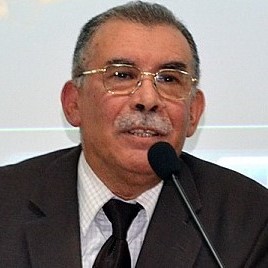
Mohamed Boudhan was an Amazigh writer, thinker, researcher and activist from the Rif, and publisher of the newspaper Tawiza. He was the author of many valuable books and articles on Amazigh identity. May he rest in peace.