Hostility Toward Amazigh Identity: From Active Opposition to Deliberate Omission
As early as 1930, openly hostile positions toward everything related to Amazigh identity began to emerge in Morocco. These stances relied on the myth of the “Berber Decree” (Dahir Berbère), a narrative used to demonize the Imazighen by fallaciously associating them with colonialism—as if they were the signatories of the protectorate treaty that allowed France to occupy Morocco! They were also linked to Christian proselytism, treason, secessionism, racism, and social discord (fitna). Since that era, the struggle against Amazigh identity has been framed as a form of “jihad” or sacred battle, serving as the ultimate litmus test for activism and sincere patriotism. Following independence, this crusade continued under the pretext of erasing the remnants of colonialism, based on the claim that Amazigh identity was a pure creation of the occupier, perpetuating the “Berber Decree” lie. Yet, the genuine vestiges of colonization—such as the French language, French schools, French laws, alcohol, bars, and former collaborators—persisted as if nothing had changed after the colonial authorities departed.
This campaign against Amazigh identity formerly took the shape of direct material intervention, manifesting through concrete acts of hostility. It involved publicly associating the identity with colonialism, division, racism, and Zionism—the modern iteration of the “Berber Decree”—which led to explicit calls for its prohibition and planned disappearance. Many intellectuals and politicians incited hatred against Amazigh identity in their writings, speeches, and public positions, convinced that doing so was a national duty, a progressive stance, and a necessary pan-Arab commitment.
However, with the dawn of the third millennium, these openly Amazighophobic writings and speeches receded as direct material acts. This retreat was forced by the state’s highest authority recognizing Amazigh identity, formalized by the Ajdir Speech and the Royal Decree establishing the Royal Institute of Amazigh Culture on October 17, 2001, and later by its conditional constitutionalization in 2011. Nevertheless, the fact that this rhetoric is no longer direct or explicit does not mean it has vanished. It has simply mutated, shifting from “action” to “omission” or “abstention.” I use these terms here in the legal sense; in criminal law, a crime exists not only through action (material intervention) but also through abstention—the refusal to perform a required act, such as failing to assist a person in danger, failing to report a crime, or refusing to testify.
This is precisely what the Amazigh cause faces today, despite the significant gains achieved since the early 2000s. While it is no longer the target of overt, material hostility as it once was—except in isolated cases—it is now subject to a widespread failure to meet legal obligations. Amazighophobia has shifted from a brutal form to something more insidious, a sort of “light” version. Yet, the result remains the same: the exclusion of Amazigh identity from state institutions, even though it is “equally” an official language. Thus, while the teaching of the Amazigh language has been official since 2003 and binding ministerial circulars have been issued to regional and provincial officials, this project has descended into the absurd. Many directors of regional academies, provincial directorates, and schools refuse to act or implement ministerial directives. Similarly, although constitutional recognition dates back to July 2011, the government did not publish the organic law for its implementation until September 2019, following eight years of procrastination and inertia. Furthermore, while this organic law mandates that data on the National Electronic Identity Card (CNIE) be written in the Amazigh language (Article 21), the drafters of the new Law 04.20 regarding this card failed to comply with that requirement. Finally, despite the cancellation of the former Interior Minister’s circular that banned Amazigh first names, some civil registry officers still refuse to register them.
These examples are merely a glimpse of the “obstruction by omission” currently facing the Amazigh cause, leading to its continued marginalization—just as when it was the victim of direct attacks aimed at demonizing or destroying it by linking it to Zionism or sedition. Today, many who once openly displayed their hostility have ceased their direct attacks, believing that their silence proves a reconciliation with Amazigh identity and clears them of any suspicion of opposition. This might be true for a crime like theft; a person who stops stealing is no longer a thief. However, this logic does not apply to the Amazigh issue. Ceasing insults and demonization is not enough to stop being an opponent. Your position remains hostile as long as you do not demonstrate active support. Why? Because the situation of the Amazigh cause is identical to that of a person in danger. Just because you have not physically harmed that person does not mean you are absolved of responsibility. The law—as well as morality and religion—obliges you to provide assistance. Otherwise, you are responsible for your omission, and it is for this inaction that you must answer before the law.
The same holds true for Amazigh identity, which currently finds itself in peril, facing the threat of death and extinction. Yet, the responsibility for this danger lies not only with those whose concrete and explicit actions have excluded the Amazigh language, depriving it of development or protection and pushing it to the brink of the abyss. Responsibility also rests with those who remain silent in the face of this peril and refrain from any action to rescue and safeguard it. All Moroccans who—without showing direct material hostility toward Amazigh identity or openly opposing its integration into state institutions—nevertheless fail to act to save it, bear a responsibility equal to that of its declared detractors. Through this inaction, they are no different from those who harbor manifest hatred toward it. In this context, neutrality toward the threats facing Amazigh identity constitutes an Amazighophobic posture, as it amounts to condoning the status quo. The enemy of Amazigh identity is not only the one who calls for its disappearance, but also the one who watches as a spectator while this process unfolds without intervening to stop it. The only nuance lies in form: the will to destroy is explicit in the former, while it is silent in the latter. However, the result remains identical: the imminent death of Amazigh identity.
The value of highlighting this distinction between action and omission is to expose the reality of those who—having been, until recently, fierce opponents of the cause—continually repeat that “Amazigh identity is a national responsibility,” that it is “the property of all Moroccans,” or a “common heritage without exception.” If these individuals were sincerely convinced by these slogans, how can their total inaction be explained? Where is the evidence that they are fulfilling this national duty? Why do they not work to develop, promote, or invest in this heritage to protect it from extinction? These hollow formulas saturate the discourse of political parties, revealing a low-level political hypocrisy. How can these parties make such claims when, in the exercise of their governmental and parliamentary duties, they enact laws that stifle the Amazigh language and hinder its effective official use, as evidenced by the content of the Organic Law relating to the implementation of the official status of the Amazigh language? Even more flagrant: how can they claim to defend this language while failing to implement the meager legislative provisions they themselves granted, such as the law on the new National Identity Card?
This is why we consider the proponents of hostile “action”—those who do not hide their Amazighophobic positions and own them with a certain frankness—to be at least honest with themselves and toward Amazigh identity, for which they feel no sympathy. Paradoxically, the advantage of these declared opponents is that their manifest hostility acts as an alarm, revealing real dangers and calling for intervention to avert them. Conversely, the proponents of “omission”—those who commit no direct act of exclusion but do nothing to stop the exclusion practiced by the former—kill two birds with one stone: they indirectly contribute to this marginalization through their passivity, while profiting from an image of defenders of the cause through resonant slogans. They take pleasure in this role of “spectators” while exclusion eats away at Amazigh identity, without ever lifting a finger.
In conclusion, turning these slogans into reality cannot be limited to a shift from direct hostility to omission; it requires a transition toward defensive, direct, and resolute action in favor of Amazigh identity. Saving this language—through the generalization of its mandatory and unified instruction and its use as a true official language of the state—requires positive engagement, not merely the absence of opposition. It goes without saying that the existence of genuine political will is the sine qua non for the success of this transition, so that Amazigh identity finally becomes, in practice, an official language within the state and its institutions.
Arabic version | French version
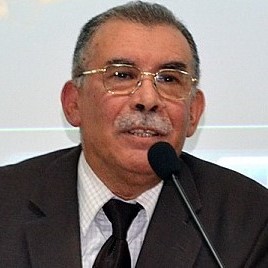
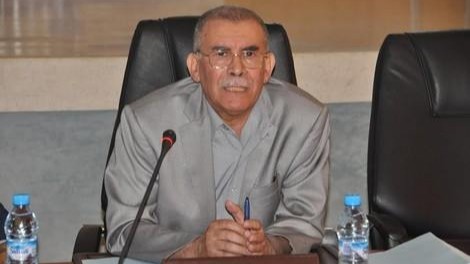
Mohamed Boudhan was an Amazigh writer, thinker, researcher and activist from the Rif, and publisher of the newspaper Tawiza. He was the author of many valuable books and articles on Amazigh identity. May he rest in peace.