Debunking the Myth of “Fraternity” Between Amazighs and Arabs
From independence until the end of the last century, the opponents of the Amazigh movement — those “identity-shifters” who chose to trade their Amazigh and African roots for an Arab-Asian identity (using “Arab” in the sense of jins, meaning a specific nation or people) — made no secret of their hostility. In disowning their Amazigh origins to manufacture a purely Arab identity, they did not seek excuses to justify their rejection. On the contrary, they were quite explicit, relying not on pretexts but on what they considered irrefutable “proof”: the fear of a resurrected “Berber Dahir” and its corollary, the “Latif” prayer. The latter was used to warn against everything then associated with Amazigh identity: racism, division, sedition, obscurantism, national betrayal, and alleged allegiance to colonialism.
However, the landscape has changed today. Amazigh identity has enjoyed official recognition since the creation of the Royal Institute of Amazigh Culture by the Dahir of Ajdir on October 17, 2001. It entered the education system in 2003, secured its own television channel, and is now displayed on the facades of public institutions. Finally, it became an official state language under the Constitution of July 1, 2011. In the face of these major shifts, it has become difficult for detractors — these individuals in the midst of a national and identity mutation — to justify their rejection by waving the bogeyman of the “Berber Dahir,” especially since it has been proven that the decree was nothing more than a groundless historical myth. But far from admitting defeat, they have simply changed tactics. They have moved from the direct use of the “Berber Dahir” myth to the utilization of its derivatives. At first glance, these may seem disconnected from the founding legend of hostility toward Amazigh identity, yet that legend remains their underlying engine.
A deceptive and manufactured “fraternity”
Among these derivatives is the argument of “fraternity” between Amazighs and Arabs. Playing this card has become so common that it now seems to be a reflex whenever the Amazigh question is raised. It is used as an implicit objection to what is assumed to be a risk of division or racism. Proponents of this view claim that all Moroccans are “brothers,” united by a common homeland, and that no difference exists between Arabs and Amazighs after centuries of intermingling and “fusion.” This blending, they argue, has created “brothers” who cannot be distinguished based on ethnic affiliation, whether Arab or Amazigh.
This claim of “fraternity” between Amazighs and presumed Arabs in Morocco — that is, those Amazighs who have renounced their identity to claim Arab origins — was promoted and anchored by the myth of the “Berber Dahir.” Its famous hymn, the “Latif,” repeated in a loop: “O Gentle God, we ask for Your gentleness in the decrees of fate; do not separate us from our brothers the Berbers.” It has become customary to invoke this “fraternity” to argue that Amazigh demands are groundless, since Arab and Amazigh Moroccans supposedly form a single, inseparable brotherhood.
In reality, this “fraternity,” so often brandished against the Amazigh movement, is precisely what the movement is calling for. It advocates for an authentic fraternity between Amazighs and presumed Arabs, which must translate into genuine equality across all levels: cultural, linguistic, identity-based, and, above all, political.
Yet, an analysis of how these self-proclaimed Arabs—Moroccans who have undergone an identity shift—treat their Amazigh “brothers” who remain faithful to their original identity reveals that this relationship is devoid of any genuine brotherhood. Several factors support this claim:
1 — How can these self-proclaimed Arabs be considered the “brothers” of the Imazighen, as the “Latif” prayer claims, while the culture of “Sharifian lineage” inherent to the Arab ethnicity persists? This ideology asserts that these “noble Arabs” descend from a lineage distinct from that of the Imazighen. This categorically denies any brotherhood, as a fundamental requirement for two individuals to be “brothers” is to share the same lineage. Furthermore, anyone claiming “noble blood” inevitably views others as being of an inferior rank. This is a blatant and direct form of racism and ethnocentrism.
2 — How can these self-proclaimed Arabs in Morocco—who are, in fact, Imazighen who rejected their own identity to forge a new one—be considered “brothers” to the Amazigh people? Through this transition, they have disowned their Amazigh mother to claim that their mother is Arabness itself. This precludes any brotherhood between the two parties, as the essential condition of uterine brotherhood is to share one and the same mother.
In reality, the moment one admits the existence of “Arabs” and “Imazighen,” as proponents of this “fraternal” thesis do, they simultaneously deny that the two groups are truly “brothers.” The reason is simple: recognizing Arabs and Imazighen as distinct entities is an admission of two separate belongings stemming from two different origins, one “Arab” and the other Amazigh. As for the alleged “fusion” between the two, it has had no concrete effect that would transform these two groups into “brothers” whose ethnic boundaries have vanished. In a true fusion, individual elements lose their independent characteristics to acquire unique, shared properties—which is clearly not the case here.
4 — How can we speak of “brotherhood” between self-proclaimed “Arabs” and the Imazighen when the Moroccan state defines itself as an “Arab” state, completely excluding the Amazigh “brother”? Why, for instance, is it not an Amazigh-Arab state?
5 — If these supposed “Arabs” and Imazighen were truly “brothers,” why has there been a concerted effort since 1912 to Arabize the Imazighen to align their identity with that of their “Arab brother,” especially when their belonging is supposedly already common and unique by virtue of this alleged “fraternity”?
A “Brotherhood” Dictated by the Arab “Big Brother”
In reality, when analyzing the concept of this “brotherhood” and how it has been implemented in Morocco—particularly the behavior of self-proclaimed Arabs (meaning acculturated Imazighen) toward their actual Amazigh brothers—one concludes that this notion refers, on the “Arab” side, to “Big Brother.” This is meant in the sense used by George Orwell in his novel 1984, written in 1948.
The structural similarity between the “Big Brother” of 1984 and the “Arab brother” in his relationship with his Amazigh “brothers” is striking, even staggering, as shown by the following points of comparison:
1 — Much like “Big Brother” in George Orwell’s 1984 unilaterally determines policies in the “interest” of his fellow workers—while actually serving his own—the “Arab Big Brother” in Morocco dictates policies he deems to be in the “interest” of his Amazigh “brothers.” In reality, these policies primarily serve his own ends. Consequently, all political decisions in Morocco are made in the name of the “Arab Big Brother”—that is, in the name of the state’s Arab identity—thereby excluding any Amazigh belonging. This contradicts the narrative of “brotherhood” championed by this same “Big Brother” since 1930, particularly during the “Latif” episode, the famous prayer used to protest the manufactured myth of the “Berber Dahir.”
2 — The Big Brother of 1984 established a “Ministry of Truth,” whose mission was to rewrite history according to his own desires and will, in order to justify his dominance over the rest of his “brothers.” This version then becomes the truth, the whole truth, and nothing but the truth.
The “Arab Big Brother” in Morocco operates in exactly the same way toward his Amazigh “brother.” He is the one who writes history—not based on facts, but according to his own wishes—in a way that legitimizes his hegemony over those he calls his Amazigh “brothers.” This version of history, curated, drafted, and imposed by the “Arab Big Brother,” constitutes the sole historical truth that his Amazigh “brothers” are required to learn, know, and accept.
Examples of these “historical truths” produced by the “Arab Big Brother’s” Ministry of Truth include: the claim that the Amazigh people are of Yemeni-Arab origin; the assertion that Morocco’s first historical state was the Arab state founded by Idris I, the Sharifian Arab; and the notion that the history of the Moroccan state spans only thirteen centuries. Other narratives claim the “Berber Dahir” was a French decree intended to divide the “Arab Big Brother” from his Amazigh “brothers,” but that the “Big Brother” fought it, foiled the French conspiracy, and saved Islam, Arab identity, and his Amazigh “brother.” Furthermore, it is claimed that the “Arab Big Brother” and his “jihad” are the source of Moroccan independence, and that the policy of Arabization rescued the Amazigh people from underdevelopment, ignorance, and paganism.
3 — In the novel 1984, anyone who questions the truths imposed by “Big Brother” or attempts to share facts that contradict the claims of the Ministry of Truth—a department created to falsify and invert reality—is accused of high treason. This is the case with Emmanuel Goldstein, who is portrayed as a traitor and conspirator against the people for daring to confront “Big Brother” and expose his lies and pretensions.
This is precisely the same method used by the “Arab Big Brother” in Morocco against anyone who attempts to correct the historical falsehoods he has imposed and disseminated. These voices call for a rewriting of history that would illuminate the reality of Morocco’s Amazigh identity while rehabilitating the Amazigh language and culture. In response, the “Big Brother” accuses them of “separatism,” sowing discord (fitna), promoting division, and stoking racial and ethnic tensions. He further alleges they are carrying out colonial and Zionist agendas, or attempting to resurrect the “Berber Dahir”—the very decree the “Big Brother” claims to have confronted and defeated.
4 — In George Orwell’s novel 1984, “Big Brother” forces a “Newspeak” upon the workers to replace their original tongue. The plan is for the very last word of the old dictionary to vanish by roughly 2050, once the new language becomes the sole legal and accepted medium for daily life.
An “Arab” Big Brother has followed a similar path in Morocco, imposing Arabic as the language of instruction to replace the two languages actually used in social life: the Amazigh language and Darija. Like Orwell’s character, this power gambles on the eventual extinction of the language of its Amazigh “brothers” in the relatively near future.
In Orwell’s work, the purpose of this linguistic imposition—and the resulting disappearance of the original tongue—is to sever the connection between the working “brothers” and their past, their true history, their culture, and their identity. Language, after all, is the vessel, the expression, and the constant reminder of these roots.
Similarly, the imposition of the Arabic language in Morocco, which entails the exclusion of the Amazigh language, seeks to break the link with the Amazigh past and history, as well as with Amazigh culture and identity. These are the foundations of identity of which language is the natural extension; their very existence depends on the survival of the Amazigh language.
This reveals the true political, cultural, and linguistic nature of the “brotherhood” connecting so-called “Arabs”—who are essentially acculturated Imazighen—to Morocco’s actual Amazigh population. It is a relationship where the “Arab” side plays the role of Big Brother in the Orwellian sense.
The true brotherhood we aspire to
The true brotherhood we wish to see in Morocco is not one of domination where the “Arab” element acts as a “Big Brother.” Nor is it a “brotherhood” that assigns people to two distinct origins, one Arab and the other Amazigh, which would strip the concept of any real meaning. The brotherhood we advocate for is one where the “Arab brother” recognizes that he and his “Amazigh brother” are true siblings, born from the same womb and the same mother. That mother is the Amazigh land—the North African soil to which all Moroccans belong. This shared belonging is what makes them true brothers.
Recognizing this authentic brotherhood—nurtured for tens of thousands of years within the Amazigh soil—is what will liberate Moroccans from alienation and false identity. This alienation has turned them into “barbarians” in the original Greek sense: strangers to themselves (see the article: “When the Imazighen become barbarians hostile to their own Amazigh identity”). They have become exiles from their own being, hating themselves and showing ingratitude toward the mother who bore and raised them, even going so far as to deny their lineage in search of an adoptive mother. By returning to the arms of their true Amazigh mother, they will not only become the brothers of the Imazighen; they will also cease to be “barbarians” alienated from their land and soul. They would break with what could be called “identity deviance”—an anomaly they once publicly took pride in—to become healthy Moroccans once again, in harmony with their Amazigh truth. They would recover the dignity of an identity lost the day they denied their heritage to beg for foreign identities. By finding their truth, they will free themselves from identity slavery; for as Christ said, “The truth shall set you free.” I will never tire of repeating these words, for they apply perfectly to those who fear reclaiming their independence and freedom, having grown accustomed to dependency like servants bound to their masters.
Arabic version | French version
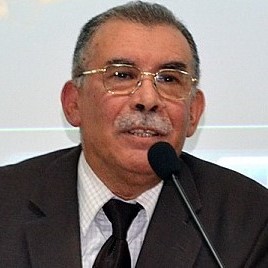
Mohamed Boudhan was an Amazigh writer, thinker, researcher and activist from the Rif, and publisher of the newspaper Tawiza. He was the author of many valuable books and articles on Amazigh identity. May he rest in peace.