The Need to Engage in “Minor Politics” to Advance the Amazigh Cause
In my previous article, titled “Does the Abandonment of the ‘Makhzenization’ of Amazigh Identity Signal a Return to Exclusionary Policies?”, I reached the following conclusion: “This stance reveals a genuine ‘reversal’ in how the Amazigh issue is handled. It tends to nullify all the gains achieved through recognition and national reconciliation—milestones made possible by granting the cause a ‘royal’ status through a process of ‘Makhzenization’ rooted in a ‘Berber policy.’ The objective at the time was to end the cultural, linguistic, and identity-based exclusion that had persisted since Independence. How and why did this reversal and nullification occur?”
In this second article, I will attempt to address that question.
Was the Constitutionalization of Amazigh Identity Merely a Smokescreen for Further Exclusion?
Many viewed the constitutional recognition of the Amazigh language in 2011 as a true revolution. For them, this official status represented a legal shield against exclusion and marginalization, ushering in a new era for the promotion and rehabilitation of Amazigh language, culture, and identity. As I have previously noted, these were the very elements that underpinned the “Berber policy,” which manifested the process of Makhzenization and the granting of “royal” status to the cause.
However, the reality is quite different. Official recognition has served as a legitimate legal justification—as evidenced by the subsequent stagnation of Amazigh development—to prevent its actual implementation. This is not only due to the first paragraph of Article 5 of the Constitution, which states that “Arabic remains the official language of the State,” implying through the use of the definite article that no other official language exists (see: “An Organic Law to Bury the Officialization of the Amazigh Language”). Nor is it simply because the Constitution makes this official status conditional upon the adoption of an organic law. Rather, it is because the Constitution strips the Amazigh cause of its “royal” dimension. This transfer shifts it from the realm of royal prerogatives and sovereign issues into the hands of the government and Parliament, treating it as mere routine administrative business. What, then, is the problem with this divestment and transfer?
Since the emergence of these two institutions in post-Independence Morocco, the government and Parliament have never taken any meaningful action in favor of the Amazigh cause. The only official recognition achieved since the rise of Amazigh demands was that decreed by the King on October 17, 2001, through the Dahir of Ajdir, which established the Royal Institute of Amazigh Culture (IRCAM). This was a foundational act, marking the beginning of the Makhzenization of the Amazigh cause by integrating it into the monarchy as a sovereign “royal” dossier. The limitations of the Institute—whether it exercised only a fraction of its powers, faced a lack of government cooperation, or drew criticism from parts of the Amazigh movement itself—do not diminish its scientific and symbolic importance.
The dissolution of IRCAM, as planned under the organic law relating to the National Council of Moroccan Languages and Culture, thus marks the end of the “Berber policy” and its ultimate goal: the legitimate institutionalization of a royal, “Makhzenized” Amazigh identity. The Institute was created to disseminate and develop this vision—the maximum that a self-proclaimed “Arab” state could concede to Amazigh language, culture, and ethnicity without integrating them into the identity of the state itself. This shift inevitably leads to continued political exclusion. In short, we are witnessing a retreat from the process of Makhzenization itself—a disengagement from the royal Amazigh policy established by the state in October 2001.
In this way, the government and Parliament are exploiting the constitutional provisions regarding the officialization of Amazigh identity—initially perceived as a historic milestone and a major victory—to effectively nullify it. They are achieving this through the adoption of an organic law that buries this official status, alongside an organic law on the National Council of Languages and Moroccan Culture that dissolves the Royal Institute of Amazigh Culture (IRCAM). This signals an abandonment of the “Berber policy” established by the Dahir of Ajdir, which aimed to “Makhzenize” Amazigh identity by linking it directly to the monarchy and the Makhzen, as stipulated in that same decree.
While the constitutionalization of the Amazigh language should have represented a giant leap forward—moving beyond simple Makhzenization and its instrument, the “Berber policy,” toward an “Amazighization of the Makhzen” (where the State would perceive and conduct itself as an Amazigh state in the territorial sense of the term)—this reform has instead been used to reverse course. In practice, it marks a return to the period preceding Makhzenization, reviving the cultural and linguistic exclusion of Amazigh identity. How can such a paradox be explained?
This situation stems from the fact that, following its constitutionalization in an incomplete and conditional form, the Amazigh language lost the royal protection it had enjoyed since the Dahir of Ajdir. Under the process of “Makhzenization,” that decree had transformed the language into a sovereign matter falling exclusively under the King’s authority, shielded from the influence of the government and Parliament. However, its inclusion in the Constitution abolished this sovereign privilege as a protected domain reserved for the monarch alone under his constitutional prerogatives (Article 19 of the 1996 Constitution and Article 42 of the 2011 version). Instead, it placed decisions regarding the language in the hands of the executive and the legislature. This explains why these two institutions have returned to their traditional stance toward the Amazigh language: a fundamentally “Amazighophobic” and hostile posture. This hostility has been particularly pronounced because the political Islam movement has led the government since the language was constitutionalized—a movement that does not hide its enmity toward the Amazigh cause, even though the majority of its members are themselves Amazigh speakers, much like members of other parties with leftist or Arab nationalist leanings. Consequently, the transfer of the Amazigh file from the royal institution to the government and Parliament has proven to be a major and genuine setback for the cause. These two institutions saw it as an opportunity to settle scores with Amazigh identity, as clearly evidenced by the content of the Organic Law on the Implementation of the Official Character of the Amazigh Language and the law establishing the National Council of Languages and Moroccan Culture. A synergy was established between these two texts to “punish” the Amazigh language and “take revenge” upon it: while the organic law on officialization strips that recognition of its substance, the law on the Language Council, for its part, liquidates the IRCAM. Yet, this institute was the specialized scientific body meant to accompany and oversee the officialization process through the development and planning of the language. Since officialization has been neutralized by the organic law, the very existence of the IRCAM is no longer deemed necessary.
This is how the Makhzenization of the Amazigh language reached its end and the accompanying “Berber policy” was buried, signifying the conclusion of projects aimed at promoting Amazigh identity through the Makhzen framework. Does this mean, however, that the government and Parliament are proposing an alternative to promote the Amazigh language? If the answer is yes, what exactly is this alternative?
Arabizing the Amazigh language as an alternative to its “Makhzenization”
The fact that the ideologies of ethnic Arabism, nationalism, and political Islam dominate most members of the government and Parliament does not mean they will work toward the definitive exclusion of the Amazigh language, even though the Constitution has now granted them the power of decision and legislation. They are unlikely to repeat the approach taken in the immediate aftermath of independence, when the language was perceived as a colonial legacy to be fought and eradicated. Such a position is highly improbable today, given the numerous developments Morocco and the world have undergone. Instead, these officials will also “ride the wave” and proclaim their commitment to the development and promotion of the Amazigh language. However, this is according to their own conception of “development” and “promotion,” and based on the objectives they assign to this process. How, then, do they perceive the “development” and “promotion” of the Amazigh language through the prism of their anti-Amazigh ideology? And what do they truly expect from this process?
Since they cannot deny the very existence of the Amazigh language, as I have previously noted, their idea of development and promotion consists of placing it under the guardianship of Arabism and political Islam, subjecting it to their authority, and forcing it to conform to their legislation and decisions. Just as the development of the Amazigh language in the “new Berber policy” once meant its “Makhzenization”—making it “Royal” and attaching it to the Makhzen to serve and be used by it—its promotion today means, for the majority of government and parliamentary members, its “Arabization.” This involves making the language dependent on Arabism and political Islam. This context clarifies their persistence during the debates on the organic law for the official recognition of the Amazigh language, where they refused to establish Tifinagh as the sole and definitive alphabet. Why? Because the use of Tifinagh means the language’s script escapes Arabization and the grip of Arabism and political Islam. This explains, on one hand, why the government disavowed Organic Law No. 26.16 regarding officialization—even though they drafted it themselves to neutralize said officialization—by preparing Bill No. 04.20, which excludes Tifinagh from the new national identity card. In doing so, they arrogantly defy the Constitution and the very organic law they established (see my article: “On the pretext of excluding Amazigh from the national ID card project”). On the other hand, this explains why both houses of Parliament adopted this bill in July 2020, despite its manifest violation of the Constitution and the same Organic Law No. 26.16.
This is why these officials, who hold government and legislative power but harbor no sympathy for Amazigh identity, constantly praise those Amazighs who have served the cause of Arabism and political Islam. They present them as the only representatives of “free” Amazighs, citing figures such as Tariq ibn Ziyad or Ahmed Wehman. Conversely, they condemn those who demand the independence of the Moroccan Amazigh identity from Middle Eastern influence and who advocate for the teaching of the Amazigh language on an equal footing with Arabic. They stigmatize them by linking them to colonialism and Zionism, asserting that they do not represent “free” Amazighs. These are the same officials who intervened to distort the draft Constitution regarding equality between Arabic and the Amazigh language by imposing the current wording of the first paragraph of Article 5, which stipulates that Arabic is the sole official language of the State.
The two organic laws—the one on implementing the official status of the Amazigh language and the one concerning the Council of Languages and Culture—perfectly illustrate the type of “development” and “promotion” that proponents of nationalist and Islamist currents have in mind for Amazigh identity. For them, either the Amazigh identity exists to serve Arabism and political Islam, or it is merely an instrument of Zionism and colonialism.
The Necessity of Engaging in “Small Politics”
Faced with the government and elected Parliament’s monopoly over the Amazigh dossier, and following the disengagement of the monarchy—which ceased its direct oversight of the issue after its constitutionalization—what can be done to halt the setbacks now facing the project to promote Amazigh identity? What must be done to save, at the very least, the institutionalization of the Amazigh language from the Arabization that threatens it within the halls of government and Parliament? How can we ensure that the Amazigh language becomes a truly official language—that is, the language of the state, its institutions, and its official documents?
The call issued by the “Amazigh Political Action Front,” inviting movement activists to participate in political action—whether by creating new organizations or joining existing parties whose orientations do not contradict the movement’s principles—is a major initiative. It demonstrates wisdom, foresight, and an advanced political consciousness, even if it has arrived late.
The strategy of boycotting elections—whether at the level of registration, candidacy, or voting—was a practice of “grand politics.” This approach is rooted in the “all or nothing” principle. In its first sense, regarding political actors outside the monarchy, it means: either total and real democracy, or a boycott. In its second sense, linked to the monarchy, it means: either holding all power or losing it entirely. This refers to the monopoly over real, effective, and executive power, and the exclusivity of the state’s major strategic decisions.
However, the winner of a boycott has always been the party that practices “small politics,” which is based on the principle that “a little is better than nothing” (passing a few decisions and securing some advantages is better than passing nothing and gaining nothing at all). This is precisely the side whose defeat and political failure the boycotters hope to cause. Yet, the citizen who boycotts an election and fails to vote against an opponent effectively hands their vote to that very adversary. The opponent benefits from the absence of a ballot that would have reduced their electoral score. This is a phenomenon we all recognize: if the PJD was able to dominate general elections, it was because the young people who reject the party did not vote. In doing so, they implicitly granted their votes to the party they opposed, as their voices were not counted among those that could have negatively impacted its results.
The same observation applies to the Amazigh cause, which lacks defenders within the government, Parliament, regional and provincial councils, and urban and rural municipalities. Because the youth and activists of the Amazigh movement do not vote, their voices indirectly benefit their opponents who are hostile to Amazigh identity. This means that if these young people, activists, and their sympathizers participated in elections—by registering, running, and voting—they would shift the electoral balance of power within various bodies elected by universal suffrage. This is particularly true for Parliament, as government members are drawn from the most represented parties. The result would be that the political entity gaining the most votes would have the opportunity to shape political decisions within the framework of this “small politics.”
What falls under “small-p politics” encompasses everything related to language and culture. The choice of Arabic, French, the Amazigh language, or Darija as languages of instruction, for example, falls within the prerogatives of Parliament and the Government. The Palace will not intervene in these decisions, as they do not affect the domain of “capital-P politics,” which, in its second sense, remains the exclusive preserve of the monarchy. Contrary to a common misconception, the Palace is not instinctively clinging to Arabic at the expense of other languages. In reality, it matters little to the monarchy which language is chosen, so long as the actors of “small-p politics” play by the electoral rules—defined and approved by the masters of “capital-P politics”—and exercise the legislative and executive decision-making power these rules grant them over education policy. To be sure, decisions in “small-p politics” are closely monitored and guided by the architects of “capital-P politics,” as seen with finance bills or even linguistic matters when circumstances demand it. This was the case in July 2019, when Parliament adopted—on instructions from the “capital-P politics” emanating from the Palace—Framework Law No. 51.17 on the system of education, training, and scientific research. This legislation put an end to the Arabization of science subjects by mandating their instruction in foreign languages at the primary and secondary levels, breaking with a policy established in the 1980s. Yet, despite this oversight, “capital-P politics” takes care not to strip “small-p politics” of its prerogatives, preserving Morocco’s democratic and electoral veneer. Everything hinges on a pragmatic principle: “it is better to pass a few decisions and secure a few gains than to vote through nothing and get nothing at all.” Why only “a few”? Because, as noted, “small-p politics” remains under the guardianship and guidance of sovereign “capital-P politics.”
Consequently, having a sufficient number of Amazigh advocates in Parliament would make it possible to pass legislation favorable to the Amazigh language, while respecting the electoral rules within the domain of “small-p politics” assigned to the people’s “representatives.” Anything that does not threaten, weaken, or pose the slightest risk to the authority of the Palace is permitted, provided it stems from compliance with electoral rules. It is common knowledge that Amazigh identity poses no threat to monarchical power, does not seek to weaken it, and presents no danger to it. Better still, the Palace would not object to Morocco being an Amazigh kingdom, so long as the foundations of the regime and the King’s reserved domain—”capital-P politics”—remain intact.
This reasoning applies equally to local governance. If, for instance, a majority on the municipal council of Témara had been made up of Amazigh advocates brought to power through electoral participation, candidacy, and voting, we would never have seen its streets renamed after Wahhabi figures or foreign terrorist figures (see the article: “Is there a difference between calling Morocco ‘Arab’ and naming its streets ‘Al-Dahlous’?”). These street names were imposed by a municipal majority known for its hostility toward everything Amazigh and authentically Moroccan. By choosing to boycott the electoral process out of rejection for “small-p politics” and adherence to a radical conception of “capital-P politics,” Amazigh advocates—particularly young people and student activists in the movement—left the field wide open for anti-Amazigh elements to run the council in Témara. It was they who gained the institutional legitimacy required, through municipal powers, to impose foreign Wahhabi names aligned with their Arab nationalist identity ideology.
While engaging in “small-p politics” will not transform Morocco into an Amazigh state—politically or in terms of identity—overnight, it remains essential for genuine cultural and linguistic revival, which falls squarely within this realm. Such a revival hinges on the success of teaching the Amazigh language, a project stalled since its announced launch in September 2003. This requires establishing the legal and institutional mechanisms for serious, compulsory, and standardized instruction, as well as enabling the spoken and written use of the Amazigh language as an official language across state public services and institutions. Why place such emphasis on education? Because by learning their language, Moroccans will also “learn” their collective Amazigh identity; they will rediscover it and reclaim it. This is the prerequisite and starting point for a gradual transition toward an Amazigh state—in the territorial sense of the term. This process will accompany a progressive shift from a false, distorted identity consciousness, entrenched by decades of Arabization policies and national alienation, toward a healthy, authentic self-awareness spread through schools and the effective officialization of the Amazigh language throughout all levels of government.
Arabic version | French version
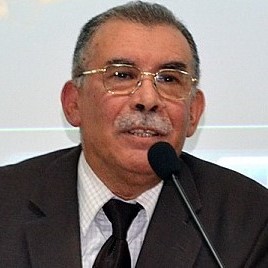
Mohamed Boudhan was an Amazigh writer, thinker, researcher and activist from the Rif, and publisher of the newspaper Tawiza. He was the author of many valuable books and articles on Amazigh identity. May he rest in peace.