The Torch and the Lamp
When I use the terms “identity perversion” and “identity transsexuality”—taking the word “identity” in the primary sense of the Arabic root jinsi, which relates to national origin, belonging, and homeland—to describe this widespread state of affairs in Morocco, characterized by the denial of Amazigh identity and the usurpation of an Arab affiliation, it is neither a gratuitous attack nor an exaggeration. All the facts confirm this anomaly and transition, this denial and usurpation. This is demonstrated by the lavish reception recently given to senior Hamas leader Khaled Méchaal by officials of the “Lantern” party (the symbol of the Justice and Development Party, or PJD), including parliamentarians and government ministers. They treated him as a true “torch” (méchaal) from which they came to draw light for their own “lantern,” whose glow had dimmed and no longer shone properly. And so that the light of this “torch” would reach every part of the “lantern,” these officials did not hesitate to mobilize the qandilates (the nickname given to female PJD activists) to welcome this “torch.” They gathered around him, seeking to draw light for their own dying lanterns like moths drawn to powerful spotlights, even jostling for a spot beside him in the collective souvenir photo.
We would not have raised the issue of this reception had PJD MPs not abandoned their parliamentary duties and walked out of the Interior Committee as well as the Education, Culture, and Communication Committee on December 25, 2017 (see the report published on the “Andalus News Network” website on December 26, 2017) in order to make it in time to welcome and meet their “torch.” Prioritizing the reception of Khaled Méchaal over the exercise of their parliamentary duties—for which they were elected and receive substantial compensation—is not merely a breach of their electoral commitments to their voters, nor just a lack of respect for the parliamentary mandate. It also reflects, in the mindsets of these individuals who have disowned their identity, a view of the Arab Middle East and its political, intellectual, and cultural figures through the prism of a vassal-to-master or disciple (murid)-to-sheikh relationship. Indeed, in the eyes of these assimilated individuals, Khaled Méchaal embodies Arabness, heroism, tenacity, and resistance, representing the master, commander, and ruler, as well as the sheikh, imam, and role model. Conversely, those welcoming him play the role of the submissive, obedient vassal, the devoted disciple, and the temple guardian, whose sole dream is to have the master accept their obedience and the sheikh approve their devotion and service. This is why, as videos posted on YouTube show, expressions of childlike joy appeared on the faces of these “vassals” and “disciples” when their “master” and “sheikh,” in a speech delivered during the ceremony in his honor, reminded them of Morocco’s Arab identity. He thus stroked their most sensitive nerve, for their fondest wish is for a real Arab—is Khaled Méchaal even a real Arab?—to recognize their Arabness, an identity they themselves doubt as long as an Arab they deem authentic, simply because he comes from the Middle East, has not validated their belonging.
Some might assume that the Justice and Development Party’s (PJD) disproportionate obsession with Palestine and anyone arriving from there stems from its self-proclaimed religious orientation as an “Islamist” party, rooted in the Islamic significance of the cause of Jerusalem. Yet nothing could be further from the truth. The proof lies in the fact that figures affiliated with the left and secularism, despite their open conflict with the “Islamists”, also welcomed the “torch” with the greatest warmth and enthusiasm, hoping to bask in its radiant glow. As for the PJD, its hostile stance toward Amazigh identity places it far removed from the Islam it professes. Why? Because Islam does not oppose the identities of non-Arab peoples, nor does it prescribe their Arabization or the surrender of their identity—trading their authentic, natural belonging for a usurped Arab one—as a prerequisite for the validity of a non-Arab’s faith. If the PJD were truly an Islamic party committed to the teachings of Islam, it would champion the Amazigh identity of both the Moroccan people and the Moroccan state. It is precisely through the framework of this Amazigh identity that PJD members could stand up for Jerusalem and Palestine in the name of their own Amazigh heritage—much like the Turks, who render immense service to the Palestinian cause while doing so in the name of their Turkish identity, rather than posing as adoptive Arabs, as do those Moroccans whose solidarity with Palestine rests on ethnic motives rather than Islamic or even purely humanitarian ones.
Through these observations, our aim is to show that Morocco’s identity dependence on the Arab Middle East—along with the resulting intellectual, cultural, linguistic, artistic, and religious dependence (Salafist doctrines)—is by no means confined to the “Islamists”. It is deeply entrenched across both left and right, among secularists as well as Salafists, and among loyalists of the Makhzen as well as its opponents… It reflects a pervasive culture of identity prostitution, sown, nurtured, and expanded by the policy of “sex reassignment” of Moroccans toward the Arab gender, known as the policy of Arabization. Yet what is most striking is that Moroccans who believe themselves to be Arab as a result of this identity transformation systematically strive to appear more Arab than the Arabs themselves, and more Palestinian than the Palestinians. This is evidenced by their boundless zeal in championing Arab causes and their solidarity with Palestine, reflected in million-strong marches unmatched among the genuine Arab peoples of the Middle East. The triumphant welcome they gave their “Méchaal” offers a textbook example of this excess. Never has Mr. Khaled Méchaal been received in an authentic Arab country of the Middle East with such fervor and adulation as he was in Morocco. Nor has he ever been regarded in any of those countries as a “torch” toward which enthusiasts rush in search of his glow and radiance, as Moroccan Arabizers do. Why, then, do these “converted” Moroccans display such excess in flaunting their Arabness? Because they do not truly believe they are Arabs, being subconsciously aware that they are African Imazighen. Consequently, to convince themselves that they are indeed Arab as they claim, they feel compelled to overcompensate and outdo authentic Arabs at their own Arabness. This ultimately confirms that they are merely identity usurpers and counterfeit Arabs, not genuine Arabs (see the article: “When Excess in Arab Belonging Proves Amazigh Identity”, in the work Sur l’identité amazighe du Maroc = http://tawiza.byethost10.com/identite.pdf).
The worst aspect of this prostitution of identity, spread by the policy of sex reassignment in Morocco, is that any Arab figure—political, intellectual, or artistic—who has failed in their home country in the Middle East is welcomed in Morocco by these “converts” as a model of success and victory to be followed and imitated. In doing so, they repeat what their Amazigh ancestors did with Idriss Ier, a defeated man fleeing to Morocco whom they received as a valiant hero and to whom they swore allegiance as sultan, when all he sought was to save his own skin. These manifestations of Moroccans’ dependence on the Arab Middle East, produced by the policy of identity mutation, are now practiced as masochistic behavior and identity servility: those who indulge in them feel joy and satisfaction in renouncing the dignity of their identity and adopting a foreign Arab identity that does not belong to them—and whose true holders do not even recognize their legitimacy, still considering them mere “Berbers.” In truth, by renouncing their Amazigh identity, these “converts” have chosen to be “Berbers” and have ceased to be Imazighen.
Moreover, in connection with this identity dependence on the Arab Middle East and all its consequences, the fact that Justice and Development Party (PJD) lawmakers prioritized meeting their “Méchaal” at the expense of their parliamentary duty shows that Arab causes—foreign causes—come before national priorities. This became clear when they hastily abandoned parliamentary committee work to go welcome their master and sheikh. Such an attitude is entirely logical for individuals whose primary homeland—bound to their soul, heart, and faith as a result of the identity and national transformation they have undergone—has become Palestine, Najd, Syria, or Iraq… It is no coincidence that the delegation accompanying their “Méchaal” offered them a handful of soil from Jerusalem, a symbol indicating that their homeland is the land that contains that earth. Morocco, by contrast, is for them merely a homeland of purely physical and material attachment, a source of rapid enrichment through high salaries, an undeservedly comfortable pension, and multiple privileges. One can therefore understand why these devotees of the homeland of their “Méchaal” harbor no affection for Amazigh identity: it reminds them that the true homeland is Morocco, and that denying or betraying this Amazigh identity amounts to denying and betraying Morocco. Can we, then, trust and entrust the country to those who view it merely as a simple means, while elevating other homelands as their ultimate end?
Arabic version | French version
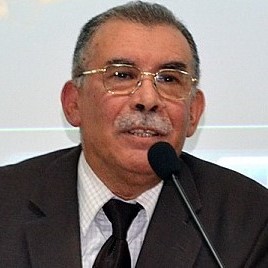
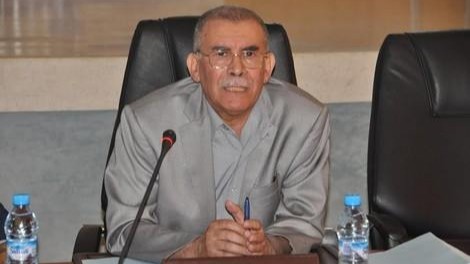
Mohamed Boudhan was an Amazigh writer, thinker, researcher and activist from the Rif, and publisher of the newspaper Tawiza. He was the author of many valuable books and articles on Amazigh identity. May he rest in peace.