The Myth of a “Fair Trial” for Rif Hirak Detainees
The “Fair Trial” and Its Paradoxes in Morocco
On June 13, 2017, Minister of Justice Mohamed Aujjar stated before the House of Representatives, in response to a question regarding the Rif detainees, that “the government ensures the presumption of innocence and compliance with all requirements of a fair trial.” Granted, the trial of these detainees—which began some time ago for those brought before the courts of Al Hoceima and Nador—was and will be “fair.” But what does a “fair trial” truly mean, and what are its conditions? One of these conditions is that it be open to the public, absent a valid reason to the contrary, thereby allowing the defendants’ families, the national and international press, as well as domestic and international human rights organizations to attend. More importantly, in a “fair trial,” the court hears defendants who speak in complete freedom, and grants defense counsel all the necessary latitude and time to respond to the prosecution’s charges, submit motions, and raise procedural flaws and substantive defenses that the court is required to examine and rule upon. It is, therefore, a “fair trial” because the court will rely on nothing other than the law and procedural rules—the law, the whole law, and nothing but the law throughout the various stages of the proceedings.
However, if we accept that the trial of the Rif detainees will be “fair” on the grounds that the conditions of a “fair trial,” such as those mentioned above, will be met, this would imply that the trials that sent hundreds of innocent people to prison during the period known as the “Years of Lead” were also “fair,” and that those convicted were indeed criminals rather than innocent victims. Why would the prosecution of these innocent people be considered “fair”? Because the same conditions and guarantees of a “fair trial”—such as the defendants’ freedom of speech to address the charges, the defense’s right to raise all procedural and substantive arguments capable of exonerating the accused, and the guarantee of a thorough review of the cases before the court in compliance with the law and transparency—were also present during those trials. And yet, the very state whose judiciary tried those defendants admitted—by establishing the Equity and Reconciliation Commission and compensating those convicted by that same judiciary—that these individuals were victims of unfair, political, and vindictive trials that lacked the most basic conditions of a “fair trial.”
This presents a genuine impasse: if the trials during the Years of Lead had been fair, it would follow that the trial of the Rifians would be fair as well, since the same conditions of a “fair trial” are present in both cases. But since the earlier trials were not fair—by the state’s own admission—it is certain that the trial of the Rifians will not be fair either, because the factors that rendered the first trials unfair are repeating themselves in these second proceedings targeting the Rif detainees. Indeed, the same causes always produce the same effects. Where, then, lies the problem at the heart of this impasse?
What purpose does a “fair trial” serve if the police statements are inherently unfair?
The core issue in Morocco is that the guarantees and conditions of a “fair trial” begin and end inside the courtroom, before professional, qualified judges. Yet the very substance of a trial rests on allegations documented in police reports drawn up by judicial police officers who are not members of the professional judiciary, even if they operate legally under its direction and supervision. Once these reports are produced by non-judicial personnel, the role of actual magistrates (prosecutors, investigating judges, and trial judges) begins: they classify the facts into corresponding criminal offenses to facilitate the application of statutory penalties. However, it is exceptionally rare for such police reports to be thrown out, despite major violations that might taint them and provide more than sufficient grounds to declare them null and void—especially when the motives behind an arrest are political, vindictive, and punitive, as is the case for the Hirak du Rif detainees. For instance, the right of the accused to remain silent is a safeguard that the law (the third paragraph of Article 23 of the 2011 Constitution and the second paragraph of Article 66 of the Code of Criminal Procedure) mandates judicial police officers to explicitly notify suspects under interrogation. Yet how many police reports actually record that a suspect chose to remain silent, thereby keeping the record free of any confession regarding the alleged acts? It is safe to say there is not a single such report for any of the Rif detainees. Is it credible or natural that nearly four hundred detainees all “chose”—as if by prearranged agreement—to speak and “confess” to the charges against them, without a single one opting to remain silent, even though police officers allegedly notified them of this right as required by law and noted in the preambles of the reports? The right of the accused to remain silent during police interrogation is no mere secondary technicality; it is a fundamental prerequisite for ensuring a “fair trial.” This is precisely why the Constitution itself enshrines this right, even though a specific statute, the Code of Criminal Procedure, already governs the matter.
It is true that even in democratic countries, where no one questions the integrity of justice or the objectivity of the judicial system, it is the judicial police—rather than specialized professional magistrates—who draft the interrogation and hearing records of individuals held in custody. These records form the raw material of prosecutions and trials. In those democracies, however, suspect interrogations take place in the presence of legal counsel and under video recording; moreover, any violation of the rules governing arrest, custody, or police questioning—whether an arbitrary arrest, a street abduction, a warrantless home raid, beatings, torture, humiliation, cruel treatment, or forcing a suspect to sign a statement without reading or understanding it—leads, once demonstrated by the defendant or their lawyer before a competent judge, to the invalidation of the police reports, the dropping of charges, and the judicial prosecution of the police officers responsible. In Morocco, by contrast, although the law also prohibits and penalizes such violations, it proves in practice—particularly in arrests driven by political motives, vengeance, or punitive logic, as with the Rif detainees—extremely difficult, if not impossible, to throw out police reports on grounds of legal violations, let alone hold the perpetrators accountable. That is why the courts failed to investigate or rule on the statements of the Hirak du Rif detainees asserting that they suffered beatings, humiliation, cruel treatment, and forced signatures on reports they were never allowed to read. Similarly, no light was shed on the leak of photographs showing the courageous Zefzafi half-naked, nor on the findings of the investigation into the death of martyr Imad El Attabi, who was killed following the security forces’ excessive use of force to disperse the peaceful demonstration of July 20, 2017, in Al Hoceima. Furthermore, we saw how the head of state praised the law enforcement operations in Al Hoceima during his Throne Day speech on July 29, 2017—a message security forces may well have interpreted as encouragement to persist in the same repressive tactics and as immunity from accountability for misconduct, legal violations, or the fabrication of false charges against innocent citizens.
The fundamental difference between a “fair trial” as it exists in true democracies and the version practiced in Morocco, under the guise of a purely formal Makhzen-style democracy, lies in the fact that, in the former, guarantees apply from the very moment a suspect is arrested. In Morocco, by contrast, the process deemed “fair” begins only on the day of the court appearance. The judicial tribunal then judges the accused solely on the basis of police reports drawn up outside the judicial framework, without any video recordings proving that the statements recorded are indeed theirs and were signed voluntarily, and in the absence of any legal counsel—standing in stark contrast to practices in states that respect and guarantee human rights and dignity, even when an accused person’s involvement in an extremely serious crime is established. This is the central contradiction of the Moroccan-style “fair trial”: while all the formal guarantees of a “fair trial” appear to be met during hearings before professional, specialized judges, the acts at the core of the prosecution—which is what is truly at stake—remain exclusively the accusations written in judicial police reports. Yet, in the case of the Rif detainees, these police reports fail to meet even the most basic requirements of a “fair record” worthy of a “fair trial.” In reality, these police reports seal the judicial fate of the defendants and effectively pass judgment on them, reducing the trial itself to a mere legal classification by judges of acts attributed to innocent detainees by investigative services.
These observations by no means suggest that those who threw stones at security forces or plotted to undermine the Kingdom’s internal security—as numerous judicial police reports claim—should escape prosecution or trial. On the contrary, the harshest penalties should apply to them. The real question is whether the Rif detainees languishing in prison, whether already convicted or awaiting trial, actually committed the physical acts attributed to them. In the singular context of the Rif Hirak, which the authorities seek to suppress by all means, it is all too easy to be arrested, have a police report drawn up accusing you of participating in an unauthorized demonstration, throwing stones at law enforcement, or planning separatist action, and then be sentenced to firm prison terms while ostensibly benefiting from all the formal guarantees of a “fair trial”: appearing before an ordinary court rather than a military or special tribunal, referral to a professional investigating judge, respect for defense rights, hearing defense witnesses if any exist, and exercising the right to appeal and cassation… Such is the model of a “fair trial” reserved for Rif detainees. As for the unfair police reports that serve as the foundation for these convictions, they fall completely outside the criteria of a “fair trial.” The end—namely, the crushing of the movement and vengeance against its activists—thus justifies the means: arrest, trial, and detention. We are confronted here with one of the most dangerous manifestations of the absence of justice: using the very instruments of the judicial system to exert injustice, arbitrariness, vengeance, and tyranny. This is precisely what Montesquieu) underscored when he wrote: “There is no more cruel tyranny than that which is exercised under the shadow of the law and under the guise of justice.”
The return to the practices of the “Years of Lead”
Consequently, it is legitimate to question the true substance of the concept of “transitional justice,” a term widely used in recent years in Morocco by official and unofficial circles alike, as well as within the community of justice and human rights defenders. While “transitional justice” refers, in the Moroccan context, to the set of judicial, legal, and political measures adopted by the state to address the grave human rights violations committed during the “Years of Lead” and prevent their recurrence, state practices in the Rif from May 26, 2017 to date (September 7, 2017) impart a completely different meaning to this notion. Given how the state treats Rif Hirak activists, “transitional justice” does not mean settling cases of grave human rights abuses, redressing grievances, implementing political reforms, or establishing mechanisms to prevent the repetition of such violations. Rather, it signifies an actual “transition”—in the literal sense of the Arabic term (intiqāl)—toward the renewal of the very abuses for which this justice was originally established. Morocco is thus experiencing “transitional justice” in a very specific sense: a return to the human rights violations that marred the reign of the late King Hassan II.
The proof of this return and of this “transition” toward rights-violating abuses—abuses for which the state had nevertheless created the Equity and Reconciliation Commission to address their aftermath and prevent their recurrence—lies in the methods of arrest and trial applied to Rif Hirak activists. These are the exact same methods used during the “Years of Lead” against innocent people convicted by the Kingdom’s courts after being prosecuted under the legal and judicial procedures of the era—to say nothing of the victims of purely extrajudicial practices, such as assassinations, enforced disappearances, and secret detentions. For those defendants who were formally tried, the state would eventually admit that their trials were unfair and authoritarian, and their imprisonment unjust and vindictive. But what was the source of this injustice, authoritarianism, and spirit of vengeance? It lay in fabricated charges and falsified police reports, tailored to match the sentences the Makhzen intended to inflict on those it considered to have damaged its “prestige,” demanding their reprimand and punishment to make an example of them. The exact same scenario is repeating itself today with the trials of the Rif Hirak activists: all the formal guarantees required for a “fair trial” appear to be met during the hearings, but the core of the cases rests, just as during the “Years of Lead,” on unfair police reports, truncated charges, and entirely fabricated facts designed to overwhelm the accused.
Consequently, it proves useless for the defense to cite procedural defects in these police reports or the fabricated nature of the charges, insofar as the court can simply disregard the lawyers’ observations and conclusions. What matters most is that the judge is supposed to deliver a verdict based on their own conviction. This is what formally endows the ruling with a “fair” character, since it complies with the law stipulating that the judge rules “according to their intimate conviction” (Article 286 of the Code of Criminal Procedure). This is how the trials that sent hundreds of innocent people to prison during the “Years of Lead” were labeled “fair”—on the grounds that magistrates had rendered their decisions based on their intimate conviction in accordance with the letter of the law—until the state itself acknowledged that these were unfair trials and a profoundly unjust judicial system.
One must therefore expect the state to set up, sooner or later, a new Equity and Reconciliation Commission. There, it will organize public hearings in which the Rif Hirak detainees will testify about the beatings, humiliation, mistreatment, cruel treatment, and acts of voyeurism they suffered (notably when filmed virtually naked), as well as the unfair and harsh sentences pronounced against them… Through this new commission, the state will eventually admit that these convicted activists were innocent victims of injustice, authoritarianism, vengeance, and abuse of power.
The human rights situation in Morocco now resembles the “boulder of Sisyphus,” in reference to the figure from Greek mythology condemned by the gods to roll a boulder up a mountain summit. Every time he reached the top, the stone rolled back down to the bottom of the slope, forcing him to start over endlessly. The phrase “boulder of Sisyphus” thus denotes any effort marked by perpetual repetition and a systematic return to the starting point, without the slightest real progress. This is precisely the tragedy of human rights in Morocco: just when the country was believed to have permanently freed itself from the excesses of the “Years of Lead,” the state plunges back into the very same practices, with renewed vigor, impetuosity, and zeal.
Arabic version | French version
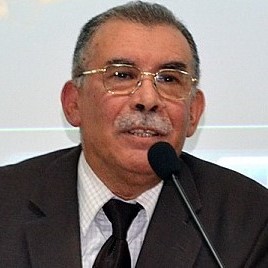
Mohamed Boudhan was an Amazigh writer, thinker, researcher and activist from the Rif, and publisher of the newspaper Tawiza. He was the author of many valuable books and articles on Amazigh identity. May he rest in peace.