Did Zefzafi Carry Out His Threat by Driving the Makhzen into a Frenzy?
When analyzing how the Makhzen authorities handled the Rif Hirak movement, there is perhaps no more fitting term than “rage.” It is all the more apt because, in a figurative sense, it denotes “madness” and “extreme anger” taking the form of a violent frenzy and uncontrollable impetuosity. Literally, rabies—or rage—is a disease caused by a virus attacking the central nervous system, which controls body movements and regulates reactions and impulses. Among the symptoms of this disease in humans (referring here to human rabies rather than animal), as listed on the website (http://santecheznous.com/condition/getcondition/rage), are:
— Agitation (agitation),
— Confusion (confusion),
— Major excitement (major excitement),
— Hallucinations (hallucinations)…
It is striking how closely these symptoms align with the concept of “madness” inherent in the term “rage,” as well as with a state of frenzy and extreme anger, and how all of this stems from a central nervous system breakdown that disrupts the body’s normal functions. Agitation and confusion were blatantly evident in the Makhzen authorities’ stance toward the Rif popular movement: after recognizing the legitimacy of the movement’s demands, they proceeded to arrest the very people carrying them forward, thereby reneging on their own acknowledgment; after conceding that the right to peaceful protest is guaranteed by the Constitution, they brought their batons down on the bodies of peaceful demonstrators, shamelessly trampling upon the constitutional text; and after assuring that they would respect the law and regulatory procedures regarding detainees, they did not hesitate to beat them, torture them, and photograph them half-naked in detention centers, defying all laws and procedures… As for hallucinations (perceiving non-existent things as real), they manifested in equating the Hirak with separatism, conspiracy, fitna (discord), foreign funding aimed at undermining national unity, the Polisario Front, or Shia Islam… Finally, extreme fury, accompanied by frenzy and rash impetuosity, found expression in arbitrary arrests, the smashing of house doors, the siege of entire neighborhoods, the intimidation of the population, raids extending into the sea in land combat gear, as well as the torture and stripping of detainees… Through these irresponsible acts, the Makhzen authorities acted not in accordance with the law or respect for human rights, but under the impulse of a punitive, vengeful rage that stripped them of all reason, leaving them at the mercy of violent emotional reactions and blind impetuosity. This rage reached its climax during the Eid al-Fitr “raid” on June 26, 2017, followed by the tear-gas “slaughter” on July 20—two operations carried out by the Makhzen authorities in Al Hoceima with unprecedented aggression. In doing so, they exhibited behavior akin to a rabid creature that bites, tears apart, and attacks anyone in its sight, obsessed by the delusion that its life is under threat.
Who incited in the Makhzen this rabies that struck its “nervous system” and caused it to lose its mind and balance? It was not the Hirak itself as a popular movement, as one might assume at first glance, but rather what the Makhzen views as the engine behind it: its leader Nasser Zefzafi (may God free him). That is why the issue facing the Makhzen today lies neither in the Hirak’s demands, nor in the delayed implementation of the development programs planned for Al Hoceima in 2015, nor even in the tragic crushing of the martyr Mohcine Fikri that sparked the movement in the first place. Its real problem is the very existence of a man named Nasser Zefzafi, who triggered a fury that destroyed the cells of its “nervous system”—as I have previously written—reducing all of its actions regarding the Hirak and the Rif in general to mere reflexive reactions to the stimuli generated by this rage. The emergence of a leader beloved and supported by the people—backed even by his critics and those who disagree with him—a leader coming from beyond the traditional partisan, nationalist, or religious “figureheads,” hailing from the Rif and from Amazigh identity (that is to say, from the fringe of the periphery), is a phenomenon that instills panic and terror within the Makhzen. This gives its reactions the distinct appearance of symptoms seen in a patient suffering from rabies—a disease that deprives its victim of all balance due to its direct impact on the brain, as noted earlier.
What is most bizarre—if not most striking—is that the leader of the Hirak, Nasser Zefzafi, had declared in one of his impassioned videos, after escaping an assassination attempt in Imzouren, in a menacing tone: “Ad s-mouzzreg rmakhzen-nna” (“I am going to drive this Makhzen state rabid”). And his threat materialized exactly as he had predicted. The signs of this rabies are plain to see today in the behavior of the Makhzen and its decisions regarding the Rif Hirak. For the Makhzen regime, the issue is not merely a matter of responding to the movement’s demands—which would have been simple and straightforward, and which it had in fact begun doing in its own way. The real problem lies in the very person of Nasser Zefzafi. He has become a full-blown psychological complex for the Makhzen, causing it sleepless nights and cold sweats. Zefzafi embodies the Moroccan “Prometheus” (see our article on “Nasser Zefzafi, or Morocco’s Prometheus”) who dared to reclaim from the Makhzen’s clutches, like the Greek Prometheus, the sacred flame of freedom, justice, and dignity to restore it to the Moroccan people and dispel the darkness of repression, injustice, authoritarianism, and corruption. This explains why the Makhzen suppressed the July 20 demonstration with such unprecedented brutality: the mobilization provided tangible proof that Nasser Zefzafi’s words still carried weight. The call he had issued more than two months earlier to demonstrate in Al Hoceima on July 20 was answered not only by Rifians, but also by thousands of Moroccans who traveled from every region of the Kingdom. This drove the regime out of its mind, transforming it into a rabid beast that took merciless revenge on the protesters to punish them for their loyalty to Zefzafi, despite all the colossal efforts deployed by the Makhzen since his arrest to tarnish his image and destroy his popularity in the hearts of Moroccans: accusations of treason and “separatism,” the online leak of private photos showing him nearly naked, not to mention the mobilization of a subservient media landscape to peddle slander, denigrate him, and attack his honor.
Rabies ceased to be a fatal disease after the French scientist Louis Pasteur (1822–1895) discovered a vaccine for it. Since the rabies vaccine, as conceived by Pasteur, is produced from the very substance that causes the infection, the Makhzen has no choice but to administer the vaccine prepared by Zefzafi himself—the very person who triggered this crisis—to cure its symptoms of “rabies.” How can this be done? It would be as simple as sitting down with the Hirak leaders once they are released and negotiating, in an atmosphere of truth and serenity, over their list of demands and the conditions for ending the popular protests. Such a move would not undermine the so-called “prestige” (heiba) of the state. On the contrary, it would strengthen it, as the state would be acting with wisdom, rationality, and democratic principles. True state prestige lies there, not in a hollow authority imposed through repression, arrests, and police batons. Regarding these negotiations, it must be emphasized that no official government body ever summoned the Hirak leaders or asked them to open a dialogue about their demands. This stands in stark contrast to the falsehoods spread by the pro-Makhzen press, which claimed protesters had refused all dialogue to justify the state’s repressive approach. This lie even misled “prominent” political analysts, who repeated on international news channels that a security-first approach was the only option left after the protesters’ supposed refusal to talk. In reality, the protesters only refused to negotiate with representatives of political parties, knowing full well those parties represented nothing. When the Minister of the Interior visited Al Hoceïma with a ministerial delegation before the arrests, the protesters expected to be called for a dialogue. However, the minister refrained from doing so, having already decided in favor of a repressive intervention. It is, therefore, a deceptive absurdity to claim they refused dialogue with the delegation; that visit was not intended for negotiation, but to prepare for the assault and the subsequent arrests.
The popular Hirak of the Rif, which has evolved into a national movement for all of Morocco, offers the Makhzen an opportunity to inoculate itself with the serum of democracy. This would facilitate the transition from a traditional Makhzenist state to a modern state governed by the rule of law and institutions. Such a transition would allow for the release of the “seized items” mentioned earlier—namely, liberty, dignity, and social justice—which form the core of the Hirak’s demands in both the Rif and across Morocco. Conversely, without the urgent administration of this vaccine, the virus of “rabies” will eventually destroy the Makhzen’s nervous system, causing it to lose all capacity for reflection and discernment. Symptoms of this loss of lucidity are already visible in its primal reactions, which are based on vengeance, violence, and the force of repression, in the total absence of the power of thought and reason.
Arabic version | French version
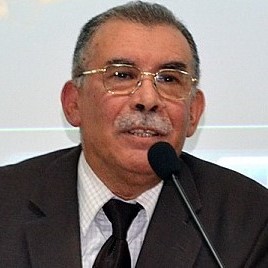
Mohamed Boudhan was an Amazigh writer, thinker, researcher and activist from the Rif, and publisher of the newspaper Tawiza. He was the author of many valuable books and articles on Amazigh identity. May he rest in peace.