Who Governs Morocco?
The Eid al-Fitr “Raid” in Al Hoceima
In democratic nations, the answer to the question of who governs is clear: power is exercised by the law and by institutions, such as the Parliament, the government, and the judiciary. In these systems, the state is a legal entity in the fullest sense, entirely independent of the individuals who happen to enforce the law or represent those institutions. In contrast, in non-democratic countries like Morocco, the state retains a deeply personalized character; it is not dissociated from the individuals who lead it and who manage it as if it were their own personal fiefdom. This is why the answer to the question “Who governs Morocco?” is as obvious as it is well known: it is the King. This is true not only of the King as an institution—in the way one might say the American president governs the United States—but of the King as an individual, because the state remains a state of individuals rather than a state of law and institutions. This personification of the state is pervasive, manifesting at every level: from the minister responsible for his department to the low-level clerk in a rural civil registry office; from a minister’s chief of staff to a court courier; from the dean of a university faculty to a primary school security guard; and from a district caid to the neighborhood moqaddem, the police prefect, or the traffic officer. It is, in fact, this personalization that explains the rampant corruption eroding the Moroccan administration; bribes are not paid to institutions with a moral or legal status, but to the specific individuals who hold positions of responsibility within them.
It follows from this personalized nature of the Moroccan state that the King is the one who governs Morocco, acting as an individual before acting as an institution. Indeed, every constitution prior to the 2011 text explicitly stated that “the person of the King is sacred.” If this is the case, and since the answer to who governs seems so self-evident, why ask the question at all? The justification for this inquiry lies in the “raid” that took place on Eid al-Fitr, June 26, 2017, in Al Hoceima. On that day, security forces were unleashed against peaceful protesters, even preventing people from outside the city from visiting their families for the holiday, all while maintaining a security and military blockade that had stifled the region for months. Such a “raid”—characterized by blockades, a climate of terror imposed on residents, house searches, the arrest of innocent bystanders, and the torture of detainees—could not have been ordered by a mere subordinate official, regardless of their rank or seniority. Does this mean, then, that the King himself ordered this “expedition” and issued the instructions for its execution?
Authoritarianism Between Two Reigns
Under the reign of Hassan II, major security and strategic decisions emanated directly from him. This occurred within the framework of a personalized state and authoritarian Makhzen power, despite the presence of advisors who possessed great competence and solid political training. Even the powerful Minister of the Interior, Driss Basri, saw his role limited to supervising the implementation of these decisions—particularly regarding security—without having any real influence over their creation. Under Mohammed VI, however, a shift has occurred regarding the source of security and strategic decisions. The King now relies on a group of close associates, including several of his former classmates, who serve as active advisors rather than mere figureheads. They are often referred to by various names, such as the “shadow government,” the “deep state,” or even “demons and crocodiles,” or members of the “Royal Circle.” By virtue of their positions, these new decision-makers participate concretely in the crafting of security and strategic policy. This has allowed them to become influential and to dominate the state apparatus (I have no qualms about borrowing the term “domination,” or tahakkoum, from Mr. Abdelilah Benkirane and his party). They play a fundamental role in selecting the individuals they deem fit for sensitive and important posts within the security services, intelligence, and the judiciary, and they dictate the country’s political and developmental directions.
All of this might seem entirely normal, falling squarely within the assistance the King requests from advisers he himself appointed. What is not normal, however, is that the influence of these “advisers” has grown and expanded continuously over time. Their role has surpassed simple assistance or advice to the sovereign to become a genuine power of control—a designation used, as I noted, by Mr. Benkirane and his party before he became a willing victim of this very hegemony. They do not only control the state, but also exert influence over the monarchy itself, making crucial decisions—particularly on security matters—in the King’s name without the sovereign necessarily being their direct instigator. This process could gradually transform the King into a kind of hostage in the hands of this very tight elite of “controllers,” who play the role of a “governing government” facing a “governed government” (governed by this elite), to borrow the expression of Nasser Zefzafi—may God free him—whose sole role is limited to applauding corruption, authoritarianism, and hegemony.
Under the reign of Hassan II, decisions—whether concerning security, the economy, or strategy—were clear and firm, issuing from a single will: that of the sovereign, despite the presence of his advisers. Today, the existence of a controlling body close to the King, embedded in decision-making and policy formulation, often taints these measures with a blatant lack of management and discernment. This has produced a climate of confusion, hesitation, and contradiction, as illustrated by the handling of the Rif Hirak over the past eight months. Under Hassan II, such a protest movement would have been settled by a decisive and definitive ruling based on his political calculations of gain or loss: either through the bloody repression seen in Al Hoceima in 1958–1959, or by opening a dialogue to address the demands. Comparing the two eras reveals that the absolutism characterizing his reign did not disappear under Mohammed VI, contrary to popular hope; rather, it has been compounded by a new form of domination: “tahakkoum” (hegemonic control). The defining feature of the Hassan II era was that he exercised his authoritarianism directly, without intermediaries, needing no “petty despots” to impose their own tyranny under the pretext of serving the grander one. Under Hassan II, one could never have imagined an official, no matter how influential, daring to strip a prisoner in front of a camera to broadcast the images online. Yet this is precisely what officials did under the reign of Mohammed VI on July 10, 2017. Defying all laws, ethics, religion, and human rights, they ordered the humiliation of the hero Nasser Zefzafi by filming his nudity and releasing the video on the web out of sheer vengeance. There is no doubt that the person responsible for this heinous crime acted only because he knew he was immune from prosecution or accountability. Since it is unthinkable that the King himself gave such instructions—which would be a major catastrophe—this means the culprit is behaving like a “second king” within the kingdom of Mohammed VI. The gravity of this crime lies in the fact that Mohammed VI, by virtue of his constitutional prerogatives, ultimately bears responsibility for it. This is precisely what the direct perpetrators of this act know and seek. It confirms our analysis: these shadow actors, created by the monarchy itself, are seeking to take it hostage. It is in the monarchy’s name and under its cover that they violate the law, trample rights, attack the innocent, and take revenge on principled citizens.
The French Protectorate Model
By exploiting the monarchy—which nonetheless shaped them to consolidate its power under King Mohammed VI—these figures driving this power grab are replicating the strategy of the French Protectorate. The Protectorate occupied Morocco, fought its tribes, killed its people, and plundered its wealth, all under the guise of “protecting” the King—a mere pretext for colonizing the country (without, however, denying the direct responsibility of Sultan Moulay Hafid, who explicitly consented to that regime). Today, those orbiting the royal inner circle, these new decision-makers, use the exact same rhetoric: they claim to serve the King merely to entrench their own influence and control. Here too, one cannot overlook the responsibility of the King himself, who facilitated the rise of these figures. Unless stopped, they are on the verge of turning him into their hostage, using and blackmailing him precisely as the French Protectorate once did.
To isolate the King from his people and manipulate him at will—just as the Protectorate did—they set out, always in his name, to weaken political parties, tame the opposition, corrupt public life, and condone the plundering of state funds. They forged institutions devoid of credibility and rejected by the public, all while submitting reports to the monarch claiming that, thanks to them, everything was fine in the “enchanted Kingdom.” Confident in their impunity and displaying boundless arrogance, they convinced themselves that their stranglehold was complete and that everything was now under their absolute control.
The Hirak Disrupts the Plans of the Power Brokers
Then came the popular movement of the Rif, the Hirak, shaking the very foundations of their hegemony, disrupting their plans and calculations, and shattering their confidence in their own schemes. Seeing it as a direct threat to their grip and influence, they lost all composure regarding the effectiveness of their approach and style of governance. To ensure their survival and preserve their privileges—a form of “self-defense” of their power—and to avoid losing everything by becoming overnight the declared enemies of the people, they found no other option than to crush the movement through force and violence, in blatant defiance of the law. Crucially, all of this was carried out in the name of the King and under his cover. By once again weaponizing the royal figure, they killed two birds with one stone: they deluded themselves into believing they were crushing the protest movement while embroiling the Sovereign himself in human rights and freedom violations. They offer the pretext that the King, as head of state, is constitutionally responsible for the Eid al-Fitr “expedition” in Al Hoceima, as well as all those that preceded or followed it. By driving such a wedge between the Monarch and the people, they turn the former into a hostage in their hands, manipulating and blackmailing him at will. They strive to convince him that without them, he is at the mercy of street protests, which they routinely portray as a threat to the Throne. This tactic bears a striking resemblance to that of the French Protectorate, which fought anti-colonial tribal resistance by accusing it of separatism and hostility toward the Monarchy. Thus, it is in the King’s name that they arrest, abduct, search, try, and imprison, securing total impunity for themselves—even though that is precisely the fate they should face if justice and the rule of law were genuinely applied. Unsurprisingly, they brandish the scarecrow of the Hirak in their media and statements—parroted by a puppet government—claiming that the movement could lead to Syrian, Iraqi, Libyan, or Yemeni scenarios of bloody civil war and destruction. In reality, in a final, suicidal rush forward, they are prepared to turn Morocco into the very chaos they officially claim to dread if they were to lose their influence and control over the Monarchy—in whose name they commit their abuses.
There is no doubt that the King issued instructions to resolve the Rif crisis. However, did he give the direct order to carry out the Eid al-Fitr “raid” and the heavy-handed security interventions that have followed one after another since May 26, 2017? Whoever may be directly responsible for these operations, the King cannot be absolved of responsibility. Why? First, because these acts are committed in his name, as head of state and a monarch endowed with executive powers who both reigns and rules. Second, because those directly responsible for these events serve a system of deep-seated control (tahakkoum), authoritarianism, and corruption—a system spawned by the Monarchy itself. Consequently, the King remains accountable for the decisions of his servants, whether authoritarian or corrupt.
The Vicious Cycle of Control and Authoritarianism
Therefore, to the question of who rules Morocco, the answer is as follows: a clique of power brokers controls the country, but this is ultimately merely a means to reinforce monarchical absolutism. To grasp the nuance between authoritarianism and tahakkoum, authoritarianism is the grip exercised directly by the Monarchy, whereas tahakkoum is a form of personal arbitrariness exercised in its name by its entourage. If the weakening of political parties, the taming of the opposition, and the corruption of political figures are the defining features of the current era, it is precisely to expand the Monarchy’s political and economic hegemony. It is from the strength of this absolutism that these “minor” despots derive their power to cause harm. They work tirelessly to ensure that royal authority neither falters nor recedes, as any decline in it would spell the end of their own grip on power. This explains the immense difficulty of establishing a genuine democracy in Morocco. Transitioning from an executive, authoritarian Makhzen monarchy to a parliamentary monarchy would render superfluous the existence of these intermediaries, who decide matters based on their whims, personal interests, and complexes, outside any legal or constitutional framework and shielded from all accountability under the cover of royal authority.
However, these architects of control, created by the monarchy itself to consolidate its absolutism, are now using it to establish their own dominance. The result is a weakening of the King’s actual role, which is now exercised in his name and on his behalf by the practitioners of this tahakkoum (shadow control). Thus, all the clumsy security decisions taken by the regime in response to the Rif Hirak since May 26, 2017—driven by a desire for punishment and vengeance, marred by violations of the law and human rights, and accompanied by the intimidation of local populations, home raids, the abduction of innocent people, the torture of detainees, and attacks on those standing in solidarity with them in Rabat and other cities—were adopted and executed as though the King were virtually absent, even though, in principle, everything was done in his name. This does not mean that every decision must be personally taken or supervised by the Sovereign when it complies with the Constitution and the law; in such cases, one could speak neither of undue control, nor oppression, nor abuse of power, since the actions of the authorities would respect the legal framework. Rather, the required royal presence is that mandated by his constitutional duty (Article 42) to put an end to the shredding of the Constitution, the law, and human rights—such as the abuses committed in Al Hoceima, particularly the Eid al-Fitr “assault,” or the outrage committed against the noble activist Nasser Zefzafi, whose photos showing him nearly nude were leaked online to humiliate him and violate his dignity. Those manipulators who gave the security orders to commit these constitutional and legal atrocities undeniably acted as if the King possessed neither authority nor oversight over them. What is most grave is that they do so in his name, thereby eroding his role and endangering the monarchy itself. This danger is all the greater because the institution may fail to realize it in time to put a stop to it.
The Need for a Royal Hirak
What option remains for the monarchy to free itself from this control exercised in its name, when it was initially the very source and cause of it? Its only way forward is to join the people by proclaiming a “Royal Hirak” in the form of a genuine “Revolution of the King and the People”—a real one this time, rather than the myth forged by the “National Movement,” akin to the legend of Mohammed V appearing on the moon. If such a revolution uniting the King and the people seems improbable or even chimerical, it is because authoritarianism and corruption stand between them. The beneficiaries of this system, drawn from a clique of manipulators, strive to widen the gulf between the Sovereign and the citizenry in order to monopolize power, wield it, and use blackmail to perpetuate their privileges. They go out of their way to place the blame for arbitrary governance on the King to strain this bond, as seen with the popular Rif Hirak movement. They sent reports to the Palace labeling the movement as separatist and hostile to both Morocco and the King, seeking to provoke a royal reaction proportional to this alleged gravity and driving a deeper wedge of hostility between the Throne and the people.
The solution for the monarchy is simply to break with the authoritarianism and corruption that fuel the system of control it once relied upon to shield its absolutism from any real opposition. By doing so, it will no longer need manipulators or corrupt elites to protect it from the public, because the people themselves will become its shield. By renouncing arbitrary rule to become a popular, citizen-centered monarchy, its survival will depend on the commitment of its citizens rather than coercion. In this regard, the popular Rif Hirak represents a historic and invaluable opportunity for the monarchy to shed its two chronic ills: authoritarianism and corruption. These plagues are exploited by influential decision-makers who derive their power from their proximity to the King, putting the institution in jeopardy by portraying it as hostile to the public through widespread abuses of power carried out in its name via a sprawling security apparatus.
As for the political prisoners of this popular movement, and with a view to breaking with authoritarianism, simply releasing them and prosecuting those who abducted, tortured, or mistreated them is not enough. They should be honored for having alerted the monarchy to the dangers of arbitrary power and corruption. Because of these blights, the institution has become a mere tool in the hands of a small group of decision-makers it helped create, who now exercise arbitrary and personal control, setting themselves up as the true rulers of Morocco.
Arabic version | French version
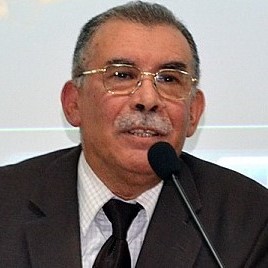
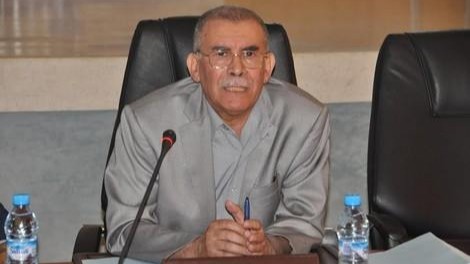
Mohamed Boudhan was an Amazigh writer, thinker, researcher and activist from the Rif, and publisher of the newspaper Tawiza. He was the author of many valuable books and articles on Amazigh identity. May he rest in peace.