The El Otmani Government and the Opportunity for Political Unity Between Amazigh Identity and Islamic Principles
The central issue
After successfully forming the government appointed by the King on April 5, 2017, and officially becoming Head of Government representing his “Islamist” party, it is legitimate to ask what stance Dr. Saâd Dine El Otmani will take toward Amazigh identity in his role as the executive leader. This question does not merely stem from the fact that Dr. El Otmani holds a progressive personal position—rather than a partisan one—on Amazigh issues. Indeed, his conviction often surpasses that of many Amazigh activists, having stated multiple times that Morocco is Amazigh, regardless of whether its citizens speak the language. Rather, the concern arises because he represents a party that does not hide its hostility toward Amazigh identity, whose Secretary-General has openly mocked Imazighen at public rallies. Furthermore, he leads a government tasked with implementing the official status of the Amazigh language as mandated by the Constitution—a project that was stalled and postponed for over five years by the previous government under Abdelilah Benkirane, who was known for his blatant and unapologetic Amazighophobia.
How will Dr. Saâd Dine El Otmani navigate this, acting as a defender of Amazigh identity while simultaneously protecting the political Islam ideology of the Muslim Brotherhood-affiliated party he leads? Moreover, how will he defend these two opposing poles while conforming to the directives and expectations of the Palace, which chose and appointed him as Head of Government? This presents a genuine dilemma, suggesting he will be unable to achieve anything exceptional for Amazigh identity without the approval of his inherently hostile party, or a sovereign decision from the Palace.
In reality, regarding the satisfaction of both the party and the Palace, the new Head of Government could find an opportunity here to serve the Amazigh cause without deviating from the ideology of the party that nominated him or the policy of the Palace that invested him. How is this possible?
“Islamizing” the PJD by transforming it into a truly Islamic party
Since the Justice and Development Party claims to be an Islamic party seeking to apply the precepts of Islam, the Head of Government, representing this majority party, must break with the “Amazighophobic” policy of Arabization to stay true to his party’s principles. This policy contradicts the teachings of Islam because its goal is not piety, but the imposition of an ethnic Arab identity. This is inherent in the concept of “Arabization”—transforming that which is not Arab into Arab—a practice that Islam does not advocate. On the contrary, Islam forbids it, as it resembles a form of identity “transsexualism” prohibited by religion. It is important to clarify here that this Arabization—a mutation aimed at erasing the identity of non-Arab peoples, such as the Amazigh people—has absolutely nothing to do with the spread and teaching of the Arabic language. Learning any language does not change the identity of the person who masters it. That is why we repeat: yes to the Arabic language, to its promotion, and its instruction; but no—a thousand times no—to Arabization, which is an alteration of the identity of non-Arab peoples and is contrary to the principles and goals of Islam.
Thus, if the government is truly Islamic—driven by the platform of a majority party and led by a head of government with genuine convictions—it ought to seek the application of the Islamic framework. This framework necessitates a struggle against the form of identity aberration known as “Arabization,” which contradicts the faith. Instead, it should work toward the principles of this framework within the natural and original identity that God intended for the peoples of North Africa, including Morocco: an Amazigh identity in harmony with its African geographic roots.
By implementing such a policy—one that rehabilitates Amazighity as the identity of Morocco, its people, and its state, and puts an end to the identity deviance currently afflicting our country—the head of government should face no opposition from his party colleagues. Indeed, he would simply be applying the Islamic references that the Justice and Development Party (PJD) members constantly invoke. Should they oppose it, they would fall into a blatant contradiction with the very framework that justifies their party’s existence. They would then appear as mere hypocrites and impostors, devoid of principle and credibility, whose goal is not Islam itself but its instrumentalization in the service of an ethnic Arabism with racist and archaic undertones—an ideology that Islam actually fought and proscribed.
As we can observe and conclude, the implementation of Islamic precepts as claimed by the PJD within a government led by Saâd Dine El Otmani—by virtue of his membership in this Islamist formation—must imperatively involve the recognition of Amazighity. This means embracing it as the profound identity of Morocco, the Moroccan people, and the state, in accordance with a divine will that decreed the peoples of North Africa (including Morocco) be Amazigh, just as those of the Arabian Peninsula are Arab, the Japanese are Japanese, Iranians are Persian, or the British are English. This recognition aligns with the geographic identity of these nations. Conversely, attempting the Arabization of the Amazigh, Persian, or Japanese peoples, or the “Amazighization” of Arab or Turkish peoples, constitutes a challenge to God’s will. It is a form of polytheism (shirk), for it is an attempt to appropriate a divine prerogative: that of having created peoples with distinct identities independent of one another.
Consequently, if the Islamist Saâd Dine El Otmani were to adopt a policy opposing what could be described as a forced “identity transition” while anchoring Amazighity as the foundational identity of Morocco, its people, and its state, he would merely be putting into practice the Islamic teachings advocated by his party. Such a shift would transform the PJD into a truly Islamist party. Its objective would then be to apply the principles of Islam within the framework of the Amazigh identity that God chose for the people of North Africa, rather than seeking to alter this identity through an Arabization that amounts to a denial of nature—an act contrary to religious precepts. In taking this stance, the PJD would join the ranks of authentic Islamist parties seen in most Muslim countries. These parties defend Islam while preserving the original and natural identity of their nations, as in Turkey, Iran, Pakistan, or Indonesia. In these countries, Islamist groups advocate for the application of Sharia within the context of Turkish, Persian, Pakistani, or Indonesian identities, rather than within an Arab identity foreign to their respective lands. Such a substitution would indeed contradict the principles and goals of Islam, whose purpose is neither to change the identity of peoples nor to Arabize them.
By implementing the true principles of an authentic Islam through the government he leads on behalf of his party, Saâd Dine El Otmani could enable the state to reconnect with its two founding pillars. This authentic version of the faith recognizes Amazighity as the core identity of Morocco, its people, and its state, in contrast to the “Arabizing Islam” used to distance Moroccans from their Amazigh roots. These foundations, upon which the country has rested since the arrival of Islam in Morocco, are Amazigh identity and Islam. This remained the case until French intervention altered this duo, replacing it with Arabo-Islamism and excluding Amazighity as a state identity despite its status as an immutable root. Restoring these two pillars in tandem means restoring a political unity, broken since 1912, between Amazigh identity and Islamic reference points. This unity manifests as a mode of governance based on Islam as the state religion, yet exercised in the name of Amazigh belonging—Morocco being an Amazigh state by virtue of an identity drawn from its North African roots. In this regard, it is essential not to confuse Amazigh belonging, which is a matter of identity, with Moroccan belonging, which is a matter of nationality. This confusion is common, stemming from a flawed perception that treats identity and nationality as synonyms when they are distinct concepts.
“Africanizing” Morocco by transforming it into a truly African country
Regarding respect for the Palace’s strategic choices, it is well known that the King is currently spearheading a proactive and deliberate African policy with rigorous planning and determination. Through these efforts, Morocco has regained its seat in the African Union and returned to its continental fold. However, this return to Africa is not solely political, diplomatic, commercial, or economic. While countries like China, France, India, and Brazil maintain high-level relations with African nations, Morocco’s return to the African family is, above all, a return to its identity. Morocco is reconnecting with its African roots, its origins, and its true self. Since 1912, its African belonging has remained incomplete and truncated, ever since the country began to be described as part of the “Arab Maghreb”—a term in blatant dissonance with its African anchoring. Since then, it has been African in body alone, while its soul was forcibly transformed into an Arab one. Consequently, it lost both its African soul, represented by its Amazigh identity, and its identity sovereignty, becoming dependent on the influence of an identity foreign to its geographical location. Yet, what makes Morocco an African country is precisely its Amazighity, which constitutes its African essence. Morocco is an African country because it is Amazigh. Therefore, fully realizing its African belonging requires the complete restoration of its Amazigh identity—a process through which it also recovers its identity independence and sovereignty.
Consequently, actions taken by Saâd Dine El Otmani’s government to anchor the Amazigh identity of the Moroccan state and its people will serve to consolidate the Kingdom’s African belonging. This aligns directly with the implementation of the King’s African-oriented strategic choices. Thus, Morocco’s return to its Amazighity, as the identity of both the people and the state, will be both the expression of and the prerequisite for its return to “Mother Africa,” in perfect harmony with the King’s foreign policy regarding our continent.
One strong indicator that the government’s commitment to the Amazigh cause aligns with royal priorities is the King’s very appointment of Saâd Dine El Otmani as Head of Government. The Sovereign is fully aware of El Otmani’s Amazigh convictions, which are common knowledge. He knows that during his tenure as Foreign Minister, Saâd Dine El Otmani proposed replacing the phrase “Arab Maghreb Union” with “Maghreb Union” to break from the notion that North African countries belong to an exclusively Arab sphere. The King also recognizes that El Otmani represents the direct antithesis of Abdelilah Benkirane on the Amazigh question. One can infer that concern for Amazigh identity was a factor in the royal selection of El Otmani. This suggests that any governmental decision to develop and rehabilitate the Amazigh language and culture, recognizing it as Morocco’s core identity, would likely receive the King’s support and approval.
Ensuring the Soussi El Otmani does not become a copy of El Mokhtar Soussi
This is what is expected of the Saâd Dine El Otmani government, given its identity as an administration led by an Islamist party. However, if its leader continues to implement a “backward” and racist Arabization program—one that contradicts the principles of Islam and is used to oppose Amazigh identity through a policy of “identity transformation” forbidden by the religion—then El Otmani, a native of the Souss, will be no different from his illustrious regional predecessor, the late scholar El Mokhtar Soussi. Like El Otmani, the late scholar frequently reminded others of his Amazigh roots, but only to emphasize the alleged benefits that Arabs, Arabness, and the Arabic language brought to the Amazigh people. This reflected a sense of alienation and a set of misguided convictions. Through this lens, as expressed in his writings, El Mokhtar Soussi viewed the Arabization of the Imazighen as an act of divine grace and celestial benevolence. Such a perspective leaves the door wide open for an “identity mutation” of the Amazigh people, framed as a matter of honor and divine protection.
While the late scholar El Mokhtar Soussi was a member of the “National Movement”—which built its “national” project on the ideology of this transformation labeled as Arabization—Saâd Dine El Otmani belongs to a party that claims an Islamic identity. Therefore, it would be enough for the Head of Government to act according to the true principles of authentic Islam, whose values his party claims to defend, to purge his organization of its non-Islamic tendencies—specifically the pursuit of an “identity transformation” policy for Moroccans. Most importantly, this would involve delivering the Moroccan people and state from the sin of this “identity anomaly” by returning the country to its healthy, natural state. Free from such deviations, Morocco could finally be itself, in harmony with its geographic reality and its Amazigh and African identity.
Arabic version | French version
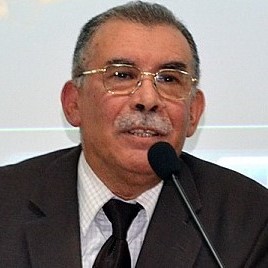
Mohamed Boudhan was an Amazigh writer, thinker, researcher and activist from the Rif, and publisher of the newspaper Tawiza. He was the author of many valuable books and articles on Amazigh identity. May he rest in peace.