The Accurate Prophecy of Auguste Mouliéras Regarding the Arabization of Morocco in the 20th Century
In the second volume of his work Le Maroc inconnu (The Unknown Morocco), dedicated to the “exploration of the Jbala” and published in 1899, Auguste Mouliéras (1855–1931) includes a brief passage on the continuous process of self-arabization among the Jbala tribes in Morocco. Observing the progression of this voluntary arabization, the author offers insights that reveal remarkable foresight and a precise understanding of the mechanisms at play. His profound perception of the phenomenon allowed him to predict its future evolution with such accuracy that his analysis can be described as a scientific prophecy. This historical relevance makes reading and analyzing this text essential today.
Text Analysis and Commentary
“In the perhaps near future, the Jbala tribes bordering the Rif, half of whom have long been arabized, will irrevocably adopt the language of the Prophet and deny even their Amazigh origins. Learned genealogists will prove to them, in the clearest and most indisputable manner, that they are descended from some famous conqueror from the Hejaz or Iraq. No doubt these newly arabized people will, in turn, work toward the arabization of the Rif, persuading its children of the commonness of their language, their customs, and their ancestors. It is a termite-like work, operating slowly and deeply, but achieving its ends through persistence and an irresistible advance. Now, suppose the annexation of Morocco by a European power. Then the arabization of all Imazighen will move with giant strides, and the conquering state will be the first to encourage this transformation, as we ourselves have done in Algeria, in our complete ignorance of the ethnography and history of the Amazigh states.” (Auguste Mouliéras, Le Maroc inconnu, Part 2, “Exploration of the Djebala,” 1899 edition, page 306).
What can we observe and conclude from this text?
1 — The author is aware that the “Jbala” tribes—and this applies to the whole of Morocco—are of Amazigh rather than Arab origin, even though some of them have become arabized. This arabization, which is elective rather than forced, continues to gain ground among these tribes. The inhabitants of these northern regions, like all Moroccans, are therefore Amazigh in their identity, affiliation, and even ethnic origin, just like their Rifian neighbors. The only difference lies in the fact that they have abandoned the Amazigh language to speak Darija, as has been the case for a significant portion of the Moroccan population.
2 — The cause of this linguistic shift, from the Amazigh language to Darija, is purely religious. It stems from the desire of Imazighen to use the “language of the Prophet” and to adopt, through it, an Arab affiliation, thereby breaking with their original Amazigh identity, which was perceived as non-“prophetic.” Since this language, Classical Arabic, is not used in daily exchanges, the Imazighen ended up creating—a result Mouliéras did not explicitly detail—their own variant of Arabic: Darija. By using an Arabic vocabulary, they became convinced that they were speaking the language of the Prophet. It was this desire to speak the sacred language that drove them to forge Darija and reject their Amazigh identity. We have already explained this in previous articles with great patience for those slower to grasp the concept, demonstrating the Amazigh roots of Darija through its geography, its people, and its linguistic structure.
3 — However, this linguistic transition to Darija was not enough to grant these speakers an Arab identity identical to that of the Prophet, whose language served as the religious driver for abandoning Amazigh identity. To perfect this identity, they resorted to the usurpation of Arab lineages. As Mouliéras wrote, “learned genealogists” took it upon themselves to “prove” to them that they were descended from “some famous conqueror from the Hejaz or Iraq.”
The initial desire of the Imazighen, driven by religious motives, to use the language of the Prophet spawned a second aspiration: the appropriation of an Arab identity. This phenomenon explains an identity shift—a transition from authentic Amazigh origins to a usurped and artificial Arab persona. This is how the belief took root and spread that the Moroccan population consists of indigenous Imazighen and Arabs who arrived in migratory waves. Yet, fundamentally, everyone is Amazigh; those who speak Darija and claim Arab lineage are, without exception, children of this North African soil and do not hail from elsewhere.
Having traded their original identity for an Arab one, these Imazighen “would in turn work to Arabize” their peers, convincing them of “the vileness of their language, their customs, and their ancestors,” as Auguste Mouliéras wrote. This observation remains strikingly accurate: it is reflected in the attitude of many Arabized Moroccans—these identity “converts”—who harbor a pathological hostility toward Amazighness. They pride themselves on not being Amazigh, displaying an “Amazighophobia” not even found among actual Arabs from the Gulf countries, who hold great respect for the Amazigh people, their language, and their culture. This confirms that these Moroccans are not true Arabs but individuals who have undergone an identity mutation, explaining the hatred they feel for their primary origins. Every new convert then becomes a tool of Arabization, drawing other Imazighen into this identity usurpation with a significant dose of contempt for their roots. Through this process of mutation, which the author likens to the work of termites, Arabization spreads and expands, while Amazigh identity recedes, its number of speakers dwindles, and its detractors multiply.
Despite the steady advance of Arabization—this shift of Imazighen toward an Arab identity—the phenomenon always remained an individual and optional choice. It was never imposed, nor did it involve Morocco as a whole or all Moroccans, or any of the dynasties that ruled the country before 1912. It is for this reason that all writers and historians who dealt with Morocco considered it part of the “Land of the Berbers” or “Africa.” They never used expressions like “the Arab Maghreb” or the “Arab State of Morocco” to refer to the country.
However, with the advent of the French Protectorate in 1912, Arabization became mandatory, collective, and accelerated, having previously been optional, individual, and slow. Here, the brilliance of Auguste Mouliéras and his acute understanding of the phenomenon are revealed. Contrary to common beliefs among pan-Arabists, he links the acceleration and success of Arabization in North Africa to foreign occupation. Mouliéras acknowledges that this shift of Imazighen toward an Arab identity was indeed common in North Africa for religious reasons since their conversion to Islam. Yet, while its progress seemed inevitable, it remained slow—a pace the author compares to the activity of termites to highlight its persistence and gradual nature. But under the French occupation, the tempo accelerated in an unprecedented way, and the “Arabization of all Berbers advanced by leaps and bounds.” Auguste Mouliéras explains that “the occupying power is the first to encourage this transformation, as we ourselves did in Algeria, in total ignorance of the ethnography and history of the Berber States.”
Why did France encourage Arabization? Why did this process accelerate in Algeria, and later in Morocco after its occupation, just as Auguste Mouliéras had predicted? It is because France, acting as an occupying power, did not allow Arabization—the identity shift of the Imazighen toward Arabness—to remain an optional and individual process driven solely by religious, political, or social attractions, as had been the case since the expansion of Islam into Amazigh North Africa. On the contrary, France intervened to transform it into a global, mandatory national project that left no room for free will. This national and compulsory character imposed by France is manifested in the Arabization of the states it colonized, such as Algeria, or “protected,” such as Morocco. But what does the Arabization of the state actually mean? It signifies the Arabization of its three pillars: its territory, its people, and its political power. Since the Arabization of the state consists of transforming it into an Arab state, this process, by extension, converted its land into Arab land, its population into an Arab people, and its regime into an Arab power. Consequently, anyone living under the aegis of this state is considered, whether they like it or not, to belong to the Arab people of that Arab state. With the Arabization of the state and the resulting transformation of territory, people, and power, Arabization truly made giant strides, as Mouliéras observed, reaching its ultimate goal: the total Arabization of all things. It is this total Arabization that the post-independence state in Morocco would inherit from the colonial state. This demonstrates—as Mouliéras emphasizes by linking the acceleration of this process to the French occupation, and as I have explained in previous articles (see the topic: “Arabization succeeded through French before Arabic,” accessible via this link: http://www.hespress.com/writers/279735.htm)—that Arabization, in its state-led, national, and coercive form, is a French colonial policy that the post-independence state continues to practice, as it is the legitimate descendant of the French Protectorate.
6. The only point on which I diverge from Mouliéras concerns his assertion that the colonial encouragement of Arabization stemmed from a “total ignorance […] of the ethnography and history of the Amazigh states.” This is inaccurate; in fact, the opposite is true: France possessed a perfect knowledge of the history, geography, languages, and identity of the peoples of the Maghreb. It specifically exploited the vast amounts of exploration and intelligence data it had collected to carry out its occupation. Mouliéras’s own work, Le Maroc inconnu (Unknown Morocco), written as a series of intelligence reports for French authorities to serve as a blueprint for the country’s occupation, was undoubtedly one of the primary sources upon which France relied for its conquest. France therefore knew with absolute certainty that these countries were not Arab and had never been so. Why then did it undertake to Arabize them and substitute an Arab identity for their collective Amazigh identity? Because, based on the data at its disposal, it was convinced that Arabness served its short-term colonial interests and its long-term national interests far better than Amazigh identity ever could. This is why it supported the “transmuted” Moroccan elite—those who had already renounced their Amazigh origins to adopt an Arab identity—and established a new Arab state in Morocco for their benefit. It handed the reins of this state to them upon its departure in 1956, and they scrupulously continued the Arabization policies of colonial France. Subsequent events have confirmed that France was correct in its assessment that Arabizing Morocco would preserve its interests. Indeed, the Arabist elite who received the Arab state created by France in 1912 is the same elite that continues, sixty years after France’s departure from Moroccan soil (as of late 2016), to protect French economic, cultural, and linguistic interests. The most glaring proof is that the French language, despite its waning global influence and declining scientific output, remains dominant in Morocco and constitutes, in practical terms, its true official language.
Arabic version | French version

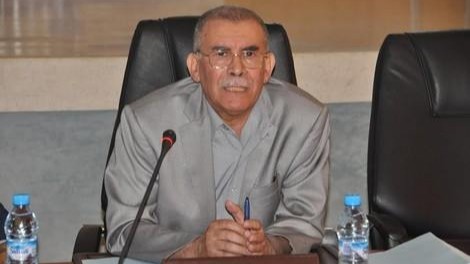
Mohamed Boudhan was an Amazigh writer, thinker, researcher and activist from the Rif, and publisher of the newspaper Tawiza. He was the author of many valuable books and articles on Amazigh identity. May he rest in peace.