The Draft Organic Law to Prevent the Officialization of the Amazigh Language
It is now almost certain that the memorandum addressed to the King by Amazigh activists and associations—urging him to intervene to amend the two draft organic laws on implementing the official status of the Amazigh language and establishing the National Council of Moroccan Languages and Culture so that they align with the official status of the Amazigh language—fell on deaf ears. On Monday, September 26, 2016, the Cabinet, chaired by the King, adopted the text of both bills. One can therefore state that Draft Organic Law No. 26.16, concerning the implementation of the official status of the Amazigh language, began from that date to lose somewhat its character as a “draft.” Indeed, the King’s approval of this bill, in his capacity as chair of the Council of Ministers, amounts to a green light indicating that the text will likely undergo neither amendment nor revision. It will be implemented in the form and substance given to it by the head of government, Mr. Benkirane, and now awaits only formal, procedural passage through the two remaining stages—the House of Representatives and the Constitutional Court—to become a final, enforceable organic law after its publication in the Official Gazette. Until the bill completes the procedures that will strip it of its status as a “draft” and confer upon it that of an “organic law,” we will continue to refer to it as the draft organic law on the Amazigh language, even though our examination actually concerns the organic law on implementing the official status of the Amazigh language.
Everything Except Officialization
Reading and rereading this draft organic law on implementing the official status of the Amazigh language leaves one with the conviction that it grants the Amazigh language everything except genuine officialization, which, on the contrary, it denies it. That is why it would have been more fitting to title it a draft organic law for the development of the Amazigh language, for the promotion of the Amazigh language, or for the rehabilitation of the Amazigh language… This shows that it brings nothing new, as the development, promotion, and rehabilitation of the Amazigh language are missions already provided for in the Ajdir Dahir of October 17, 2001, establishing the Royal Institute of Amazigh Culture. Comparing this dahir with the draft organic law, one sees that it differs neither greatly nor fundamentally in its content and objectives from those of this bill. However, the glaring difference between the two texts lies in the fact that the former was written in a style marked by great sincerity and good faith (I am speaking here of the dahir as a legal text, without linking it to the extent to which its provisions in favor of the Amazigh language were implemented, since the problem of implementation will also arise with the organic law). As for the latter, its wording conceals a good deal of duplicity, deceit, trickery, evasiveness, and bad faith, as I will explain below. And all of this is not to implement the official status of the Amazigh language, but to prevent its legal officialization, as I have said. Such is the true objective of the bill, as revealed by the overarching philosophy that guides and governs it, which we will set out below.
Violating the Constitution to Impose Dialectalization
From its very first article, the draft organic law steers us away from the Constitution’s objectives and deliberately breaches its provisions on making the Amazigh language official, as set out in Article 5. In its second paragraph, that first article states: “For the purposes of this draft organic law, the Amazigh language means the various Amazigh linguistic expressions in use across the different regions of Morocco, as well as the Amazigh linguistic and lexical output produced by the competent institutions and bodies.” That clause therefore constitutes a flagrant violation of the Constitution, which affirms that “the Amazigh language also constitutes an official language of the State”—using the terms “Amazigh” and “official language” in the singular, rather than in the plural as the second paragraph of Article 1 of the draft bill does when it refers, in the plural, to “the various Amazigh linguistic expressions in use across the different regions of Morocco.” Further proof that the Constitution understands the Amazigh language to be a single, unified language, rather than its various dialectal expressions, is that it devoted the fifth paragraph of Article 5 to preserving dialects without mentioning the Amazigh language, as that paragraph makes clear: “The State shall work to preserve Hassani […] and to protect the dialects and cultural expressions practiced in Morocco.” In violation of the Constitution, this second paragraph of Article 1 of the draft organic law thus brings us back to a sterile debate that prevailed before the start of the third millennium over whether the Amazigh language was a dialect or a language worthy of entering schools, the public administration, and all institutions of the State.
Furthermore, because this paragraph of Article 1 of the bill puts forward a specific and novel definition of the Amazigh language, it also violates the Constitution by stepping outside the framework of the tasks set out in the fourth paragraph of Article 5, which stipulates: “An organic law shall establish the stages for implementing the official status of the Amazigh language, as well as the procedures for its integration into education and priority areas of public life, so that it may in the future fulfill its function as an official language.” It is therefore not the role of the organic law to define the Amazigh language, as the Constitution has already settled the matter by defining it as an official language. When the draft organic law engages in such a definition, it acts as though the Constitution read: “An organic law shall define what is meant by the Amazigh language.” That is a clear breach of the content of the fourth paragraph of Article 5 of the Constitution, representing a departure from the Constitution and a violation of its provisions on making the Amazigh language official.
As a consequence of this breach of the Constitution, the draft organic law also strays from the constitutional objective of making the Amazigh language official, as defined by the fourth paragraph of Article 5 of the Constitution—namely, enabling the Amazigh language “to eventually fulfill its function as an official language.” Indeed, if the Amazigh language corresponds to “the various Amazigh linguistic expressions in use across the different regions of Morocco…”, as Article 1 of the draft defines it, it follows that this language could not be official—unless there were several official Amazigh languages, in the plural, each representing one of the “Amazigh linguistic expressions in use across the different regions of Morocco.” Clearly, the purpose of the definition the draft bill gives to the Amazigh language, without the Constitution ever having asked it to do so, is precisely to prevent the Amazigh language from being an official language. For there cannot be more than one single official Amazigh language; otherwise, there would simply be no officialization of this language at all. Such is the aim of this circumvention of the Constitution: to fabricate out of whole cloth a definition of the Amazigh language designed to prevent its genuine officialization, so that this language remains reduced to mere “dialects” whose “dialectal” and “multiple” status bars them from being used as an official language of the State.
A heritage-based approach:
To support this logic of dialectalization, which runs counter to the Constitution, the bill also insists that the Amazigh language constitutes a “common heritage of all Moroccans without exception”—a phrase taken from the Constitution that recurs with striking insistence throughout the text of the bill (explanatory note, paragraph 1 of Article 2, paragraph 4 of Article 2, and Article 19). While the Arabic expression rassid mouchtarak (which can evoke a “common capital”), when applied to the Amazigh language, might lead one to believe in the Arabic text that it serves the language by making it the concern of all Moroccans, the French version of the Constitution belies this “positive” interpretation by translating the word rassid with a precise term that carries only a single meaning, leaving no ambiguity or room for alternative interpretation. That word is Patrimoine, which in French means heritage—in other words, all the property passed down by parents to their children. When this heritage is a language such as the Amazigh language, the “rassid“—that is, the “heritage”—means that this language is a legacy passed down to present generations. This is precisely what the organic law bill means by its excessive use of this phrase, seeking to imply that the Amazigh language is a common heritage of all Moroccans. And where is the problem? The problem is that if the Amazigh language is treated merely as heritage, developing and promoting it does not require making it an official language, but only preserving this heritage, taking care of it, and dusting it off so that it does not die out and disappear. This fits into the bill’s overall strategy aimed at preventing the officialization of the Amazigh language, as the title of this article indicates, and aligns with the dialect-based approach that the bill adopts from its very first article, as we have explained.
While the third paragraph of Article 5 of the Constitution is precisely the provision that tied the officialization of the Amazigh language to its status as a “common heritage of all Moroccans without exception”—the very element on which the organic law bill based its heritage-centered conception of implementing the language’s official status—this paragraph was in fact added illegally by “unknown individuals” who had no authority to amend, delete, or add anything to the draft Constitution, even though the Royal Commission tasked with drafting it had already completed its text and submitted it to the Royal Cabinet for the popular referendum. Indeed, the original text of Article 5 of the draft Constitution stated, regarding Arabic and the Amazigh language: “1. Arabic and the Amazigh language are the two official languages of the State. 2. In order to enable the Amazigh language to eventually fulfill its function as an official language, an organic law shall define the stages for implementing the official status of this language, as well as the procedures for its integration into education and priority areas of public life.” The original text was therefore altered and modified so as to suggest a hierarchy between Arabic and the Amazigh language, while linking the officialization of the latter to its status as a common heritage of Moroccans, whereas the text drafted by the legal commission placed them on an equal footing, in the same sentence, as the two official languages of the State. That is why this current article, devoted to Arabic and the Amazigh language, is falsified and legally flawed, as it was written by individuals devoid of any authority to draft a proposed Constitution. Clearly, the motive behind this alteration of the original legal text lies in its authors’ bad faith toward the Amazigh language: this falsification separated its officialization from that of Arabic, contrary to what the competent commission had decided, and subordinated it to its status as a common heritage of all Moroccans—a loophole that the organic law bill exploited to build its heritage-based conception of the officialization of the Amazigh language.
Officializing oral communication to avoid officializing written use
However, because the Constitution tasks the organic law with defining the “implementation of the official status of the Amazigh language” “so as to enable it eventually to fulfill its function as an official language,” the draft organic law circumvented this constitutional requirement so as to display—purely on the surface—a commitment to and respect for the Constitution, while preventing the genuine officialization of the Amazigh language. How does it go about this?
The draft organic law reduces the implementation of the Amazigh language’s official status to a single objective, which it calls “communication.” This is clearly and explicitly stated in the bill’s explanatory memorandum, which reads: “This organic law aims to strengthen communication in the Amazigh language across the various priority public domains, as an official language of the state.” Examining the various contexts in which the word “communication” appears reveals that the draft means the oral use of the Amazigh language, and nothing more. This focus on the “oral” aligns with—and flows directly from—the dialect-based approach that governs the entire bill, as we have already explained.
As for officializing the Amazigh language in written form, it is limited to publishing a version of the Official Gazette in the Amazigh language (Articles 10 and 11), inscribing it on coins, banknotes, postage stamps, and state seals (Article 22), as well as on the national identity card, passport, driver’s license, residence permit for foreign nationals, and various certificates issued by the administration (Article 21). With the exception of the Official Gazette—a matter to which we will return later—this official written use of the Amazigh language remains fixed and uniform, as seen on the various cards, passports, postage stamps, seals, coins, and banknotes. It is therefore a symbolic officialization, one that takes on an ornamental and decorative character rather than constituting genuine officialization. All that the draft organic law thus grants the Amazigh language is an oral, symbolic, and decorative form of officialization—and even that assumes this “favor” toward the Amazigh language would actually be put into practice.
And where are the conditions for genuine officialization?
We have seen that the draft organic law departed from the provisions of Article 5 of the Constitution—which itself was a departure from the original Article 5 drafted by the competent royal commission, as has already been noted—by offering its own definition of the Amazigh language, reducing it to mere dialects. It sought to soften this crude dialectal definition by writing, in place of the word “dialects,” “the various Amazigh linguistic expressions in use across the different regions of Morocco, as well as the Amazigh linguistic and lexical output produced by the competent institutions and bodies.” We have also seen that the use of this definition is intended to prevent the effective and genuine officialization of the Amazigh language. Why? Because if the bill’s goal had been to make the Amazigh language official, it would not have resorted to a definition of its own—something that falls completely outside the scope of implementing the official status of the Amazigh language as set out in the fourth paragraph of Article 5 of the Constitution. Indeed, such a definition is not the subject of that fourth paragraph, which deals solely with implementing the official status of the Amazigh language, as has already been explained. Had the draft organic law been concerned with respecting the text of the Constitution, it would have begun by defining the concept of an official language—since that is the subject of the fourth paragraph of Article 5—rather than defining the Amazigh language. Yet it failed to do so in order to avoid contradicting the bill’s underlying aim, which is to prevent the officialization of the Amazigh language.
An official language is, in its fundamental nature, the unified language of the state—that is, the language in which the state’s institutions operate uniformly. What does it mean for state institutions to operate in a given language? It means that the civil servants and public officials who represent the state and its institutions use that language to read, draft, and produce official documents, as well as in their public speeches and oral statements when speaking on behalf of the state and its institutions. This implies that these civil servants and officials are proficient in reading and writing the language in which they read and draft official documents. It also implies that these same civil servants and public officials have previously studied the language for a sufficient and necessary period to master its unified written form and be qualified to read and draft various official documents in it across all areas and regions of the country where they may be assigned. All of this shows that the first two conditions that make a language an official language are its written use and its unified nature (writing and unification). This therefore requires teaching it so that people learn this unified written form, as is the case for all languages around the world used in writing as official languages.
This teaching of the Amazigh language as a unified written language, to enable it to fulfill its function as an official language in the future, is the first and most glaring omission from the draft organic law. This omission is entirely logical and understandable, as the bill’s purpose, as previously noted, is to prevent the officialization of the Amazigh language rather than to implement it. That is why the draft law uses the term “teaching” only twice: first, in the second paragraph of Article 4, which stipulates: “To this end, the Amazigh language shall receive progressive teaching at all levels of basic education”; and second, in Article 5, according to which: “The Amazigh linguistic expressions in use in certain areas of the Kingdom’s regions may be adopted, alongside Arabic, to facilitate the teaching of certain school subjects.” This confirms that the language referred to corresponds to regional dialects, and not to the unified Amazigh language, which alone is worthy of being an official language of the state. The draft law has thus completely avoided mentioning the unification of the Amazigh language in schools for a unified written usage that would enable it to perform its function as an official language in the future. Making the Amazigh language official as a unified written language lies outside the “thinking” of the drafters of the draft organic law, because what they had in mind was to treat it as dialects so that it would not attain the status of an official language, which can only be unified. Yet this unification can only be achieved through schools and through writing.
And what about the “modalities of its integration into education”?
This is why the draft organic law has neither clarified nor detailed the “modalities of its integration into education,” a task that falls directly within its purview under the fourth paragraph of Article 5 of the Constitution. All that the draft contains regarding these “modalities” is a vague and evasive reference to the principle of “gradual implementation” (paragraphs 1, 2, and 3 of Article 4), without the slightest specificity or binding force, while delegating this task to the Ministry of National Education, the National Council of Moroccan Languages and Culture, and the Higher Council for Education and Training. Indeed, Article 5 of the draft stipulates: “The government authority responsible for education and training shall ensure, in coordination with the National Council of Moroccan Languages and Culture and the Higher Council for Education, Training, and Scientific Research, the adoption of measures capable of progressively integrating the Amazigh language into the education and training system within both the public and private sectors.” Yet constitutional requirements dictated that if the organic law had to entrust these three institutions with integrating the Amazigh language into education, it should have laid down strictly, imperatively, and bindingly what they are required to accomplish toward that end. However, delegating responsibility for this integration to these bodies without defining their obligations or imposing any constraints constitutes a blatant evasion and a deliberate dilution of responsibility. The aim is to ensure that no party can be held accountable for the failure to integrate the Amazigh language into the education system, since the organic law has assigned them neither specific missions nor defined competencies on which they could be challenged in the event of default. As a result, the Ministry of National Education will continue to sabotage the teaching of the Amazigh language and treat the subject with the same contempt it has displayed since 2003. If called to account for this failure and casual indifference, it will simply retort that it implemented the measures it deemed appropriate to integrate the Amazigh language into education, in accordance with Article 5 of the organic law. And legally, its response will be unassailable. The other two institutions will put forward the exact same argument. If, on the other hand, the organic law had rigorously and precisely defined—in the form of an actual set of “specifications”—the concrete substance of the measures required of these three bodies, it would have left them no leeway to enforce arbitrary provisions dictated by ideological whims and anti-Amazigh bias. Holding them accountable in the event of delay or failure would then have carried genuine weight, as they would have been assessed on what was carried out under the “specifications” that the organic law mandated them to implement.
Furthermore, what is the point of an organic law incapable of defining, with rigor and a sense of responsibility, what must be accomplished by the institutions tasked with integrating the Amazigh language into education? Under these circumstances, there will be no effective implementation of the official status of the Amazigh language that represents any real progress beyond the text of the Constitution, which specifically entrusted this operationalization to an organic law. By delegating the integration of the Amazigh language into education to these three bodies without specifying their obligations or compelling them to act, this organic law merely replicates what the Constitution had already done when it deferred the responsibility of operationalizing this official status to the law itself. Yet, while it is the inherent nature and function of a constitution to set forth general principles without delving into specifics, it is conversely the duty of organic laws to flesh out what the Constitution addressed only in broad strokes—such as the “modalities of its integration [that of the Amazigh language] into education,” which the Constitution mentioned in purely general and summary terms.
Furthermore, the draft organic law once again breaches the Constitution, in a flagrant and undeniable manner, by granting the Ministry of Education, the National Council of Languages, and the Higher Council for Education the prerogative to “take the necessary measures to progressively integrate the Amazigh language into the education and training system within both the public and private sectors.” The constitutional violation here is obvious, since the fourth paragraph of Article 5 stipulates: “An organic law defines […] the modalities of its integration [that of the Amazigh language] into education,” and in no way states that “the Ministry of Education, in coordination with the National Council of Languages and the Higher Council for Education and Training, defines the modalities of its integration into education.” This constitutes a clear transgression, as an organic law has no authority whatsoever to substitute itself for the Constitution in order to alter its provisions or forge new ones. Its mandate is strictly confined to implementing constitutional provisions—nothing more. Consequently, failing to establish a set of binding terms and conditions governing the integration of the Amazigh language into education, as mandated by the Constitution, and abdicating its own responsibility to the Ministry of Education, the Council of Languages, and the Council of Education represents a blatant deviation and a direct breach of the constitutional text, which must inevitably render this organic law null and void.
If one examines the contents of the “Strategic Vision for Education Reform 2015–2030,” drafted by the Higher Council for Education, Training, and Scientific Research—a document cited by the draft organic law regarding the integration of the Amazigh language into education—it becomes apparent that it likewise confines the ultimate purpose of teaching the Amazigh language to mere “communication” skills. Indeed, this strategic framework document states: “Enable secondary school graduates to master the Arabic language, to be capable of communicating in the Amazigh language, and to master at least two foreign languages.” It is precisely here that the “Amazigh” philosophy of the draft organic law converges with that of the Higher Council for Education and Training’s Strategic Vision: an approach that starts from “orality” (local vernaculars, in other words the various regional dialects) only to end at that very same “orality” (communication). Given that the “Strategic Vision” predates the publication of the draft organic law, one can deduce that the draft bill’s conception of the Amazigh language was directly copied from it. Even more tellingly, in light of the stylistic affinity between the draft bill and the “Strategic Vision,” and considering their exclusively “oral” treatment of the Amazigh language, it can be stated with certainty that the authors of the “Strategic Vision” are the very same individuals who drafted the organic bill. They instilled into it this same dialectal and purely communicative vision of the Amazigh language, while rejecting any written and standardized development that would allow it, in the future, to fully exercise its prerogatives as an official language.
Trickery, disinformation, contempt for intelligence, and bad faith:
Because the draft organic law restricts officialization to the oral, the symbolic, and the decorative, as previously demonstrated, and given the complete absence of any plan for the official written use of a standardized Amazigh language in the future, setting a 15-year ceiling for implementing its official status is nothing short of an outright lie and a stalling tactic. Why? Because as long as there is no genuine officialization of the Amazigh language as a unified, written language used across state administrations and institutions, it will never become an official language—meaning one used in writing throughout public institutions—even if the timeframe set for its officialization were several centuries rather than 15 years. To be convinced of this, one need only read the third paragraph of Article 30 of the draft bill regarding the use of the Amazigh language in the judicial system, which stipulates that “litigants have the right, upon request, to hear the pronouncement of judgments in the Amazigh language.” Officialization thus never goes beyond strictly oral bounds—the mere act of hearing the verdict delivered in the Amazigh language—without the court even being subjected to any binding obligation in this regard. The Amazigh language will therefore remain confined to an oral, dialectal status, permanently barring it from attaining the status of an official language worthy of the name, used in a unified, written form across the judicial apparatus—not merely after 15 years, but even centuries from now, if the provisions of this draft organic law were ever to be implemented.
The Amazigh language would only become a truly official language if the bill required court rulings—not merely their oral pronouncement—as well as legal briefs to be drafted in Amazigh, on an equal footing with the Arabic language. This would require judges, lawyers, court clerks, and judicial officers to have received their legal training in the Amazigh language, which in turn presupposes that Amazigh serves as a language of instruction for law in university faculties, alongside Arabic. Such a process would undoubtedly require a timeframe far longer than the 15 years provided for in the bill. That is why I am in no way claiming that the Amazigh language should be used on par with Arabic starting today, or even within a maximum period of 15 years. Rather, it is essential to prepare the ground beforehand by making the teaching of the Amazigh language mandatory and rigorously universal for all Moroccans across every level of schooling, so that graduates will be able, in twenty years or more, to master the unified written use of this language. Only on that condition can it be used, gradually and over time, in the judiciary, public administration, and various state institutions as a written and standardized language. This is precisely what the draft law should have spelled out by defining its procedures, stages, and implementation measures. Instead, it carefully refrained from doing so, because it is only interested in making the Amazigh language official in an oral, symbolic, and decorative capacity—never in its concrete and effective dimension, which is inseparable from unified written use.
In the same way, Article 15 of the bill stipulates: “Royal speeches and messages, as well as official statements by public officials, shall be broadcast on Amazigh public television channels and radio stations, accompanied by their oral or written translation into the Amazigh language.” It therefore becomes obvious that within the framework outlined by this article, there will be no genuine officialization of the Amazigh language—not even after centuries, let alone after 5, 10, or 15 years. Why? Because as long as those speeches, royal messages, and official statements by public officials are not delivered directly in the Amazigh language, it means this language is anything but an official language. An official language is, by definition, the language of the state—the one used by its representatives, from senior officials to public employees. Having these speeches and statements translated into the Amazigh language does not merely amount to denying it official status; it is tantamount to treating it like a foreign language whose speakers need a translation from the official language into their “foreign” tongue in order to understand what state officials are saying. This translation—which the draft organic law so generously “bestows,” without the slightest shame, in the guise of making the Amazigh language official—is nothing more than an illusion, a deception, an insult to the Amazigh language and its official status, and a blatant display of contempt for its speakers, who are openly treated like fools.
Among the other facets of this deception, trickery, and insult to intelligence is the provision in Article 3 of the draft organic law, which states: “The teaching of the Amazigh language is considered a right for all Moroccans without exception.” This is deception, trickery, and an insult to intelligence, because this wording turns the teaching of the Amazigh language into a mere right—that is, a prerogative that binds no one, which can be waived and whose enforcement need not be demanded. It is precisely this “right” that opponents of the Amazigh language use to justify its marginalization when they retort to the activists defending it: “Teaching your Amazigh language, learning it, and taking an interest in it are rights of yours that no one has denied you. Why, then, blame others for marginalizing the Amazigh language if you yourselves do not teach it and do not pass it on to your children?” Here, the draft organic law resorts to manipulation, takes citizens for fools, and displays culpable recklessness in Article 3 by establishing the teaching of the Amazigh language as a right without the slightest obligation—that is, without a corresponding duty—making it a purely formal, superficial right, completely devoid of concrete realization and effective implementation. Persisting in disinformation and mystification, the draft uses the Arabic term “ta‘līm” (teaching), the verbal noun of the verb “‘allama,” which is characterized by taking two objects. This implies that all Moroccans, without the slightest exception, would have the right to teach the Amazigh language to one another themselves. It is the height of manipulation, absurdity, and nonsense. One cannot argue that the second object intended by the text of Article 3 refers to Moroccans as the recipients of this act of teaching the Amazigh language, as when one says “teaching the Amazigh language to students.” For if that had been the intended meaning, the phrasing would have been written as follows: “The teaching of the Amazigh language to all Moroccans without exception is considered a right belonging to them.” Consequently, had the draft instead used the term “ta‘allum” (learning), the verbal noun of the verb “ta‘allama” (to learn), the meaning would have been, at the very least, acceptable and coherent—namely, that all Moroccans have the right to learn the Amazigh language.
Moreover, the draft text deliberately speaks of informal teaching (“ta‘līm”) rather than school and academic instruction (“tadrīs”). Yet a world separates these two notions: teaching can be purely oral, with neither school nor teacher, much like the oral learning of any living language at home, in the street, or in the factory… By contrast, school instruction requires teachers and a school, or equivalent structures, and is in no way reduced to oral and dialectal communication; above all, it centers on mastering the written and unified use of the language. Had the authors of the draft been serious and driven by good intentions, and had they truly wished to implement the officialization of the Amazigh language, they would not even have limited themselves to writing: “The teaching of the Amazigh language is a duty for all Moroccans without exception.” They would have explicitly stated: “The teaching of the written and unified use of the Amazigh language, provided to all Moroccans without exception, is a duty incumbent upon the state.” Indeed, it is making the teaching of the Amazigh language contingent on its unified written use—and not merely on oral and dialectal communication—and assigning it to the state as the authority holding the power of enforcement and execution, rather than to ordinary citizens, that would lend seriousness and credibility to the issue of teaching the Amazigh language. Beyond that, reducing its teaching to an optional right left to the goodwill of citizens is nothing but condescension, disdain, and blatant trickery.
Among the outrageous displays of deception and provocative insults to intelligence that abound in this draft organic law are the provisions of Article 10 (paragraph 2) and Article 11 concerning the publication of an edition of the Official Gazette in the Amazigh language. Publishing an Amazigh-language version of the Official Gazette would certainly constitute the most irrefutable tangible proof of the language’s genuinely and fully official status, since an official language is, by definition, the one in which laws and legislation are promulgated—making it the language of the state, its institutions, and its legal texts. It is therefore an admirable and magnificent initiative; no one would dispute that. However, the crux of the deception, manipulation, and insult to intelligence hidden behind this supposed “greatness” and “beauty” lies in the fact that no one will read this Official Gazette written in the Amazigh language. Why is that? Simply because, by confining the teaching of the Amazigh language solely to oral communication—as we have demonstrated—no one will have mastered its written form well enough to read and understand the texts published in it.
What, then, is the point of an Official Gazette in the Amazigh language if law faculties do not establish Amazigh-language law tracks designed to train graduates capable of practicing law in the Amazigh language in their professional roles—which would naturally lead them to consult and apply the legal and legislative texts published in the Amazigh-language edition of the Official Gazette? What use is there in designing an Official Gazette in the Amazigh language if judges, lawyers, notaries, experts, ministers, the speaker of Parliament, regional presidents, walis, governors, and all public officials will never read this publication, for the simple reason that they will not have received their legal and university education in the Amazigh language? It is therefore the height of absurdity and pure demagoguery to publish an Official Gazette in the Amazigh language without first providing rigorous, comprehensive, adequate, and serious school instruction in the written use of the Amazigh language, subsequently extended across various university disciplines. All of this irrefutably proves that the true cornerstone of using the Amazigh language as a genuinely official language lies in establishing universal, mandatory, and unified instruction in the language, carried out with seriousness, sincerity, and rigor. That is precisely where the draft organic law should have focused its efforts, detailing its measures and provisions in the form of a set of “specifications,” as we mentioned earlier. It should also have included a requirement for proficiency in the written use of the Amazigh language as a condition for entering public office after a reasonable period following the launch of this mandatory education—a timeframe that could be estimated at fifteen years or more—so that this requirement would apply only to new graduates who have fully mastered the written Amazigh language after studying it for more than fifteen years. Such a condition is part of the very definition of an official language: it is unthinkable for a civil servant representing the state within the public administration where they work to be ignorant of that state’s language. Moreover, such a requirement would encourage and stimulate the learning and mastery of the Amazigh language by linking it directly to access to public office. Without this mandatory and unified teaching of the Amazigh language, publishing an Official Gazette in the Amazigh language remains meaningless and devoid of any utility—serving no purpose other than to misinform, deceive, take citizens for fools, and openly show contempt for the intelligence of Moroccans.
The same disinformation, deception, and blatant disregard for the intelligence of citizens appear in Article 7 of the draft law, which states: “The Amazigh language shall be integrated into literacy and non-formal education programs.” On the surface—and only on the surface, for the purpose of disinformation and trickery—one might believe that the goal of using the Amazigh language in literacy programs is to strengthen its presence among those who did not benefit from formal schooling. In itself, this would be a commendable and positive objective. However, as is widely understood, the goal of literacy programs and non-formal education in general is functional: it aims to enable the recipient—who is initially illiterate and unable to read or write—to understand what they might receive in their daily lives. This includes, for example, water and electricity bills, court or police summons, and invitations to ceremonies or meetings. It also seeks to enable them to draft and complete the fields of a tax return, understand and fill out an election ballot, write the address on a letter, compose an SMS message, or read and complete a job application form. Literacy programs thus fulfill a very specific function: first, to allow the beneficiary to read and understand a range of simple and essential printed materials and documents; and second, to write simple but equally necessary items, such as a mailing address, their name, place and date of birth, or to fill out specific forms like ballots or tax documents. Consequently, providing literacy through the teaching of a given language to those who missed formal education presupposes the availability and distribution of written output (forms, documents, certificates, bills, and official reports, not to mention books, newspapers, and magazines) in that language, treated as a medium for written use. Since it is well known that such written output does not exist—and will not exist in the future for the Amazigh language because its instruction has been confined to oral and dialectal communication, as previously explained—integrating the Amazigh language into literacy programs becomes absurd and contemptuous; it is quite simply a mockery. Indeed, those who attend Amazigh literacy courses will find no printed materials or administrative documents written in Amazigh that would allow them to put their reading and writing skills into practice, which is the very functional purpose of literacy training.
Summary and Conclusions:
Many people—if not everyone—believe that the draft organic law regarding the implementation of the official status of the Amazigh language is riddled with gaps and imperfections, even contradicting constitutional provisions, because it was drafted in the final moments of the current government’s term. These critics argue that the time necessary for the rigorous and successful preparation of an organic law was simply not allocated. However, I personally disagree with those who offer this “excuse” based on a lack of time. On the contrary, I believe this draft benefited from all the time necessary to be prepared with deliberation, reflection, and without haste. The hallmarks of this calculated calm and careful consideration are strikingly clear within the text of the project itself. The choice of terms and expressions is meticulously tailored to a “dialectalizing” objective that prevents true officialization. Phrases such as “linguistic expressions,” “common heritage,” “protection of Amazigh cultural and civilizational heritage,” and “teaching the Amazigh language is a right for all Moroccans” are telling. So too are expressions like “taking into account regional specificities,” “communication,” “encourages,” “can,” “it is permitted,” “facilitate,” “ensures that,” “it is appropriate to,” “account is taken of,” “works towards,” and “strives to.” Notably absent is the word “must,” which would express a binding obligation and a committed engagement. This vocabulary is the result of mature reflection and patient care in selecting words and formulating sentences. It is a product of strategic cunning, manipulation, and a premeditated bad faith aimed at feigning the implementation of the official status of the Amazigh language while effectively prohibiting any real officialization. Executing such a deceptive and “dialectalizing” plan requires significant time, thought, and preparation. One could argue that the preparation for this project began as soon as Abdelilah Benkirane’s government was inaugurated on January 3, 2012, rather than when the misleading announcement was made regarding the collection of proposals via email between January and February 2016. Because this project was prepared in absolute secrecy, without a public commission or witnesses, and without even the participation of the coalition parties forming the government, many concluded it was written in haste as the mandate neared its end. Yet, this “explanation” and “excuse” are themselves part of the plan of deception, which even misled the government’s own partners. Consequently, the draft is procedurally void due to the lack of participation from government members in its creation.
If this draft has dashed the hopes raised by the constitutional officialization of the Amazigh language in July 2011—and if it even stands in contradiction to that Constitution—it is because the party of Head of Government Abdelilah Benkirane was among the most fierce opponents of officializing the language. This is common knowledge. It is therefore unsurprising that this project serves as an extension and confirmation of that very opposition. Having failed to prevent its constitutional officialization in 2011, Benkirane found the perfect opportunity to draft an organic law that effectively nullifies the status he once rejected. Since the Constitution stipulates that the Amazigh language is also an official language, the drafters had to resort to manipulation, deception, and evasion. They sought to give the impression of implementation while confining the language’s official role solely to the oral, dialectal, symbolic, and decorative spheres. As we have seen, this excludes anything written or unified. The end result is the hollowing out of the language’s official status, stripping it of its true meaning: the official written use of the Amazigh language within state institutions and administrations, along with the necessary instruction of the Amazigh language as a written and unified language.
The result is that the officialization of the Amazigh language, as envisioned by this draft bill—which is soon to become an organic law—will share the same fate as the “Talsint” oil. King Mohammed VI had announced the joyous discovery of these oil reserves to the Moroccan people in his speech on August 20, 2000. Less than two months later, however, it emerged that this alleged discovery was nothing more than a scam orchestrated against the Moroccan state by an American company, which sold Morocco illusions in exchange for millions obtained through fraud and deception. Similarly, the implementation of Amazigh officialization, as defined by this draft organic law in its objectives, content, and philosophy of “dialectalization,” will be a pure swindle at the expense of both the Amazigh language and the Moroccan people, who have waited five years for this official status to be enacted. When the moment for implementation finally arrived with the publication of the draft organic law, this officialization turned into a scam and a ruse, just as the Talsint oil had previously morphed into a deception that victimized the entire state.
This purely formal and deceptive officialization of the Amazigh language provided by the draft law—which limits itself to symbolic, oral, and dialectal aspects without extending to its unified written use in state administrations and institutions, and which restricts its appearance to banknotes, passports, the Official Gazette, literacy programs, and courtrooms upon a litigant’s request—resembles the “pacifier” used to trick and “con” an infant. When a mother places this pacifier in a baby’s mouth to silence and distract them, she makes them suck on a vacuum while giving them the sensation of nursing on nutritious milk. Such is the role of this symbolic, decorative, oral, and dialectal officialization of the Amazigh language: to silence those demanding a genuine implementation of its official character and to give them the impression that officialization has become a reality. Proponents point to the inscription of “Tifinagh” on banknotes, the publication of editions of the Official Gazette in the Amazigh language, or its use in literacy programs as evidence. Thus, the dual “absorption” that characterizes the function of a pacifier is mirrored in the officialization proposed by the draft law: it absorbs the “vacuum” of this status as if it were a genuine officialization—much like an infant sucking the void of a pacifier believing it to be milk—and it “absorbs” Amazigh demands by feigning to meet them through a formal and decorative implementation, just as one “absorbs” a baby’s anger by putting a pacifier in its mouth. But the most serious and worrying aspect of this comparison between a mother’s pacifier and the “pacifier” of this formal officialization contained in the draft law is that the former relies on treating the infant as a small child incapable of discovering the trickery or protesting against it. Similarly, Mr. Benkirane and those who drafted this project alongside him believe that Moroccans are minors, incapable of detecting the deception of this “pacifier” officialization and rising up to reject it.
The objective of this symbolic, oral, dialectal, formal, and decorative officialization is, therefore, to prevent effective officialization, which can only be achieved through the unified written use of the Amazigh language as a language of the state, its institutions, and its official documents. Consequently, the written and official documents of the state, its administrations, and its institutions will continue to be published and disseminated in only one official language: Arabic. This constitutes a flagrant violation of the Constitution, which stipulates: “Amazigh likewise constitutes an official language of the State.” This reality makes it imperative to cancel and invalidate this draft law on the grounds of unconstitutionality.
If this project violates the Constitution, it is because Mr. Benkirane and his associates are adopting a new “Berber policy” in their perception and treatment of the Amazigh language, mirroring the old “Berber policy” of the French Protectorate (see the article “When will Morocco move from a Berber policy to an Amazigh policy?” at: http://www.hespress.com/writers/269189.html). This approach treats the Amazigh language as the tongue of an ethnic minority that should only receive what corresponds to its “minority” weight, and only to the extent that it allows this “minority” to integrate into the “Arab” state and its “Arabist” majority. Constitutional equality between Arabic and the Amazigh language is unacceptable and unthinkable for Mr. Benkirane and his circle. This is why the draft organic law has employed ruses to circumvent this equality, ensuring Arabic remains the sole official language of the state while “gratifying” the Amazigh language with a purely symbolic, dialectal, and formal status—serving as a mere ornament and nothing more.
By pushing through his Amazighophobic project, Mr. Benkirane will have implicated all concerned parties in its adoption, whether they realize it or not. He will thus kill two birds with one stone: on one hand, he will deal a blow to the genuine officialization of the Amazigh language; on the other, he will create tensions between its defenders and the Monarchy. Historically, the majority of the Amazigh movement viewed the Monarchy as a guarantor and protector of Amazigh rights, often bringing their grievances to the palace when government or parliamentary decisions were deemed unjust. Indeed, they have already asked for royal intervention to amend Mr. Benkirane’s draft law out of a desire for equity and respect for the Constitution. Consequently, this project will incite further conflict regarding language and identity in Morocco, even though the Constitution’s recognition of Amazigh officialization was intended to put an end to such disputes.
However, one of the few merits of this draft organic law—designed to prevent the officialization of the Amazigh language—is that it has united the various currents of the Amazigh movement in categorical rejection. While past state proposals regarding the language have often split the movement between supporters and opponents—as was the case with the creation of the Royal Institute of Amazigh Culture or the constitutional recognition of the language in 2011—this draft organic law has succeeded in federating the entire movement in its opposition to both the project and the organic law it is destined to become.
Arabic version | French version
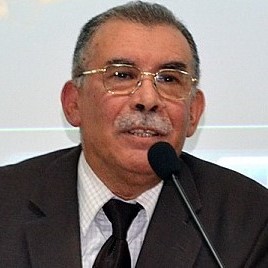
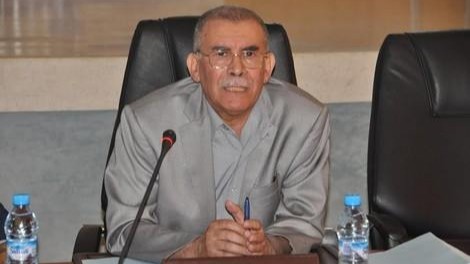
Mohamed Boudhan was an Amazigh writer, thinker, researcher and activist from the Rif, and publisher of the newspaper Tawiza. He was the author of many valuable books and articles on Amazigh identity. May he rest in peace.