Mohamed Boudhan: The Predicament of Tamazight
Why has the serious and real, not formal and symbolic, implementation of the constitutional official status of the Amazigh language been standing still since 2011? Why has a serious and real, compulsory and unified, teaching of the Amazigh language not yet begun, so that it can be used as an official language?
The answer is that the state, judging by how its real ruling and executive bodies treat Amazigh, is not convinced of the official character it has recognized for the Amazigh language. That is why it stopped at what is formal and symbolic and did not go beyond it to a real and practical implementation coupled with a serious and real, compulsory and unified, teaching of Amazigh, as I said. This is the real impasse in which Amazigh finds itself: on one hand it has been an official language since July 2011; on the other it remains in practice deprived of this official status, as it was before 2011. And why does the state treat Amazigh, whose official status it approved, in a way that contradicts that status? Why does its recognition of Amazigh waver between advance and retreat, between taking decisions of principle and hesitating to carry them out?
We must not forget that the Moroccan state, although its new Constitution does not say so, presupposes itself, particularly since 1912, when Morocco’s Arabness began to form part of the political, social, popular and cultural consciousness, which the state would work to spread and entrench through its various institutions and ideological apparatuses, to be an Arab and not an Amazigh state, and in practice acts, as its diplomacy, its officials’ statements and its Arabizing language policy show…, on the basis of this presupposition, that is, as an Arab and not an Amazigh state. This explains why this state cannot go to the end of its recognition of Amazigh, with all the consequences and changes this implies for the language and identity of the state. This is the source of the impasse in which Amazigh finds itself, and in which the state itself finds itself, with its equivocal attitude to Amazigh, which it seems to have wanted and created itself.
For the implementation (I always mean the serious and real, not formal and symbolic, implementation) of the Amazigh language as the language of the state and its institutions, so that its recognition of Amazigh is consistent with its linguistic and identity consequences, cannot succeed and come about without reconsidering the linguistic and identity (not cultural and religious) status of the Arabic language, and the presupposed Arab belonging of the state, which this special status of Arabic helps to create, making it at once a language and an identity, so that the state that uses Arabic automatically becomes an Arab state in its identity. If the state still refuses, to this day (we are in October 2021), the linguistic and identity consequences of its recognition of Amazigh as an official language, it is because by that refusal it preserves the “consistency” between its presupposed Arab belonging, which it practices in reality (as I noted), and its linguistic and identity consequences, where the Arabic language is regarded as the emblem of this belonging, because of the property of that language that its linguistic function cannot be separated from its identity function, as I said before. That is why reconsidering the place Arabic occupies in Morocco, as an official language that automatically implies the state’s presupposed Arab belonging given the identity function of this language, is one of the conditions of the real official status of Amazigh, with all its linguistic and identity consequences concerning the state’s new choices and orientations on its identity belonging and its language and education policy. This raises the following delicate question: is the state ready to make Arabic a secondary language and Amazigh a first and fundamental language, with serious and conscious political preparation so that the project succeeds gradually after two decades or more? This is the real political transition, necessary for Amazigh to occupy its natural place as the language and identity of the Moroccan state. It is a political transition from a state that presupposes itself Arabist to a state that acknowledges its Amazigh identity, with all the change and renewal this transition requires concerning language and identity.
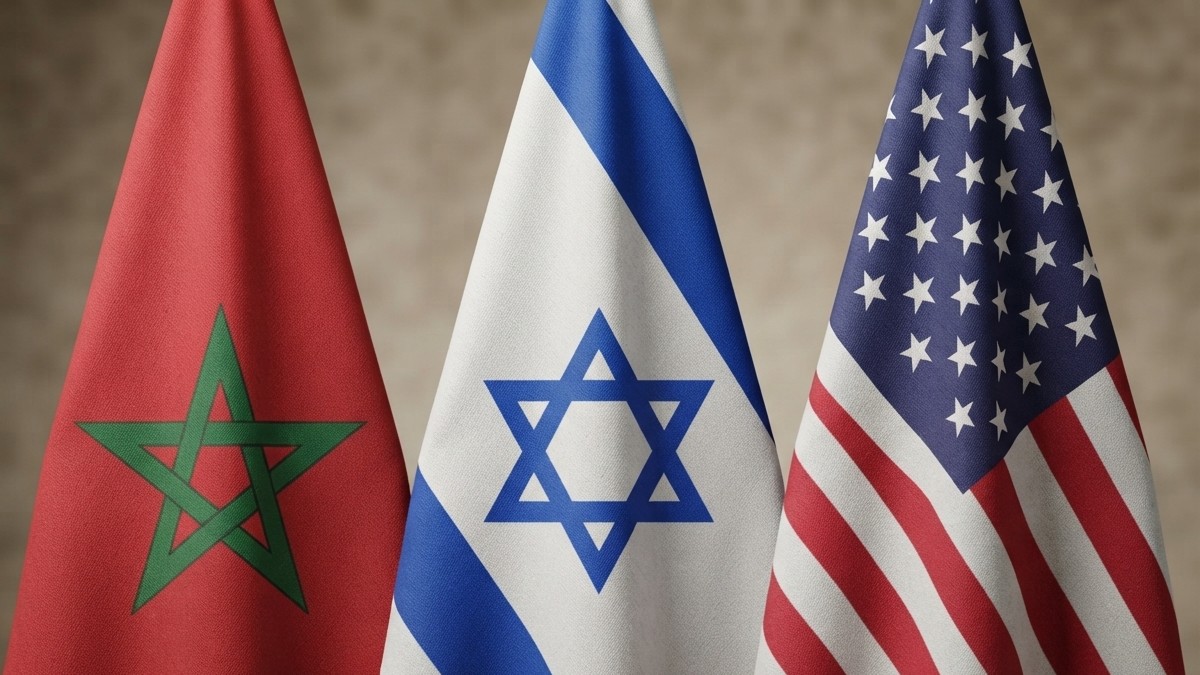
No doubt many will see in this hoped-for transition a kind of political fantasy, convinced that it is impossible and out of the question. But if we recall that normalizing relations with Israel has become an effective reality, whereas it seemed (before the signing of the cooperation agreement between Morocco and Israel on December 22, 2020, in Rabat, and because of the hostility to the Hebrew state that Arabist ideology, in both its nationalist and Islamist branches, planted to a boundless degree in the minds and hearts of Moroccans) more impossible and out of the question than normalization with Amazigh, then the decision to move from a state that presupposes itself Arabist to a state that declares an Amazigh identity and uses its Amazigh language as the language of the state and its institutions would be merely an ordinary and simple administrative measure, with no element of surprise or exception compared with the decision to normalize with Israel.
Without this political, linguistic and identity transition, everything the state, as one that presupposes an Arab belonging, can offer Amazigh cannot in any case exceed the ceiling of the “new Berber policy” (to understand what the “new Berber policy” means, one can read the article: “When Will Morocco Move from the Berber Policy to the Amazigh Policy?”), which it began with the Ajdir speech and the dahir establishing the Royal Institute of Amazigh Culture on October 17, 2001. If this “new Berber policy” is far better for Amazigh than the total exclusion it suffered before that date, it will not put an end to its political exclusion, which is the source of all other exclusions.
Even the political participation to which Amazigh activists have called, so that Amazigh has decision-makers in its favor, in local and regional councils, in parliament and in government…, could not, if elected representatives from Amazigh activists won a significant number of seats in these councils and institutions, do more than improve the “new Berber policy”. This must be acknowledged to be very useful to Amazigh, but it will not make the state move (gradually, of course) from a state that presupposes itself Arab to an Amazigh state that exercises its political authority in the name of its Amazigh belonging, with the change this entails in the state’s linguistic and identity choices, as pointed out. For decisions on the language of the state and its presupposed Arab belonging in Morocco, even though the Constitution gives parliament and the government the right to decide on language, are, like all strategic decisions, the Palace’s prerogative, that is, of the real government that rules and is not ruled. This Palace government is represented by the king and the royal square formed by his advisers and closest aides.
When we link the Amazigh cause to the institution of the Palace, we can explain, among other reasons, the state’s dragging its feet over a serious and real, compulsory and unified, teaching of Amazigh for the serious and real, not formal and symbolic, implementation of its constitutional official status, by the fact that the Palace has not yet decided to teach the Amazigh language to the princes and the Palace’s children, especially the crown princes, in preparation for using it when they become kings, as an official language of the state (see the article: “Will Crown Prince Moulay Hassan Learn the Amazigh Language?”). Why the Palace? Because the Palace’s teaching of the Amazigh language to its children necessarily entails the state’s teaching it to the children of the people, the Palace being the representative of the state since the king is “the Head of State, its Supreme Representative, the Symbol of the unity of the Nation, the Guarantor of the permanence and continuity of the State” (paragraph 1 of Article 42 of the Constitution). That is why governments, however sincere their intentions toward Amazigh, cannot give it what the Palace has not yet given it, namely its serious and real, compulsory and unified teaching, as a condition of its future use as an official language of the state. That is why the former head of government, Abdelilah Benkirane, dodged the issue, when the delay in passing the organic law was raised, by saying that Amazigh is a royal affair. This is another aspect of Amazigh’s impasse: on one hand it is an official language of the state, but on the other it is a language that those who will rule this state do not learn.
If the state backed away from Arabizing primary and secondary education after parliament adopted, at the end of July 2019, Framework Law No. 51.17 on the system of education, training and scientific research, that by no means signifies that this retreat is motivated by a wish to rehabilitate the Amazigh language and identity. It is worth recalling here that Amazigh experienced a total and comprehensive exclusion immediately after independence, before the Arabization of education, which began only in the early 1980s. The “linguistic alternation” that the cited framework law establishes between Arabic and French as languages of instruction is an alternation in excluding Amazigh. For French plays in Morocco, ideologically, the same Amazigh-phobic function as Arabic. One can even say that French in North Africa has become, like Arabic, a language that signals the presupposed Arab belonging of North African countries, because it is Francophone. That is why it is not enough to put an end to linguistic Arabization for Amazigh to occupy its place as the language and identity of the state. What gives Amazigh that place is putting an end to identity Arabization, from which comes the presupposition that the Moroccan state is Arab (see the article: “It Is Pointless to Stop Linguistic Arabization Without Stopping Identity Arabization”).
Given these obstacles, the serious and real implementation of the official status of Amazigh, so that it is the language of the state, its institutions and its official documents, remains hard to achieve, especially as its essential condition, the serious and real, compulsory and unified, teaching of the Amazigh language, has not yet begun. This explains why the state reduces the official status of Amazigh to what is formal and symbolic, in line with its “new Berber policy”. This is another aspect of Amazigh’s impasse: the state cannot, because it presupposes that it is an Arab and not an Amazigh state, give Amazigh more than a symbolic and formal official status, in application of the “new Berber policy”. Which will continue its political exclusion, the source of all other exclusions, linguistic, cultural and identity-related… For Amazigh to rid itself of this political exclusion, the state must behave as an Amazigh state and not an Arab one in its identity. If its behaving as an Arab state is something presupposed, with no need to state it in a law or constitution, as I wrote, its behaving as a state with an Amazigh identity requires announcing this explicitly and clearly; otherwise, in the absence of that announcement, what is presupposed remains that it is an Arab and not an Amazigh state, which means excluding Amazigh.
If the fall of the PJD (Justice and Development Party) as leader of the government means the removal of a major obstacle that stood as a solid barrier on the road to rehabilitating Amazigh, installing a new government led by a party that bears no grudge against Amazigh will not change much this impasse situation, if the position of the real government, that is, the ruling Palace government, toward Amazigh stays as it is, a position by which the makers of strategic decisions within the royal circle, the king’s advisers and closest aides, consider that Amazigh has received the most it deserves, namely the positive aspects of the “new Berber policy” that the Palace decided in its favor since October 17, 2001. The difference, as regards the attitude to Amazigh, between the PJD’s leading the government for ten years and another party’s leading it in application of the results of the September 8, 2021 elections, is that the first party worked to obstruct the “new Berber policy” itself, by refraining from implementing not only the real and serious official status of Amazigh, but even its formal and symbolic status which the “new Berber policy” “permits”. As for the new government, led by the new party, the most it will do for Amazigh, assuming it is serious and sincere in its intention to deal positively with the Amazigh file, and given the position of the royal institution, is to work to develop the “new Berber policy”, with what that means of developing the formal and symbolic official status of Amazigh. But this “new Berber policy” has shown, despite its undeniable benefits, its inadequacy after the constitutional official status of Amazigh. Why? Because the real and serious, not symbolic and formal, implementation of the official character of Amazigh requires going beyond the level of the “new Berber policy” to another, more advanced level, that of the state’s using Amazigh as its official language. Which presupposes a change in the linguistic and identity status of Arabic, as pointed out.
If the inauguration of the “new Berber policy” constituted, compared with the total exclusion that Amazigh had suffered since independence, a real revolution in favor of Amazigh first and then of the state, making Amazigh an official language of the state, truly and in practice, not formally and symbolically, with all the requirements and consequences that go with it, would be not a real revolution but a real political coup in favor of the state first and Amazigh second. Without it, Amazigh stays in the impasse in which the Constitution placed it: it is an official language, but this official status leaves no trace in the state’s institutions or in the official documents drawn up daily, apart from what is formal, symbolic and decorative. And the question is always: what will push the state to carry out this political coup in its own favor first and in Amazigh’s second?
Arabic version | French version
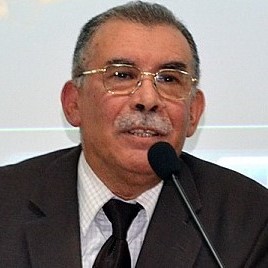
Mohamed Boudhan was an Amazigh writer, thinker, researcher and activist from the Rif, and publisher of the newspaper Tawiza. He was the author of many valuable books and articles on Amazigh identity. May he rest in peace.