When Arabization poses a danger to the interests of Morocco
A total and sweeping Arabization:
Under strong ideological and political pressure from the “National Movement”, which took the form of blackmail of the state, the state engaged itself since independence, with great enthusiasm, in a total and sweeping Arabization, comprising the political Arabization begun by France, which aims to spread and entrench among Moroccans the conviction that their state is Arab and ruled by an Arab authority; the ethnic Arabization, which likewise aims to spread and entrench among Moroccans the conviction that they are an “Arab” people of Arab origin; the identity Arabization, which also aims to spread and entrench among Moroccans the conviction that Morocco is an Arab country with an Arab belonging; and the ideological Arabization, which aims to create a false consciousness among Moroccans that entrenches and consecrates their dependence on the Arab East in terms of belonging, culture, art, religion (schools of thought, interpretations and fatwas), language, unity of causes and destiny…, until this Arab East became like the fixed star around which Morocco revolves as a small planet that draws its existence and movement from the great eastern star. The fifth aspect of this total and sweeping Arabization, as I said, is linguistic Arabization, whose implementation, in its total and sweeping form, would be delayed until the 1980s. Why? Because spreading, teaching and using the Arabic language was never the goal of Arabization: Arabic was always merely a means of political, ethnic, identity and ideological Arabization. This total and sweeping Arabization cost Morocco its identity sovereignty, represented by its African Amazigh belonging, and created an extremist Arabist consciousness in a group of Moroccans, turning them into “dumbed-down” people and “dumbers-down” (to learn what “dumbing down” [tadbi‘] means, see the article “‘Dumbing Down’ in the Criminalization of ‘Normalization’”, by clicking here and here), tied emotionally to the causes and problems of the Arab East more than to the causes and problems of their own country.
The dangers of Arabization to Morocco’s interests:
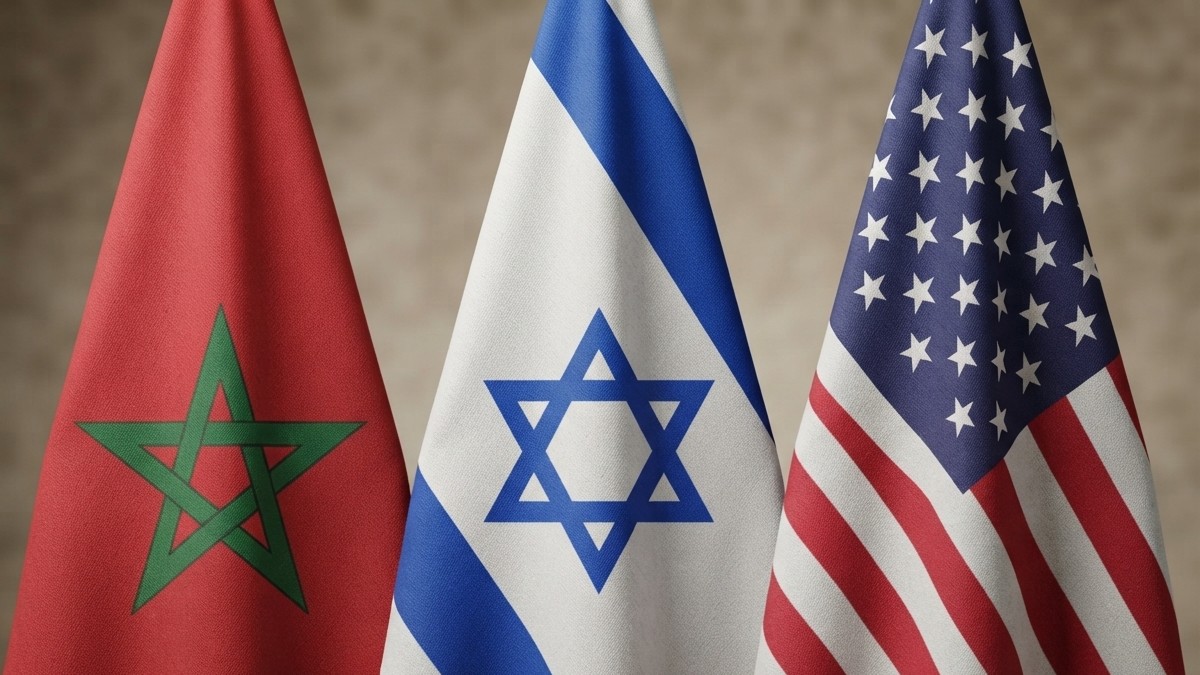
But the seriousness of this extremist “dumbed-down” Arabist consciousness, which Arabization planted in the minds of many Moroccans, will move from harming Morocco’s identity sovereignty to opposing its interests and security, when the hostile and inflammatory discourse of a handful of these “dumbed-down” people (with a fatha and then a kasra on the ba’) against their country, on the occasion of the Israeli defense minister’s visit to Morocco starting November 23, 2021, matches the same hostile and inflammatory discourse spread by Algeria, opponent of the territorial integrity of their country, Morocco. When we compare the judgment that Morocco’s normalization of relations with Israel is “folly”, as Mr. Mohamed Sassi said (source: click here), counted among the leftist current; the description of this normalization as “new colonialism”, as Bensalem Himmich said (source: click here), also counted among the leftists; the claim that “the policy of normalization mortgages the question of the country’s sovereignty because the decision is no longer in our hands and our sovereignty is being taken from us”, as stated by Nabila Mounib (source: click here), the leading figure of the Moroccan left; Mr. Raissouni’s description, he who is called a jurist of the higher objectives (faqih maqasidi) and is president of the so-called International Union of Muslim Scholars, of the agreements Morocco signed with Israel as a “policy of seeking help from the enemy state, a state of occupation, aggression and crime”, his statement that his country Morocco asked for “Zionist rescue, at the expense of Jerusalem and Palestine”, and that this amounts to behavior of humiliation under Zionist tutelage; his declaration that the relations of official Morocco “are now wholly immersed in forbidden love with the Zionist enemy”, from which it will reap “only penetration, entanglement, madness, the buying of consciences and the manufacture of agents” (source: click here); and the statement of the “Union of Muslim Scholars”, chaired by the same Mr. Raissouni, which says that what Morocco and the Emirates did by way of alliances “with the occupying Zionist entity is a condemned act, forbidden by Islamic law, and a betrayal of the covenant of ‘Umar, of Saladin and of the rights of the Palestinian people” (source: click here)…, (when we compare the words of these Moroccan “dumbed-down” people) with the words and statements of Algerian officials who repeat that Algeria is confronting the Zionists on its western border and that Morocco’s recourse to them will not help it against the might of Algeria (!), we will notice a match between the two discourses, to the point that Mr. Raissouni did not hesitate to repeat the same contents of Algeria’s hostile and inflammatory discourse, the same false slanders, the same terms demonizing Morocco because of its normalization of relations with Israel, to use them himself, for the same reason, against his country.
Let us ask Mr. Raissouni: who practices “forbidden love” (amour contre nature)? The one who loves his country’s original collective identity and keeps his natural and original belonging, or the one who usurps belonging to a foreign collective identity, disowns his own gender and loves another, different one, thereby practicing a sexual deviance, that is, a national and identity one, which is the height of “forbidden love”? And who practices collaboration and manufactures agents? The one who is loyal to his country through loyalty to that country’s collective identity, shaped by collective belonging to the same country, and who defends its sovereignty, independence and distinctness from the identities of other peoples, or the one who sets aside his country’s identity and strives to attach it, as a humiliated vassal, to the identities of foreign countries thousands of kilometers away, and promotes their rotten, unsold ideological goods, Wahhabi, Brotherhood and Arabist, thereby expressing his allegiance to outside parties, practicing, in effect and in result, free collaboration with these parties without their asking him to?
It is clear that these hostile and inflammatory positions of these “dumbed-down” people (again with a fatha and then a kasra on the ba’) against their country because of normalization, which match the positions of outside parties hostile to Morocco, show that the ideology of Arabization, from which they draw these hostile and inflammatory positions, is an unpatriotic ideology that produces intellectuals who oppose the interests and security of their country, just as Algeria’s positions hostile to Morocco’s territorial integrity oppose its interests and security.
Why is freedom of expression used only to defend Arab causes?
Rejecting this hostile and inflammatory discourse that these Moroccans spread against their Morocco does not mean rejecting their right to criticize their state’s decisions, their right to freedom of expression and opinion and to differ with state policy. But why must this criticism always fall on decisions related to Palestine and Arab causes, such as the question of normalization with Israel? Why did Mr. Raissouni not write that the twenty-year sentence handed to those who demanded freedom, justice and dignity is a condemned act forbidden by Islamic law? Why did he not declare that Morocco’s normalization of relations with Spain, which occupies parts of its territory, is a plunge into “forbidden love” at the expense of Sebta and Melilla? Why did he not say that contract hiring is an act rejected by Islamic law? Why did he not denounce the delay in the real and serious implementation of Amazigh’s official status and declare it a condemned act rejected by Islamic law? Why did he not issue a statement, in the name of the Union he chairs, condemning the corruption spreading in Morocco and stating that it is forbidden by Islamic law?…
With these examples we want to show that there are a thousand and one Moroccan causes on which it would have been more natural for Mr. Raissouni and other “dumbed-down” people (again with a fatha and then a kasra on the ba’), had he cared about his country’s causes, to criticize state policy. That this criticism appears, in hostile and inflammatory form, only when it concerns Moroccan decisions interpreted as not directly serving the Palestinian cause and other Arab causes proves that what drives these “dumbed-down” people to condemn these decisions is their ethnic Arabist zeal, which Arabization, in the sense explained above, planted in their hearts and souls until their loyalty to these Arab causes became an ingrained faith and a firm creed, with the duty to prove on every occasion the renewal of this loyalty by disowning their Amazigh identity and entirely ignoring the causes of Morocco and the Moroccans.
The state’s responsibility:
But we must not place all the responsibility for this opposition to the cooperation agreement between Morocco and Israel, from which the enemies of territorial integrity benefit, on the agents of foreign, backward and extremist ideologies, of the type of Mr. Raissouni and other “dumbed-down” people (again with a fatha and then a kasra on the ba’). The state bears the greater share of responsibility for the spread of the culture of “dumbing down”, with which the state’s ideological apparatuses, such as the school, the mosque, the media and the administration…, loaded the minds of Moroccans, planting in them the disowning of their Amazigh identity and national causes, the mad infatuation with the causes of Arabism, and doubt about their state’s decisions when these decisions do not serve those Arab causes.
It is true that after independence the state faced strong political pressure towards a total and sweeping Arabization and “dumbing down”, matched by a systematic exclusion of Amazigh on the pretext that it was a leftover of colonialism. If the state benefited at one stage from the policy of Arabization and “dumbing down”, using it to manage balances and to face its political opponents with the same eastern ideology with which they opposed the state, as shown by its adoption of nationalist causes and then of Wahhabi Islamic thought, to which it opened Morocco’s doors to face political Islam, it then became hostage to the Orientalist ideologies whose spread in Morocco the Arabization policy facilitated, as we observe today when it concluded security and military agreements with Israel, which provoked the anger of the keepers of the eastern temple in Morocco. This shows that the Arabization policy, in its political, ethnic, identity and ideological sense, has become a danger to Morocco’s interests and national security, when those steeped in this ideology, which the state itself spent much money to spread and plant in Morocco, oppose these interests and this security in the name of the Arabization ideology.
There is no way to be rid of this unpatriotic Arabization ideology except by spreading and planting a culture of love of the land and attachment to it through attachment to the collective identity this land has shaped, which is the Amazigh identity. This takes quite some time, because changing what is intellectual and ideological is not as easy as changing what is material and tangible.
Arabic version | French version
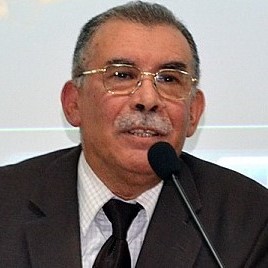
Mohamed Boudhan was an Amazigh writer, thinker, researcher and activist from the Rif, and publisher of the newspaper Tawiza. He was the author of many valuable books and articles on Amazigh identity. May he rest in peace.