The Deception of the Concept of the “Common”
In this paper I discuss the concept of the “common” (al-mushtarak), as in: “the national common”, “the collective common”, “living together”…, which Moroccan intellectuals, politicians and rights defenders now use widely as a new rhetorical fashion, to express openly tolerance, openness, modernity, acceptance of difference and plurality, and implicitly the exclusion of what is presumed to be outside the “common”… The French writer Paul-François Paoli published in 2018 a book titled: “L’imposture du vivre-ensemble de A à Z” (The Imposture of Living Together from A to Z), which is a dictionary of 175 entries comprising names of historical events and geographical places, of writers, thinkers, philosophers, journalists and politicians, and a set of concepts and terms…, through which the author criticizes the widespread use of the concept of “living together”, which, through the book, as he explains in the “Presentation”, he tries to show is a mere deception and imposture.
And although the subjects of use of the term “common”, as in “living together”, among the French intellectual and political class are not the same as those on which its Moroccan use bears among the Moroccan intellectual and political class, what unites the two uses is the unity of its function, which is always misleading, deceiving and duping. What are the aspects of this misleading, deceiving and duping in the use of the concept of the “common” by Moroccan intellectuals, politicians and rights defenders?
One of these aspects is the link between the use of this concept and questions of language and identity more than its use on other questions, intellectual, cultural, political…? Why?
Because the trick of misleading, deceiving and duping, in the use of the concept of the “common”, performs its function better and more when it concerns such language and identity questions, which still make up, in Morocco, the most suitable subject for practicing misleading, deceiving and duping. That is why the concept of the “common” appears frequently and repeatedly whenever there is a debate about Amazigh, with the presence, in the same frequent and repeated way, of its opposite, “fragmentation”, as in “identity fragmentation”, which Professor Fouad Bouali, president of the “National Coalition for the Arabic Language in Morocco”, is addicted to using.
The “common”, which means the set of elements shared by the people of one region or one society, seems a simple matter, even self-evident. Likewise “difference”, made up of the elements that distinguish one region from another, or one society from another, as in cooking arts, dress forms or weddings…, also seems a simple matter, even self-evident. But this “common”, simple and self-evident, becomes a problem when it concerns not a region or a local society but a homeland and a state, and not cooking, dress or celebrations but language and identity.
That is why the use of the term “common” most often occurs on the occasion of a debate about questions of language and identity for homelands and states, as I said, to perform its misleading, deceiving and duping function, as in the following example about language and identity: since Darija, which is wrongly and forcibly attached to the Arabic language, is present orally in the school, the court, the administration and all state institutions in Morocco; and since Arabic is present in writing in the school, the media, the court, the administration and all state institutions as well, it follows that Arabic constitutes the “common”. As for Amazigh, since it is absent from these spaces where Arabic is active, it follows that it does not fall within the “common”. And because language is the second face of identity, the linguistic “common” of Arabic entails that Moroccans’ identity “common” is Arab. The aim of the logic of the “common” is to convince that Arabism is the unifying and “common” identity among Moroccans, and to rule out Amazigh on the pretext that it represents “fragmentation” for lacking the property of a “unifying” and “common” language, with what that includes: whoever defends Amazigh defends “fragmentation” and rejects the “common” that unites Moroccans, as Professor Fouad Bouali hints in all his writings on language and identity. What is asked of you is to abandon your Amazigh gender, adopt the Arab gender and thus practice sexual deviance in its national and identity form, to obtain recognition of your belonging to the “common”, and to be accepted as a member of the “living together” club founded by the Amazigh-phobic Arabizers, leftists and Islamized. Without that, you are among the advocates of “fragmentation” because you are among the advocates of Amazigh. Thus the logic of the “common”, as used by Moroccan intellectuals, politicians and rights defenders, leads to making sexual deviance, that is, national and identity deviance, sound national and identity behavior because it is general and “common”, and making sound national and identity behavior a deviant departure from the “common” because it is “fragmentation” and division. This shows that the only real “common” that unites these deviants, nationally and in identity, is their hostility to Amazigh and their defense of the usurpation of status and the forgery of the Moroccans’ collective identity.
And we do not need much analysis and deconstruction of the discourse of the “common” to understand, when it concerns language and identity, that it represents a new version of the lie of the “Berber Dahir”. Since this lie is today known and exposed, it is not invoked directly and explicitly, but implicitly and covertly, limiting itself to invoking its effects expressed as “fragmentation”, instead of using the word “division” which is the subject of the false “Latif”.
The concept of “Tamghrabit”, which has also become a rhetorical fashion among intellectuals and politicians, and even among Amazigh activists (see the article: “Between ‘Tamazight’ and ‘Tamghrabit’” by clicking here), makes up a main element in the discourse of this supposed “common”. And the danger of this “Tamghrabit” to Amazigh is not that it is a manifestation of this “common” used against it, but that it makes Darija the only language “common” among Moroccans, which means a clear exclusion of Amazigh. Yes, it would have been possible, indeed required, to consider Darija a linguistic and identity “common” of Moroccans if there were among them an awareness, spread and entrenched by the school, the media, intellectuals and politicians…, that their Darija is an Amazigh product that expresses, consequently, the collective, common Amazigh identity of Moroccans. But since these bodies, school, media, intellectuals and politicians…, spread and entrench that Darija is an Arabic language brought by the Arabs whose descendants still use it in Morocco, that makes “Tamghrabit”, which bases its legitimacy and lawfulness on this Darija, a weapon for killing Amazigh and destroying it.
What those who make the “common” discourse want to convince and impose is that you live, even through slander and forgery, by Arabic and Arabism and for them, to “share”, falsely and by usurpation, with the real Arabs their real “common”. This shows that the aim of using the concept of the “common” does not concern only what Moroccans “share” among themselves, but what they “share” with the real Arabs, that is, the Arabs of the Middle East. What matters to the people of the “common” is therefore not what unites Moroccans as counterfeit Arabs, but what unites them with the real Arabs.
Thus the concept of the “common” is used to mislead, deceive and dupe regarding the question of language and identity, with the aim of excluding Amazigh and linking it to the “fragmentation” opposed to the “common”, as I explained. And the aspect of misleading, deceiving and duping appears in presenting the “common”, tied to Arabic and Arabism, as if it were a natural and original given, whereas what made Arabic a “common” language, besides the Arabist identity ideology it carries, is its school imposition on all Moroccans. From this angle it is not a natural and original “common” but a made “common” that the school created outright. Which allows any foreign language taught to all Moroccans to be a “common” language, imposed on them by the school as Arabic was imposed on them. As for Amazigh, although it is excluded from the school, court, administration and state institutions so that it not be a “common” language, it nevertheless represents the real, natural and original “common” of Moroccans, because they all share belonging to it, whether educated or illiterate, unlike Arabic, which is a “common” only for those who learned and studied it at school.
This is the truth that those who use the trick of the “common” want to veil and hide. But when we dispel this deception by which the discourse of the “common” misleads us, and the truth appears to us shining and pure, with no trick, deception or duping, it will be confirmed to us that those who fight the real “common” that unites Moroccans are the opponents of Amazigh, which represents this real “common”, the collective, common Amazigh identity of Moroccans, and it will be clear to us that those who call for “fragmentation” are those who call for “sharing” with the foreign other his own “common”, by creating an artificial “common”, neither natural nor original, at the expense of the real, natural and original Moroccan “common”. These are the defenders of “fragmentation” because they defend foreign identities that kill the unifying identity of Moroccans, which is their Amazighness constituting their collective, real and original “common”, because everyone shares belonging to it, by homeland, history, culture and even lineage. From this we understand that Amazigh is the protective wall against “fragmentation”, and the guarantor of the real collective “common” of Moroccans.
As for what those who make the “common” discourse promote by way of respect for plurality and diversity within the unity of their unifying Arabist “common”, as they claim, it is, as is their habit, a reversal of the truth by making the branch the origin and the dependent the followed. The Arab element they have made into a supposed linguistic and identity “common” is merely one tributary among the multiple tributaries that enrich the unity that Amazigh represents, without being a substitute for it or taking its place. Moroccans remain Amazigh in their collective identity without that negating their practice of cultural and linguistic plurality, as is the case with all the peoples that preserved the unity of their original identity while enriching it with cultural and linguistic plurality. This is what the royal speech of March 9, 2011 had already stressed, which said: “From this constant reference framework, We have decided to carry out a comprehensive constitutional reform, based on seven essential pillars: first, the constitutional enshrinement of the plural nature of the unified Moroccan identity, rich in the diversity of its tributaries, and at its core Amazigh, as a heritage for all Moroccans.” The first of the pillars that the King called to be observed in drafting the new Constitution is the plurality founded on the core of Amazigh as the heart of this plurality, since Amazigh is a common heritage of all Moroccans, that is, a collective “common” for them, contrary to what those using the trick of the “common” hold, who want this “common” to be Arabist. Amazigh constitutes the origin, the core and the heart, as the royal speech says. As for the other elements, cultural, linguistic and secondary identity ones, they are tributaries that enrich this origin, strengthen it and entrench it. This is what the Constitution should have contained and stated, in application of the royal directives as they appeared in the speech of March 9, 2011. But, unfortunately, parties hostile to Amazigh (two well-known parties) intervened and pressed the committee preparing the draft Constitution so that Amazigh would not occupy its place in this Constitution as the heart and pillar of Moroccan identity as the “common” of all Moroccans, as the royal speech said. So the Constitution settled for enshrining the mistaken popular idea of the plural identity, without its drafters realizing that they thereby deny Moroccans a single common identity of their own, as if they were a people without origin or root.
Arabic version | French version
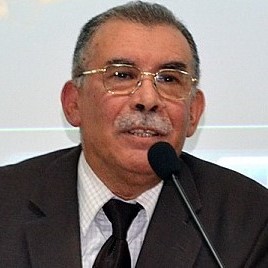
Mohamed Boudhan was an Amazigh writer, thinker, researcher and activist from the Rif, and publisher of the newspaper Tawiza. He was the author of many valuable books and articles on Amazigh identity. May he rest in peace.