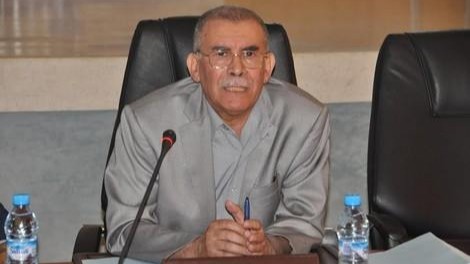
Aherdane, one of the last free men
Much of what many Moroccan intellectuals and politicians—particularly “progressives” and “leftists”—know about the leader Mahjoubi Aherdane, who passed away on November 15, 2020, stems largely from rumors spread by his ideological opponents. They routinely brand him a “Makhzenist,” a “reactionary,” a “feudalist,” a “tribalist,” or even an “ethnicist.” It does not take much reflection to see that all these “accusations” boil down to one thing: he is Amazigh. For my part, having already written that I am myself a “reactionary” proud of my “reaction” (see the article at this link), I feel no embarrassment in being labeled as such for praising an Aherdane who is “reactionary” according to the lexicon of his Amazighophobic detractors. This only reinforces my pride, as it heightens my own “reaction.” I confess that I have always admired Aherdane and considered him a charismatic figure since the 1970s—a time when labels like “Makhzenist” or “reactionary” were more disgraceful than an accusation of treason—and long before I met him personally during our first encounter in the summer of 1997.
He navigated the political shifts of contemporary Morocco for more than eighty years (having been born in 1921), engaging as a front-rank actor starting in the 1940s. This journey allowed him to become a true “archive” of authentic Morocco, a memory he documented in his Memoirs, published in two volumes in 2013. But Aherdane’s genius lay in the fact that, beyond being a politician, he was a talented painter, an eloquent poet, a creative writer, and an authentic Amazigh who harnessed politics, art, and writing to champion the Amazigh cause.
On the occasion of the fortieth day since his passing, I have written this article about this exceptional Amazigh figure of multifaceted talents and dimensions.
The first Amazigh politician
It is safe to say that the late Mahjoubi Aherdane was the first truly Amazigh politician in contemporary Moroccan history. This is not merely because, as an Amazigh, he founded a political party or held various government posts. While almost all Moroccan party leaders and political officials are Amazigh—given that Morocco is an Amazigh and African country—and the majority of them are speakers of the Amazigh language, such as Mbarek Bekkaï (1907-1961), who led the first government of independent Morocco, or Saâd Dine El Otmani, the head of government in December 2020, this does not make them “Amazigh politicians” in the same way Aherdane was. What, then, sets him apart from his fellow speakers of the language? His uniqueness lies in the fact that he was the first to practice politics specifically as an Amazigh and to champion Amazigh identity as a political act. This was evident in his activism for the Amazigh cause, which he brandished as the banner of his belonging to a Morocco that is profoundly Amazigh. For him, defending this identity was inseparable from the defense of liberty and dignity. He did so at a time when Amazigh identity was a taboo subject that everyone avoided—even speakers of the language, particularly once they attained official responsibilities. Under the hegemony of pan-Arab ideology and the resulting policy of blind Arabization, a manufactured identity had become synonymous with patriotism and progress. Conversely, an attachment to Amazigh identity—though a sign of a healthy consciousness—was perceived as treason, a reactionary impulse, or a mark of backwardness. During those dark hours of the three decades following independence, Aherdane did not hesitate to loudly proclaim not only his identity, but also the Amazigh character of Morocco and all of North Africa. Like a prophet ahead of his time, he fought against falsification, alienation, and acculturation, challenging the “constants” and “self-evident truths” forged by the National Movement to impose a truncated, borrowed identity upon Morocco.
A patriotism rooted in the Amazigh land:
Unlike the “nationalists” who drew their sense of belonging from “elsewhere”—namely the Arab East, which was elevated as a reference, model, and source of concepts by members of the “National Movement”—Mahjoubi Aherdane was an authentic Moroccan patriot. His loyalty was rooted “here,” in Amazigh identity and his land, “Tamazirt.” His patriotism falls under what in French is called patriotisme, a term referring to the concept of homeland, which dictionaries define primarily as the “country of ancestors, land of birth.” In contrast, the sentiment of the “National Movement” resembles nationalism, built on the concept of “Nation,” defined by dictionaries as a “human group whose members feel united by a real or supposed common origin.” This fundamental distinction between the two forms of belonging explains why Aherdane’s patriotism meant love for the Amazigh land, defending it, and sacrificing for it. Conversely, the nationalism of the “nationalists” manifested as devotion to an imaginary nation whose “seat” they placed outside Amazigh Morocco, while remaining ready to sacrifice themselves for this illusion, convinced they belonged to it. As Dr. Mustapha Qadiri points out, they practiced a nationalism steeped in self-contempt. Aherdane, on the other hand, exercised his patriotism from and for his own identity. It was an innate patriotism, springing from the land and dedicated to the land.
It is therefore hardly surprising that, while serving as a caid appointed by the Protectorate administration, he refused to sign the petition aimed at deposing the late Mohammed V in 1953—a document that nearly all caids, pashas, and notables had signed. This refusal was not motivated by any search for privileges or positions that Mohammed V, who was then stripped of power and facing an uncertain future, could have offered him. On the contrary, signing the decree of deposition was the very key to securing such advantages, since it was the Protectorate administration, not the Sultan, that granted them. The immediate consequence of his public opposition was his swift dismissal from his post as caid of the Oulmes region. Aherdane’s stance cannot be explained through Middle Eastern concepts to claim he was a “nationalist.” If his attitude must be characterized as patriotic, it has nothing to do with the concept imported from the Near East by the “National Movement.” Aherdane’s patriotism expressed itself through an act in complete alignment with an instinct forged by belonging to the Amazigh land, and by values of nobility and dignity that transcended any self-interested calculation. Aherdane was thus true to himself, faithful to his convictions, and loyal to his principles. A man of truth, he spoke out for what he believed was right, whatever the cost, living his patriotism as a natural inclination inherited from his Amazigh land.
Why was Mahjoubi Aherdane defined by such sincerity, loyalty, devotion, frankness, and innate patriotism? It was because he was a man driven by a passion for liberty, always acting as a free agent. His decisions were the manifestation of an internal freedom that disregarded personal gain or rewards. This deep-seated thirst for liberty famously led him to confront Mehdi Ben Barka in 1958, declaring: “We did not achieve independence only to lose our freedom” (Aherdane, Memoirs, Editions du Regard, Paris 2013, Volume 1, page 200). This principle was the catalyst for his fight for the law on public liberties, promulgated in November 1958. This landmark legislation authorized political pluralism, finally allowing for the legal recognition of the Popular Movement. Aherdane had co-founded the party in 1957, but it had remained banned until that point. He envisioned the party as the political continuation of the armed struggle of the Liberation Army, an organization of which he was also a founder. For him, patriotism and freedom were virtually synonymous, both flowing from the same source: his Amazigh identity. Thus, his defense of the Amazigh cause was an expression of his authentic patriotism and his steadfast attachment to liberty. Conversely, his patriotism and his fight for freedom were themselves a plea for Amazigh identity, which he saw as the foundational source of these values.
Using the Makhzen to defend Amazigh identity, rather than the reverse:
Mahjoubi Aherdane leveraged his proximity to the Makhzen not for personal gain or self-interest, unlike many others. While some former fierce opponents of the regime and its allies scrambled with unprecedented greed for royal favors upon joining the “alternance” government in March 1998, Aherdane instead put his influence at the service of the Amazigh cause. He used his position on the commission tasked with drafting the 1962 Constitution to reject and remove language suggesting Morocco was an exclusively Arab country. Specifically, he opposed the first paragraph of the preamble championed by commission member Allal El Fassi, which stated: “The Kingdom of Morocco is a sovereign Arab state, whose national language is the Arabic language, and it is part of the Great Arab Maghreb.” Aherdane firmly rejected this proposal, arguing that Morocco is not Arab. He demanded it be replaced with: “The Kingdom of Morocco is a sovereign Islamic state, whose official language is the Arabic language, and it is part of the Great Maghreb” (Aherdan, Memoirs, Editions du Regard, Paris 2013, Volume 2, page 52). He succeeded in imposing this vision on the commission after obtaining the approval of the late King Hassan II. This phrasing was subsequently integrated into the 1962 Constitution and maintained in successive constitutional texts until the 1992 Constitution, which adopted the expression “part of the Great Arab Maghreb”—a term that would not be removed until the 2011 Constitution. It is noteworthy that Aherdane perfectly understood the fundamental distinction—often overlooked by many intellectuals and even linguists—between an official language and a national language. An official language can be foreign, such as Arabic in Morocco or French in Senegal, whereas a national language must be indigenous. To consider Arabic as Morocco’s national language would have been to deny the existence of another national language, namely the Amazigh language, which explains his refusal. Furthermore, he also opposed Allal El Fassi’s proposal to make the official status of the Arabic language immutable and beyond the reach of any constitutional revision, similar to the monarchical system (Ibid, page 53). This proposal was included in neither the 1962 Constitution nor any of those that followed.
While Mahjoubi Aherdane was an establishment figure within the Makhzen, he knew how to leverage his proximity to power to serve the Amazigh cause. Such commitment must be commended if it benefits Amazigh identity. This stands in stark contrast to the attitude of many Amazighs who, despite holding key positions within the state apparatus, use their identity to serve official pan-Arabism and an Arabization policy that is destructive to everything Amazigh.
Aherdane and the party:
Mahjoubi Aherdane took the same approach with his party. His Amazighophobic detractors often claimed that this political formation did nothing for Amazigh identity, suggesting he used it as a mere storefront. While it is true that political, institutional, and legal constraints meant the Popular Movement rarely distinguished itself from other parties through concrete achievements in this area, its unbreakable link with Aherdane made it an organization intrinsically tied to the Amazigh cause, regardless of the actual nature of that relationship. Although this link did not always live up to the expectations placed on a so-called “Amazigh” party, the authorities nevertheless decided, in 1986, to “wrest” the party leadership from him. This power play, orchestrated during an extraordinary congress to oust the Amazigh leader, was intended to punish him for his stances and statements in favor of Amazigh identity, which irritated decision-makers. This planned overthrow to remove him from the Popular Movement proves that, through Aherdane, the party played a role in favor of the cause that unsettled the government, even though it was classified as a loyalist party. Finally, even if one were to admit the party achieved nothing, Aherdane could only be blamed if it were proven that he had not made the necessary efforts to make Amazigh identity a priority for his organization.
Yet, these efforts were always very real. As previously mentioned, Mahjoubi Aherdane participated in drafting the 1962 Constitution on behalf of the Popular Movement. This allowed him to use his political stature to demand the removal of language stipulating that Morocco is an Arab state. It can even be argued, through numerous examples, that he transformed the party into an instrument serving the Amazigh cause by mobilizing its resources, headquarters, and funds to publish pioneering journals and newspapers in the field of Amazigh studies and media, such as the magazines Amazigh and Tifinagh, and the weeklies Tidmi and Akraw. This momentum deeply displeased the Amazighophobes within the ruling class. In 1981, they intervened to ban the magazine Amazigh and arrest its director, Ouzine, Aherdane’s son. At the same time, the late Ali Sedki Azaykou was sentenced to one year in prison for “threatening internal state security” because of an analytical article addressing the issue of language and culture in Morocco.
Aherdane and the Amazigh movement:
It is important to remember that a segment of the emerging Amazigh movement’s activists opposed Aherdane’s party, whether it was the Popular Movement or the National Popular Movement—the latter of which he founded in 1991 after being forcibly ousted from his original party. These activists accused his political organization of being a “Makhzenian,” reactionary, and feudal structure. In doing so, with a certain degree of political naivety, they echoed the very accusations leveled against Aherdane by his Arab nationalist opponents, who were hostile to everything Amazigh. For these Amazighophobic nationalists, the aim of these accusations was not to criticize the party itself, but to disparage it because of its association with Amazigh identity. In other words, the target of their grievances and contempt was not the party as a political organization, but rather Amazigh identity and the Imazighen themselves. By adopting the same posture toward Aherdane as the Amazighophobic nationalists—a move stemming from a lack of mature and well-considered strategic awareness—a small group of activists essentially applied a new principle: “the enemy of my friend is always my friend,” rather than “the enemy of my friend is also my enemy.” Consequently, they served the interests of those opposed to Amazigh identity without even being asked to do so. This kind of positioning, where some sympathizers of the Amazigh movement struggle to distinguish strategic allies from adversaries—focusing on tactical postures rather than long-term goals—kept the movement for a long time without the political influence or social roots that the justice of its cause deserved. It lacked an “official” and recognized political voice to articulate and defend its demands. After wasting precious time rejecting Aherdane’s party on the grounds that it was a Makhzenian, reactionary, and feudal entity, we now see a new group of activists from this movement (the Political Action Front) joining—and calling on others to join—the National Rally of Independents (RNI). In doing so, they turn a blind eye to the fact that, according to the rhetoric of Aherdane’s Amazighophobic nationalist opponents, the RNI is also a Makhzenian, reactionary, and feudal party—yet one with no history of defending the Amazigh cause compared to Aherdane’s party.
The lack of a strategic, mature, and shrewd political consciousness among some activists in the Amazigh movement has led to a failure to recognize the importance of Aherdane’s party as a major political vehicle for Amazigh demands. This led many activists to withhold their support, preventing the party from becoming the “official” and legitimate political voice for Amazigh identity. Such a move would have positively influenced policy decisions regarding Amazighity—and indeed, is there any political decision in Morocco that does not involve the Amazigh question?
Aherdane and the Tribe
One of the ideas I find brilliant in Mahjoubi Aherdane—though those who focus only on appearances may disagree—is his acute awareness of the importance of the tribe in Moroccan society. He went as far as to say that he who has no tribe has nothing. His Amazighophobic opponents exploited this stance to attack him and his party, accusing him of a tribalism that prioritized the tribe over the nation and the homeland. This claim might seem accurate at a superficial glance. In reality, what Aherdane sought to preserve through the tribe was Amazigh identity itself. This was not because Amazighity can only survive through tribal structures, but because his political intuition and deep understanding of Morocco told him that the call to transcend the tribe in the name of the “homeland” was a deception. To him, it was a call to erase the Amazigh tribe to allow for the dominance of the “Arab tribe,” rather than to serve the country. This is exactly what happened: after being convinced that the tribe was an obstacle to national unity—linked to the era of “Siba,” underdevelopment, and division—and after sacrificing the tribe for the promised homeland, we suddenly found ourselves in an Arab homeland, an “Arab Maghreb,” which is ultimately nothing more than a massive Arab tribe. Thus, the fight against the tribe in the name of the nation was driven by a desire to break the Amazigh tribe and establish the power of the Arab tribe. Aherdane understood this early on. When he defended the tribe, it was not for the concept of tribalism itself, as his pan-Arabist detractors claimed, but for the sake of Amazighity. He knew the goal was not national interest, but the hegemony of an Arab tribal identity over the country. This is why many of those who attacked Aherdane for his tribal ties are the same people who proudly display certificates of affiliation to what they consider their “Qurayshite tribe.” What they reject because it is Amazigh, they embrace when it is Arab. The Amazigh tribe is forbidden, but the Arab tribe is accepted—even required—to the point where all of Morocco has been transformed into an Arab tribe under the banner of the “Arab Maghreb.”
Aherdane: A Political and Cultural Institution
This was Aherdane: a multifaceted personality of immense talent, bridging politics, art, and literature. He dedicated every facet of his life to promoting and defending Amazigh identity. Through his central and active presence on the Moroccan political stage for eighty years, his prolific artistic and literary output, and his fierce defense of Amazighity—becoming its symbol even beyond Morocco’s borders in Algeria, Libya, and among the Tuareg of Mali—he stood apart. Driven by a passion for freedom that was his second nature and an instinctive patriotism rooted in Amazigh soil and the values of nobility and dignity, Aherdane was more than just a man. He was a true institution in his own right, both political and cultural, possessing a moral personality independent of his physical existence. This is why he continues to live on after his biological death. This is Aherdane’s immortality. It stems not only from the lasting impact of his political positions or his intellectual and artistic works, as is the case for all great figures, but from his status as an institution that continues to function and produce even in his physical absence. This is what makes Aherdane eternal: an institution does not die the way individuals do.
Arabic version | French version
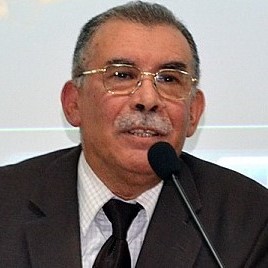
Mohamed Boudhan was an Amazigh writer, thinker, researcher and activist from the Rif, and publisher of the newspaper Tawiza. He was the author of many valuable books and articles on Amazigh identity. May he rest in peace.