Small Politics”: Thwarting the Arabization of the Amazigh Language Following the Pivot from State Co-option
The Ajdir Decree and the launch of the state co-option of the Amazigh language:
With the Dahir of Ajdir on October 17, 2001, which established the Royal Institute of Amazigh Culture (IRCAM), the Amazigh cause entered a new phase. This period was widely regarded as revolutionary, representing a sharp break from the past. In fact, the decree’s provisions surpassed the expectations of many Amazigh activists, offering more than their previous demands had even dared to seek.
The Amazigh issue is inherently political, touching upon the very essence of the state’s identity. Within Moroccan political practice since 1912, this identity has been viewed as Arab. Consequently, the only solution the state could find to address Amazigh demands—without undermining this established identity—was to rehabilitate the Amazigh language, culture, and ethnicity as belonging to a minority in specific regions. However, it stopped short of recognizing it as the collective identity of all Morocco and its people. This approach, treating the issue as a set of linguistic and ethnic claims, is the core of what can be called the “new Berber policy” (for more on the concept of old and new “Berber policies,” see the article “The Failure of the New Berber Policy” in the book The “Berber Decree”: Reality or Myth?). This represents a new formula for the “makhzenization” of the Amazigh cause—its appropriation by the Makhzen (the royal establishment) to bring it under its wing and make it “royal.” By reducing these demands to culturally “neutral” requests, the state ensures they remain dependent on the system and pose no threat to the established Moroccan power structure.
While the makhzenization of the Amazigh cause through this “new Berber policy” has yielded benefits—such as undeniable progress in media and education, the adoption of the Tifinagh alphabet, and the start of formal schooling—these advances do not address the fundamental issue. The problem remains political from start to finish, and this promotion merely sidesteps it. The crux of the matter is political exclusion. Since 1912, political power in Morocco has been exercised not in the name of an Amazigh identity rooted in its North African home, but in the name of an “Arab” identity. This results in political exclusion that precedes any linguistic or cultural marginalization. The Amazigh language lacks a political existence because it holds no political power; that power is wielded in the name of ethnic Arabism rather than African Amazighness. Thus, while Imazighen today enjoy recognition of their language, culture, and history, they still lack a political existence. They have no state of their own because Morocco has been defined since 1912 as an “Arab” state—meaning a state for Arabs in an ethnic sense, rather than a geographical one. Consequently, despite contemporary recognition, the Amazigh people continue to face the same political exclusion that has served as the source of all other secondary forms of marginalization (see the article “On the Political Exclusion of the Amazigh Language” in the book On the Amazigh Language and the Amazighophobic Tendency).
The retreat even from the state co-option of the Amazigh language:
In the process of restoring the status of the Amazigh language, it was hoped and expected that the state would evolve from its current “Berber policy”—which, in its content and purpose, is a “Makhzenization” of the Amazigh language by integrating it into the traditional power system—toward the long-awaited “Amazigh policy.” This desired shift would be manifested through the “Amazighization of the Makhzen”—that is, its integration into an Amazigh identity rather than absorbing the language into its own system. This would be achieved if the Moroccan state exercised its political power in the name of its African Amazigh roots, as an Amazigh state in the territorial sense, ensuring harmony between the state’s identity and its geographic origins. At the very least, while waiting for the conditions of an “Amazigh policy” to be met—where the Makhzen integrates into its own Amazighness—the state should have worked to strengthen its “Berber policy” by consolidating this integration. This would have involved ensuring the success of Amazigh language education, bolstering its presence in the media, incorporating its oral use in public administration, and correcting numerous “scientific” falsehoods regarding Amazigh history, such as the myth of the “Berber Decree.” Instead, paradoxically, immediately after the Amazigh language was granted official status in the July 2011 Constitution, the state began to retreat even from its “Berber policy” and the process of institutional integration it had officially adopted since 2001.
Particularly striking signs of this regression include:
– The near-total “disappearance” of Amazigh language teaching since its officialization. Launched in 2003, it has suffered a fate similar to that of the “Talsint oil,” the discovery of which the King announced in an official speech on August 20, 2000, before it was revealed to be a deceptive scam perpetrated against the Moroccan state.
– The legal suspension of its official status for more than eight years under the pretext of waiting for an “organic law,” and its practical suspension for an indefinite period, as long as this law does not compel the state to make actual official use of the Amazigh language.
– The content of this organic law itself, which aims not to truly officialize the Amazigh language, but to stifle its genuine implementation. It reduces this supposed official status to a purely decorative and symbolic dimension that will never make the Amazigh language the language of state institutions, administrations, or official documents (as discussed in the article: “An Organic Law to Slay the Officialization of the Amazigh Language”).
– Finally, the dissolution of the Royal Institute of Amazigh Culture (IRCAM) under the guise of its integration into the National Council for Moroccan Languages and Culture (Articles 50 and 51 of the organic law regarding this Council). This measure signals the abandonment and termination of the integration of Amazigh identity into the state apparatus. It marks the end of the “Berber policy,” which served as the operational implementation of that process. Why does the dissolution of IRCAM signify a renunciation of this policy? Because the creation of this institution had inaugurated the policy by expressing a reconciliation with Amazigh identity and recognizing it within the strict limits of culture, linguistics, and ethnicity. These were the boundaries permitted by the “Berber policy,” which sought to lift the cultural and linguistic exclusion facing the Amazigh people while maintaining their political exclusion. This political exclusion can only end when the state stops exercising power in the name of a borrowed identity that is foreign to its territorial reality, which is fundamentally Amazigh and African.
This retreat from the policy of “Makhzenizing” Amazigh identity—and the resulting abandonment of the “Berber policy,” which represented the absolute minimum of recognition after half a century of total exclusion—is equivalent to announcing a return to that very same exclusion. This encompasses cultural, linguistic, and identity-based exclusion, compounded by the political exclusion that lies at the root of all others. Such a position reveals a true “reversal” in how Amazigh issues are handled. It cancels out everything gained in terms of recognition and reconciliation through the granting of “Cherifian” status via the process of Makhzenization. This process, conducted through a “Berber policy,” aimed to lift the cultural, linguistic, and identity exclusion suffered since independence. How and why did this reversal and cancellation occur?
Did constitutionalization serve as a cover for exclusion?
Many of us viewed the constitutional officialization of Amazigh identity, enshrined in the 2011 Constitution, as a genuine revolution. We believed this status would provide legal protection against exclusion and marginalization, opening a new chapter for its promotion and rehabilitation as a language, culture, and ethnic identity. These were precisely the dimensions addressed by the “Berber policy” as a manifestation of the “Makhzenization” of Amazigh identity and its “Cherifian” character, as I previously noted.
However, the reality is that this officialization would be used as a legitimate legal justification to block its genuine implementation—a fact proven by the subsequent development of Amazigh rights. This occurred not only because the first paragraph of Article 5 states that “Arabic remains the official language of the State”—a phrasing that implies no other official language exists—nor simply because the Constitution links this status to an official organic law. Crucially, it occurred because the Constitution strips the Amazigh cause of its “Cherifian” character. It shifted the issue from royal jurisdiction as a sovereign matter to the jurisdiction of the government and Parliament as an ordinary matter. But where exactly does the problem lie in this transfer of authority?
Since the dawn of post-independence Morocco, neither the government nor Parliament has ever taken action in favor of the Amazigh cause. The only official recognition it has received since the emergence of Amazigh demands came from the King. On October 17, 2001, he issued the Ajdir Dahir, establishing the Royal Institute of Amazigh Culture (IRCAM). This was a major milestone, marking the start of the process to “Makhzenize” Amazigh identity and attach it to the monarchy as a “Cherifian” sovereign matter. The fact that the Institute achieved only a fraction of its broad mandates—hampered by a lack of government cooperation and even opposition from within the Amazigh movement itself—does not diminish its scientific and symbolic importance.
The dissolution of IRCAM, as planned under the organic law regarding the National Council of Languages and Moroccan Culture, signifies the end of the “Berber policy” and its goal: the legitimate establishment of a “Makhzenian” and “Cherifian” Amazigh identity. The Institute was created specifically to promote and develop this identity. It represented the maximum recognition the State—which views itself as “Arabic”—could grant the Amazigh language, culture, and ethnic identity, while stopping short of making it part of the State’s own core identity. This ensures the continuation of political exclusion. Consequently, as previously mentioned, there is a retreat even from the process of “Makhzenization”—a step back from the “Makhzenian” and “Cherifian” status of Amazigh identity established by the State since October 2001.
The government and Parliament are using the constitutional provisions regarding the official status of the Amazigh language—once hailed as the ultimate reparation, its most significant recognition, and its greatest victory—to effectively dismantle that status. By adopting an organic law that guts these protections, alongside another law concerning the National Council of Moroccan Languages and Culture that effectively dissolves the Royal Institute of Amazigh Culture (IRCAM), they have signaled an abandonment of even the “Berber policy” established by the Dahir of Ajdir. As previously discussed, that policy sought to “Makhzenize” the Amazigh language by making it “royal,” bringing it under the direct control of the state apparatus, as stipulated in the 2001 decree.
While the constitutional recognition of the Amazigh language was expected to be a giant leap forward—transcending the policy of Makhzenization and its “Berber policy” instrument to instead “Amazighize” the state itself, where the government would embrace its true identity and act as an Amazigh state in the territorial sense—this shift has instead served as a leap backward. In practice, it returns the country to the era preceding the state’s institutional adoption of the language: a period defined by the cultural and linguistic exclusion of the Amazigh people. How can we explain this paradox?
This paradox stems from the fact that, through its constitutionalization—in this incomplete and conditional form—the Amazigh language lost the royal protection it once enjoyed. Under the framework of Makhzenization, the Dahir of Ajdir had made it a sovereign “royal” matter under the King’s exclusive jurisdiction, meaning it was neither subject nor subordinate to the authority of the government or Parliament. However, its inclusion in the Constitution removed the sovereign privilege it held as a domain where the King decided alone, according to his constitutional prerogatives (Article 19 of the 1996 Constitution and Article 42 of the 2011 Constitution). This shifted the power of decision-making to the government and Parliament. This shift explains why both institutions have reverted to their long-standing position: a fundamentally Amazighophobic and hostile stance. This is particularly evident since political Islamists have led the government since the language was constitutionalized—a movement that does not hide its hostility toward Amazigh identity, even though the majority of its members are themselves Amazigh speakers, a trend mirrored in other parties across the leftist and nationalist spectrum. Consequently, transferring the Amazigh file from the monarchy to the government and Parliament has marked a genuine and major regression for the cause. It provided these institutions with an opportunity to settle scores, as clearly demonstrated by the contents of the organic law on the implementation of the language’s official status and the law governing the National Council of Moroccan Languages and Culture. Indeed, the two laws work in tandem to “punish” and “seek revenge” against the language: while the former guts its official status, the latter dissolves IRCAM, the specialized scientific institution intended to oversee the process by developing the language. Since this official status has been undermined by the organic law, the very existence of IRCAM is now deemed unnecessary by the authorities.
Thus, the Makhzenization of the Amazigh language has ended, and the “Berber policy” that depended on it has been liquidated, signaling the death of projects aimed at promoting the language under the state’s previous formula. Does this mean the government and Parliament have an alternative for promoting the Amazigh language? If so, what is it?
The Arabization of Amazigh as an alternative to its Makhzenization:
The dominance of ethnic, nationalist Arabism and political Islam among the majority of government ministers and parliamentarians does not mean that—now that the constitutional recognition of the Amazigh language has placed legislative authority in their hands—they will push for its total exclusion. Such an outcome would echo the immediate post-independence era, when Amazigh heritage was treated as a colonial legacy to be combated and eliminated. Given the significant developments in Morocco and around the world, such a position is highly improbable today. Instead, these officials will ride “the wave” themselves, claiming to be committed to developing and promoting the Amazigh language. In a sense, this claim aligns with their own concept of what “development” and “promotion” mean, as well as what they hope to achieve through them. How, then, within the framework of their Amazighophobic ideology, do they understand the “development” and “promotion” of the Amazigh language? And what do they expect to gain from this “development” and “promotion”?
Since they cannot simply deny the existence of Amazigh identity outright, as I have previously noted, what they mean by its development and promotion is actually subjecting it to Arab identity and political Islam, placing it under their control and guardianship, and bending it to their laws and decisions. Just as its development and promotion meant its Makhzenization under the new “Berber policy”—rendering it “royal,” vassalized, and subservient to the Makhzen, pressed into service to fulfill its agenda—so too, for the majority of government and parliamentary members, does it mean its Arabization. They seek to subordinate it to Arab identity and political Islam so that it serves their interests and can be exploited by them. This perspective illuminates their fierce opposition, during debates on the draft organic law implementing the official status of the Amazigh language, to establishing Tifinagh as its definitive script. Why? Because using Tifinagh to write the language allows it to escape, on a graphic level, Arabization and the grip of Arab identity and political Islam. This undoubtedly explains, first, why the government reneged on Organic Law No. 26.16 regarding the implementation of the official status of the Amazigh language—even though it had concocted and tailored that law itself to undermine its official status—when it drafted Bill No. 04.20, which excluded the Tifinagh script from the new electronic national identity card. Through this bill, the executive arrogantly and defiantly trampled on the Constitution as well as the very organic law it had instituted, as I previously demonstrated (see the article: “On the Pretext of Excluding the Amazigh Language from the National ID Card Draft Law”). Second, it explains why both houses of Parliament passed this bill in July 2020, despite its flagrant violation of the Constitution and of Organic Law No. 26.16, as I have noted.
That is why these decision-makers, who harbor no sympathy for Amazigh identity while holding both executive and legislative power, never tire of praising those Amazighs who have served Arab identity and political Islam, holding them up as models of “free” Amazighs—such as Tariq ibn Ziyad or Ahmed Ouihman. Conversely, they vilify those Amazighs who demand the emancipation of Moroccan Amazigh identity from Eastern Arab identity, and who advocate teaching the Amazigh language on an equal footing with Arabic. They demonize them by linking them to colonialism and Zionism, while claiming they in no way represent “free” Amazighs. It was these very same actors who intervened to distort the draft Constitution regarding equality between Arabic and the Amazigh language, imposing the wording of the first paragraph of Article 5, which stipulates that Arabic remains the official language of the state.
The two organic laws—the one regarding the implementation of the official status of the Amazigh language and the one establishing the National Council for Moroccan Languages and Culture—perfectly illustrate the concept of “development” and “promotion” that proponents of Arab nationalism and political Islam hold for Amazigh identity: either it exists solely to serve Arabness and political Islam, or it is accused of playing into the hands of Zionism and colonialism.
On the necessity of engaging in “minor politics”:
Faced with the hegemony exercised by the government and the elected Parliament over the Amazigh issue, and following the withdrawal of the monarchy—which stopped taking it under its wing in the wake of its constitutional recognition—what can be done to halt the setbacks now hitting the project to develop and promote Amazigh identity? What can be done to save, at the very least, the Makhzenization of the Amazigh language from the Arabization threatening it in the halls of government and parliament? What can be done to turn the Amazigh language into a genuinely official language—that is to say, the language of the state, its institutions, and its official documents?
The call issued by the “Front for Amazigh Political Action,” urging activists in the Amazigh movement to enter the political sphere—whether by establishing new political parties or joining existing ones whose platforms do not conflict with the movement’s demands and principles—represents a major initiative. It demonstrates undeniable wisdom, foresight, and political maturity, even if it comes late.
The policy of electoral boycotts—whether abstaining from voter registration, running for office, or voting—reflected the practice of “grand politics,” grounded in an “all or nothing” principle. In its first sense, held by political actors outside the monarchy, this principle means: either full, authentic democracy or a boycott. As for its second sense, tied to the monarchy, it implies holding all power or holding none at all. This means exercising a monopoly over real, effective, and executive power, while retaining exclusive control over the state’s strategic and major decisions.
Yet the primary beneficiary of the boycott has always been the camp following “minor politics,” governed by the rule that “a little is better than nothing” (passing a few decisions and securing a few prerogatives is better than achieving nothing at all). Ironically, this is precisely the camp that boycott supporters wish to punish and whose political project they seek to derail. By abstaining, citizens who boycott the polls and refrain from voting against political opponents effectively hand them a free gift, allowing those opponents to benefit from missing votes that could have reduced their margins. This is a reality well known through the successive electoral victories of the PJD: because young people opposed to the party did not turn out to vote, they implicitly gifted their votes to the very party they rejected, as their abstention failed to bolster the ranks of those voting against it to lower its results.
The same applies to Amazigh identity, which has no advocates within the government, Parliament, regional or provincial councils, or urban and rural municipalities. Because young people and activists in the Amazigh movement do not vote, their non-participation indirectly benefits opponents of Amazigh rights, as explained above. This means that if these young people, activists, and their supporters were to participate in elections—by registering, running, and voting—it would shift the electoral balance of power across various bodies elected by universal suffrage. This is particularly true for Parliament, given that cabinet members are drawn from the most represented parties in that institution. Consequently, the political organization that secures the largest share of the vote gains the opportunity to shape policy decisions within the framework of “minor politics.”
All issues related to language and culture fall within the scope of this “minor politics.” For instance, deciding whether to impose Arabic, French, the Amazigh language, or Darija as the medium of instruction is the prerogative of Parliament and the government. The Palace does not intervene in these matters, as they do not affect the realm of “high politics,” which, in its secondary sense, remains the monopoly of the monarchy. Contrary to the widespread belief that the Palace would never relinquish Arabic, the truth is that it prioritizes neither Arabic nor any other language—so long as the actors in “minor politics,” following the electoral rules set and accepted by those who control “high politics,” have chosen through legislation and executive action which language to impose in schools. Although decisions within “minor politics” are monitored and guided by the architects of “high politics”—as is the case with finance laws or even language policy when the situation demands intervention—we witnessed this in July 2019. At that time, Parliament adopted, under the impetus of the Palace’s “high politics,” Framework Law No. 51.17 concerning the system of education, training, and scientific research. This law ended the Arabization of the sciences by establishing their instruction in foreign languages at the primary and secondary levels, after they had been taught in Arabic since the 1980s. Despite everything, this monitoring and guidance do not deprive “minor politics” of its prerogatives; rather, they serve to preserve Morocco’s democratic and electoral appearance. These prerogatives can be summarized by the following principle: “Passing a few decisions and securing a few advantages is better than passing nothing and securing nothing at all.” Why only “a few”? Because, as we have indicated, “minor politics” is subject to the control and orientation of the “high politics” belonging to the Palace.
Consequently, having a sufficient number of advocates for the Amazigh cause in Parliament would allow for the enactment of legislation in favor of the Amazigh language, within the rules of the electoral game and the powers of “minor politics” granted to the people’s representatives. Anything that does not threaten or weaken the Palace’s authority, and poses no danger to it, is permitted and not prohibited if it results from following electoral rules. It is well known that the Amazigh movement does not threaten the power of the Palace, does not seek to weaken it, and poses no risk. Furthermore, the Palace would not object to Morocco being an Amazigh kingdom, provided this does not affect the foundations of the regime or the domain of “high politics”—the King’s exclusive preserve.
The same applies to decisions regarding local affairs. If, for example, the majority of the municipal council in the city of Témara had been composed of Amazigh supporters through their participation in local elections, we would not have seen its streets bearing foreign Wahhabi and terrorist names (see the article: “And is there a difference between calling Morocco Arab and naming its streets ‘Al-Dahlous’?“). These names were imposed by the council’s governing majority, known for its hostility toward everything Amazigh and authentically Moroccan. It was the election boycott by Amazigh advocates—particularly youth and students within the Amazigh movement, out of a rejection of “minor politics” and an attachment to “high politics”—that allowed the “Amazighophobes” to win control of the Témara council. This gave them the institutional legitimacy needed to name streets after foreign Wahhabi figures, in accordance with their Wahhabi and nationalist ideology.
While the engagement of Amazigh advocates in the game of “minor politics” will not transform Morocco into an Amazigh state in terms of identity and politics overnight, it is nonetheless indispensable for a true cultural and linguistic revival of Amazigh identity. This revival necessarily includes the success of the project to teach the Amazigh language, which has been at a standstill since its launch in September 2003. The goal is to provide the legal and institutional tools for the serious, mandatory, and universal teaching of the Amazigh language, as well as its oral and written use in public administrations and institutions as an official language. Why emphasize education? Because by learning the Amazigh language, Moroccans will also “learn” their collective identity, discovering it and returning to it. This will be the condition and the starting point for a gradual transition toward an Amazigh state—again, in the territorial sense of the term. This evolution will accompany the transition from an artificial and false identity consciousness, anchored by policies of Arabization and national distortion, toward a healthy and authentic consciousness that will be disseminated through the teaching of the Amazigh language and its official use in state administrations and institutions.
Arabic version | French version
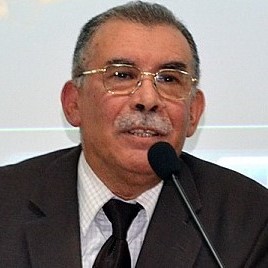
Mohamed Boudhan was an Amazigh writer, thinker, researcher and activist from the Rif, and publisher of the newspaper Tawiza. He was the author of many valuable books and articles on Amazigh identity. May he rest in peace.