The Myth of Parliamentary Monarchy in Morocco
“Parliamentary monarchy” is a recurring demand in the platforms of numerous political and human rights organizations. It features constantly in the discourse of various civil society actors and is regularly advocated by intellectuals and cultural figures. In Morocco, owing to a translation error, parliamentary monarchy is often incorrectly defined as a system where “the king reigns but does not rule.” In this model, actual power—and not merely formal authority—would be held by a genuine government equipped with effective executive authority and accountable to parliament. The “sovereignty” enjoyed by the monarch would pertain only to the exercise of symbolic and ceremonial power, divorced from effective authority such as executive power, which would fall exclusively within the purview of a government accountable to elected representatives.
I have pointed out that this definition is mistaken in Morocco due to a linguistic misunderstanding. Indeed, the common phrase “the king reigns but does not rule” was mistranslated into Arabic as “al-malik yasudu wa la yahkum.” The French verb régner (to reign) means to exercise the royal function, not yasuda (to be sovereign), whose exact French equivalent is “to exercise sovereignty.” Yet, ever since Jean Bodin defined it, sovereignty has been a political and legal concept designating the absolute right to exercise power without restriction or condition over a territory, country, or people. It is thus an intrinsic characteristic of the state, backed by its means of force, coercion, and sanction. Claiming that the king “is sovereign but does not rule” amounts to saying that he exercises absolute power while not governing. This is an absurd contradiction. To faithfully translate the intended meaning into Arabic, one should say: “The king exercises purely symbolic authority without actually governing.”
Why Demand a Parliamentary Monarchy?
An executive monarchy, where the king is the actual ruler—as is the case in Morocco—is incompatible with genuine democracy. This is not only because it precludes a true separation of powers, a prerequisite for any democratic practice, but also because executive power is supposed to be accountable to parliament. Parliament must be able to question the executive on its policies, programs, and results, holding it to account in cases of negligence or mismanagement. Yet, the king can neither be questioned nor held accountable for his actions. When he serves as the real head of the executive without answering for the outcomes of his rule, the system degenerates into individual, dictatorial, and arbitrary rule—the very antithesis of democracy. In such a setup, parliament and government are mere facade institutions and rent-seeking structures. Elections become nothing more than formal window dressing, incapable of producing a government that truly governs or a parliament that genuinely legislates.
This is precisely why a parliamentary monarchy becomes an imperative necessity, emerging as the only way to reconcile a system of hereditary rule with the requirements of democratic oversight. That is why proponents of this model frequently cite the examples of Spain and the United Kingdom. In those kingdoms, if the monarch is not accountable to parliament, it is precisely because they do not govern and hold only symbolic and ceremonial prerogatives.
Is Morocco Not a Parliamentary Monarchy?
The first paragraph of Article 1 of the Moroccan Constitution states: “The system of monarchy in Morocco is a constitutional, democratic, parliamentary, and social monarchy.” The text thus explicitly describes the Moroccan monarchy as “parliamentary.” Why, then, demand what already exists? If one defines a parliamentary monarchy as a system where a parliament limits the king’s powers by holding exclusive legislative authority in certain areas, then Morocco could be viewed as such. Parliament indeed possesses powers (notably under Article 71 of the Constitution) that, in theory, limit royal authority by reserving these domains to statutory law. Beyond this parliamentary dimension, the regime also defines itself, as mentioned above, as a constitutional monarchy in which the sovereign’s powers are bounded by a constitution.
Does this mean, however, that the Moroccan monarchy is genuinely constitutional and parliamentary, thereby rendering any call for reform in this direction obsolete?
A granted constitution:
The fundamental problem lies in the fact that the Moroccan Constitution—despite all its provisions granting powers to Parliament and the Government to limit the King’s authority, or those framing the exercise of his prerogatives—remains a constitution granted from above. Indeed, it was a royal commission, appointed for this purpose by the Sovereign himself, that drafted the text. Yet the granted nature of a constitution poses a fundamental issue: the limits it imposes on royal powers emanate, ultimately, from a royal authority that is not independent of the monarch. This means that the powers transferred to Parliament and the Government are those the King himself selected, regarding them as secondary or incidental because they in no way diminish his real executive powers. Ultimately, the King writes the Constitution for himself—whether it is the work of legal scholar Maurice Duverger, as was the case for the constitutions drafted at the request of Hassan II, or produced by a commission appointed by the Sovereign, like the “Menouni Commission” that drafted the current text. The fact that the Moroccan people approved it by referendum does not strip it of its nature as a granted constitution, born of royal will rather than an elected constituent authority.
This is why, despite the many advances introduced by the 2011 Constitution compared to previous texts, it does not—and indeed cannot—establish a genuine parliamentary monarchy on the model of the Kingdom of Spain, which is often cited as a benchmark by proponents of such a regime in Morocco, as I have previously pointed out.
In an interview granted to Agence France-Presse (AFP) on the occasion of the twentieth anniversary of Mohammed VI’s reign, royal advisors Omar Azziman and Abdellatif Menouni—the latter having chaired the drafting commission for the 2011 Constitution—themselves admitted that Morocco had not yet reached the stage of a parliamentary monarchy. Mr. Azziman stated: “We are not in a Spanish or Dutch-style monarchy where the King reigns but does not rule; we are in another type of monarchy, but the King’s powers are circumscribed.” For his part, Mr. Menouni noted: “We are on the path toward a parliamentary monarchy, though naturally there may still be a few provisions to improve” (L’Observateur du Maroc et d’Afrique via Alyaoum24, July 28, 2019).
Regarding the Spanish monarchy, which is systematically cited by advocates of parliamentary monarchy in Morocco as well as by royal advisor Omar Azziman, an essential clarification must be made: the fundamental difference between a parliamentary monarchy (the Spanish model) and an executive monarchy (the Moroccan model) lies in the fact that it was the Spanish Constitution that “created” the King. Conversely, it was the King who “created” the Moroccan Constitution through a voluntary and unilateral decision expressed in his speech of March 9, 2011. One cannot argue that the Moroccan Constitution derives its legitimacy from the people through the referendum in the same way the Spanish text does. The Moroccan Constitution has only a single source: the King. First, because he ordered the preparation of a new text in his March 9 speech; second, because he appointed the commission responsible for drafting it; and finally, because the people were merely called upon to ratify the draft devised by this royal commission. The Spanish Constitution, by contrast, emanated entirely from the people: an elected parliament appointed a committee from among its members to draft the 1978 text; that same parliament debated, amended, and adopted the draft before submitting it, as a final step, to a popular referendum on December 6, 1978. The King, whose very existence stemmed from this text, intervened only to formally express his assent before Parliament on December 27, 1978. The Spanish monarch played no role whatsoever in the decision-making, drafting, or approval process. This divergence in origin underscores the gulf between a granted constitution and one established by a constituent assembly born of general elections.
The Impasse of Democracy in Morocco
I previously pointed out that, given the hereditary nature of monarchical regimes, the only form compatible with the demands of democratic practice is a parliamentary monarchy, where the King holds symbolic powers but does not govern. However, in the case of the Moroccan monarchy—given its history, its sultanic origins, its instrumentalization of religion, its Makhzenian structure, and the role of the Protectorate in reinforcing this Makhzenian dimension—the King governs because he reigns, in the fullest sense of exercising sovereignty. The underlying principle here is actual governance stemming from real sovereignty, rather than an honorary sovereignty like that in Spain, the United Kingdom, the Netherlands, or Japan, where sovereignty does not translate into the actual exercise of power. This is why the monarchy in Morocco is either executive and authoritarian, or it does not exist at all. Its very essence is to govern as the holder of sovereignty—that is, the absolute right to exercise unhindered authority, in accordance with the definition we have given to the concept of “sovereignty.”
Herein lies the impasse of democracy in Morocco: there can be no true democracy as long as an executive monarchy persists. Yet the Moroccan monarchy cannot exist unless it is executive. This is equally a dead end for advocates of a parliamentary monarchy: by demanding it, they implicitly call for the abolition of the monarchy itself. As we have demonstrated, in Morocco, the monarchy is either executive or it is nothing. Faced with this dilemma, these activists become entangled in contradiction and ambiguity during every constitutional revision. They call for a Constitution establishing a parliamentary monarchy—where the King would exercise only symbolic powers without actually governing—while refraining from demanding the election of a constituent assembly to draft such a text. Why a constituent assembly? Because one cannot expect a “granted” Constitution—the trademark of Moroccan texts—to reduce the sovereign to an honorary and symbolic role, stripping him of effective executive power; otherwise, it would no longer be granted. Since in Morocco the monarchy is either executive or non-existent, it is inconceivable that the King himself would grant a Constitution that nullifies his own function as a monarch holding real executive power. That would amount to abolishing the Moroccan monarchy, whose very existence depends on these prerogatives, as we have explained. A third dilemma arises from this: a parliamentary monarchy can only stem from a source external to the royalty—that is, from a non-granted Constitution drafted by an independent constituent authority. Yet proponents of this model in Morocco ask the King himself to lay the foundations of a regime in which he would no longer be King in the Moroccan sense of the term, since monarchy here is, by definition, inseparable from the actual exercise of power.
A Monarchy Neither Dictatorial Nor Parliamentary
While executive monarchy may seem an inevitable fate in Morocco, this form of power is fortunately not necessarily an absolute evil. Aristotle had already distinguished dictatorship—where a single individual monopolizes power for personal gain—from a certain form of monarchy where power is similarly concentrated in the hands of one person, but exercised in the interest of all (cf. “monarchy”, Encyclopædia Universalis). Such a monarchy, which safeguards the common good and the interests of the people, can be described as democratic in its general policy. However, it remains non-democratic insofar as it monopolizes power, blocking other actors from participating in its practice. This recalls the concept of the “just despot,” famous in Arab-Muslim political thought, notably in the works of Jamal al-Din al-Afghani, Muhammad Abduh, and Abd al-Rahman al-Kawakibi. Thus, while the Moroccan monarchical regime appears to be an individual and absolute power, it retains certain democratic trappings because it governs according to rules, rather than out of sheer caprice or arbitrariness. To be sure, the democratic problem persists, since these rules, upon which the monarchy relies, were established by the monarchy itself (the granted Constitution) and do not stem from an independent text that binds the sovereign power.
However, what moves the Moroccan regime even further away from democracy is not merely that the monarchy decides the rules it applies—or chooses to ignore them—but above all that its power depends, as a condition of its survival, on patronage systems and corruption. These have effectively become the fourth pillar of the Moroccan state, alongside the three classical pillars: people, territory, and authority. Under such rent-seeking policies and inherent corruption, any notion of a “just despotism” vanishes, giving way to an “iniquitous despotism.” Patronage and corruption represent a profound injustice against the people, robbing them of their rights and wealth for the benefit of a corrupt elite. This is precisely what shatters public trust in leaders and politicians, discrediting political life as a whole.
What if the King held only a symbolic and ceremonial role?
Let us be realistic and frank. What would happen if the King of Morocco held only symbolic powers without actually ruling, much like the King of Spain? In other words, what would happen if the Moroccan government exercised full sovereign and executive authority, with a head of government directly overseeing the intelligence services, the military, the gendarmerie, and the police? The head of government would then be the true holder of power, for real authority cannot exist without controlling these armed state apparatuses—the instruments for the legitimate use of force and the exercise of effective sovereignty as the ultimate form of rule. Would the Islamist PJD government not have used these sovereign powers to transform Morocco into a Muslim Brotherhood-style emirate, if not an ISIS-style one, imposing Sharia law as it promised during its campaign rallies and publications? Would it not have waged an even fiercer war on Amazigh identity than it does today, under the banner of a divine “jihad”? And had the government been left-wing, would it not have used those same sovereign powers to turn Morocco into not just an Arab state, but a mere Palestinian appendage serving as a rear base to fight Zionism—and to fight Amazigh identity, which it views as Zionism’s “ally”?
In this regard, was it not thanks to the executive monarchy (and Article 19 of the former Constitution) that a Royal Institute was created to promote the Amazigh language? And today, is it not through the actions of the government and Parliament, rather than the King, that this institute has been dismantled and buried, as a form of retaliation against the Amazigh cause—which benefited from royal protection precisely because of an executive, rather than a parliamentary, monarchy? What the government and Parliament have inflicted upon the Amazigh language—whether by enacting an organic law designed to nip its official status in the bud (see the article: “An organic law to suppress the official status of the Amazigh language,” available on Tawiza) or by abolishing its Royal Institute—offers a clear indication of what these two institutions would do if they possessed full legislative and executive powers under a parliamentary monarchy. It is no exaggeration to suggest that they might even have passed legislation criminalizing the spoken use of the Amazigh language in public spaces, while writing it would likely have been treated as high treason.
Where, then, are the parties worthy of a parliamentary monarchy?
All of this demonstrates that Morocco currently lacks political parties capable of sustaining a parliamentary monarchy. Most existing political groups remain bound to foreign ideologies imported from the Middle East, such as Wahhabi or Muslim Brotherhood Islamism, alongside ethnic Arab nationalism. Would it really be in Morocco’s interest to be governed by such parties—in the context of a parliamentary monarchy where the King holds only symbolic authority—when their sole ambition is to serve foreign interests and promote a shocking distortion of Moroccan identity, stripping citizens of their Amazigh and African roots to impose an Asian Arab identity under the guise of “Arabization”?
Let us once again be realistic and frank. Only when we have genuine Moroccan political parties—that is, parties that defend Morocco’s authenticity and its true African identity, which is its African Amazigh identity, and that actively work to foster pride in this collective identity among Moroccans—can we speak of formations legitimately entitled to demand a parliamentary monarchy. They would then possess the legal, constitutional, and institutional levers to defend the state’s national Amazigh orientation, consolidate Morocco’s identity-based independence, and protect it from the denial of national identity that Islamist, leftist, and pan-Arab parties have spread like a viral contagion inherited from the “National Movement.”
As for the argument that the monarchy, in its current executive form, is no less Arabist or theocratic than these pan-Arabist and Islamist parties, a fundamental reality must be understood: as a political power—and this applies to any political power, even in the most democratic regimes—the monarchy cares only about what reinforces its authority, serves its interests, and guarantees its survival. Since the pan-Arabist movement in Morocco became dominant during the era of the “National Movement” by instrumentalizing Islam, the monarchy had no interest in swimming against the tide of such an entrenched force. Political prudence therefore dictated that it temporarily adopt this pan-Arab orientation to contain it and leverage it to its own advantage. The same applies to Wahhabi Islam, introduced by the monarchy in the 1980s to counter Islamist movements that challenged its legitimacy in the name of the Islamic caliphate, much like the late Abdessalam Yassine and his followers attempted to do. Thus, if a powerful Amazigh movement were ideologically and politically dominant, the monarchy would have been the first to proclaim Morocco an Amazigh kingdom to win over and instrumentalize that dominant force. Similarly, if there were a strong, dominant secular movement, it would have been the first to enshrine the separation of religion and state in the Constitution. For what matters to the monarchy as a political power is solely whatever serves its stability—whether Arabism, Amazigh identity, religious movements, or secularism.
Given the current state of our parties and the dominance of ethnic pan-Arabism and political Islam in their priorities, choices, and ideologies, it is better for Morocco to be governed by an executive monarchy. Indeed, the country’s post-independence history has demonstrated that the monarchy remains more attached to Morocco, its challenges, its culture, and its identity. Consequently, its authoritarianism is far preferable to a parliamentary monarchy where real power would fall into the hands of parties that deny Morocco’s Amazigh identity and prefer to serve foreign causes, such as Palestine or the international Muslim Brotherhood, at the expense of national interests.
Arabic version | French version
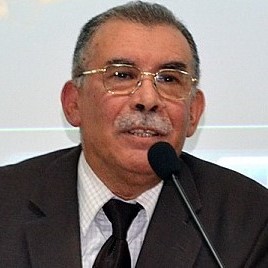
Mohamed Boudhan was an Amazigh writer, thinker, researcher and activist from the Rif, and publisher of the newspaper Tawiza. He was the author of many valuable books and articles on Amazigh identity. May he rest in peace.