From the Script War to the Constitutional Struggle
Since its emergence, the Amazigh movement has been engaged in a series of uninterrupted struggles. No sooner does it emerge victorious from one battle than it is already preparing for the next, with the ultimate goal of winning the war in its entirety. When the cause of Amazigh identity enters these frays, it is by no means seeking to occupy the lands of others, invade foreign countries, impose its language on other nations, or compel other peoples to adopt an Amazigh identity. It is fighting for its survival—its very existence. This is an exercise in legitimate self-defense against the threat of annihilation and identity assassination.
Among the struggles waged over the last two years is the “battle of the script.” The majority of the Amazigh movement advocated for the use of the Latin alphabet for writing and teaching the language, as stipulated in the historic Meknes Manifesto, while a minority expressed a preference for the Amazigh alphabet (Tifinagh). For its part, the Makhzen mobilized its intellectuals, political parties, associations, and especially its fundamentalist currents to impose the Arabic script. Amazigh activism won this battle by sidelining the Arabic alphabet in favor of Tifinagh. It matters little that the majority of the movement would have preferred Latin; the essential point remains that all its components stood in direct opposition to the Arabic script.
Today, the Amazigh movement is embarking on a new fight: the constitutional battle, where the stakes are the officialization of the Amazigh language within the Basic Law. While the Amazigh movement held the initiative during the battle of the script by publishing the Meknes Manifesto—which sent shockwaves through the proponents of the Makhzen and fundamentalist circles—it is the authorities who seem to have taken the lead in this constitutional struggle. This appears to be a test of sorts, an attempt to take the pulse of the Amazigh movement through statements made by Royal Palace officials. These officials have asserted that “the requirement of national unity dictates that our country have only one official language, namely Arabic.” This is compounded by the positions of pan-Arabist, pro-Makhzen, and Islamist parties—is there, for that matter, any real difference between these three labels?—and their intellectuals who, in interviews with the newspaper Al Ahdath Al Maghribia, have maintained that the constitutional officialization of the Amazigh language is impossible. All these indicators suggest that the question of constitutional recognition is preoccupying the authorities, who seem to be preparing a solution similar to the one adopted for the alphabet. However, while that approach was beneficial for the Amazigh cause regarding the script, applying it to the constitutional level would be extremely detrimental. Let us examine this in detail.
Regarding the alphabet, three positions were in conflict: defenders of the Latin script, those favoring Tifinagh, and those supporting the Arabic script. Because the first and third positions were diametrically opposed, the authorities encouraged the adoption of Tifinagh, which was perceived as a compromise capable of satisfying everyone. There is little doubt that the authorities eventually came to regret this choice after taking the time to gauge the identity-related significance and the consequences of recognizing Tifinagh. In the heat of the battle, they were too preoccupied with finding ways to sideline the Latin script to anticipate the deep symbolism inherent in the Amazigh alphabet.
Today, in the battle over the Constitution, three positions have emerged once again: the Amazigh movement’s demand for official status; the stance of those who accept constitutional recognition under the mere status of a “national language”; and finally, the radical opposition to any constitutional mention whatsoever. Since the first and third positions are polar opposites, the authorities are tempted to frame the second option as a “compromise”: recognizing the Amazigh language as national, but not official. If the state succeeds in imposing this, this so-called compromise will be a trap set against the demands of the Amazigh movement—a crude and blatant one. Why?
It is necessary here to distinguish between the superficial similarities regarding the alphabet debate and the constitutional question. While three positions exist in both cases, the fundamental difference is that in the alphabet debate, both the Latin and Tifinagh scripts were supported by the Amazigh movement. Only the Arabic script was the weapon of its adversaries ( the Makhzen, political parties, and Islamists). In reality, there were only two camps: the Amazigh movement (Latin and Tifinagh) and the Arabists (Arabic). By choosing Tifinagh, the authorities actually validated one of the movement’s requests. Conversely, regarding the Constitution, both the refusal of constitutional recognition and the proposal of a mere “national language” status come from the same camp: the opponents of Amazigh identity. Faced with them, the Amazigh movement is unanimous in its demand for official status. Consequently, recognizing the Amazigh language as national would—unlike the alphabet decision—amount to satisfying the opponents while totally rejecting the movement’s demands. This is why this “compromise” is a blatant trap. If imposed, it would mark a major escalation in the conflict between the state and the Amazigh movement, similar to the tension that would have been triggered had the Arabic script been forced against the general will of Amazigh activists.
Therefore, if the state is sincere in its desire to promote the Amazigh language through the creation of the Royal Institute of Amazigh Culture (IRCAM), it has no choice but to complete this recognition. In the next constitutional revision, it must establish the Amazigh language as both national and official. To settle for constitutionalizing it as a “national” language alone would, beyond political calculations, be a matter of trickery and bad faith—a pure truism. As we have written many times, this would provide no added value to the Amazigh cause, as the language is intrinsically national. Stating this in the Constitution would change nothing. It would be akin to writing in the Fundamental Law that the Moroccan Atlas Mountains are Moroccan: a useless repetition and an absurd redundancy.
Fallacious arguments put forward by opponents of official status
To claim that the Amazigh language is merely a collection of scattered dialects still seeking a path toward unification, standardization, and writing is to express a desire to keep the language in a vicious cycle. To escape this cycle, one of its links must be broken through constitutional officialization. Why? Because even if we assume that the Amazigh language consists only of dispersed dialects that have not yet attained the rank of a language worthy of official status, the authors of this objection ignore—or pretend to ignore—that this fragmentation is precisely the result of a lack of constitutional recognition. Delaying its official status until it is unified is a way of preventing that very unification. Officialization is what will accelerate the process by forcing the state to invest seriously in the preparation, unification, and standardization of the language. For the Amazigh movement, this demand is not a luxury but a vital necessity—a prerequisite for protecting the Amazigh language and ensuring its development.
As for the insinuations claiming that the Imazighen have failed to serve their language to make it ready for official status—unlike the Jews who, when Hebrew was on the verge of extinction and limited to religious rituals, reportedly “breathed the spirit of life into this moribund language thanks to their scientific abilities and skills”—this is a flawed comparison. It is like blaming a rabbit for not knowing how to fly like an eagle which, thanks to its “abilities and skills,” soars through the sky. The eagle has wings that the rabbit lacks; it has nothing to do with laziness or effort, intelligence or stupidity. The same applies to Hebrew and the Amazigh language: what allowed Hebrew to become a unified, standardized, and official language in Israel was not just the “scientific abilities” of its speakers, but the fact that it possessed wings—namely, political power. This power imposed its unification and officialization, bringing it back to life when it was on the brink of extinction. The Amazigh language in Morocco, by contrast, is deprived of this political power; its wings are clipped. No “scientific ability,” no matter how great, can repair this. Only political will—not scientific effort—can.
To claim that “the requirements of national unity dictate that our country have only one official language, Arabic” follows the logic of the “National Movement,” which marginalized and fought against the Amazigh language for over half a century in the name of this alleged threat to unity. Yet, nothing in past or present history suggests that official multilingualism threatens a country’s cohesion. One only needs to look at India, post-apartheid South Africa, Switzerland, Canada, or Belgium. What threatens national unity is not the recognition of two or more official languages, but rather the refusal to recognize legitimate national languages. Such denial can drive speakers of these languages to demand independence just so they can finally grant their own tongue official status. Finally, if there were to be only one official language, why should it be Arabic and not Amazigh—the language of Morocco’s identity and its African heritage?
In reality, refusing the constitutional officialization of the Amazigh language amounts to rejecting the language altogether, as well as its development. Official status is the guarantee and the primary path toward this growth. It serves as the true test of the state’s sincerity regarding Amazigh identity, just as it measures the actual influence of the Amazigh movement. This raises an inevitable question: what is the position of the Royal Institute of Amazigh Culture (IRCAM) on this matter? What measures and stances does it intend to adopt to defend officialization? And what will it do in the future if this demand is not met? This institution, and particularly its board of directors, is expected to express a clear and firm position to signal to the authorities that the creation of the Institute cannot serve as a substitute for the officialization of the language, nor for any other legitimate demand of the Amazigh movement.
Arabic version | French version
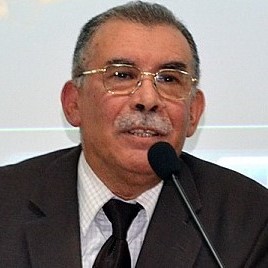
Mohamed Boudhan was an Amazigh writer, thinker, researcher and activist from the Rif, and publisher of the newspaper Tawiza. He was the author of many valuable books and articles on Amazigh identity. May he rest in peace.