Is There Any Difference Between Calling Morocco “Arab” and Naming Its Streets After “Al-Dahlous”?
It was with a mixture of shock and disbelief that Moroccans discovered, starting in the third week of May 2020 through the press and social media, that the city of Temara had been transformed into an Middle Eastern-style town modeled on the Gulf states. This was evidenced by street names honoring figures from that region—officially assigned to celebrate their “struggle” in support of oppressing women, stifling democracy, and rejecting tolerance and diversity. Among them were Khalid Al-Sultan, Bassam Faraj, Khalid Al-Hamoudi, Hamad Al-Dahlous, and Khalid Saoud Al-Hulaibi. This “discovery” sparked a wave of online anger and unanimous condemnation against what was perceived as the “capture” of a Moroccan city, handed over as a gift to Gulf Bedouins to violate its identity and desecrate its memory. Faced with the public outcry, the authorities in Temara were forced to remove the signs bearing these names.
It is striking, however, that this outrage did not target the fact that Moroccan streets were being given Arab names from the Gulf, but solely that these specific names belonged to individuals known for their religious extremism and their promotion of an obscurantist Wahhabi ideology with terrorist overtones. This implies that other names from those very same countries would remain perfectly acceptable for our city thoroughfares. By rejecting these names on grounds of radicalism while accepting others because they are deemed “moderate,” the core issue is obscured. That issue—an ingrained habit as much as a structural flaw—lies in the systematic preference given to Arab names from the Mashriq when naming our streets, public squares, buildings, and national institutions. Public attention has thus fixed on a marginal and secondary matter—the nature of the specific figures selected—which is merely the symptom of the root cause.
How can one explain this Moroccan penchant for naming streets and national institutions after Middle Eastern Arab figures rather than after Moroccan figures, whether national or local? The reason is well known: they are convinced they are Arab and part of the “Arab nation.” This is the result of a century of collective, institutional, and identity-based Arabization that began in 1912, which led to a genuine “identity transition” for Moroccans, shifting their belonging from their Amazigh and African roots to an Arab and Asian affiliation. Consequently, seeing streets, squares, and institutions named after Gulf figures appears normal and consistent with the vision imposed by this pernicious Arabization policy, according to which Morocco is nothing more than an extension of that region. The logic relied upon by Temara’s elected officials was simple: if Morocco is defined as “Arab,” what is to stop its streets from being named “Al-Dahlous,” given that the latter is just as Arab as Moroccans themselves? This is why the current rejection of these names does not in any way challenge the principle of naming streets after Gulf figures; as noted earlier, it concerns only the rejection of certain individuals due to their Wahhabi or jihadi leanings. This is a distinction found even within the Gulf countries themselves when they reject certain names for ideological or political reasons, rather than because the names are Arab.
Drawing a line between the absolute validity of naming Moroccan streets after foreign Arab figures and merely applying caution by choosing “suitable” names shifts the debate toward secondary matters. It completely fails to address the core issue: Morocco’s identity dependence on the Arab Mashriq. This alienation fosters further dependencies across culture, art, language, religious practices, and even clothing styles. What truly matters in this debate over Gulf Salafists is not what is openly discussed—extremism, obscurantism, and fanaticism—but what is swept under the rug: the exclusion of the Amazigh identity of Morocco and Moroccans. This identity leaves no footprint in the names given to streets, public squares, or national infrastructure such as schools, universities, hospitals, or ships. One cannot counter this by pointing out that certain institutions or avenues bear the names of Tariq ibn Ziyad, Abdelkrim Al Khattabi, or Al-Hasan al-Yusi. If these names were chosen, it was not because these men were Amazigh, but simply because their names sound Arab.
Furthermore, while those opposing the Arab-Gulf names chosen by city officials in Temara justify their rejection by pointing to the radicalism, obscurantism, and fanaticism linked to those figures, a fundamental question arises: where did this trend come from that has so thoroughly invaded Morocco that the names of its ideologues now disfigure official state documents in street addresses? As I have written before, this trend stems from Morocco’s identity dependence on the Arab Mashriq, the cradle of these extremist and obscurantist ideologies. It was inevitable that they would spill over into Morocco, following the logic of a follower imitating the one they follow. Therefore, combating these ideologies is not merely a matter of halting the naming of Moroccan streets after obscurantist Wahhabi figures. Instead, it requires ending Morocco’s identity dependence on the Mashriq, the true source of these obscurantist movements spreading across our country. Only then will Morocco regain its identity independence as a state with a collective Amazigh identity, rooted in its Amazigh and African foundations. That is why, when Morocco’s collective identity was Amazigh (I emphasize “collective” to distinguish it from what an individual might claim as personal belonging, which often traces back to a fabricated lineage)—before 1912 and especially before independence—Moroccans practiced a uniquely Moroccan Islam. Not in the sense of a different religion, but as a faith lived and practiced free from rigorism, excommunication (takfir), or excessive Salafism, characterized instead by tolerance, common sense, and freedom…
In response to the growing surge and spread of the Wahhabi, obscurantist, and Takfiri movement in Morocco—whose Mashriqi figures now adorn street signs and official documents—many Moroccan intellectuals have begun sounding the alarm over the dangers threatening the foundations of Moroccan identity, which this movement seeks to erase and eradicate. In an article published on May 18, 2020, on the Ahewar website titled “They are erasing national identity, Mr. Minister of the Interior,” writer Saïd El Kahl asserted that this obscurantist Wahhabi Salafist movement aims to “Islamize society by erasing its national, historical, cultural, and civilizational identity.” He added: “The erasure of identity is the most serious crime committed against the Moroccan people, on par with the crime of erasing Palestinian identity committed by Israel against the Palestinian people.”
This is a pertinent analysis, marked by incisive commentary and a thoroughly sound judgment. However, Mr. El Kahl, like most Moroccan intellectuals, does not explicitly name the identity he calls to protect from erasure and extinction. The phrase “national, historical, cultural, and civilizational identity” remains vague and general; it says nothing specific about the actual substance or nature of this national identity, nor about the historical, cultural, and civilizational components that should be preserved and defended. Indeed, the conservative Islamist movement in Morocco, which Mr. El Kahl views as a threat to national identity, itself considers this identity to be inherently Islamic and Wahhabi in its core and components, calling for its protection against the secular and modernist radicalism that supposedly threatens it. Thus, when adherents of this movement rename streets in Moroccan cities after extremist Wahhabi sheikhs hostile to democracy, women’s rights, and modernity, they do so—according to their vision of identity—in the name of preserving, reinforcing, and defending national identity.
It appears that if Mr. El Kahl—much like other intellectuals who no longer openly label this identity as “Arab” as they readily did before Amazigh identity asserted itself in recent years, particularly following its conditional constitutional recognition—fails to clarify what he means by national identity to dispel any ambiguity, it is out of reluctance to mention Amazigh identity, which nevertheless constitutes the true substance of the identity of Morocco and Moroccans. Why this reluctance to cite Amazigh identity and specify that it lies at the heart of national identity in its historical, cultural, and civilizational dimensions? Because the majority of Moroccan intellectuals, as I have noted, and Mr. El Kahl among them, refuse to recognize Morocco’s collective identity as Amazigh. Even when they do acknowledge it, they reduce its existence to a small minority group compared to what they view as the identity of the overwhelming majority: Arab identity. This is why they do not oppose the policy of Arabization—that is, the policy of assimilation and erasure of Moroccans’ identity. They thus fall into a clear contradiction: on the one hand, they reject radical Wahhabi religious movements; on the other, they embrace the policy of identity Arabization that enabled the rise of these very movements. In short, they reject the consequences of Arabization—embodied by Wahhabi Islamist movements—while accepting its root causes: the policy of identity, national, political, and ideological Arabization. Their opposition to Wahhabi and jihadi movements therefore stems not from a defense of genuine Moroccan identity, but rather from a secular stance opposed on principle to the Islamization of the state and society.
Without clarifying that Moroccan identity in fact refers to Amazigh identity, one cannot make sense of Mr. El Kahl’s assertion that the erasure of identity constitutes a crime equivalent to the erasure of Palestinian identity. This parallel only makes sense if the identity threatened with erasure in Morocco is Amazigh identity. Why? Because it is the victim of the crime of Arabization in Morocco, just as Palestinian identity is the victim of the crime of Judaization. The parallel then becomes crystal clear. We have already analyzed this equivalent relationship between Arabization in Morocco and Judaization in Palestine in an article titled “Judaization in Palestine and Arabization in Morocco: Two Facets of the Same Racist Policy,” published in the book On the Amazigh Identity of Morocco.
All of this demonstrates that in Morocco, it is impossible to eradicate ISIS-style Islamist, Wahhabi, Takfiri, and extremist ideology without tackling its underlying root causes, which lie in the policy of Arabization. Yet most Moroccan intellectuals—such as Mr. El Kahl—refuse to do this, often openly defending an Arabization policy that has led them to believe that they, and the majority of Moroccans, are Arab. This is precisely what has brought them to an impasse: they call for combating the extremism, ISIS ideology, and Wahhabism spawned by Arabization, while scrupulously avoiding rejecting or confronting that very same Arabization. Yet it is precisely the identity-driven, national, political, and ideological Arabization policy pursued by Morocco since 1912—and intensified after 1956—that ultimately brought the name of Hamad Al-Dahlous to the streets of Temara. Consequently, the true culprit behind the erasure of Moroccan identity is none other than Arabization.
Therefore, if the city of Temara has turned into a “Saudi province” in Morocco, as journalist Naim Kamal wrote in “A Saudi province in Morocco” on May 17, 2020, in response to naming city streets after extremist Gulf figures, this is neither surprising nor puzzling. Why? Because all of Morocco is treated as an Arab province. What applies to the whole (Morocco) necessarily applies to the part (Temara). Yet Saudi Arabia, like all the Arab states of the Persian Gulf, is the birthplace and stronghold of Arabness. To prevent various regions of Morocco from turning into Saudi and Arab provinces, Morocco—as an African country—must first be liberated from this Asian Arabness that makes it an identity-dependent province of the Arabian Peninsula.
Faced with the affront to dignity that this identity dependence on the Arab states of the Persian Gulf causes for many Moroccans—a feeling stemming from every people’s legitimate need to take pride in their original, independent identity—many have begun championing the concept of “Tamaghrabit” to express an authentic Moroccan identity liberated from the Middle East. Yet here again, these voices stop halfway and hesitate to call things by their true name. By “Tamaghrabit,” these Moroccans mean, as everyone knows, that distinct specificity unique to Morocco and Moroccans that sets them apart from other peoples outside North Africa, especially those of the Middle East. But what could this distinguishing specificity of the Moroccan people be, if not Amazigh identity? It is the sole characteristic unique to Moroccans as part of the Amazigh peoples of North Africa. This uniqueness and distinctiveness are precisely what constitutes a people’s shared collective identity. It follows that the identity of Morocco, of Moroccans, and of the Moroccan state is fundamentally Amazigh. Why not openly call it by its name, Amazigh, instead of resorting to the subterfuge of the term “Tamaghrabit”—which itself stubbornly uses an Amazigh grammatical structure, thereby recalling its true nature? It must be acknowledged, however, that the growing use of the term “Tamaghrabit” reflects the emergence of a healthy identity awareness, destined to replace the false consciousness that alienated Moroccans from their Amazigh identity and deprived them of pride in belonging to it. Returning to Amazigh identity is a return to truth after abandoning illusion. And therein lies true freedom, for as Christ said, the truth shall set you free.
Arabic version | French version
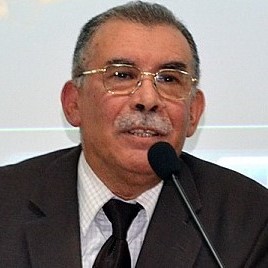
Mohamed Boudhan was an Amazigh writer, thinker, researcher and activist from the Rif, and publisher of the newspaper Tawiza. He was the author of many valuable books and articles on Amazigh identity. May he rest in peace.