The Rif Hirak: Between Security, Judicial, and Institutional Violence
After finishing the executive summary of the National Human Rights Council’s report on the “Rif Hirak,” I thanked God that this document was not published before the verdict was delivered against the detainees. Had it been published earlier, those sentenced to twenty years in prison would have faced even harsher penalties. Why?
Because the rulings relied heavily on the preliminary investigation reports. Constrained by legal limits on police custody and the limited manpower of the judicial police faced with hundreds of Rif Hirak detainees, these reports may have omitted several details that could have further incriminated the defendants. By contrast, the National Human Rights Council’s report took its time, requiring “long and arduous months of work,” as the document’s preface highlights—a timeframe chosen by the Council itself rather than imposed by law. Consequently, this report served to supplement the judicial police reports and make up for what had slipped through the cracks. In effect, this transformed it into a collective, exhaustive, and detailed preliminary investigation report on the “Rif Hirak,” characterized by exaggeration and an overly punitive classification of the detainees’ “crimes.” Had this comprehensive collective report been available during the trial, it would have superseded the individual reports compiled by the judicial police. The prosecution and the civil party lawyer, Mohamed El Houssaini Karrout, would have relied on it to demand even harsher and more unforgiving sentences, which the court would most likely have granted as the basis for its rulings.
In the trial of the Rif Hirak detainees, everything rested on security-driven decisions motivated by political considerations. This is why the proceedings began with the preliminary investigation reports drawn up by security services and ended with them—meaning the trial concluded with verdicts based on the acts documented in these “security” reports, rather than on whether the detainees actually committed them. This central role of security directives—enforcing political decisions—in “manufacturing” the trial of the Rif Hirak explains the distinct security footprint stamped on the report produced by the Council chaired by Amina Bouayach. The report effectively corroborated the content of the judicial police’s “security” reports, which were themselves produced under political instructions. For this reason, the report by Amina Bouayach’s Council resembled, as I noted, a supplementary and detailed preliminary investigation.
And because security decisions, subordinate to political decisions, had the final say in the arrest and prosecution of Rif Hirak activists, security violence remained the dominant feature of this chain of events. This is demonstrated by the abductions of detainees, the breaking down of doors to private homes, the torture suffered by many of them according to their testimony, the online leak of a half-naked photo of Nasser Zefzafi, and the death of Imad El Attabi. Since this security violence is merely the execution of a political decision, as I have highlighted, it constitutes violence committed in the name of the state. While it might seem predictable for violence to accompany security practices, what is most striking is that the judiciary also exercised its own form of violence—judicial rather than security-based. It did so by handing down harsh and unjust sentences in response to the security apparatus’s dictates expressed in the judicial police’s “security” reports. Relying on these dictates, the court exercised its own judicial violence under the cover of the law so that it would appear legitimate. Ultimately, this represents violence inflicted by the state through its security and judicial apparatuses, as its underlying source remains political decision-making.
All of this aspect related to violence, in both its security and judicial dimensions, appears understandable, logical, and even ordinary and predictable within a state driven primarily by a security obsession. What is neither understandable, nor logical, nor ordinary, however, is that a human rights body such as the National Human Rights Council should itself be involved in exercising this very same state violence against the Rif Hirak detainees. It did so by adapting it to its presumed mandate and duties, turning it into a “human rights” form of violence, much like the court that had conferred a judicial character upon state violence, as I have previously explained. This represents a new evolution in the roles and missions of this human rights institution, which no longer contents itself with defending state violence (security and judicial), but stubbornly exercises it in broad daylight, brandishing it like a trophy displayed with the euphoria of a victory won in its battle against the Rif.
This explains why this institution strove, through its report, to play the role of the “thief turned guard,” surpassing through its “institutional” violence the judicial violence itself—which had nevertheless settled for a maximum sentence of twenty years in prison against the Rif Hirak activists. Consequently, the sentence handed down by the report of the Council chaired by Amina Bouayach against the Rif Hirak resembles a death sentence, rather than life imprisonment or twenty years’ confinement. Indeed, it is a death warrant served upon the term “Hirak” when linked with “Rif,” with the latter region also condemned to disappear. As for the grounds of this decision, they border on grotesque caricature. The authors of the report engaged in absurd linguistic gymnastics to eliminate the designation “Rif Hirak,” alleging in particular that the word “Hirak” “is pronounced sometimes harak with an a, sometimes hirak with an i, without distinction,” according to the document. Following such logic, one would have to delete the word munakh (climate) from the Arabic lexicon simply because some pronounce it manakh, or ban the term ‘ilaqa (relation) because others pronounce it ‘alaqa… What crime has the word “Hirak” committed if some mispronounce it due to ignorance of the rules of Arabic grammar and spelling? If such a pretext justified purging every mispronounced word, most of the Arabic language’s vocabulary would be wiped out.
Regarding the word “Rif,” the report recommends its deletion on the grounds that “the word Rif does not accurately fulfill its function as an adverb of place to characterize the facts described,” according to the document. Indeed, it is quite true that the word “Rif” does not fulfill the function of an adverb of place. And with good reason: it is a proper noun of place—a region—and not an adverb of place as the report asserts! Grammatically and semantically, however, the gap between an adverb of place and a place name is immense. What, then, is the fault of the word “Rif” if Ms. Bouayach is ignorant of the fundamental distinction between an adverb of place and a proper noun of place? If such an absurd pretext allowed the banning of any word whose meaning and function are confused through ignorance of the Arabic language, most of the Arabic dictionary would disappear, as I have already pointed out. In such a scenario, ignorance and error would become the standard and the reference point for what is correct, defying the elementary principles of logic and the foundations of knowledge.
It thus becomes blindingly obvious that behind this failed and caricatural linguistic scam aimed at banning the expression “Rif Hirak” from public discourse lie political motivations that have absolutely nothing to do with the absurd pretexts invoked in Ms. Bouayach’s report. Indeed, it is not the word “Rif” itself that is being targeted, but everything it embodies: a history, a memory, a tradition of resistance, an Amazigh identity, and a centuries-old struggle with the Makhzen.
One is therefore entitled to ask: what is the purpose of a National Human Rights Council if the state, as it constantly claims, respects the laws it has itself enacted? Indeed, it would suffice for the state to scrupulously comply with the rules established by the Code of Criminal Procedure to prevent any human rights violations, without the need to create a national institution dedicated to these rights. Yet, although Morocco possesses a legislative framework prohibiting human rights violations and a National Council tasked with monitoring compliance, it remains difficult to claim that these abuses have completely vanished.
When reports and information detailing these violations are published, Ms. Bouayach’s document steps in to claim that such information constitutes “disinformation,” “propaganda,” and “false news”—going so far as to provide the English equivalent, fake news. Yet Ms. Bouayach knows full well that during the Years of Lead, state officials and their defenders similarly categorized reports denouncing grave human rights violations and the existence of secret detention centers holding innocent people who were never brought to justice. Just as Ms. Bouayach does today, they claimed these were rumors, false information, and disinformation spread by the “enemies of Morocco.” However, the very state that once denied these reports eventually officially recognized having committed these abuses. And it was precisely thanks to this state acknowledgment that the institution now chaired by Ms. Bouayach was created to prevent the repetition of such atrocities. Nevertheless, it is clear from the tone of this report that the Council chaired by Ms. Bouayach by no means aims to prevent the recurrence of these violations, but rather seeks to confer legitimacy upon them by hushing them up and sweeping them under the rug. Thus, Ms. Bouayach’s Council indeed fulfills, as the report claims, “its role as the conscience of the rule of law,” but in the literal and original sense of the word “conscience” (dhamîr in Arabic), which dictionaries define as “that which an individual conceals deep within themselves and which is difficult to detect” (Mo’jam al-Ma’ânî al-Jâmi’). In other words, the role of the National Human Rights Council consists of concealing, obscuring, and burying the truth, rather than illuminating, revealing, and proclaiming it loud and clear.
Arabic version | French version
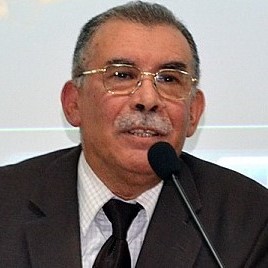
Mohamed Boudhan was an Amazigh writer, thinker, researcher and activist from the Rif, and publisher of the newspaper Tawiza. He was the author of many valuable books and articles on Amazigh identity. May he rest in peace.