Amazigh Identity in the Book “For a Cultural Revolution in Morocco
A strong and striking Amazigh presence:
Anyone who reads the works of Professor Hassan Aourid will notice the strong and striking presence of Amazigh identity throughout his writings, both in his novels and his intellectual treatises. It received particular attention in his book Pour une révolution culturelle au Maroc (For a Cultural Revolution in Morocco), published by Imprimerie An-Najah El Jadida, Casablanca, in 2018 (352 pages), with a second edition appearing in 2019. He presents it as a core constituent of the Moroccan personality and the identity of its people. Answering the question “Who are we?”, he writes: “We are quite simply the inhabitants of this land since the first appearance of human beings […] We are therefore the descendants of the inhabitants of these regions since the dawn of time” (page 19); “We are different from the East, or more precisely from the Arab world […] We are Amazighs, and anyone who came to our country became Amazighized” (page 23); “The constant of the Moroccan personality is the Amazigh component, followed by the Andalusian element, although the latter is an extension of the former. Everything else is merely a variable” (page 50); “We must build the nation on a foundation, like someone erecting a building using construction materials derived from the Moroccan personality. The consistency of this personality lies in its Amazigh depth, and this depth is determined by a geographical determinism that reminds us of what we risk forgetting: we are Africans, on African land […]. Our ancestors are the ones who gave Africa its name, and it was they who raised the slogan ‘Africa for the Africans'” (page 51).
Since Amazigh identity carries such importance, the development and promotion of the Amazigh language have become a necessity. “This is why,” Professor Hassan Aourid asserts, “I am absolutely determined to preserve it (referring to the Amazigh language); I am determined to promote it because it is the instrument that grants me my singularity in this environment where I struggle between East and West, and because it reminds me of all the stages of my history. I need the Amazigh language because it is the symbol that reminds me of the singularity characterizing my region, and the symbol that refers to the modernist project I carry” (page 195).
Revisiting long-standing themes:
Thus far, everything regarding Morocco’s Amazigh identity and the necessity of preserving and promoting the Amazigh language is clear, lucid, and easy to understand. However, it is from this point onward that a certain ambiguity, hesitation, and lack of decisiveness appear regarding the nature and methods of this preservation and promotion.
Although Professor Aourid does not oppose the teaching of the Amazigh language to preserve and promote it, the way he discusses it reflects hesitation, reserve, and apprehension. This is evident through his emphasis on the difficulties and obstacles associated with such instruction. He offers no solutions to overcome these challenges—with the exception of the question of the writing system—as if he were convinced they represent an inevitable fate obstructing this education, with no possibility of removal or change.
While this article is initially dedicated to examining what Professor Aourid considers difficulties hindering the teaching of the Amazigh language, as outlined in his book Pour une révolution culturelle au Maroc, it also provides an opportunity to analyze positions he shares with many Amazigh-speaking intellectuals. These include perspectives on the appropriate script for writing the Amazigh language and the relationship between regional dialects and a unified Amazigh language (a term I prefer over “standardized,” as I will explain later).
Indeed, while Professor Aourid adopts the position of anthropologist Abdellah Hammoudi, quoting him as saying: “The solution lies in reforming and rationalizing the teaching of the Arabic language, alongside the teaching of the Amazigh language and a constant openness to foreign languages […] The principle lies in multilingualism and an emphasis on the sound and effective teaching of the country’s two official languages” (pages 168-169), he declares shortly thereafter: “In view of what we are experiencing, I do not believe we can do without two languages that—provided we raise the level of our curricula, our methods, and the adopted pedagogy—are likely to improve the performance of our educational system: Arabic and French, to which I would eventually add Spanish” (page 169). He adds: “By this, I do not mean to exclude other languages, as I would not want to violate the rights of the Amazigh language. But at the same time, I must be conscious of the reality in which it finds itself. It is not enough to simply decide to teach it for the process to occur smoothly for a language that has remained untaught for centuries, living only by the grace of its own internal momentum. I cannot change this reality by a simple decision, nor by an emotional impulse or ideological zeal” (page 170).
What do these statements mean?
“It has remained an untaught language for centuries”:
This implies that the Amazigh language is not part of the school languages, which are Arabic and French. However, Professor Aourid anticipates the rebuttal of those who might see this as an exclusion of the Amazigh language on his part. He reminds us that the language “has remained untaught for centuries,” emphasizing that this is a reality that cannot be changed simply by a decision to teach it, nor by sentimental impulses or ideological zeal.
This logic, through which Professor Aourid attempts to justify the difficulty of teaching the Amazigh language, serves as both the cause and the result of its exclusion from schools. If the Amazigh language has remained untaught for centuries, using this reality as a pretext to explain the difficulty of providing instruction for the first time in its history—while labeling the decision to teach it a mere passionate impulse that ignores reality—will result in its teaching being permanently barred. This justification then becomes an irreversible fait accompli. Every time a project aims to teach the language, it could be undermined and abandoned by citing that “it has remained an untaught language for centuries.” Recalling this situation thus amounts to enshrining and perpetuating it; in other words, it maintains the Amazigh language in its status as an untaught language. This is why, if there remains one compelling reason to teach the Amazigh language, it is precisely this: the fact that “it has remained an untaught language for centuries.”
Furthermore, if this logic were sound and acceptable, no language in the world would be taught today, because every language currently used in education “remained an untaught language for centuries,” exactly like the Amazigh language.
Between standardization and dialects:
Among the other arguments put forward by Mr. Aourid to convince us of the real difficulties hindering the teaching of the Amazigh language is his warning: “a hasty transition to a standardized language breaks with the speaker base” of the various variants of the Amazigh language “and limits the vital function that activists placed at the heart of Amazigh specificity” (page 196). This leads him to conclude: “I cannot, therefore, ignore the ‘dialects’ in favor of a standardized language that some fear will turn into a laboratory language, understood by a tiny minority. I know the media has a role to play in accelerating standardization, but I cannot skip steps. An Amazigh proverb comes to mind: ‘Termed, tourou afghoul’ (Rushed, it gave birth to a deformed being), and that is exactly what I dread” (page 197).
Opponents of the Amazigh language are typically the ones who, acting in bad faith and with blatant cynicism, brandish the bogeyman of “dialects” as a double-edged sword to block the Amazigh language and prevent it from attaining the status of an official, written language of schooling. They argue first that it is merely a scattering of disparate dialects unfit for education and writing, and then object—once efforts to unify the language get underway to overcome this fragmentation—that it is an artificial, laboratory-created construct alien to the natural Amazigh language spoken by Moroccans. Yet Mr. Aourid also overdramatizes the question of unifying (standardizing) Amazigh dialects—a term I use here without quotation marks and without any hesitation—even though he does so in good faith, sincerity, and integrity. Indeed, he harbors a completely legitimate concern that such unification might produce a linguistic counterfeit, as he put it, severed from the living, spoken, and widely practiced Amazigh language.
There is no doubt that terms such as “standard Amazigh,” “standardized Amazigh,” or even “normative Amazigh,” promoted by academic and research circles—such as the Royal Institute of Amazigh Culture (IRCAM) and scholarly works devoted to the Amazigh language—are liable to make Amazigh speakers fear the loss of their living, maternal Amazigh language used in everyday life. They dread seeing it replaced by a “standard Amazigh” “manufactured” in research and language-planning centers. Much like the narratives surrounding Arabic, this variety is perceived as a “literary” language (fusha) alien to “dialectal” Amazigh—one mastered and spoken only by its creators, thereby remaining an elitist, artificial construct detached from the spontaneous and vibrant Amazigh language.
This is why it is preferable to abandon the terminology of “standardization” and frame the issue in a simple, accessible way: if we understand why Moroccans from the north cannot understand their compatriots from the Souss—either orally or in writing—when both use their natural, spontaneous Amazigh language, we may be able to find a solution that allows both sides to communicate in speech and writing without either having to abandon their native Amazigh or cease using it daily. What is this solution? It does not necessarily entail “bypassing the dialects” in favor of a “standard” Amazigh that risks becoming a laboratory language—as Mr. Aourid fears. Rather, it means ensuring that northern Moroccans learn the Amazigh of the Souss (Tachelhit) and that people in the Souss learn northern Amazigh (Tarifit). In this way, mutual understanding will take root between speakers of two Amazigh dialects separated by undeniable differences, without either group having to abandon the daily use of their mother tongue (Tachelhit and Tarifit). It is this mutual intelligibility that will transform the Amazigh of the Rif and the Souss into a shared Amazigh—what is technically referred to as a koine. We will thereby gain a unified, common Amazigh language (without labeling it standardized), all while preserving Amazigh as a natural, living language.
The educational and pedagogical success of this approach does not hinge on “bypassing dialects” or erasing some of them, but rather on teaching these very dialects to all students within a unified national framework. This is by no means an impossible task, contrary to how it might appear to those who have failed to grasp the nature of both the problem and the solution. In fact, teaching these dialects simply means teaching the differences between them—especially the grammatical particles and conjunctions that primarily hinder mutual understanding between speakers of different Amazigh dialects, along with expressive structures, pronunciation where necessary, and even verb conjugations in certain cases. This will enable speakers of one regional variety to understand the Amazigh of another region, precisely because they will recognize and comprehend the distinctions setting that Amazigh apart from their own, rather than erasing these specificities and replacing them with a “standard” language. To explore the details of this approach—which seeks to unify the Amazigh language in schools and education without cutting it off from natural Amazigh—readers can consult the article titled “What vision and approach for teaching a unified, common Amazigh language?” at the following address: http://tawiza.byethost10.com/1tawiza-articles/arabe/enseigner.htm.
The process of transforming the Amazigh language, through its teaching, into a unified and shared language for all Moroccans requires sufficient time—potentially more than fifteen years—as an indispensable foundational phase. This unification process then continues through written and cultural production in the Amazigh language, as well as its spoken use across public administration, the media, and state institutions. There is, therefore, neither haste nor slipshod work in this unification process—and I purposely do not say standardization—which remains ongoing at the pace of writing in the Amazigh language and using it in daily communication.
This is why the fear that “standardized” Amazigh would “kill off” the living, vernacular Amazigh language, as Mr. Aourid dreads, is an exaggerated apprehension, triggered by the words “standardized” and “standardization” far more than it relates to the actual process of unifying the Amazigh language through schooling. Yet Mr. Aourid knows full well that detractors of the Amazigh language, as previously noted, oppose the emergence of a unified, shared Amazigh language under the pretext that it might “kill off” the living, dialectal vernacular. They exploit this argument to hinder the teaching of the language, claiming that it consists merely of multiple, scattered dialectal varieties. Yet if there is one compelling reason to teach the Amazigh language, it is precisely this necessity of unification, so that it does not remain fragmented into multiple, scattered dialects.
Tifinagh:
Although the question of the Amazigh writing system has been settled on the official, educational, pedagogical, and even political levels for over sixteen years—ever since the royal approval on February 10, 2003, following consultations and agreement among the majority of political parties, designating Tifinagh as the official script for writing and teaching the Amazigh language—some continue to reopen the debate to express personal opinions at odds with this official decision, as Mr. Aourid does. Reopening this discussion thus provides an opportunity to respond not only to Mr. Aourid, but also—as previously mentioned—to many Amazigh-speaking intellectuals who believe, like him, that choosing Tifinagh was a mistake detrimental to the Amazigh language.
Mr. Aourid indeed regards Tifinagh as an obstacle to successfully teaching the Amazigh language to all Moroccans, arguing that “anyone who does not speak the Amazigh language sees Tifinagh as a psychological barrier” (page 198) that discourages them from learning it. He therefore advocates using the Latin script to develop and promote it. As he states: “I want to advance the Amazigh language; I want it to reach non-Amazigh speakers as well, and I do not want it to become a psychological barrier; that is why I lean toward adopting the Latin alphabet. If I were seeking only identity or sentiment, nothing would offer that more than Tifinagh; but if I wish to make it a modern language, I see no way forward other than this difficult choice” (page 199).
1. The preference for Latin over Arabic, not over Tifinagh:
While the majority of the Amazigh movement preferred the Latin alphabet for writing the Amazigh language prior to the official adoption of Tifinagh, it should be emphasized that this preference was in opposition to the Arabic script—which it categorically rejected—and not in opposition to Tifinagh. The latter was in fact absent from the “script battle,” not because it was unsuitable for the Amazigh language, but because it remained outside the conflict, perhaps even unthinkable at the time, having never been standardized, adapted, or used in Morocco, unlike the Latin and Arabic scripts. Thus, while comparative studies pitted the Latin and Arabic scripts against each other, highlighting the advantages of the former and the disadvantages of the latter for learning to read and write the Amazigh language, no specialist has ever conducted a comparison between the Latin alphabet and Tifinagh that would demonstrate the superiority of the former over the latter in terms of learning ease for students. Consequently, advocating for the Latin alphabet in no way meant it was technically or pedagogically more suitable than Tifinagh for teaching the Amazigh language to students, but simply that it was preferable to the Arabic script.
2. The choice made by IRCAM:
Following the Dahir of Ajdir of October 17, 2001, which established the Royal Institute of Amazigh Culture (IRCAM)—with one of the mandates set out in the decree being the development of an appropriate writing system for the Amazigh language—most activists and intellectuals within the Amazigh movement expected IRCAM to adopt the Latin script as the official alphabet for writing and teaching the language. However, the institution’s selection of Tifinagh, a decision subsequently ratified by royal decree, dashed the expectations of the majority of Amazigh activists. They viewed this choice as an outright “about-face” from the direction taken by the Amazigh movement, whose members and constituent groups overwhelmingly favored the Latin script. What really happened, then? And why this “about-face”?
While specialists, linguists, and educators believe that the criteria governing the choice of an alphabet suitable for writing a language are technical and pedagogical—taking into account ease and simplicity of use, reading, and writing—matters unfold quite differently when the selection of this script ceases to be a purely scientific and academic affair. It also becomes a political issue, representing a decision made by the state—backed by political and partisan forces wielding weight and influence—before being the decision of researchers and academics. In the debate over the script for the Amazigh language, these political and partisan forces were heavily involved, to the extent that the well-known “Islamist” party threatened to take to the streets if the Latin alphabet were chosen. Nor is there any doubt that the state exerted pressure, both explicit and implicit, on the leadership of “IRCAM” to steer them away from the Latin alphabet, seeking to avert the conflict and confrontation that the “battle of the script” threatened to unleash. Faced with this political and ideological reality—far removed from scientific or academic considerations—priorities began to shift among defenders of the Latin alphabet within “IRCAM,” and even among their opponents advocating for the Arabic script outside “IRCAM.” Thus, for IRCAM members hailing from the Amazigh movement, the priority was no longer securing the adoption of the Latin alphabet, but ruling out the Arabic script, which proponents of Arabization—primarily nationalists and Islamists—were seeking to impose through political and media pressure. Likewise, for those proponents of Arabization themselves, the priority was no longer to impose the Arabic alphabet, but rather to rule out the Latin script.
Given the political and ideological conflict surrounding the choice of script, it is easy to interpret the eventual adoption of Tifinagh as a compromise solution satisfying all parties involved in the dispute. One could even argue that circles hostile to the Amazigh language viewed this decision as a victory for their anti-Amazigh stance. Why? Because they believed, just as certain Amazigh activists defending the Latin alphabet did, that Tifinagh would be the graveyard of the Amazigh language and spell its demise.
3. A political choice in favor of the Amazigh language:
While the adoption of the Tifinagh alphabet by “IRCAM” may have appeared, given the political context in which it took place, as a political choice serving as a compromise to the benefit of political actors—including the state—who were parties to the “battle of the script,” what would later become clear is that this decision was indeed a political choice, but one in favor of the Amazigh language, rather than to the advantage of other parties. How so?
Following the Ajdir Dahir of October 17, 2001, which marked the state’s official political recognition of Amazigh identity and the Amazigh language, a prevailing belief emerged within Amazigh circles that, after this revolutionary and historic recognition, there was no longer any need to continue campaigning for and defending Amazigh identity as a political cause. Indeed, according to this view, having transitioned from the political and identity-based realm to the cultural and linguistic sphere, the Amazigh cause no longer called for demands of a political or identity-driven nature—issues the state had already settled through their official political recognition in the Ajdir Dahir. Instead, it required technical and scientific measures that addressed not the question of “why?” but rather “how?”: How should the Amazigh language be written? How should the Amazigh language be taught? How can Amazigh heritage be preserved and Amazigh culture advanced?…
Yet more than five years after the promulgation of the Ajdir Dahir, it became plainly evident that the state’s announced commitments regarding the recognition of the Amazigh language and identity, as well as its stated resolve to ensure its development and roll out its widespread teaching—as laid down in the decree—had been fulfilled only to a negligible degree. These efforts never ventured beyond mere symbolism, accompanied by a deliberate undermining of the decision to teach the Amazigh language. This laid bare the absence of any genuine, serious political will to foster a meaningful and authentic promotion of the Amazigh language and culture. It was precisely this state of affairs that prompted the resignation of seven board members from the Royal Institute of Amazigh Culture, who stepped down in protest against this lack of genuine, serious political will in the handling of the Amazigh issue.
What does all this have to do with the question of the alphabet? The connection is that the lack of genuine, serious political will to foster a meaningful and authentic promotion of the Amazigh language and culture—as I have written—brings the Amazigh issue back to what it was prior to the Ajdir Dahir: fundamentally and realistically a political question. It was at this juncture that Amazigh activists realized that, while they deemed the Latin alphabet linguistically suited to the Amazigh language as a linguistic and cultural matter, the script that suited it politically and in terms of identity—as a political and identity cause—was none other than its original historical script, Tifinagh. Why? Because its use serves as a means of asserting and reclaiming Amazigh identity, while functioning as a political instrument in the political struggle for genuine political recognition of Amazigh identity as a political and identity issue before being a matter of language and culture, contrary to the misleading narrative fed to us when the Royal Institute of Amazigh Culture was founded.
This explains why the Tifinagh script came to terrify the proponents of Arabization who oppose the Amazigh cause, even though they had initially believed it would serve as its graveyard. Indeed, they found no other way to fight it than by slanderously claiming that it was the root cause of the stagnation in teaching the Amazigh language—even though this instruction has never once been undertaken with the required seriousness and conditions. In reality, if this stagnation is to be linked to the Tifinagh alphabet at all, it is not mere stalling, but rather a deliberate sabotage of this teaching aimed at blocking the path of the Tifinagh script—an alphabet that grants the Amazigh people and language total independence and complete unity, as an identity, a language, and a script that itself symbolizes both that identity and that language.
4. The superiority of Tifinagh over the Latin alphabet:
I have already pointed out that prior to the official adoption of Tifinagh, advocating the Latin script as the most suitable choice for the Amazigh language merely meant deeming it preferable to Arabic characters, which were also in contention for writing and teaching the language. It by no means implied that Latin surpassed Tifinagh, since Tifinagh was then not even in the running, excluded from any comparison and entirely unconsidered as an instructional tool. However, once Tifinagh was officially recognized, modernized, and equipped with a standardized alphabet ready for use, it entered the arena to go head-to-head with the Latin script, allowing their respective strengths and weaknesses to be weighed against each other. What, then, does such a comparison reveal?
While it is true that the choice of Tifinagh stems from an identity and emotional dimension, as Mr. Aourid writes, it is completely false to claim that only the Latin script is capable of transforming the Amazigh language into a developed one. By logical deduction, such reasoning suggests that the Amazigh alphabet would act as an obstacle to this development. Yet that is categorically untrue. Why?
Because while Tifinagh surpasses the Latin alphabet in terms of identity and emotional resonance, it outperforms it just as much on technical and pedagogical grounds. To convince Mr. Aourid, I will not confront him with the diagnostic study conducted in 2010 by the Royal Institute of Amazigh Culture, in coordination with the Ministry of National Education, which revealed that pupils manage to learn to read and write the Amazigh language in Tifinagh with remarkable ease, vastly outstripping the difficulties they face in learning to read and write Arabic and French. I will not refer him to this study, because he is perfectly capable of comparing for himself the process of learning to read and write the Amazigh language using the Latin alphabet with doing so using Tifinagh. He will conclude—a glaring truth that he could hardly dispute if he compares the two systems, not from his preconceived notion that the Latin alphabet is universal and used by the world’s most prestigious languages, but by examining the intrinsic properties of each writing system in terms of how easily or difficulty it is acquired—that learning to read and write the Amazigh language in Tifinagh proves easier and simpler than resorting to the Latin script. Indeed, learning and using the latter requires mastering four distinct forms depending on whether the writing is handwritten and cursive, in lowercase or uppercase, or print and disjointed, also in lowercase and uppercase. This constraint may seem minor, or even “insignificant,” to Mr. Aourid and other proponents of the Latin alphabet, given that they are educated adults accustomed to handling these four forms without any noticeable difficulty. For a schoolchild, on the other hand, assimilating these four scripts requires an additional investment of time and energy, which places a considerable burden on learning to read and write. Only those who have experienced this in the field truly grasp the extent of this challenge, such as French language teachers like the author of these lines, who still remembers how fifth-grade pupils (the final year of primary school under the former system), at a time when education in Morocco was effective and of high quality, struggled to read and, above all, to write these letters in the form required by the context, despite having already completed three years of French instruction.
As for claiming that cursive handwriting gives the Latin alphabet an edge over Tifinagh—as advocates of the Latin script constantly assert—this argument stems from their preconception that the Latin alphabet is universal and used by the world’s most influential languages. This very bias leads them to view everything present in the Latin alphabet but absent from Tifinagh as an inherent advantage of the former over the latter. Yet, from a graphic and technical standpoint, it is entirely feasible to write Tifinagh in a cursive hand, as some researchers advocate. However, I firmly oppose this option. It represents nothing more than a slavish imitation of the Latin alphabet driven by its dominance and prestige, without offering any real benefit—whether in making writing in Tifinagh more fluid, simpler, or faster, as some imagine.
To this difficulty of mastering the four forms of Latin characters must be added the unavoidable need, however limited, for diacritical marks placed above or below the line to adapt the modified Latin alphabet to the phonological system of the Amazigh language. While such marks might seem inconsequential to us—especially since they are used in other languages like Turkish and Maltese—the reality is entirely different for a young schoolchild. For pupils, they cause confusion and disrupt the assimilation of spelling rules, often leading to hesitation between pronouncing a letter with a diacritic and one without. This, in turn, demands extra time and effort to learn how to handle letters with diacritical marks—not to mention the aesthetic drawback that such visual clutter inevitably creates.
In contrast, the Amazigh alphabet stands out for its genuine simplicity and ease of learning, both technically and pedagogically. And when I say “pedagogically,” I mean its use in teaching the Amazigh language to a child or young student who cannot yet write in any language and has mastered no alphabet. Why is it so simple and accessible? Because each graphic character corresponds to a single sound, creating a truly phonetic script where the written form faithfully mirrors spoken speech, with the exception of a few very rare cases where the written form diverges from the spoken word (phonological spelling) to meet requirements imposed by Amazigh grammar rules.
This ease with which young students learn to read and write the Amazigh language in Tifinagh explains why non-Amazigh-speaking children are just as capable of easily assimilating the language as their Amazigh-speaking peers. This is indeed the observation made by the majority of Amazigh language teachers, despite the deliberate sabotage targeting the rollout of this subject. Many of them even report that non-Amazigh-speaking students frequently outperform their Amazigh-speaking classmates.
Regarding the success of non-Amazigh-speaking students, I will share a true story whose protagonists are still alive today. In Tangier, a father went to a school where Amazigh language classes had just been introduced to inform the principal of his flat refusal: he did not want his son taking these classes and demanded that the boy not be marked absent, not be tested, and that the subject not count toward his academic record. The principal, however, explained that the Ministry of National Education had made the teaching of the Amazigh language mandatory, just like any other subject, and that his son had to comply or face regulatory penalties. At the end of the school year, the father was astonished to discover that his son had earned the highest grade in the Amazigh language, which helped him achieve an excellent overall average. Yet the biggest surprise came during the end-of-year school play: the father watched an Amazigh-language performance in which his son played the lead role, speaking fluently in the very language the father had detested and refused to let him learn. Witnessing such a performance, the father completely reconsidered his views on the Amazigh language, as he personally admitted to the school principal.
In short, proponents of the Latin alphabet are utterly incapable—and I challenge them to try—of demonstrating on scientific, technical, educational, or pedagogical grounds that this script is superior to Tifinagh for teaching reading and writing in the Amazigh language to a pupil who has never learned or used either the Latin alphabet or Tifinagh. I place particular emphasis on this phrasing: “a pupil who has never learned or used either the Latin alphabet or Tifinagh.” The point is to highlight that the issue is fundamentally pedagogical—in the etymological Greek sense of the term, which pertains to the child—and to reiterate that selecting the best alphabet concerns the initial introduction to the Amazigh language for young children who cannot yet read or write in any script whatsoever. This has absolutely nothing to do with adults who are already familiar with the Latin alphabet.
Since these advocates of using the Latin alphabet to transcribe the Amazigh language are unable to establish its superiority over Tifinagh, whether scientifically, technically, or pedagogically, why do they persist in demanding the abandonment of Tifinagh and its replacement by Latin characters?
5. A layman’s conception:
This preference for the Latin alphabet is by no means grounded, as I have pointed out, in scientific, technical, or pedagogical data, but rather in a layman’s conception that is widespread among many Amazigh-speaking intellectuals. It is a layman’s view because its proponents proceed from the observation that the Latin alphabet is used to write dominant, developed languages that produce science, knowledge, and technology, such as English, German, or French. Through a superficial and somewhat naive analogical reasoning, they deduce that adopting it for transcribing and teaching the Amazigh language would offer it better prospects for growth, akin to what it supposedly brought to those advanced languages. Yet one need only consider the extraordinary economic, scientific, and intellectual rise of countries whose languages make no use whatsoever of the Latin alphabet—such as China, Japan, or South Korea—to realize that this script is by no means a prerequisite for progress, science, and development.
Since Tifinagh allows pupils to learn to read and write the Amazigh language more simply, smoothly, and quickly than the Latin alphabet, while embodying Amazigh identity and language and conveying the political dimension of this cause, demanding its replacement with the Latin alphabet smacks of pedantry and pseudo-intellectualism. Such a demand simply stems from a need among its advocates to give themselves the illusion of being resolutely anchored in modernity and in tune with the spirit of the times.
6. Does Tifinagh constitute a “psychological barrier”?
Among the other arguments put forward by Mr. Aourid to justify using the Latin alphabet at the expense of Tifinagh is the notion that the latter poses a “psychological barrier” for non-Amazigh speakers.
Why would Tifinagh represent such a psychological hurdle for non-Amazigh speakers? The explanation supposedly lies in its apparent unfamiliarity: a new alphabet that they have never practiced or encountered, unlike the Latin alphabet, which is ubiquitous in Morocco, widely known, and familiar in everyday use. Yet, if this “unfamiliarity” of Tifinagh, stemming from its novelty and historically limited circulation, were sufficient to justify giving primacy to the Latin alphabet, why would it concern only non-Amazigh speakers? The vast majority of Amazigh speakers are just as unfamiliar with Tifinagh, for the simple reason that it is equally new to them, and they never learned it in school or used it to read and write. There is therefore no justification, logically or in reality, for making the slightest distinction between Amazigh speakers and non-Amazigh speakers when it comes to their relationship with Tifinagh.
Moreover, if the line of reasoning demonstrating the superiority of the Latin script were well-founded, it would apply even more forcefully to the Arabic alphabet, which remains undeniably more widespread, more commonly used, more familiar, and far more prominent in the visual environment. Pushing the logic of the “psychological barrier” to its ultimate conclusion, it is therefore the Arabic script, and not the Latin one, that ought to be chosen to transcribe the Amazigh language. Indeed, this argument wielded by Mr. Aourid and other proponents of the Latin script is precisely the primary and decisive claim invoked by advocates of Arabization to demand that the Amazigh language be written in Arabic characters. Thus, the rhetoric of a “psychological block” directly serves the cause of those championing the Arabic script, without supporters of the Latin alphabet realizing either the glaring contradiction into which they have locked themselves or the tremendous favor they are doing their adversaries.
Even assuming that such a “psychological barrier” truly exists and discourages non-Amazigh speakers from learning the language, a fundamental question must be asked: why would the script itself constitute such an obstacle for them? Is it not rather their broader unfamiliarity with the Amazigh language that acts as the real psychological impediment hindering their learning? Does their supposed reluctance toward Tifinagh not reflect a rejection of the Amazigh language itself, far more than of its alphabet? If so, resorting to any other writing system will never suffice to make them appreciate it or secure their support. The one and only way forward lies in making the teaching of the Amazigh language compulsory, as an official and national language, for all school-age pupils beginning in primary school. That way, neither the language nor its Tifinagh script will present a psychological block comparable to the one experienced by older generations. After three generations—roughly forty-five years—of Moroccans studying and learning the Amazigh language in school alongside Arabic and French, there will no longer be any citizens for whom the Amazigh language and Tifinagh stand as obstacles to learning, since everyone will have studied, absorbed, and practiced it in its original alphabet. For man is the enemy of what he does not know, as the adage attributed to Ali ibn Abi Talib reminds us.
This is why framing Tifinagh, or the Amazigh language in general, as a “psychological barrier” for non-speakers is an argument that is entirely beside the point and alien to the real issue: the pedagogy of the Amazigh language. Why? Because when we debate Tifinagh as the script for the Amazigh language, we are approaching it from the perspective of its institutional instruction and the classroom learning of reading and writing. Consequently, the fact that certain Moroccans, whether Amazigh speakers or not, turn away from learning it under the pretext of preferring Latin or Arabic characters—with which they are already thoroughly familiar—in no way undermines the validity of choosing Tifinagh to transcribe and teach the Amazigh language. And for what reason?
Quite simply because teaching the Amazigh language in Tifinagh is not intended for educated adults who have already mastered the Latin and Arabic alphabets, and for whom this Amazigh script does indeed represent a “psychological hurdle.” In truth, this education is aimed at young children entering school who have not yet mastered any alphabet, whether Latin or Arabic, to the point of preferring it over Tifinagh. In their eyes, all writing systems are on equal footing when it comes to what is labeled a “psychological block.” The monumental error committed by proponents of this theory is that they project their own subjective feelings—since Tifinagh does indeed represent a mental barrier for them—onto the entire process of teaching and writing the Amazigh language. They transform their own reluctance, born of their fluency in Latin characters—or Arabic characters for those calling for the latter—into a general rule applied to young schoolchildren. Yet these children are encountering reading and writing for the very first time in their lives, skills they have never practiced in any script, be it Latin, Amazigh, or Arabic.
The real “psychological obstacle” hindering the learning of the Amazigh language—if one can even speak of such an obstacle—lies with those intellectuals, whether Amazigh-speaking or not, who struggle to let go of the writing systems they are accustomed to in order to learn a new alphabet such as Tifinagh. Children, for their part, have no prior graphic reference points to abandon when they begin learning to read and write the Amazigh language in Tifinagh. The controversy surrounding the appropriate script therefore has nothing whatsoever to do with young learners, but rather with adults, who constitute, as I have pointed out, the real “psychological block” facing the learning of the Amazigh language in Tifinagh by Moroccans. Indeed, we have seen the case of a parent who refused to let his son learn the Amazigh language, only to be amazed later to see him excel to the point of acting and delivering dialogue in an Amazigh theatrical play. The real impediment to the Amazigh language thus stems from adults, not children; from parents, not their offspring.
Furthermore, teaching the Amazigh language in Tifinagh characters is a state decision, binding on everyone just like all public policies, regardless of anyone’s personal preferences regarding this or that script. By warning us that Tifinagh could erect a “psychological barrier” for non-speakers, Mr. Aourid views the learning of the Amazigh language as an individual endeavor rooted in personal choices, much like what activists in the Amazigh movement used to do when learning its script through self-taught efforts. That is why some of them wrote it in Latin characters, Arabic script, or Tifinagh, seeing a “psychological barrier” in the other two options depending on their own assessment, academic background, personal sensibilities, and what they expected from learning and using the Amazigh language. By contrast, the institutional project of teaching the Amazigh language in Tifinagh is by no means an individual choice or a matter of personal whim subject to each person’s opinion, level of education, or attitude toward this language and its goals. It is a sovereign choice of the state, which applies to all citizens, whether Amazigh-speaking or not, including those who continue to see Tifinagh as a “psychological obstacle.”
The exclusion of the Amazigh language from education:
Ultimately, these difficulties raised by Mr. Aourid regarding the teaching of the Amazigh language are merely pretexts designed to convince us that this language cannot be taught on an equal footing with Arabic or French. This is precisely what he himself summarizes in these words: “Consequently, my answer regarding languages of instruction consists of advocating teaching in Arabic, the Amazigh language, and French (along with Spanish in regions formerly subject to French colonization), provided that the function of each idiom is properly understood and a progressive pedagogical approach is adopted. Thus, on an emotional level, in preschool education, I would teach in a refined Darija and an Amazigh language faithful to the lived experience of the Amazigh-speaking pupil, before transitioning to Arabic without, however, overburdening the learner with grammatical rules” (page 200).
What are we to make of these remarks? While such rhetoric claims to encourage the teaching of the Amazigh language, in reality it serves to sideline it all the more effectively. How so? When Mr. Aourid asserts that we must “teach in Arabic, the Amazigh language, and French,” he gives us no time to welcome such a formula, which would put the Amazigh language on par with Arabic and French. Indeed, he rushes to specify that such an approach is contingent upon a clear awareness of the role assigned to each of these three languages. Yet he assigns to the Amazigh language here, just as to Darija, nothing more than a mere “emotional” function, tailored to the preschooler’s level, in order to prepare their transition to the Arabic language. It is therefore evident that the function allocated to the Amazigh language, through this “emotional” use in preschool, boils down to preparing the pupil to transition into the true language of school instruction—namely Arabic, followed by French. The mission of the Amazigh language thus ends the moment the child steps across the preschool threshold to enter primary school. This amounts, purely and simply, to ousting the Amazigh language from school education—that is, from the formal educational curriculum.
Moreover, the role Mr. Ourid assigns to the Amazigh language—serving as a preschool bridge to prepare pupils for learning Arabic as the language of instruction—is nothing new. The National Charter for Education and Training had already given it this task back in 1999. Its Article 115 stipulates: “Regional educational authorities may choose to use the Amazigh language or any local dialect to facilitate the learning of the official language in preschool and the first cycle of primary education.” Regarding this “emotional” role for the Amazigh language in preschool, it is worth recalling that when the Charter granted it this function aimed at “facilitating the learning of the official language,” the Amazigh language was not yet an official language. Mr. Ourid is therefore pushing the Amazigh language—despite its status as an official language since the 2011 Constitution—back to an era when Arabic reigned as the sole official language. He is also rolling it back to before the teaching decision announced in 2003, when it was officially introduced into primary schools, as he now proposes confining it solely to preschool more than 15 years after it entered primary education. Yet doing justice to the Amazigh language would instead require advocating, working—and even fighting—to implement and ensure the success of the decision to teach it from primary school onward, rather than confining it to mere “emotional” use in preschool.
Starting from the end rather than the beginning:
Mr. Ourid recommends “that the teaching of the Amazigh language begin from the top down—that is, at university, then high school, followed by the second cycle of basic education, and finally the first cycle of basic education. One cannot rush through the stages hastily,” he writes (page 200). This proves that he is in no way convinced of the feasibility of compulsory, standardized instruction in the Amazigh language that would begin not at the end, as he suggests, but at the beginning—that is, from the bottom up, in keeping with the natural trajectory of learning national and official languages, a process aimed first at the child and school pupil, rather than the adult and university student.
Starting its instruction at the university level would only relegate it to the status of an elitist language, reserved for the minority who make it into university lecture halls. It would thus be unable to complete its cycle of reproduction as a vehicle for written, cultural, and intellectual creation used across public administration, the media, and communications. Added to this is the fact that only a small proportion of students enrolled in the Moroccan school system reach university. By contrast, making it compulsory for all pupils from primary school onward would enable the majority of Moroccans—within about 15 years of introducing that requirement—to master it and be able to read and write it, including those who leave school before middle school.
As for establishing research centers on the Amazigh language and opening specialized academic programs, that mission naturally belongs to the university—not introducing initial instruction in it at that higher education level. Doing so would amount to treating it either as a language that already has its own cycle of written reproduction, or as a foreign language like Hebrew, Persian, or Chinese—languages that are in no way expected to sustain a cycle of reproduction as national and official languages of Morocco.
If the term “prematurity” or “premature nature” means, in linguistic terms, “carrying out an action before its time has come, rushing to use something whose necessary conditions have not yet been met, or picking a fruit that has not yet reached full ripeness…,” then this notion of a “premature abortion” of the stages of teaching the Amazigh language—an apprehension harbored by Hassan Ourid, and on which he bases his proposal to begin teaching it at the university level—applies directly to the very idea of starting Amazigh language instruction at university. Indeed, a student who has reached this stage of higher education is expected to already have a command of the languages learned since primary and middle school, so as to deepen their study of them or specialize in them during their university coursework. This means the student could only achieve complete mastery of these languages at university because they acquired them throughout earlier school cycles, at stages tailored to their age group and level of schooling. By contrast, teaching them the Amazigh language directly at this university tier amounts to skipping the prior “natural” stages of primary, middle, and secondary education. Such an approach would produce nothing more than a “premature” Amazigh language, deprived of maturity precisely because it would not have followed its normal, gradual progression. That is the real “prematurity” against which Hassan Ourid claims to warn us. This premature and incomplete nature thus becomes entirely obvious: university-level Amazigh will not have followed the path of its natural maturation, which necessarily requires that it be taught from the very start of primary school.
The death of the Amazigh language:
If the teaching of the Amazigh language is to begin at the top—that is, in higher education—while remaining confined at its lowest rung to the preschool level, the inevitable result will be that the Amazigh language is deprived of genuine schooling. Yet only schools are capable of enabling it to complete its cycle of reproduction as a language of writing, culture, thought, and pedagogical transmission, once the first generation of schooled students who have learned and mastered it has passed. Unless we move swiftly to implement mandatory, standardized, and continuous instruction in the language for all Moroccans starting in primary school, as I have already explained, this situation could well lead to its death and outright disappearance within less than four centuries, given the rate at which the number of Amazigh speakers is declining year after year.
This grim fate awaiting the Amazigh language, so long as it remains unable to reproduce itself as a written language through mandatory, unified instruction for all school-age Moroccans, challenges us and confronts Hassan Ourid with the following question: if the Amazigh language is truly “the instrument that gives me my distinctiveness within this environment where I oscillate between West and East, and it is what brings back to my memory all the stages of my history. […] It is the symbol that reminds me of this distinctiveness characterizing my region, and it is the symbol that points to this modern project I carry within me,” as he himself wrote and as we recalled earlier, how can we preserve this distinctiveness and this symbol when both owe their very existence to the existence of the Amazigh language itself? Conversely, if Hassan Ourid imagines that the Amazigh language can continue to endure for long centuries, remain alive, reproduce itself, and be passed down from generation to generation through oral use alone, without schools and without writing, I believe, for my part and purely as a personal view, that such an assumption is flatly impossible. The signs and evidence proving this are countless, and neither time nor space allows them to be set out and debated here. That is why it remains strictly impossible to safeguard this language and enhance its standing, as Hassan Ourid advocates, without elevating it to the status of a written, school-taught language through education and the school system.
Conclusion and summary:
In his book, Hassan Ourid calls for a cultural revolution that would benefit French as the language of instruction for scientific subjects, as well as Arabic, to which he has reserved a preeminent place—going so far as to write on page 111 of the first edition: “and we foresee no renaissance without it.” He later revised that statement to remove it from the second edition, no doubt because of its excessive nature and its contradiction with his own declarations establishing that Arabic is not the language of science, even though science is the essential prerequisite for any genuine renaissance. This cultural revolution would therefore benefit both French and Arabic, with the notable exception of the Amazigh language, whose status would be confined strictly to oral use. This holds true despite its marginal use in preschools or its teaching at the university level, which is viewed as mere superficial window dressing that will never allow it to launch its own cycle of reproduction as a written language and a language of schooling, as I have already demonstrated. And although Hassan Ourid repeatedly stresses that this cultural revolution cannot take place without a genuine break from dominant, recurring patterns (page 223), he paradoxically “excludes” the Amazigh language from it. It would thus remain confined to its traditional, prevailing, and customary state as a language outside the school system, on the pretext that established reality has always meant it “remained for centuries an untaught language.” Where, then, is the break with the established order if we refuse to break with what dominates the linguistic landscape in Morocco, where the Amazigh language continues to be reduced to a set of oral dialects deemed impossible to teach or standardize? Does teaching the Amazigh language as a mandatory, unified language not constitute, in itself, an authentic revolution and a radical break from dominant, centuries-old practices? Or would the only revolution the Amazigh language deserves be a step backward, returning to the provisions granted twenty years ago by the “National Charter for Education and Training,” when it restricted its pedagogical use to merely preparing pupils to learn the official language, which at the time was exclusively Arabic?
There is no doubt that detractors of the Amazigh language will exploit—with their characteristic cynicism, just as they did with the remarks attributed to Hassan Ourid regarding the officialization of the Amazigh language and the debate over identity—his particularly lukewarm stance toward teaching the Amazigh language from the very start, that is, from primary school onward as a mandatory, standardized language. They will use it to lend credibility and legitimacy to their own opposition to this generalized, unified instruction, declaring: “Look closely: here is one of the greatest Amazigh writers and intellectuals, proud of his Amazigh identity, whose renown shines brightly through his intellectual output and literary works. Yet he is pragmatic, rational, and level-headed in his approach to the Amazigh language: he shows no enthusiasm for teaching it, unifying it, or using its Tifinagh alphabet. This is indisputable proof that he is in the right, since he takes concrete realities into account, relies on reason, and handles the Amazigh ‘question’ with wisdom. It also proves that you are on the wrong track, because you are nothing more than idealists disconnected from reality: in your approach to the Amazigh language, you are driven by ‘the heat of passion’ and ‘ideological fervor,’ at the expense of reason, wisdom, and foresight.”
Arabic version | French version
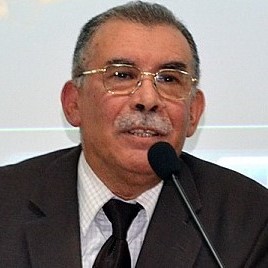
Mohamed Boudhan was an Amazigh writer, thinker, researcher and activist from the Rif, and publisher of the newspaper Tawiza. He was the author of many valuable books and articles on Amazigh identity. May he rest in peace.