Amazigh Identity and Colonialism, or Arabism and Colonialism?
Although the title “Amazigh Identity and French Colonialism,” chosen by Professor Taïeb Boutbouqalt for his lengthy 30-part study published starting May 17, 2018, during the month of Ramadan in an online newspaper, might suggest—drawing on the Amazighophobic legacy of the “National Movement,” which strove to associate Amazigh identity with colonialism—a complicity between Amazigh identity, the Amazigh people, and the colonizer through the latter’s exploitation of them to divide Morocco along racial lines, Professor Boutbouqalt proved to be “moderate” and reserved in his presentation and analysis. He attempted to move beyond received wisdom regarding the link between Amazigh identity and French colonialism, striving to present himself as an objective academic researcher. However, despite this methodological caution he sought to maintain, the author could not detach himself from the “national” analytical framework (referring to the “National Movement”) of the Protectorate period, specifically regarding the relationship between Amazigh identity and colonialism. By a “national” reading of the link between Amazigh identity and colonialism, we mean that interpretation shaped by—and in turn shaping—the myth of the “Berber Dahir,” which since independence has remained the explicit or implicit guiding benchmark for any reflection on Amazigh identity and the Amazigh people. The remainder of our analysis will demonstrate how Professor Boutbouqalt draws on this “national” reading to grasp the supposed relationship between Amazigh identity and French colonialism—a relationship he reaffirms in the very title of his research.
Thinking and explaining through conspiracy theory:
Because conspiracy theory lies at the heart of this “national” reading of Amazigh identity and its alleged tie to colonialism, Professor Boutbouqalt made it the explanatory pillar for every single action France took or planned in Morocco, particularly regarding the spread of the French language and culture before and during the Protectorate. Thus, according to this conspiracy-driven logic, the Alliance Française schools in Morocco, which opened as early as 1882, aimed “to instill a biased culture in order to turn Moroccans into a docile instrument serving colonial exploitation” (Episode 3). But even if that had been France’s motive for creating these schools, would mastering the French language and culture necessarily turn a non-French person into a “docile instrument” serving French colonial designs against their own country? Was it not precisely the French education received by those labeled “nationalists” that enabled them to discover and employ the concepts of “homeland” and “nationalism,” making them aware of the danger of colonialism, prompting them to reject it and demand independence? Was Gandhi, steeped in the English language and culture and trained in British law, a “docile instrument” of the British colonization occupying his country, India? Was the hero Moulay Mohand (Abdelkrim Al Khattabi) a “docile instrument” of Spanish colonialism—he who inflicted upon Spain its heaviest defeat at the Battle of Annual, even though he had received a Spanish education, spoke Spanish fluently, and wrote for Spanish newspapers? Was the great Francophone Algerian writer Kateb Yacine not one of France’s fiercest enemies and one of the most resolute opponents of the colonization of Algeria? Are we, as Moroccans who learn and study French from cradle to grave, a “docile instrument” that France uses to advance its interests, even to the detriment of Morocco’s own?
Through these questions, we aim to demonstrate the complete absence of any causal link between the spread of the French language and any allegiance to France or lack of loyalty to one’s homeland. Indeed, among those who were illiterate or spoke no French, there were French agents and traitors to the nation just as there were fierce resistance fighters against colonialism and ardent defenders of Morocco. Likewise, among those who were educated, fully fluent in French, and well-read in French literature, there were collaborators and traitors alongside heroic resistance fighters against colonization and passionate defenders of their country.
Professor Boutbouqalt’s reliance on conspiracy theories—which he considers essential to legitimize the idea of a link between Amazigh identity and colonialism—is also evident in his repetition of the “National Movement’s” myth that the colonizer aimed to Christianize Moroccans. He does this even though he himself acknowledges that “evangelical propaganda in Morocco left hardly any significant trace” (Episode 7). He dwells on the role of evangelical missions before devoting Episode 27 to what he calls the “milestones of the Christianization project.” He views this project as a colonial tool designed to shake Moroccans’ faith, thereby weakening Islam as a pillar of resistance and facilitating French rule. Here, Professor Boutbouqalt relies on conventional wisdom and popular misconceptions rather than a scientific, in-depth understanding of French colonial strategy in Morocco. In reality, France had no need to spread Christianity to justify its occupation. Why? Because it found support within Islam itself—support of a kind that Christianity could never have provided even if it had spread throughout Morocco—the very religion that Professor Boutbouqalt claims France fought, echoing the falsehoods of the “National Movement.” France skillfully exploited Islam to its advantage by feigning respect for it and even appearing to serve it, restoring mosques and catering to the ulema, imams, and preachers, whom it turned into quasi-civil servants on its payroll. Professor Boutbouqalt himself admits that France relied on Islam to consolidate its grip on Morocco, easily securing the loyalty of numerous religious orders (zawiyas) that used their immense popular influence to persuade Moroccans to accept the occupation.
Yes, the Amazigh question is a creation of French colonialism:
By titling his study “Amazigh Identity and French Colonialism,” Professor Boutabqalt seeks to remind us, as noted earlier, of the relationship between Amazigh identity and colonization, with all the implicit assumptions this connection carries regarding a special affinity between Amazighs and the French occupier. Through this title, he reiterates the lie propagated by the “National Movement” asserting that the Amazigh question was a creation of French colonialism. According to this thesis, France weaponized the Amazigh people to spread Christianity among them, combat Islam, sow racial discord, and divide Morocco along ethnic lines to facilitate its occupation and dominance. While it is now proven that the “National Movement’s” claim—that France used the Amazigh element to fight Islam and divide Morocco—is pure falsehood and slander, the idea that the Amazigh question arose from French colonization is indeed rooted in reality, in terms of its elements, context, and key actors. However, it is an “inverted” truth, both in its causes and in its consequences and objectives. How so?
Before the French occupation of Morocco, no “Amazigh question” existed, for the simple reason that there was no Arab Maghreb at the time, nor even a “Morocco” in the sense of a national name proper to the current Moroccan state, which was called “Marrakesh” rather than Morocco. This is precisely what Professor Boutabqalt himself explains when he writes: “It is well known that the name ‘Morocco’ in most European languages (Marokko, Morocco, Maroc, Marruecos, etc.) is originally a corruption of the word ‘Marrakesh'” (Part 1). He also emphasizes that what is today called the Arab Maghreb was referred to by the French as “Barbary Africa” (Part 6), in reference to its “Barbary” inhabitants, before this designation was abandoned at the end of the 19th century in favor of the more modern word “Berber.” In this regard, the author quotes an excerpt from a French document on Algeria and Tunisia stating: “In the two Barbary countries (Algeria and Tunisia), which we have seized” (Part 6). This clearly demonstrates that France considered them to be two Amazigh (Barbary) countries. Professor Boutabqalt adds: “In modern history, most European researchers have stressed that the majority of North Africa’s population was composed of Amazighs, and some of them referred to this region of the world as ‘Barbary,’ meaning the ‘land of the Berbers'” (Part 17). Thus, when France occupied Morocco (as well as Algeria and Tunisia), it viewed it as an Amazigh country belonging to the “land of the Berbers,” in Mr. Boutabqalt’s own words. It logically follows that there could be no “Amazigh question” concerning one segment of the population when all inhabitants shared this same Amazigh identity as part of the “land of the Berbers.”
However, General Lyautey was to undertake—what neither the Arabs nor the Romans had done before him—a process of political, rather than linguistic, Arabization of Morocco. He did so by creating an Arab state in Morocco, endowed with an Arab identity and affiliation, while shaping all the political, institutional, legal, and symbolic conditions (such as the flag and the national anthem) essential to this French-fabricated Arab state. From that point on, the political power of the Moroccan state was exercised under the banner of Arab affiliation, whether under the Protectorate—through the Sultan’s signing of dahirs drafted by the colonial authorities—or most notably after independence. This resulted in the political exclusion of Amazighness, stemming from the monopoly on political power exercised by an Arabism shaped and imposed by France, bringing in its wake the linguistic, cultural, identity-based, and historical marginalization of Amazighness. Thus, by creating an Arab-affiliated state in Morocco exercising power in the name of Arabism, France simultaneously fostered the objective political and cultural conditions for the emergence of an “Amazigh question” in Morocco. This was reflected in the implementation—by political authority that was colonial under the Protectorate, then “Arab” after independence (recalling that Morocco became Arab starting in 1912)—of a specific policy toward Moroccans who had preserved their Amazighness and had not traded their original Amazigh identity for a borrowed Arab affiliation, as so many others did in order to integrate into the new Arab order established by France in Morocco. It is this policy that is termed the “Berber policy,” whether referring to the former policy pursued by the Protectorate authorities or the new one applied by the post-independence state. Beyond this dimension of the “Amazigh question”—a product of the political Arabization of the Makhzen state by French colonialism, which concerns the management of the Amazigh question by colonial and later post-independence authorities after Morocco’s transformation into an Arab country—there is also the feeling of injustice, exclusion, and marginalization experienced by the Amazigh people. This sentiment sparked, particularly after independence, the emergence of voices, movements, and demands calling for justice for Amazighness and the Imazighen. This is precisely what constitutes what is known as the Amazigh Movement, an expression of the existence of an Amazigh cause in Morocco whose origins trace back, as previously noted, to the political Arabization of Morocco by France.
The “Amazigh question” in Morocco—whether in its dimension tied to the “Berber policy” or the emergence of an Amazigh advocacy movement defending the rights of the Imazighen—is therefore indeed a creation of French colonialism. French colonial rule erected an Arab state deliberately founded on the political exclusion of Amazighness. It is by no means, as the “National Movement” claims, a reaction to an alleged exploitation of Amazighness by the colonizer to divide Morocco and combat Islam.
Where is the “harshest blow,” and what about the “Berber Dahir”?
In his analysis of the decree of September 11, 1914, Professor Boutebqalt asserts that this text dealt “the harshest blow to the very heart of Moroccan identity” (16th installment)—an identity that he appears, given the context, to restrict exclusively to its Islamic dimension. Yet, turning to the original text of the decree—whether the French version published in the Official Bulletin No. 100 of November 21, 1914 (translated into Arabic by Professor Boutebqalt) or the Arabic version published in the Official Bulletin No. 73 of September 18, 1914—one observes the content of its first article, which the researcher describes as the “harshest blow.” After a preamble recalling that Amazigh tribes have always been governed by customary law (orf), this article states: “The Berber tribes of Our Sharifian Empire remain and shall remain governed by their particular laws and customs, under the supervision of government authorities.” What Professor Boutebqalt views as a “blow” to Moroccan identity is therefore nothing more than the Protectorate authorities confirming the continuation of customary law within these tribes. Does preserving the existing legal and customary status of Amazigh tribes truly undermine Moroccan identity? Did the author expect colonialism to accomplish what no Moroccan sultan had ever done before—namely, to forbid tribes from resorting to their customs? Even assuming these customs contained elements contrary to Sharia, did Mr. Boutebqalt expect the colonial authorities—whom he nevertheless describes as hostile to Islam—to prove more zealous guardians of Islamic law than Morocco’s own Muslim sultans, to the point of decreeing the abolition of custom? By ratifying tribal customs, the Protectorate authorities added nothing new on their own initiative that could signify an intent to attack Moroccan identity (strictly speaking within Mr. Boutebqalt’s religious conception of it). They merely validated Amazigh customary practices that predated the Protectorate. The “harshest blow” to Moroccan identity, as conceived by Mr. Boutebqalt, would only have occurred had these authorities imposed customary law on tribes that did not previously practice it, or had they resurrected long-lost customs to reimpose them on the population.
The same can be said of the decree of May 16, 1930, wrongly and slanderously labeled the “Berber Dahir.” In terms of its motives and objectives, this text differs from the decree of September 11, 1914, only in the binding force granted to customary rulings and the creation of customary courts with clearly defined territorial and material jurisdiction. It altered none of the customary rules in force prior to the Protectorate—neither adding new ones, nor modifying, nor repealing existing ones—with the sole exception of Article 6. This article conferred jurisdiction on French courts to try serious crimes and offenses, aiming to track down and neutralize resistance fighters who executed collaborators of the colonial army. Its purpose was to weaken the resistance by instilling fear among its fighters, who faced the threat of being brought before French courts for retaliatory prosecution.
In this debate, I will not attempt to demonstrate that the “Berber Dahir” never existed in real, factual history, and that it is nothing more than a fabrication manufactured by the “National Movement” as the myth that enabled its entry into history. I shall refrain from doing so because the work of the late Professor Mohamed Mounib, The “Berber Dahir”: The Greatest Political Lie of Contemporary Morocco, as well as my own book, The Berber Dahir: Reality or Myth?, have already provided irrefutable proof of this. I shall therefore confine myself here to examining a few of the questions raised by Professor Boutebqalt’s analysis.
He wrote this entire Ramadan series of thirty articles devoted to “Amazigh Identity and French Colonialism” for the sole purpose of reaching the conclusion with which he closes his study: that the “Berber Dahir,” to which he devotes the final three installments, represents the most dangerous culmination of French colonialism’s “Berber policy.”
However, if this decree constituted the height of aggression against Morocco’s identity, its unity, its religion, and the cohesion of its people—as Professor Boutebqalt suggests by aligning himself with the discourse of the “National Movement”—why does the author not explain to us concretely what this alleged gravity consisted of? Since this is a legal text, why does Professor Boutebqalt not cite the specific articles or provisions through which the French colonizer supposedly sought to impose an ethnic division in Morocco, instill discord, or foment racial fitna, as the famous “Latif” prayer claimed? This demonstrates that the “Berber Decree” is a matter of pure fabrication without the slightest real foundation. This is precisely why neither Professor Boutebqalt nor his predecessors among the followers of the “Latif” have ever been able to point to the specific clauses of the decree that would have posed a genuine danger to Moroccans, their faith, and their unity.
Among the “sources” on which Professor Boutebqalt bases his conclusions regarding the “Berber Decree” is the work The National Movement and the Berber Decree by El Hadj El Hassan Bouayad. When one considers that the author of this book was an active member of the “Latifiens” group and one of the primary architects of the “Berber Decree” myth, a question must be put to Professor Boutebqalt:
How can credit be given to the account of the very designer of the “Berber Decree” regarding his own decree? In other words, how can we believe what the “Berber Decree” says about itself? Relying on the progenitors of the “Berber Decree” to write the history of their own text proves in itself that it is a pure invention and a mystification, since there is no independent or neutral source, external to its inventors, that confirms the existence of such a “Berber Decree.”
The author cites a series of personalities who participated in the calls for the recitation of the Latif and in the demonstrations against the “Berber Decree.” But the question that should be asked of him regarding them is as follows:
Why did he not mention that the majority of these instigators of the campaign against the “Berber Decree” were consular “protégés”—the very ones he previously described as traitors acting against their own country? How can one believe that traitors to the fatherland would demonstrate such patriotism toward a country they had previously sold for a pittance?
Professor Boutebqalt asserts: “Despite the harsh colonial conditions and daily suffering, it can be said that from the episode of the Berber Decree, the Moroccan political scene saw the progressive structuring of a new generation gathered around a young king” (30th episode). One might infer from these words that the young sovereign, Mohammed V, supported the position of the “National Movement” youth regarding the “Berber Decree.” Yet, the author remains silent, just as the “National Movement” had done before him, on an event of capital importance: this young king firmly disapproved of the attitude of these young people and was angry with them. This is evidenced by the speech he addressed to them, in which he declared: “A group of your immature young people has risen up to spread the idea—and what a reprehensible act!—that the Amazigh people converted to Christianity by virtue of the Sharifian Decree, without measuring the scope of their infamous action or reflecting on the consequences, thus deceiving the people.” Why has the author remained silent on this explicit denunciation by Mohammed V of the lies told by the “Latifiens”?
In conclusion, nothing in the colonial Sultanic decree of May 16, 1930—and not the “Berber Decree,” a “nationalist” designation rather than a Sultanic or colonial one—nor in the decree of September 11, 1914, dealt a “fatal blow” to Moroccan identity. The real “fatal blow” dealt by French colonialism to authentic Moroccan identity lies in the creation of an Arab state with an Arab affiliation on Amazigh land, resulting in the political eviction of the Amazigh identity that characterized Morocco and Moroccans before French colonization—a fact that Professor Boutebqalt himself acknowledges.
Amazigh identity and colonialism, or Arabism and colonialism?
The title of the study—Amazigh Identity and French Colonialism—might suggest an indictment of Amazigh identity and the Amazigh people regarding their relations with the colonizer. This narrative posits that the colonial power found it easy to instrumentalize them to deal “fatal blows” to Moroccan unity, identity, and faith. To succeed in this colonial manipulation of the Imazighen, the occupying forces allegedly created a specific political framework known as the “Berber policy.” This involved allocating all necessary human and financial resources, alongside the essential legal, institutional, and scientific tools required to achieve its goals: winning hearts and minds for France, dividing Morocco to subdue it more easily, and undermining the faith of Moroccans by attempting to Christianize the Amazigh people. Such is the role assigned to the Imazighen and their identity in relation to colonialism, according to the “national” reading of the “Berber policy” propagated by the “National Movement”—a perspective that Professor Boutbaghalt draws upon in his study, as the very title of his work suggests.
However, we must consider several critical facts. It was Sultan Abdelhafid—who, according to popular belief, identified with Arab rather than Amazigh heritage—who officially and “legally” handed Morocco over to colonial rule by signing the Protectorate Treaty. Furthermore, this colonial power politically Arabized Morocco by creating an Arab state, leading to the political exclusion of Amazigh identity, as previously explained. The French fought Amazigh tribes until 1934 to bring them under the authority of this new Arab state. Meanwhile, those who welcomed Resident-General Lyautey upon his “conquest” of Fez—offering dates, milk, ululations of joy, and poetic praise, greeting him as the “third Moulay Idriss” they had awaited since the death of the second, treating him as a divinely sent prophet, and even praying for his recovery at the mausoleum of Idriss II while reciting the Latif—were precisely those who boasted of alleged Arab ancestry and rejected Amazigh identity. As Professor Boutabqalt detailed, many religious brotherhoods (zaouïas) whose sheikhs claimed noble Arab lineage also collaborated sincerely and effectively with the colonizer. Moreover, the only Muslim known to have converted to Christianity under the Protectorate was Mohamed Ben Abdeljelil—not an Amazigh, but an Arab from an Andalusian-Fassi family. (This is mentioned not to criticize his conversion, but to demonstrate the baselessness of the professor’s thesis regarding Amazigh identity and colonialism). Finally, the “protégés” who betrayed their country by serving foreign powers were, in popular belief, Arabs rather than Imazighen. When we weigh these facts, it becomes clear that the Protectorate actually served to protect “Arabness” and strengthen its proponents by building an Arab state for them. This process involved first crushing the Amazigh resistance and then, once military operations ceased, working to bring them under the authority of this new state through a “Berber policy” specifically designed to integrate them into the new Arab order established by the French Protectorate for the benefit of those who claim Arab identity.
This explains why French colonialism—despite its specific “scientific” interest in the Imazighen through research into their tribes, language, culture, history, and societies, as the author rightly points out—did not seek to exploit these elements to undermine national unity or divide the Moroccan social fabric through a “divide and rule” strategy, as M. Boutabqalt attempts to argue. Instead, the goal was to leverage this detailed knowledge of the Amazigh people to determine the most suitable, rapid, and effective methods for integrating them into the new Arab state designed by France. The objective was to subject these populations to French political authority with minimal cost and maximum efficiency, and to enlist them in the service of Arab identity to strengthen and expand its influence. This was achieved by using them to Arabize those Moroccans who still preserved their Amazigh identity and remained attached to their original and authentic roots. This project was a resounding success under French colonialism: all tribes and regions became dependent on this Arab state, swearing allegiance and submitting to its power. Meanwhile, a significant portion of the Amazigh intellectual and political elite became committed actors in this policy of identity conversion, shifting the Imazighen from their natural, authentic Amazigh identity toward a fabricated, borrowed Arab one.
As an illustration of this role of Arabization now entrusted to the Amazigh elite following the success of this “Berber policy” of integration, we can look at the current government (as of June 2018). It is presided over by Saadeddine El Othmani, who is himself Amazigh, and includes several Amazigh members. However, although the Head of Government is Amazigh, he does not exercise his power or functions in the service of an Amazigh policy—rather than a “Berber policy”—aimed at “Amazighizing” the government and the state. On the contrary, he places them at the service of an extension of that same “Berber policy,” designed to consolidate the Arab character of the government and the state through increased Arabization and the identity conversion of Moroccans. Consequently, it would be no surprise to see the adoption, under the mandate of this government led by an Amazigh, of organic laws designed to hinder—rather than realize—the officialization of the Amazigh language. This would consecrate the victory of the Arabization policy and mark the triumph of a “Berber policy” aimed at integrating the Imazighen into the Arab order established by France, while enlisting them to serve and defend it.
Regarding the colonizer’s subjugation of the Imazighen to the authority of the Arab state it created in Morocco, Professor Boutebqalt falls into a blatant contradiction. He explains that France took advantage of the constant refusal of the Imazighen to submit to the authority of the Makhzen, using this refusal as a pretext to “protect them from the Makhzen’s extortions to which they were constantly subjected” (Episode 24). Yet, it is a well-known and undisputed fact that France did not protect the Imazighen from the Makhzen—which, in fact, had no effective authority over the Amazigh tribes prior to the French occupation of Morocco. On the contrary, France fought these Amazigh tribes on the grounds that they were insubordinate to the Makhzen, with the aim of forcing them into obedience and subjecting them, as subjects, to its power and authority. This is exactly what France did with Moulay Mohand (Abdelkrim Al Khattabi), whom it fought under the pretext that he had rebelled against the Makhzen.
In reality, the “Berber policy” was merely a means to an end: the “Arabo-centric policy” pursued by France in Morocco, which culminated in the Protectorate’s establishment of an Arab state in the country. Thus, the “Berber policy” was only a branch serving the original matrix represented by France’s “Arabo-centric” agenda. Given the collaboration with French colonialism by groups claiming the mantle of Arabism—starting with Sultan Abdelhafid—and considering the relentless war waged by that same colonialism against Amazigh tribes until 1934, the most appropriate title to summarize France’s relationship with Moroccans during the colonial era is “Arabism and Colonialism” rather than “Amazigh Identity and Colonialism.” This is because colonialism arrived to serve, protect, and strengthen Arabism by erecting an Arab state, all while fighting the Imazighen (the Amazigh tribes) to force them into submission and integration under that state’s authority. The official and “legal” motivation for colonialism, as well as its objectives in occupying Morocco, lay in the protection of Arabism—the true beneficiary of this era. Amazigh identity, conversely, was the victim, suffering political exclusion followed by linguistic, cultural, and historical marginalization.
A “barbaric” stance toward Amazigh identity and the Amazigh people
What strikes the reader of Professor Boutebqalt’s study is his use of the same loaded, Amazighophobic concepts and terms inherited from the creators of the “Berber Dahir” myth. Chief among these is the word “Berber,” which he uses as his primary term, despite the racial contempt it conveys toward Amazigh identity and the Amazigh people. Although he used “Amazigh identity” in his title, logic should have dictated that he continue using that term—both as a noun and an adjective—to avoid contradiction between the title and the body of the text. Instead, the author insisted on using “Berbers” and its derivatives (Berber, Berberia) throughout his exposition, contradicting the very notion of Amazigh identity announced in his title.
One might argue that Professor Boutebqalt simply relied on the historically established term “Berbers” and its adjectival forms, as seen in Arabic writings and even in foreign languages like French, which still uses the word Berbère. This objection does not hold water for two reasons:
First, when Arabic authors used the word Barbar (Berbers), the term had only one meaning: it designated the inhabitants of “Ifriqiya,” referring to North Africa. At that time, the word had not yet acquired its second, more recent meaning in the Arabic language: “wild, barbaric, primitive, or uncivilized” (Mu’jam al-Ma’ânî dictionary).
Second, while the French language uses the word Berbère—which shares the same root as the Arabic Barbar—it maintains a very clear distinction between Berbère, referring to the “first inhabitants of North Africa” (as defined by the Encyclopédie Universalis), and Barbare, meaning “uncivilized, savage, or cruel.” The situation is entirely different in Arabic, which uses the same term (Barbar) to denote both indigenous North African identity and the foreign concept of savagery, barbarism, cruelty, and obscurantism.
Why, then, persist in labeling the Amazigh people as “Berber” when the word has acquired such pejorative and depreciative connotations in Arabic—essentially serving as the Arabization of the term “barbarian”? This is especially problematic now that the authentic, scientific, and official name “Amazigh” is widely used and enshrined in the Constitution and by state institutions. Worse still, the author’s insistence on using “Berber” instead of “Amazigh” creates dissonance in contexts where “Berber” is ill-suited, such as “Berber society,” “Berber custom,” “Berber family,” “Berber communities,” “Berber tribes,” the “Protectorate’s Berber policy,” “Berber studies,” “Berber archives,” or “Berber circles.” While these expressions remain coherent and acceptable in the original French texts translated by Mr. Boutebqalt, it is because the French Berbère means “Amazigh,” as we have explained, and not “barbarian” (barbare), which means “savage,” “bloodthirsty,” or “uncivilized.” However, the Arabic adjective barbarî that the author prefers carries this latter meaning. Consequently, translating “Berber archives” literally into Arabic results in a term that, back-translated into French, means “Barbarian archives” (Archives barbares), and not the Archives berbères used in French scholarship. His translation of the term as “al-wathâ’iq al-barbariyya” is therefore an error, as it conveys a sense of “Barbarians” rather than “Berbers”—that is, Imazighen.
By stubbornly employing the adjective “Berber” instead of “Amazigh,” the author himself exhibits a truly “barbaric” attitude toward Amazigh identity and the Amazigh people. This reveals the persistence of a “barbaric” posture toward Amazighité that remains deeply rooted among many Moroccan intellectuals.
Arabic version | French version

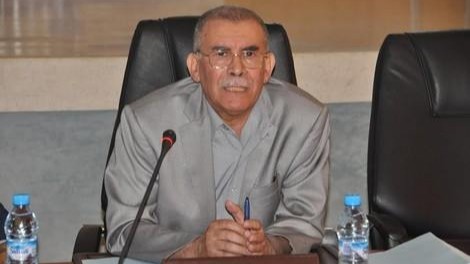
Mohamed Boudhan was an Amazigh writer, thinker, researcher and activist from the Rif, and publisher of the newspaper Tawiza. He was the author of many valuable books and articles on Amazigh identity. May he rest in peace.