Why Did Algeria Beat Us to Making the Amazigh New Year an Official Holiday?
A Rivalry Over Amazigh Identity
One could say that the rivalry between Morocco and Algeria is reflected in each country’s desire to outdo the other in serving ethnic Arabism, pursuing a policy of “gender reassignment”—that is, of national and identity transformation—aimed at the ethnic, political, cultural, national, linguistic, and ideological Arabization of the two Amazigh peoples, Moroccan and Algerian. This rivalry is equally evident in both countries’ bid to take the lead in rehabilitating Amazigh identity, through political decisions by which one neighbor seeks to embarrass the other. Thus, following the speech of August 20, 1994, in which the late Hassan II called for teaching what he termed Amazigh dialects, Algeria reacted just a few months later by establishing the Haut commissariat à l’amazighité on May 27, 1995, under the presidency of Liamine Zeroual.
It was not until Mohammed VI ascended the throne that Morocco took the initiative and adopted bold decisions compared to Algeria regarding the rehabilitation of Amazigh identity. Chief among these was the creation of the Royal Institute of Amazigh Culture on October 17, 2001, an institution far more advanced than Algeria’s Haut commissariat à l’amazighité. Through this institute, numerous milestones were achieved for Amazigh identity, including the official adoption of the “Tifinagh” alphabet, the launch of Amazigh language instruction, the creation of an Amazigh television channel, and the recognition of Amazigh identity and the Amazigh language as an official language in the Constitution of July 1, 2011…
The Algerian Lead
In reality, when it comes to Amazigh identity, comparing Morocco’s achievements to those of Algeria is beside the point. Nor is it fair to consider the initiatives through which Morocco outpaced Algeria in promoting Amazigh identity—assuming it actually did—as an advantage that puts Morocco ahead of Algeria on the Amazigh issue. Why? Because Morocco is, by its very nature, a pioneer and inherently ahead on Amazigh identity, being the premier and largest Amazigh country in the world. Consequently, whatever it achieves in favor of Amazigh identity is entirely natural, since no other Amazigh nation matches the scale of Morocco’s Amazigh character to warrant comparison in the level of attention granted to Amazigh identity.
That is why the real lead—if one can speak of a lead—lies in the decision taken by Algerian President Abdelaziz Bouteflika on December 27, 2017, to recognize the Amazigh New Year as an official paid public holiday. With this decision, the Algerian president killed several birds with one stone:
— He would thus cover his many flaws and numerous mistakes, having made this righteous decision in the twilight of his life, wiping away his past errors and serving as an “ongoing charity” that ensures he is remembered fondly after his death.
— He has thus rendered an immense service to Amazigh identity through its cultural, historical, symbolic, and identity-defining significance, to the point that this decision alone constitutes an official recognition of the Amazigh identity of North Africa. What further underscores the importance of this decision is that its implementation is immediate and does not hinge on any conditions that could see it deferred indefinitely, as happened in Morocco with the teaching of the Amazigh language and the operationalization of its official status, which remain paralyzed by ongoing delays in their rollout.
— He has thus outpaced Morocco in recognizing the Amazigh New Year as an official public holiday. This represents a genuine step forward for the reasons outlined above; conversely, had Morocco taken the initiative on this recognition, it would not have constituted any real breakthrough on its part, as previously noted. By taking the lead, he delivers a stinging rebuff to those Moroccan officials who refuse to grant the demand to institute the Amazigh New Year as an official paid holiday, putting forward laughable pretexts that betray ingrained ignorance, profound self-loathing, and a stubborn denial of Amazigh identity. The Algerian president’s decision, which marks a victory for democracy and human rights, will undoubtedly place them in an embarrassing position that cannot be masked behind such ridiculous and ill-informed justifications.
Why did Algeria outpace us in establishing the Amazigh New Year as an official public holiday?
How can we explain this Algerian lead and Moroccan delay when it comes to making the Amazigh New Year an official national holiday? One reason is that the Algerian decision came directly from the head of state, rather than the government or parliament. What is the difference between the two? The difference is that the president, acting as a singular political will, wields the authority to decide and rule immediately on matters within the purview of the presidency, without having to wait for consensus and coordination among multiple stakeholders and actors, as is required for parliamentary and governmental decisions. This explains why, in Morocco’s case, there were no hurdles, procrastination, or opposition to delay or prevent the promulgation of the Ajdir Dahir establishing the Royal Institute of Amazigh Culture: a dahir is an expression of royal will that requires the approval of no other body. It also explains why everything accomplished in support of Amazigh identity has come through royal decisions, including its constitutional recognition, which fulfilled the royal speech of March 9, 2011, in which the sovereign outlined the components to be included in the new Constitution, among them the officialization of the Amazigh language. While it may seem paradoxical that the promotion of Amazigh identity has suffered setbacks, dithering, and roadblocks since its constitutional recognition in 2011, this is because that recognition shifted it from the realm of royal will, as a sovereign domain, into the hands of the government and parliament as an ordinary governmental portfolio. As a result, decisions are governed by compromises, balancing acts, and partisan political calculations that do not foster timely decisions or the form best suited to the issue. Proof of this lies in the foot-dragging, bordering on manipulation, over drafting the organic law on the Amazigh language: six and a half years have elapsed since its constitutional recognition, yet the law has still not seen the light of day.
Because of the total exclusion it suffered over long decades, the Amazigh language is not an ordinary issue falling within the routine remit of the government and Parliament. It requires preferential treatment commensurate with its status as a victim of exclusion, injustice, and marginalization. Indeed, it truly benefited from such preferential treatment when it was treated as a sovereign matter falling under the prerogatives of the King. It was precisely this preferential treatment that drove all the decisions made in its favor, as noted earlier. On the other hand, one can only expect the worst for the Amazigh language from a government and Parliament made up of parties whose majorities still draw their reference points from the Mashreq and Mashreqi Arabism—that is, from outside the homeland. This is why they view the Amazigh language as a disruption to their Mashreqi Arabist frame of reference. We saw this firsthand when lawmakers halted deliberations on the organic law relating to the Amazigh language within the Committee on Education, Culture, and Communication at the House of Representatives on December 25, 2017, all to welcome Mr. Khaled Méchaal, a top leader of Hamas who is barred from entering numerous countries that accuse him of extremism. This incident alone proves that Mashreqi causes and figures take precedence over national issues, particularly Amazigh ones. It demonstrates that Mashreqi Arabist ideology continues to drive Moroccan politicians, who make their relentless drive to engineer an identity shift—from their Amazigh roots toward Arab lineage—the supreme objective, the ultimate value, and the pinnacle of activism and patriotism.
Hostility Toward the Amazigh Cause Harms the Homeland’s Interests
That is why declaring the Amazigh New Year a national holiday is simply unthinkable for these politicians. Through this hostile stance toward the Amazigh cause, they unknowingly work against the state’s very own positions on certain issues. For instance, in November 2015, Morocco called on the United Nations and its various bodies to stand with the Imazighen of Algeria regarding the “Kabyle people”—to use the Moroccan representative’s phrasing—and to support them “so that they may enjoy their legitimate rights to self-determination and autonomy,” according to the representative’s address. How, then, can this position carry any credibility or effectively mobilize support against Algeria, when that very same Algeria, which Morocco berates for violating the rights of its Amazigh Kabyle population, has recognized the Amazigh New Year as an official public holiday for all Algerians, while Morocco denies that very recognition to its own Amazigh people? Who will believe Morocco is sincere in defending the Amazigh “Kabyle people” in Algeria if it refuses to satisfy an Amazigh demand already granted by Algeria—the country it accuses of dismissing Amazigh rights? This contradiction and incoherence in Morocco’s stance stems from government officials who fail to grasp the vital role that the Amazigh issue can play in both foreign and domestic policy. Hence their refusal to recognize the Amazigh New Year as an official public holiday, right up until Bouteflika dealt them a stinging slap to the back of the neck, jolting them from their stupor into panic and confusion. What will they do now? They can no longer keep refusing to grant official status to the Amazigh New Year as a national holiday, because doing so would signal to the world that they continue to subject the Amazigh language and the Imazighen to racial discrimination. In that scenario, they lose. And when they finally yield to this demand—which is both inevitable and inescapable—it will amount to nothing more than a hollow formality devoid of any political payoff, since Algeria has already reaped the political dividend by taking the lead in answering the call.
Through this analysis, we conclude that had the Amazigh issue remained in the hands of the King, rather than shifting into the jurisdiction of the government and Parliament, it would have been infinitely better for the Amazigh language. This does not mean the monarchy cannot issue instructions to the government and Parliament to do justice to the Amazigh language, should it choose to do so. This raises the question of the motivation behind transferring the Amazigh issue from the King’s political purview to the partisan domain of the government and Parliament. This transfer has even led to a disregard for the law, as clearly demonstrated by the dissolution of the board of directors of the Royal Institute of Amazigh Culture without adhering to the required legal procedures. It is well known that this board was established by Sharifian Dahir No. 1-01-299 (17 October 2001), issued on 29 Rajab 1422 and published in Official Bulletin No. 4948 on 1 November 2001. Consequently, any repeal, amendment, or supplement to this dahir must be enacted through a dahir or decree and published, naturally, in the Official Bulletin. To date, this has not occurred. What, then, one might ask, is the legal basis for abolishing the board of directors of the Amazigh Institute? There is none. As a result, this board legally continues to exist, even though it is defunct in practice. Flouting and violating the law when it comes to the Amazigh language has become commonplace, as long as the aim of such contempt is the violation and suppression of Amazigh rights.
That is why, if the law were properly upheld and respected, a commission of inquiry and investigation would have been established—under the constitutional principle linking responsibility with accountability—to investigate those responsible for all the violations that have plagued the Amazigh dossier from the creation of the Royal Institute of Amazigh Culture to the present day. These include derailing the project to teach the Amazigh language, halting the implementation of its official status, and illegally abolishing the aforementioned board of directors…
Arabic version | French version
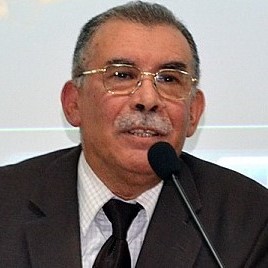
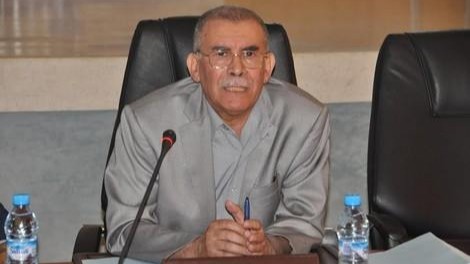
Mohamed Boudhan was an Amazigh writer, thinker, researcher and activist from the Rif, and publisher of the newspaper Tawiza. He was the author of many valuable books and articles on Amazigh identity. May he rest in peace.